
Which topics kept the food industry busy last month? In February, articles about data in spices, gas-free production, innovation and meat processing were widely read. Themes such as food safety, sustainability and smart technology also drew considerable attention. These are the ten most-read stories of February 2026 on Vakblad Voedingsindustrie’s website.
Spicemasters is growing. The family business wants deeper insight into its data and no longer rely solely on experience and know-how. With Aptean’s food solution, the company opted for a phased ERP approach: first purchasing, sales and inventory, and now production as well. The result is control—and a system that works for everyone.
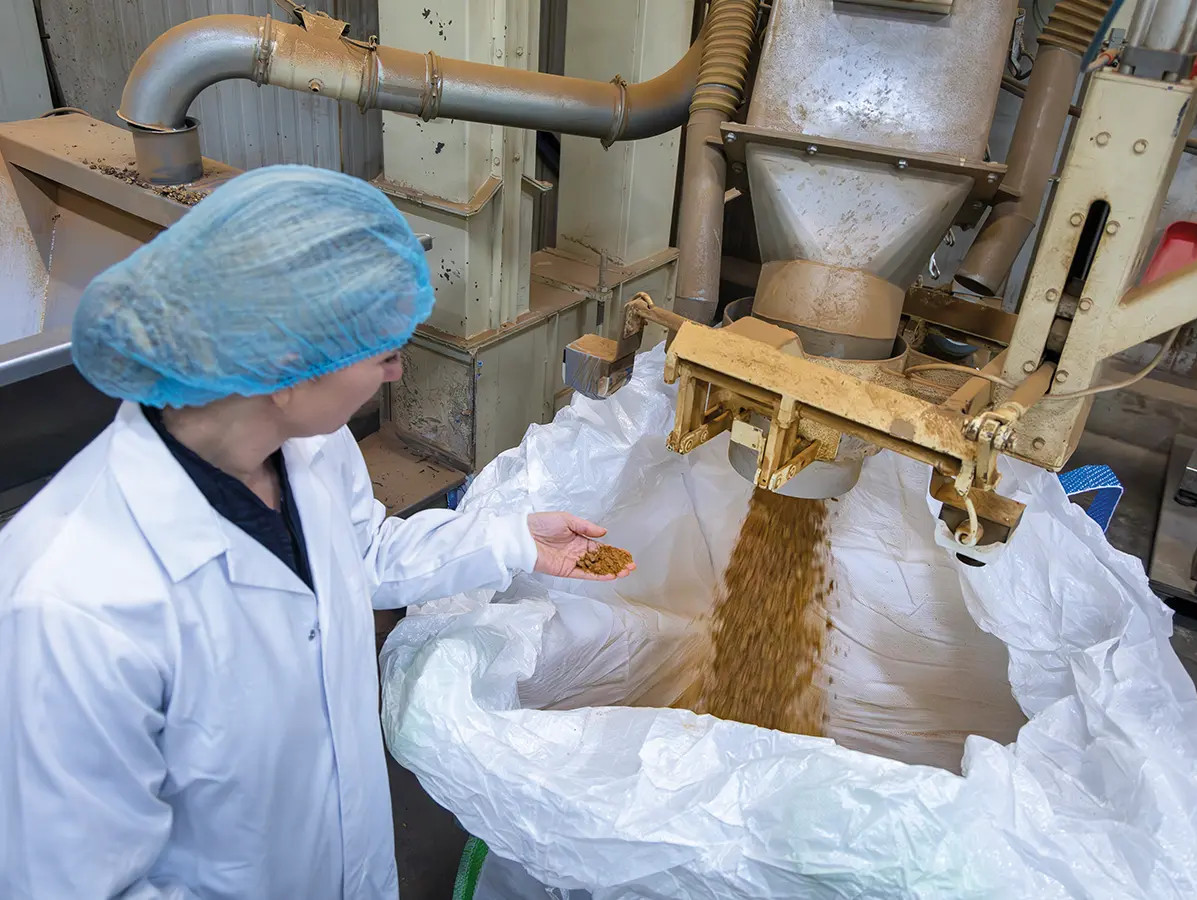
In Waalwijk, you will find the only company in the Netherlands that processes frozen meat into powder and granulate. And they do it well. It is therefore not surprising that the list of customers for the ingredients produced here, at Henningsen, is a long one. The large cabinet displaying broth cubes, noodle cups, dried soups, outdoor and military meals, and a wide range of snacks in bacon, chicken and beef flavors is bursting at the seams.
They want to be surprised time and again, those demanding consumers: with new flavors, textures, products and packaging. At the same time, labor, certain raw materials and energy are becoming scarcer—and therefore more expensive. The solution lies in innovation, but it is anything but easy. During an inspiring Round Table session, we discuss the challenging journeys surrounding innovation processes in food.
Baby and infant nutrition producer Ausnutria had an ambitious plan: to build a future-proof, efficient, gas-free factory for the production of baby and infant nutrition. The new construction project ‘Moon’ in Heerenveen is living proof that ambitions can indeed be turned into reality. This has been made possible in part thanks to the efforts of GEA.
With a strong turnout of 35 food producers and a broad mix of participants from, among others, meat and fish processing, dairy and patisserie, Mikrocentrum, together with OSV Netwerk, paid a visit to Westfort Vleesproducten (Meat Products). CEO Robbert van ’t Hoff guided the group through Westfort’s vision: building the smartest meat company, in which people, engineering and technology are inextricably linked.
For years, Wyno Zwanenburg barely left his pig farm in Odiliapeel; today, his work takes him all over the world. His farming background proves invaluable when dealing with the complex issues that come his way. How does he ensure that the new innovation fund from Brussels also benefits the food sector? “Everything comes down to timing.”
Consumers are making more conscious choices for healthy and sustainable food. As a result, an increasing number of products based on vegetables and fruit are entering the market, such as beetroot wraps, cauliflower pizza bases and puffed corn snacks. The production of these foods sometimes involves high temperatures. This can lead to the formation of process contaminants, such as acrylamide. But is that actually healthy?
Smart food processing means going a step beyond traditional, experience-based methods and recipes. If you truly want to improve efficiency, sustainability, and quality, a scientifically grounded approach is essential.
Reducing food waste requires more than good intentions. It calls for scalable technology, collaboration across the supply chain, and the courage to invest. OneThird demonstrates how a clear innovation strategy, backed by smart use of financial resources, leads to measurable impact.
What if, as a meat producer, you decide to look at your own impact in a completely different way? Not starting with solar panels or electric cars because that is what is expected, but with a fundamental question: are we doing things today that we can still sustain ten years from now? That is exactly the approach taken by Roy Bolscher, managing director of meat processor Bolscher in Enschede.
Source: Vakblad Voedingsindustrie 2026
Magazine Voedingsindustrie has been made possible in part by:



© COPYRIGHT 2026 VOEDINGSINDUSTRIE | ALLE RECHTEN VOORBEHOUDEN
Powered by Wallbrink Crossmedia © 2026





