
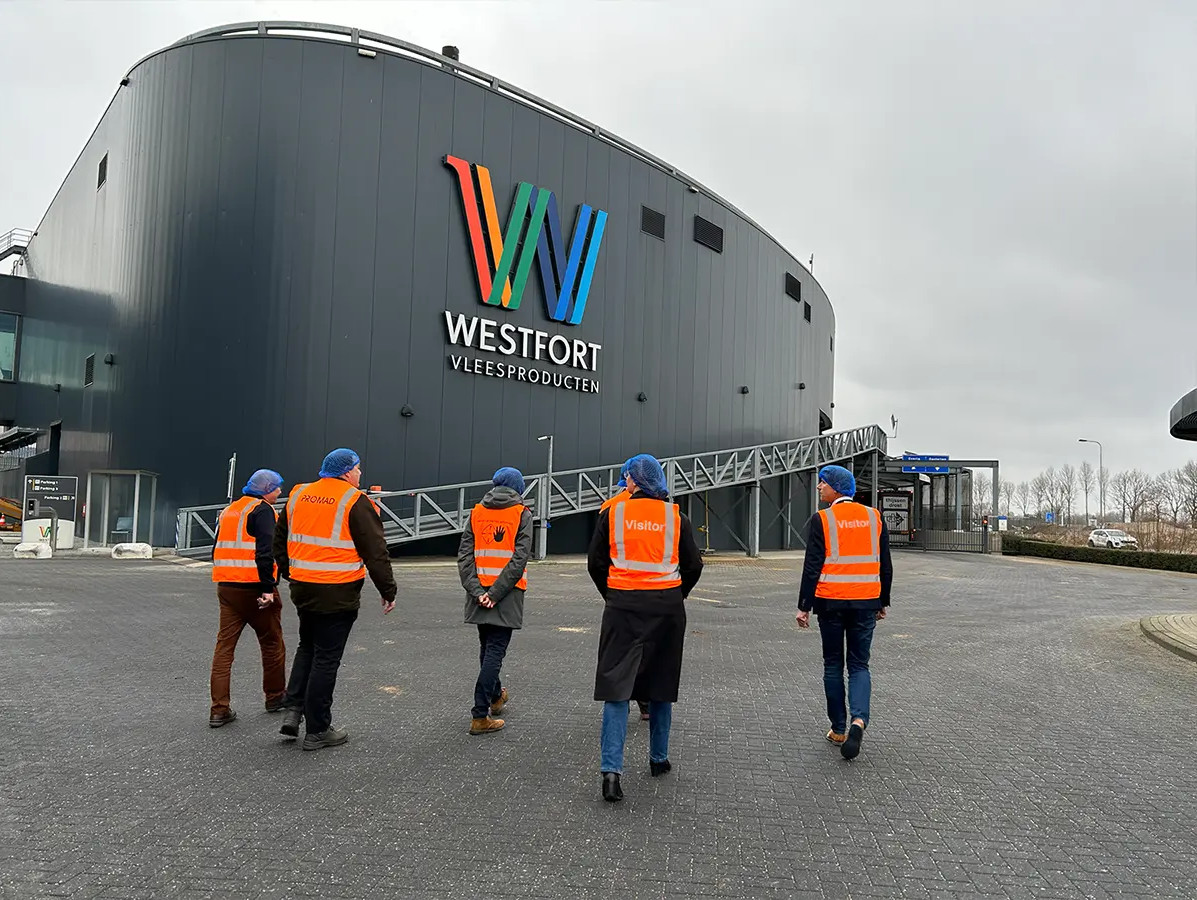
With a strong turnout of 35 food producers and a broad mix of participants from, among others, meat and fish processing, dairy and patisserie, Mikrocentrum, together with OSV Netwerk, paid a visit to Westfort Vleesproducten (Meat Products). CEO Robbert van ’t Hoff guided the group through Westfort’s vision: building the smartest meat company, in which people, engineering and technology are inextricably linked.
Westfort processes around 50,000 pigs every week, all sourced entirely from the Netherlands, and is certified for global trade, including exports to the United States. Robbert: “We always think in terms of full carcass utilisation. With the expected decline in the number of pigs, optimal utilisation of every part of the animal is becoming increasingly important. That is the core of what we do.” During an introductory film and presentation, visitors gained insight into the slaughterhouse, the automated deboning process and the fully mechanised cold store. The tour offered a detailed behind-the-scenes look at the slaughter facility, where innovative processes and automation were clearly visible. Visitors were divided into four small groups, ensuring everyone received optimal guidance and attention. Many questions focused on the slaughter process and the level of automation.
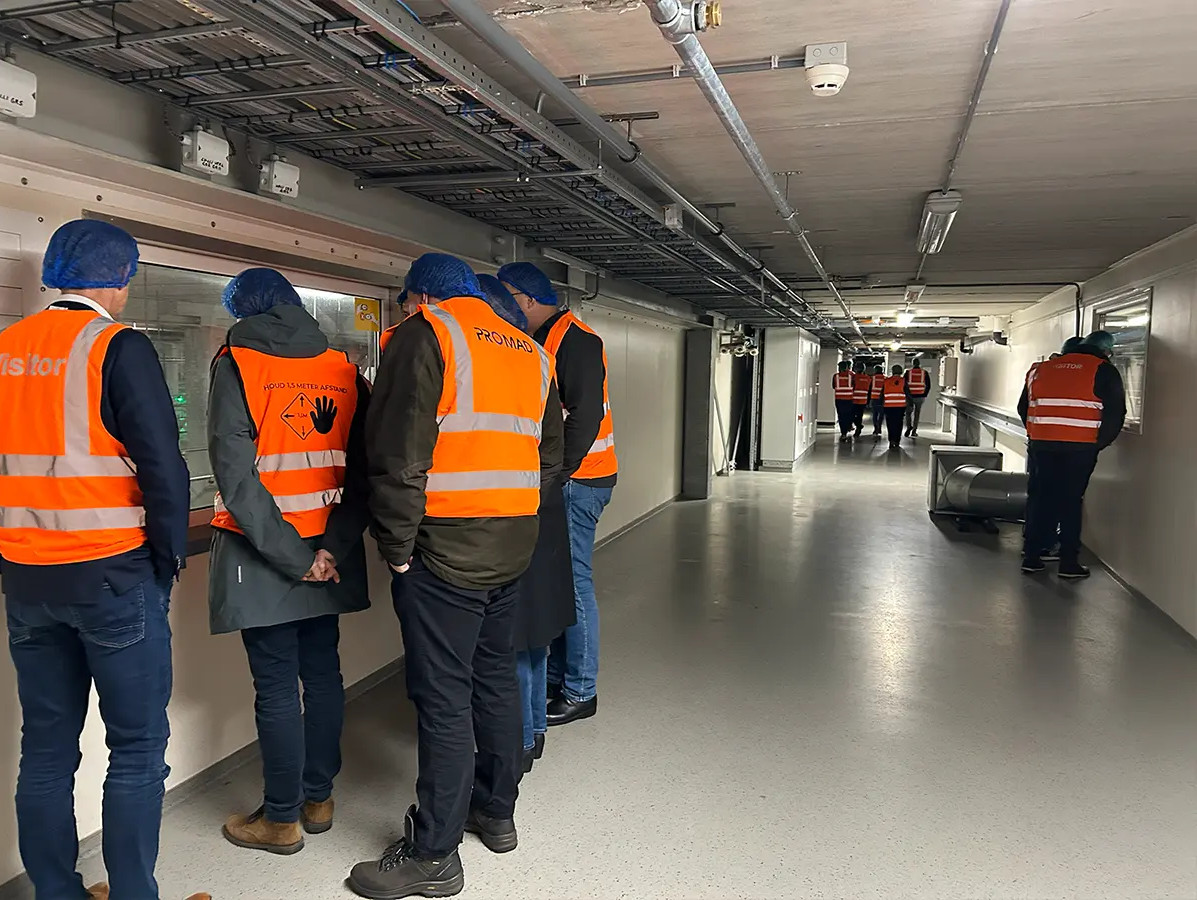
A key issue in the meat industry is the shortage of skilled professionals. This prompted Westfort to rethink its approach to production. Its strategy is built on three pillars: hardware, software and people. Westfort has made substantial investments in modern facilities such as hanging deboning, automated weighing systems, robotic arms with vision technology, and a fully automated freezing and storage system. Heavy tasks, such as opening carcasses and removing fat, are now carried out almost entirely by robots.
The cold store is fully mechanised; the route from production to storage is completely automated. Robbert demonstrated how products are packed and sorted directly from the production lines and then placed in the correct location in the cold store, without additional buffer zones. This automation ensures optimal freezing quality and efficiency, while keeping human intervention to a minimum. The freezing process is designed so that boxes are frozen within a few hours of production and automatically stacked on pallets.
At the same time, it became clear that technology alone is not enough. Operational excellence stands or falls with the commitment of people. “That’s why we developed the ‘Westfort Way of Working’, based on standardisation, visualisation and continuous improvement. Without standards, you cannot improve,” Robbert explained. At the Westfort Academy, managers and operators receive practical training, enabling them to work in a process-driven way rather than reacting to incidents.
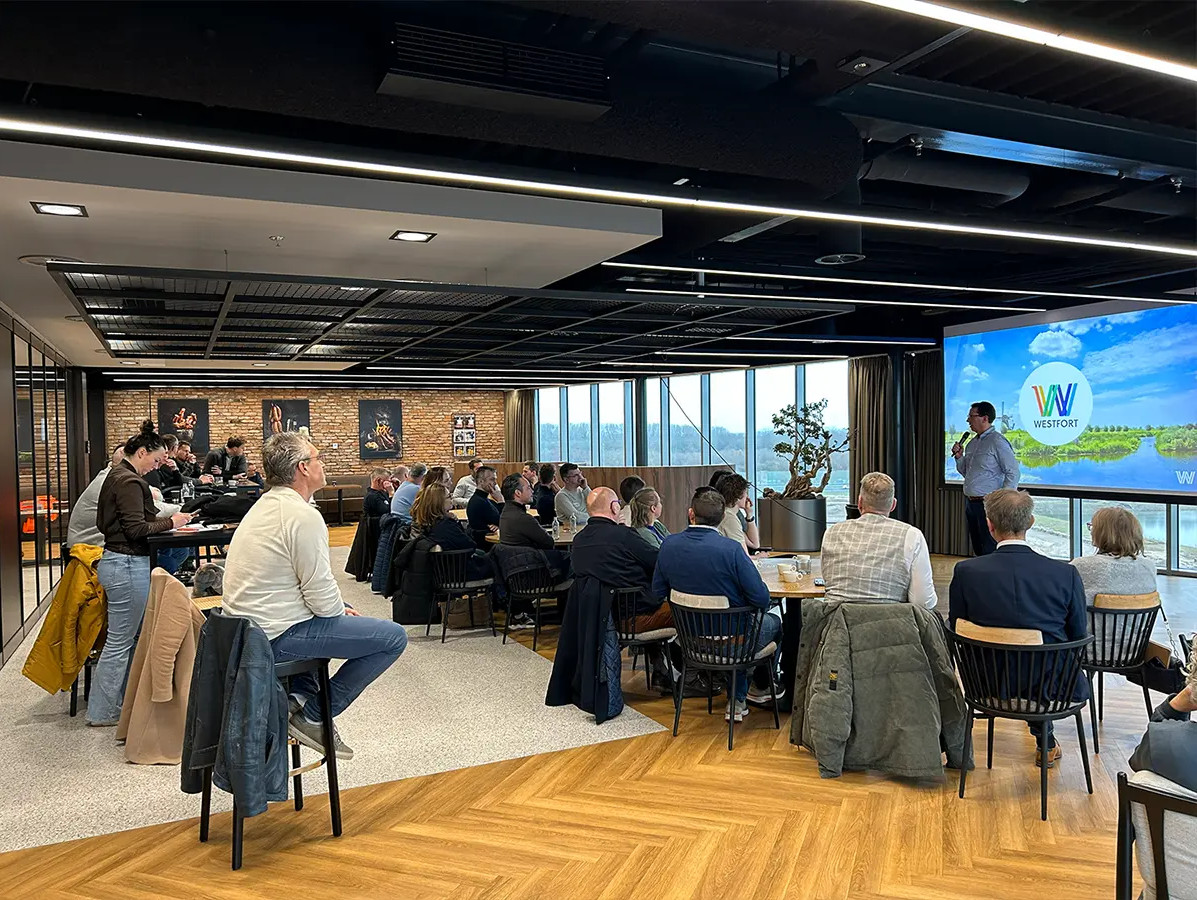
Planning plays a central role in managing complexity and safeguarding quality within the company. Robbert emphasised that working in flow with high volumes is only possible when everything is tightly planned. “Production planning takes the pressure off the production floor. Employees can focus on execution and optimisation, supported by real-time feedback, instead of constantly having to make ad-hoc decisions. At the same time, feedback from operations remains essential: our people continuously assess whether the planning is right and where adjustments are needed.”
Finally, Supply Chain Director Jaap de Wit introduced the visitors to supply chain collaboration through Smart Farming. By using smart ear tags and data collection, Westfort and its suppliers gain insight into, among other things, animal health, antibiotic use and origin. This enables additional product guarantees, improves audits and strengthens collaboration across the chain—from farmer to customer.
The visit demonstrated how Westfort combines engineering, technology and people development to continue meeting high standards in safety, food safety and economic efficiency. An inspiring example of how innovation is not only found in machines, but above all in people and collaboration.
Are you open to giving other food producers a look inside your operation? Let us know!
Source: Vakblad Voedingsindustrie 2026
Magazine Voedingsindustrie has been made possible in part by:



© COPYRIGHT 2026 VOEDINGSINDUSTRIE | ALLE RECHTEN VOORBEHOUDEN
Powered by Wallbrink Crossmedia © 2026