
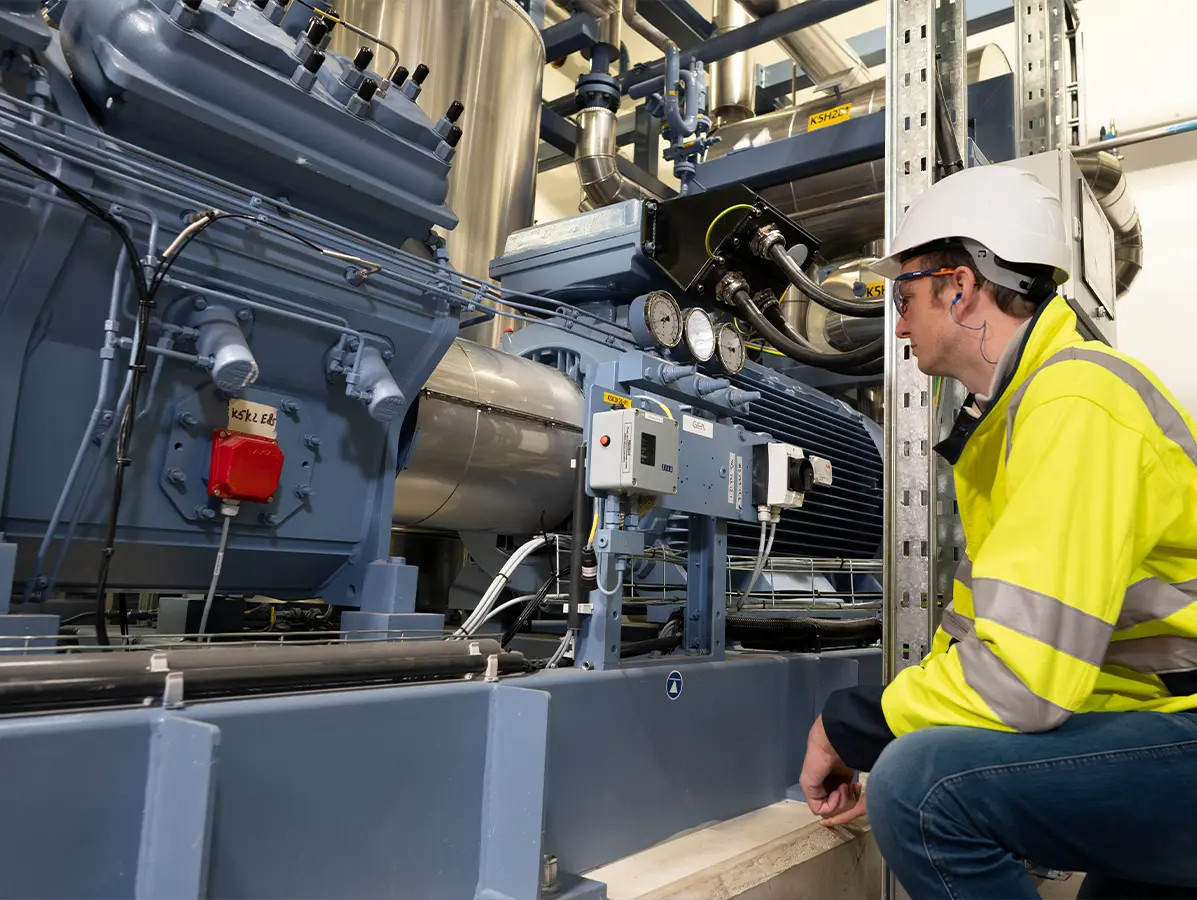
Baby and infant nutrition producer Ausnutria had an ambitious plan: to build a future-proof, efficient, gas-free factory for the production of baby and infant nutrition. The new construction project ‘Moon’ in Heerenveen is living proof that ambitions can indeed be turned into reality. This has been made possible in part thanks to the efforts of GEA.
With more than 100 years of experience in dairy production and 70 years in the development and manufacture of infant formula, Ausnutria has a clear focus on the future. It is no coincidence that the company applied for a large electricity connection (20 MW) even before construction of the new factory in Heerenveen began. Once this connection was granted, Ausnutria was able to put its ambitious plans into practice. The capacity would be able to supply enough power for the entire factory as well as future expansions.
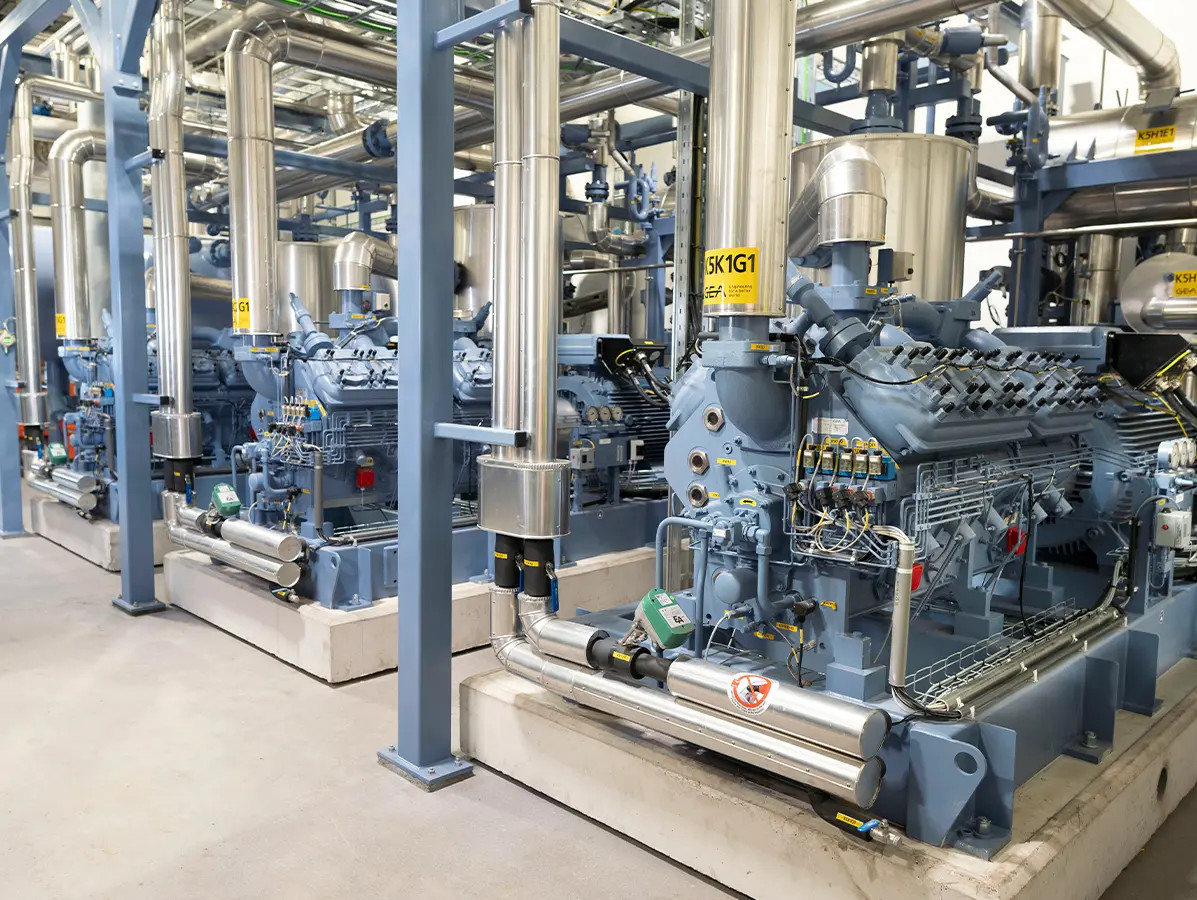
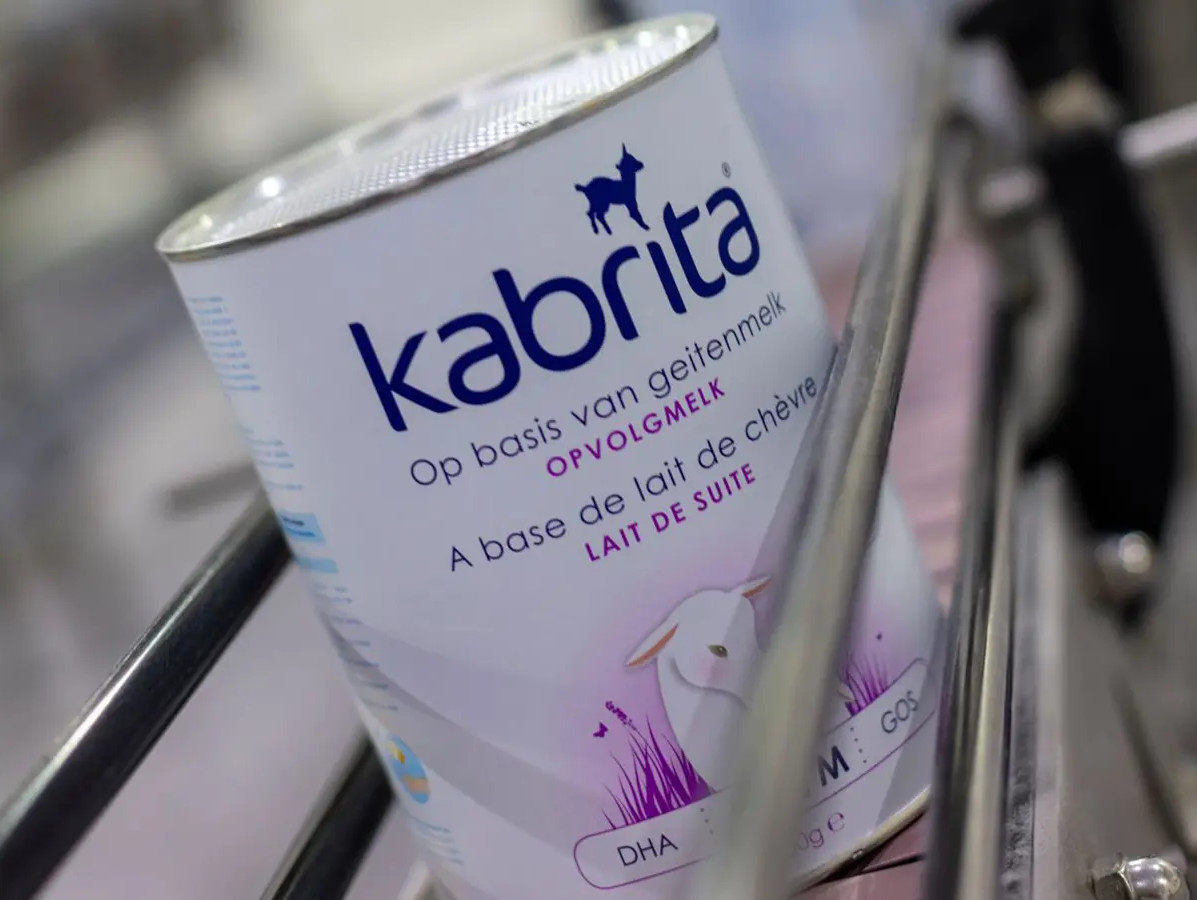
At Ausnutria’s factory in Heerenveen, goat’s milk is upgraded step by step into a powdered base for baby and infant nutrition. Several stages of the production process require heat, while others require cooling. In most factories, heat is generated by a gas-fired boiler and cooling by an electrically driven refrigeration system that discharges residual heat to the outside. Ausnutria deliberately chose a different approach for its Heerenveen facility.
“About five years ago, Ausnutria asked us whether we could install a heat pump capable of delivering temperatures of around 90 to 95 degrees Celsius,” recalls Rinus Sinke, Sales Manager Heating & Refrigeration Solutions at GEA. GEA Refrigeration Netherlands is a major supplier of components and systems for the food, beverage and pharmaceutical industries. Its portfolio includes heat pumps, refrigeration compressors and advanced process technology. “At that time, there were only a limited number of industrial heat pumps on the market that could provide the high temperatures required for their production process,” he continues. “GEA did have a heat pump suitable for this application, but it had not yet been fully released for sale. We accepted the challenge and delivered a high-temperature heat pump installation using ammonia as the refrigerant. This natural refrigerant also aligned well with Ausnutria’s sustainability objectives.”
For the factory, it is essential that sufficient heat and cooling are available at all times to keep production running. “A heat pump does not generate heat on its own; it transfers energy from a lower to a higher temperature level. That is why it is so important to align supply and demand,” Rinus explains. “The heat released during the cooling process is used as the input temperature for the heat pump. In this way, condenser heat from the refrigeration system that previously went to waste is upgraded into usable heat. If the heat pump is temporarily unavailable, an additional electric element that we have integrated can take over. And if more cooling capacity is needed to generate heat for the heat pump, that is not an issue either. We have set up additional cooling processes, including extra cooling of wastewater, to ensure sufficient heat input for the heat pump. Finally, heat and cold buffers help to create stability. This approach ensures a continuous and optimal balance between heat and cooling demand.”
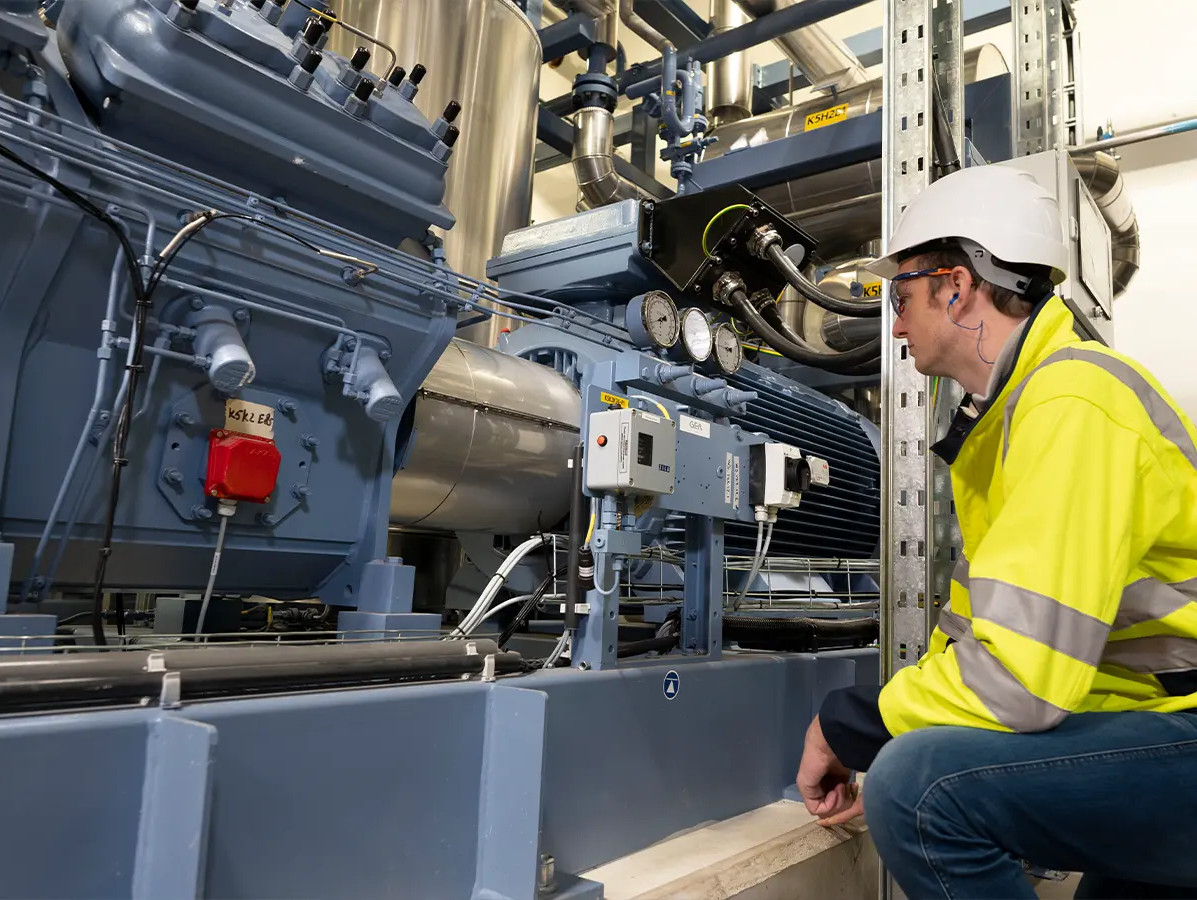
“The end result is something to be proud of,” says Jelte Smits, project manager Moon at Ausnutria. “Current energy consumption is approximately forty percent lower compared to a conventional factory with a gas-fired installation. But we are not there yet. The spray dryer, for example, is still equipped with a ‘hybrid’ solution. The first part of the heat comes from the existing heat pump installation, while the higher temperature stage is still electrically heated. With the installation of a ‘steam’ heat pump, we expect to increase our savings to 52% in the future.”
In October 2025, Ausnutria received the ‘Sustainable Project Award’ for the Moon project during the Industrial Heat & Power trade fair. This award is presented annually to the most inspiring and innovative industrial sustainability project in the Netherlands. The professional jury, chaired by Olof van der Gaag (Chair of NVDE), assessed the nominees on courage, complexity, impact on CO₂ emissions and contribution to the energy transition. According to the jury, the Moon project is not only technologically advanced, but also sends a powerful message to the industry: sustainability on an industrial scale is achievable when vision, collaboration and perseverance come together.
Source: Vakblad Voedingsindustrie 2026
Magazine Voedingsindustrie has been made possible in part by:



© COPYRIGHT 2026 VOEDINGSINDUSTRIE | ALLE RECHTEN VOORBEHOUDEN
Powered by Wallbrink Crossmedia © 2026