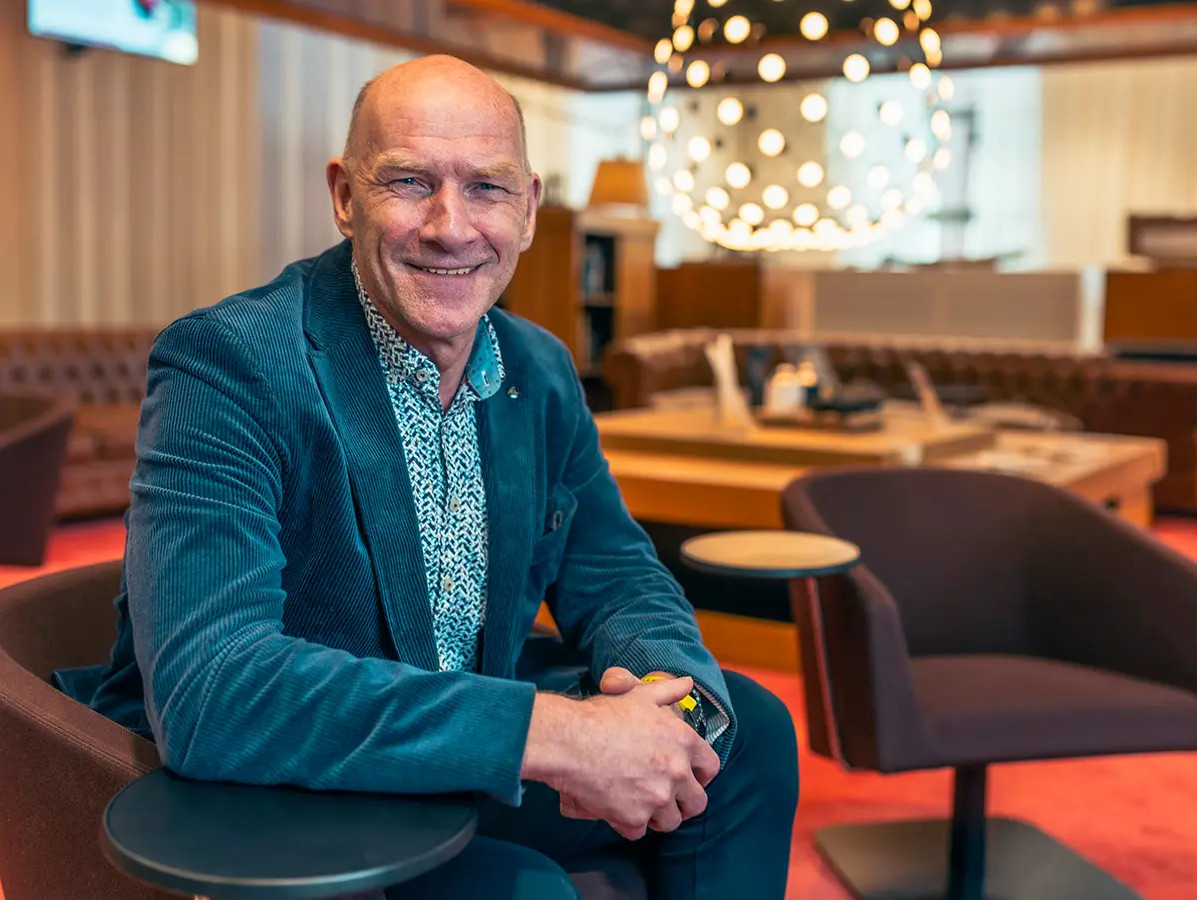
For years, Wyno Zwanenburg barely left his pig farm in Odiliapeel; today, his work takes him all over the world. His farming background proves invaluable when dealing with the complex issues that come his way. How does he ensure that the new innovation fund from Brussels also benefits the food sector? “Everything comes down to timing.”
Sometimes, Wyno Zwanenburg (62) feels like a kind of ‘behind the scenes go-between’, as he puts it himself. In the three domains in which he operates as an independent professional – policy, business and knowledge – people do not always speak the same language. “The scientific world often lacks a commercial mindset, and business and public administration are not always well aligned either.” We talk with Wyno about his work at this intersection, at his base in Agri&Food Plaza in ’s-Hertogenbosch; the location where, among others, FoodNL has its offices, the organisation he regularly represents in Brussels.
Laughing: “A long story. At just 21, I took over work on our pig farm because my father fell ill. Twelve years later, in 1996, I took over the neighbouring farm as well. A year later, swine fever hit. Our business was right at the epicenter; all pigs had to be culled. By sheer coincidence, I ended up on the crisis team tackling the swine fever outbreak. After that, it was full throttle, because the business had been at a standstill for eighteen months and there were no compensation schemes. In 2001, the foot-and-mouth disease crisis followed. Once again, I was asked to help assess the issues at hand. From that point on, intensive livestock farming came under a magnifying glass, and I was increasingly asked to share my views on the sector. Our children were getting older, my wife took on a more active role in the business, which gave me more room for governance and representation, such as becoming national chair of the Dutch pig farmers. That is how I regularly found myself at the table in The Hague and Brussels.”
“When my wife and I both turned fifty – by then we had also taken over another neighbour’s pig farm – we decided to dismantle and sell the business. For several reasons: our children were pursuing their own paths, new legislation was on the horizon, and staffing was becoming an ever bigger challenge. And I wanted to further develop my work outside pig farming, to spread my wings. In 2015, I started as an independent consultant. My farming background is a major asset: I understand how supply chains function and how policy translates into practice.”
“Policy covers both political matters – lobbying, in my case – and administrative issues such as legislation and its implementation. I also advise supply-chain partners on agrifood issues, both nationally and internationally – that is the business side. Many issues we face in the Netherlands also play out abroad, and there is enormous interest in how we approach them. For example: how do you produce efficiently using limited resources? But also: reducing antibiotics and addressing other environmental challenges. Working abroad also brings a certain fun factor: beyond our borders, Dutch professionals from our sector are often welcomed with the red carpet rolled out. Our knowledge, expertise and solutions are highly valued. It is a shame that our sector is not appreciated in the same way at home. The moment you land at Schiphol, someone is already pointing a finger.”
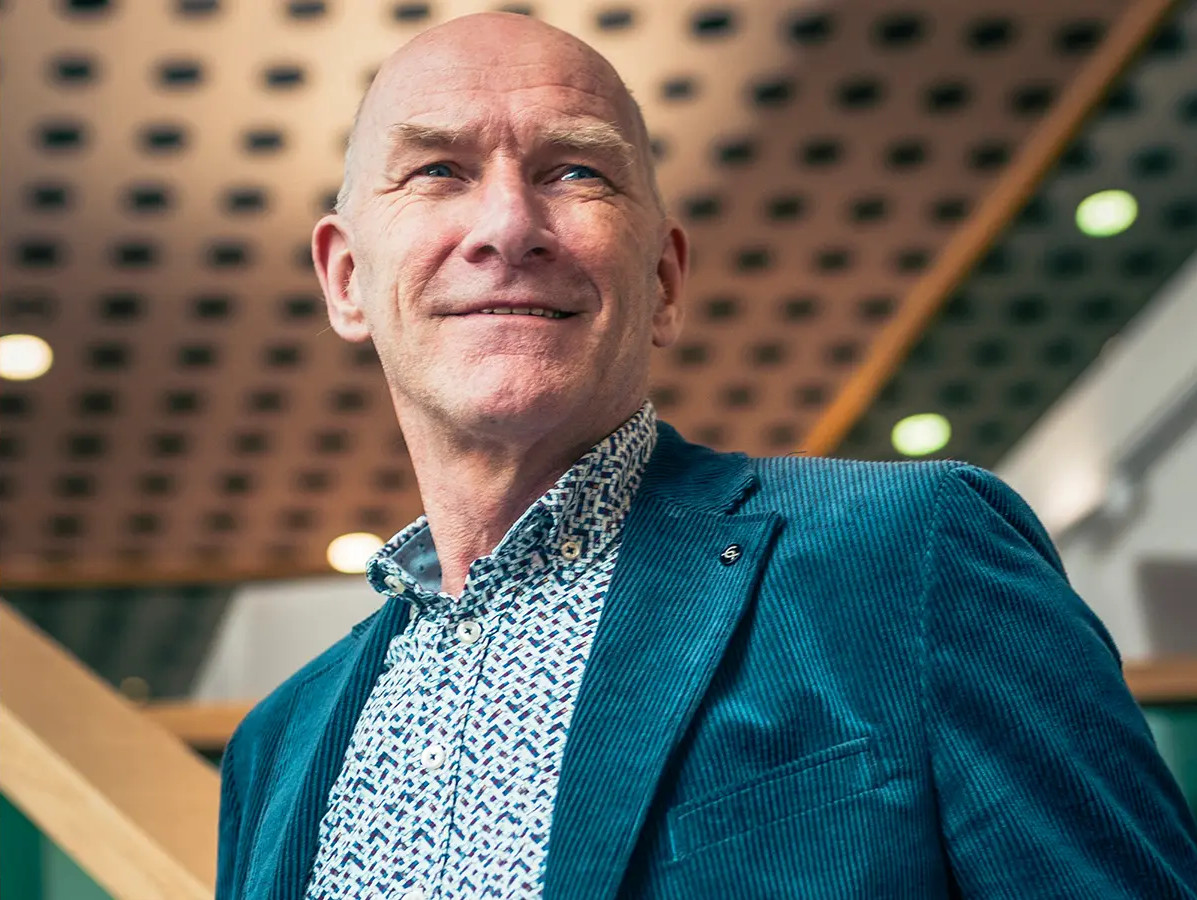
“Partly the sector itself, which has made mistakes – myself included. For a long time, we allowed consumers to drift away from us; we were mainly focused on our own world, on our own little island. I noticed this when I hosted visitors on my pig farm. They often arrived sceptical, but after my tour and explanation, they left enthusiastic. Fortunately, we are now catching up. Consumers demand transparency; they want to know where their food comes from and how it is produced.”
“That’s right. I work, for example, for WUR, including on expert missions abroad. WUR is then asked to assess supply-chain integration, for instance in China. Often, specialists in specific sub-fields are consulted. Because of my practical perspective, I am asked to share my views on these dossiers. I travel to China regularly, although we do notice that they are gradually becoming more reserved. They need us less; the pig farming sector there is becoming ‘mature’. That has happened at record speed, within a single generation. Even so, there are some things they will never master quite the way we have. For the development organisation PUM, I also work in Asia and Africa. Those international visits are both enjoyable and highly educational. And sometimes we combine those business trips with a holiday; my wife then joins me afterwards.”
“FoodNL is a collaboration between four key agrifood regions in the Netherlands: AgriFoodCapital, FruitDelta Rivierenland, Greenport Venlo and Regio Foodvalley. Regions that previously all tried, individually, to highlight their importance to Members of the European Parliament and the European Commission. That could be done more effectively and efficiently. So they joined forces within FoodNL. I helped develop a joint strategy, which now focuses on two themes: protein innovation, and food and health. Within protein innovation – previously referred to as ‘protein transition’ – an interesting shift is taking place in Brussels. The focus is increasingly on making existing protein sources more sustainable, rather than prioritising plant-based alternatives alone. One example: there is now a search for alternative protein sources to soy in animal feed. Simply using feed sourced closer to home within Europe already leads to a significant reduction in CO₂ emissions. I also maintain close contact with other lobbyists. We keep each other informed and exchange views on key positions.”
“The EU’s budget is being overhauled. Agricultural policy will soon face a 30% cut. That money will be redirected to an innovation fund, and member states will be free to decide how to allocate it. What I am somewhat concerned about is that this budget may mainly flow to ‘sexy’ sectors such as high-tech. So I am actively working to convince relevant stakeholders – Members of the European Parliament and politicians in The Hague – not to lose sight of the agrifood sector. Because innovation and ideas are abundant there as well. Food processing, for instance, can be made even more efficient, by developing technologies that make better use of nutrients or prevent waste. Fortunately, agriculture receives far more attention than it did twenty years ago; it is almost daily in the news now. That certainly helps.”
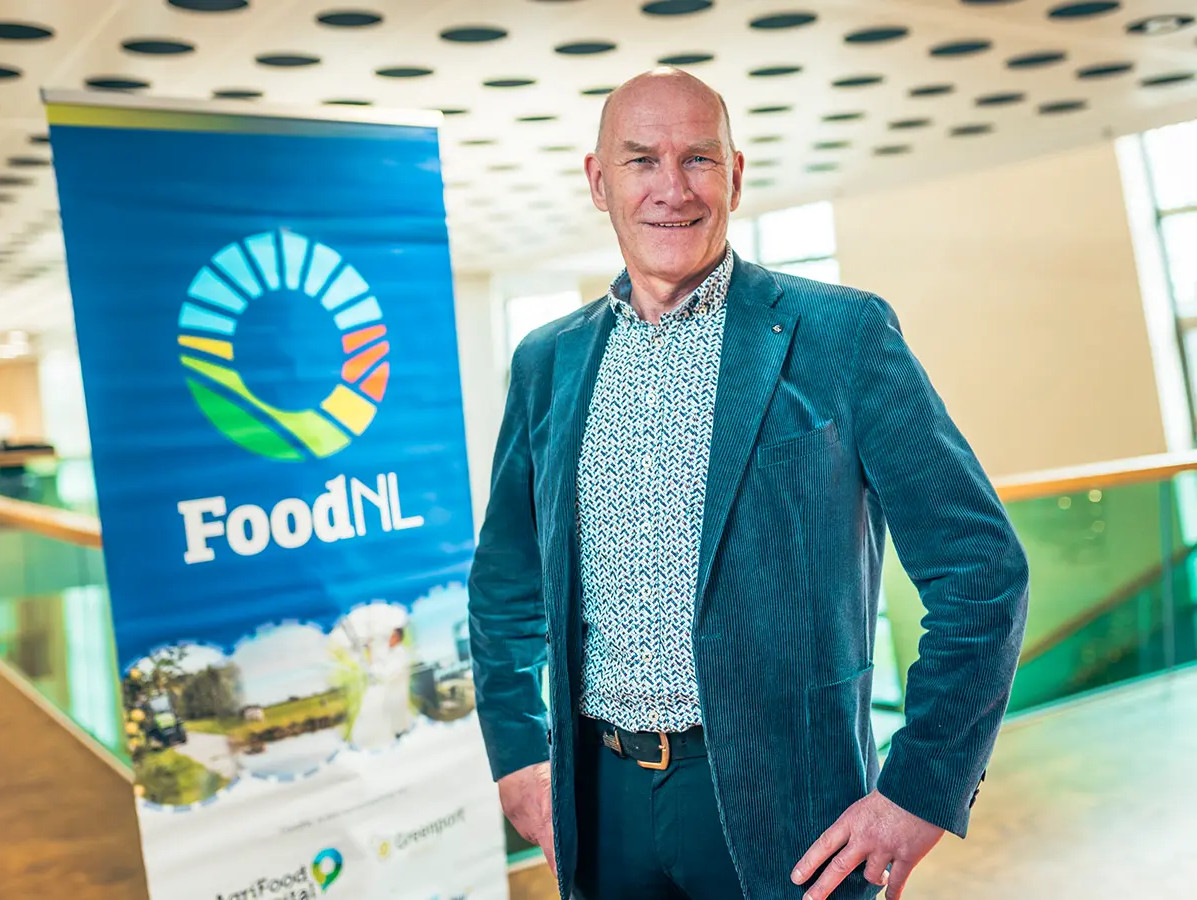
“The pace in Brussels is indeed slower, although it is very much a case of all or nothing. And everything revolves around timing. The key is to closely monitor the decision trees of different policy themes. Now that the budget is changing, I need to know exactly when issues fall into place and when I should be having coffee with whom. Yes, that does require a certain instinct, but all those crises have taught me how power dynamics develop and how such dynamics work.”
“They are absolutely vital. The four FoodNL regions are home to countless startups, and of course we also represent their interests. Field labs provide a place to, as we say here, ‘tinker and mess around’. In other words: to experiment freely, without the heavy responsibility that comes with other links in the supply chain. Although those parties are often keen to observe whether innovations have market potential.”
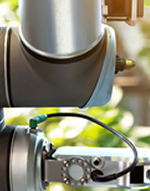
“By the way, whereas AgriFoodCapital used to focus more on food production, the processing industry is becoming increasingly important. So let this be a call to action: if food processors, machinery builders or technology suppliers from one of the four regions run into challenges related to innovation or policy, do not hesitate to contact me or FoodNL. By now, we have accumulated so much knowledge, expertise and connections at many different levels. There are numerous examples of innovation trajectories around digitalisation and automation, like this innovation from Pascal Processing.”
“Thanks to the Dutch drive for innovation, our sector is firmly on the global map – and that position must be maintained. But there does need to be a critical mass willing to embrace innovations. Unfortunately, I also see sustainable initiatives fail too often because there is no market for them. At the end of last year, two projects in our region collapsed: an indoor farming concept and a small company producing products from rescued orange peels. Both were highly commendable initiatives, but the business case did not add up. I advocate fact-based innovation: only start something if you know consumers are willing to pay for it. That is also what I wish for the new cabinet: do not attempt to force new paths through unworkable legislation, but show some flexibility.”
“Not at all. I thoroughly enjoy the diversity of my current work. And I finally have my weekends back!”
Photos: ©Studio 38C
Source: Vakblad Voedingsindustrie 2026
Magazine Voedingsindustrie has been made possible in part by:


© COPYRIGHT 2026 VOEDINGSINDUSTRIE | ALLE RECHTEN VOORBEHOUDEN
Powered by Wallbrink Crossmedia © 2026