
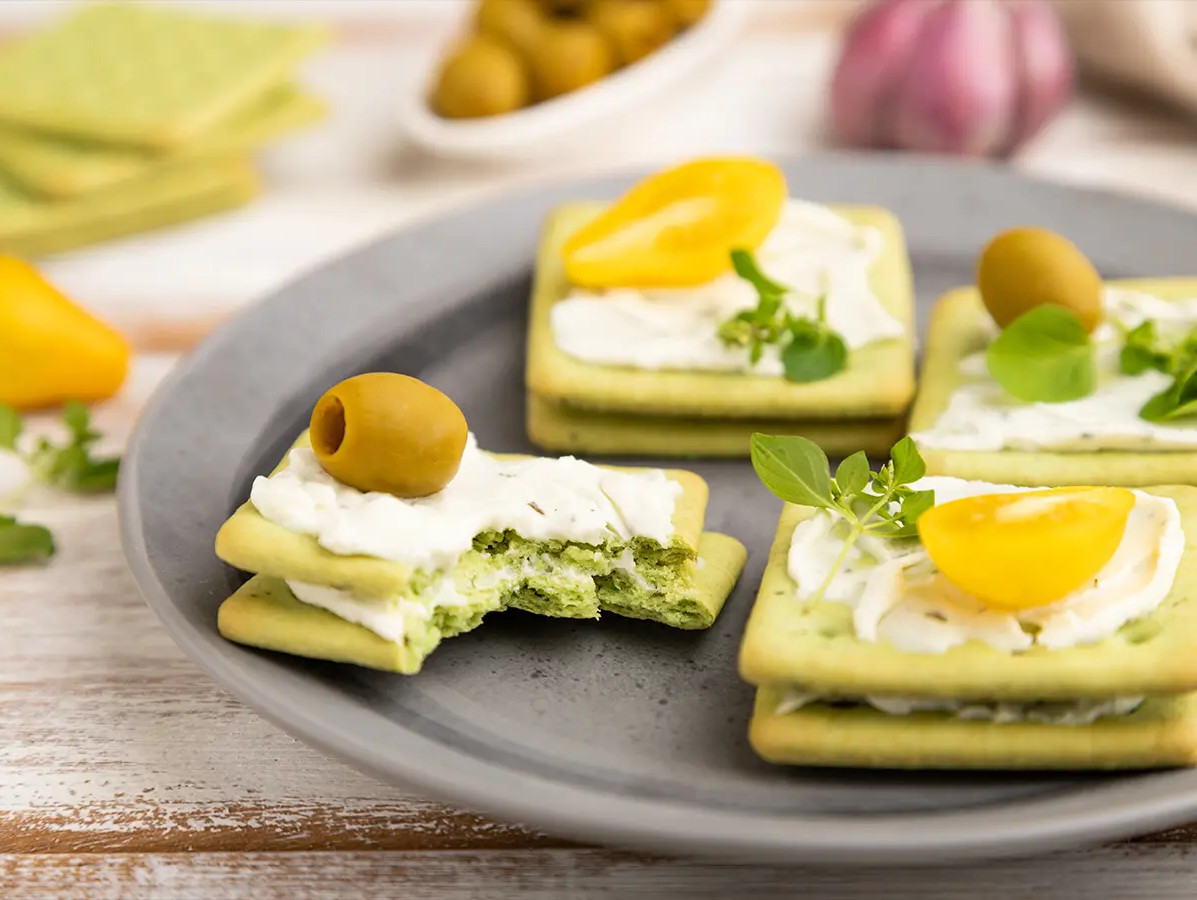
Consumers are making more conscious choices for healthy and sustainable food. As a result, an increasing number of products based on vegetables and fruit are entering the market, such as beetroot wraps, cauliflower pizza bases and puffed corn snacks. The production of these foods sometimes involves high temperatures. This can lead to the formation of process contaminants, such as acrylamide. But is that actually healthy?
About 25 years ago, it was discovered that acrylamide can form in heated products such as fries, crisps, biscuits, coffee, breakfast cereals and crackers. Acrylamide has been classified by the IARC (International Agency for Research on Cancer) as ‘Group 2A’, meaning it is probably carcinogenic to humans. According to EFSA (European Food Safety Authority), acrylamide is neurotoxic, genotoxic and carcinogenic, and may have toxic effects on the reproductive system. Because of these properties, the European Commission has established benchmark levels (the so-called BMLs) to protect public health (EU Regulation (EU) 2017/2158). Maximum limits (MLs) for acrylamide are currently being developed. Additional BMLs may also be established for specific products, such as vegetable crisps (EU Regulation (EU) 2019/1888).
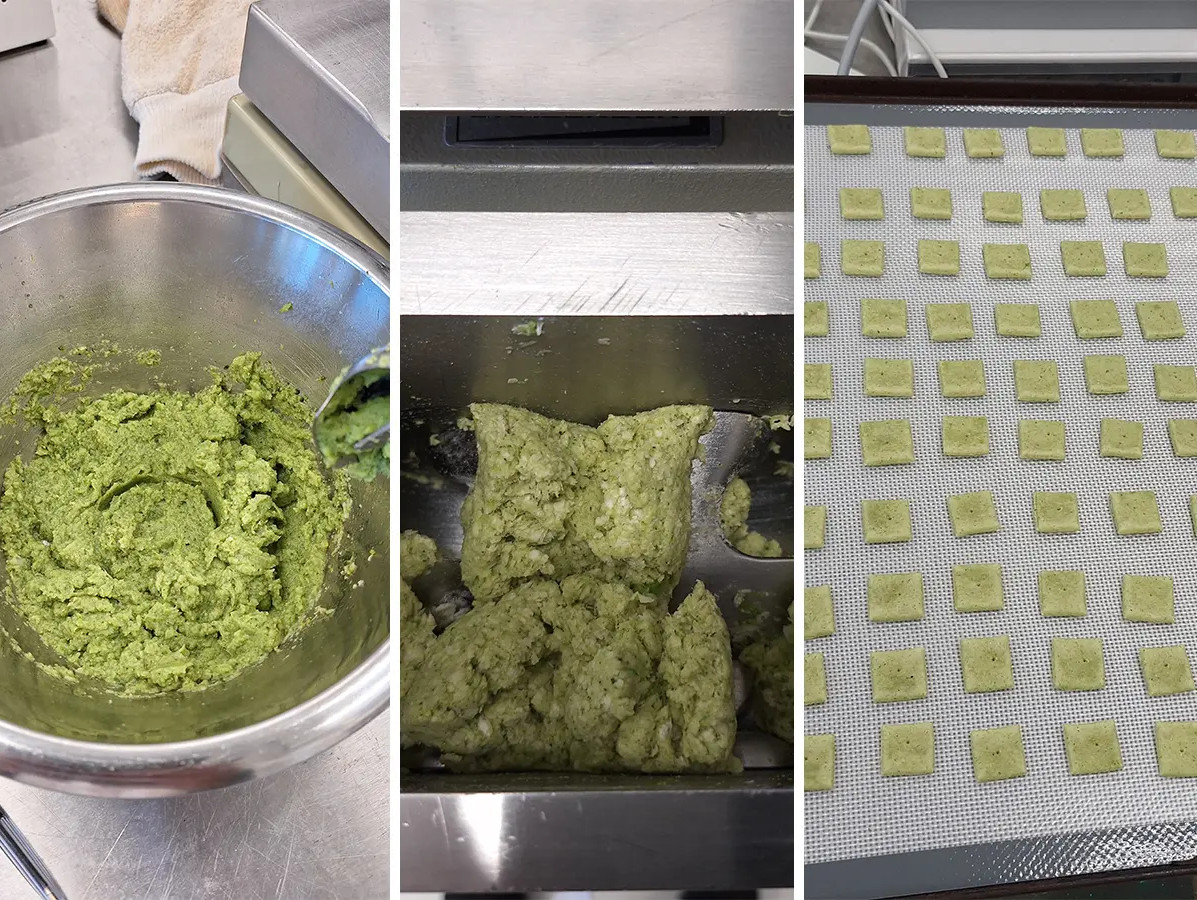
Making purée – kneading the dough – baking the crackers
Since the discovery of acrylamide, the industry has taken measures, based on research findings, to prevent or limit its formation. For example, the concentration of asparagine (a precursor for acrylamide formation) can be reduced by washing ingredients or by using asparaginase, and processing conditions such as time and temperature can be adjusted. Thanks to these types of measures, acrylamide levels in well-known starch-rich snacks have decreased drastically over the years.
However, several studies show that acrylamide levels can increase when vegetable and fruit ingredients are used. The current trend of replacing traditional ingredients with vegetables and fruit may, therefore, potentially lead to higher acrylamide levels in these products. Wageningen Food Safety Research, together with Wageningen Food & Biobased Research, both part of Wageningen University & Research (WUR), investigated the safety of healthy crackers. We, the authors of this article, examined what happens to acrylamide levels when traditional wheat flour is replaced by vegetable-based flours.
We produced two batches of crackers based on a realistic recipe consisting of broccoli purée (41%), potato flakes (30%), flour (13%), pre-gel maize starch (10%), sugar (2%), lecithin (1%), and sunflower oil (1%). In the first batch, we replaced standard wheat flour with oat flour, maize flour or carrot flour. We then prepared the crackers with and without sugar, in order to determine the effect of sugar on acrylamide levels. The crackers were produced at pilot scale (20 × 20 mm and 2.2 mm thick) and baked in two steps: first for 2 minutes at 190 °C and then for 30 minutes at 115 °C. These settings correspond to industry scale production. In the second batch, we tested four other vegetable-based flours (red beetroot, parsnip, spinach and sweet potato), with sugar added in all cases.
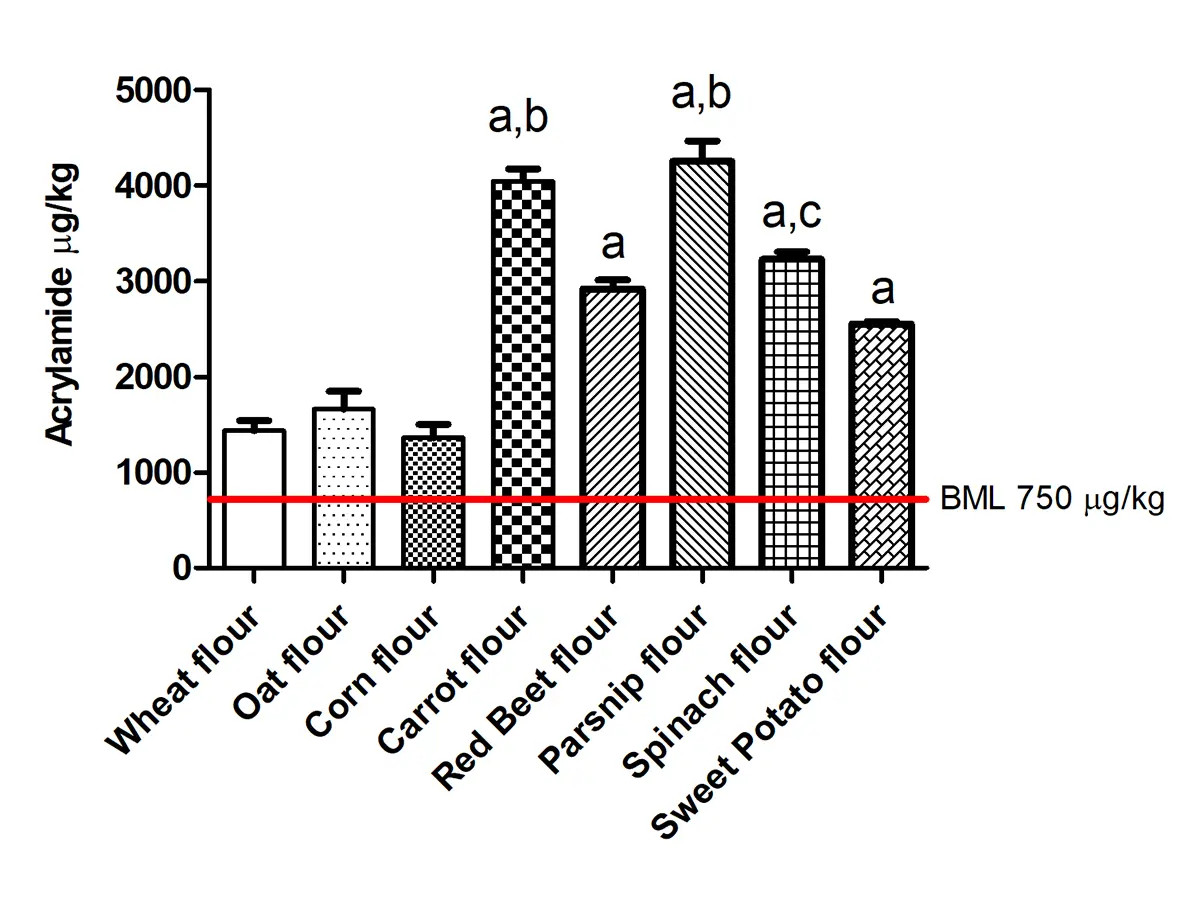
Figure 1 – Acrylamide levels
After baking, acrylamide levels were analysed using LC-MS/MS (liquid chromatography–tandem mass spectrometry). We observed minor difference between the recipes with and without sugar. Apparently, the separate addition of sugar (approximately 2%) has little effect on acrylamide formation, as free sugars are already present in excess from the cereals and vegetables in the ingredients used. We did find a significantly higher acrylamide level (p < 0.001) in crackers made with carrot flour compared with cereal-based crackers (wheat, oat, maize) in the first batch. In the second batch with other vegetable-based flours, we again found significantly higher acrylamide levels (p < 0.001) in the vegetable crackers compared with traditional cereal-based crackers. Figure 1 shows the results of both experiments. Carrot and parsnip flour resulted in the highest acrylamide levels.
Acrylamide formation is influenced by the presence of free reducing sugars. Therefore, the levels of glucose, fructose and total sucrose in the flours were determined using HPAEC-PAD (High-Pressure Anion Exchange Chromatography – Pulsed Amperometric Detection). Figure 2 shows a positive correlation between fructose levels and the acrylamide levels found in the crackers (R² = 0.90). This finding is consistent with the scientific literature and with an earlier kinetic model for acrylamide formation developed at WUR.
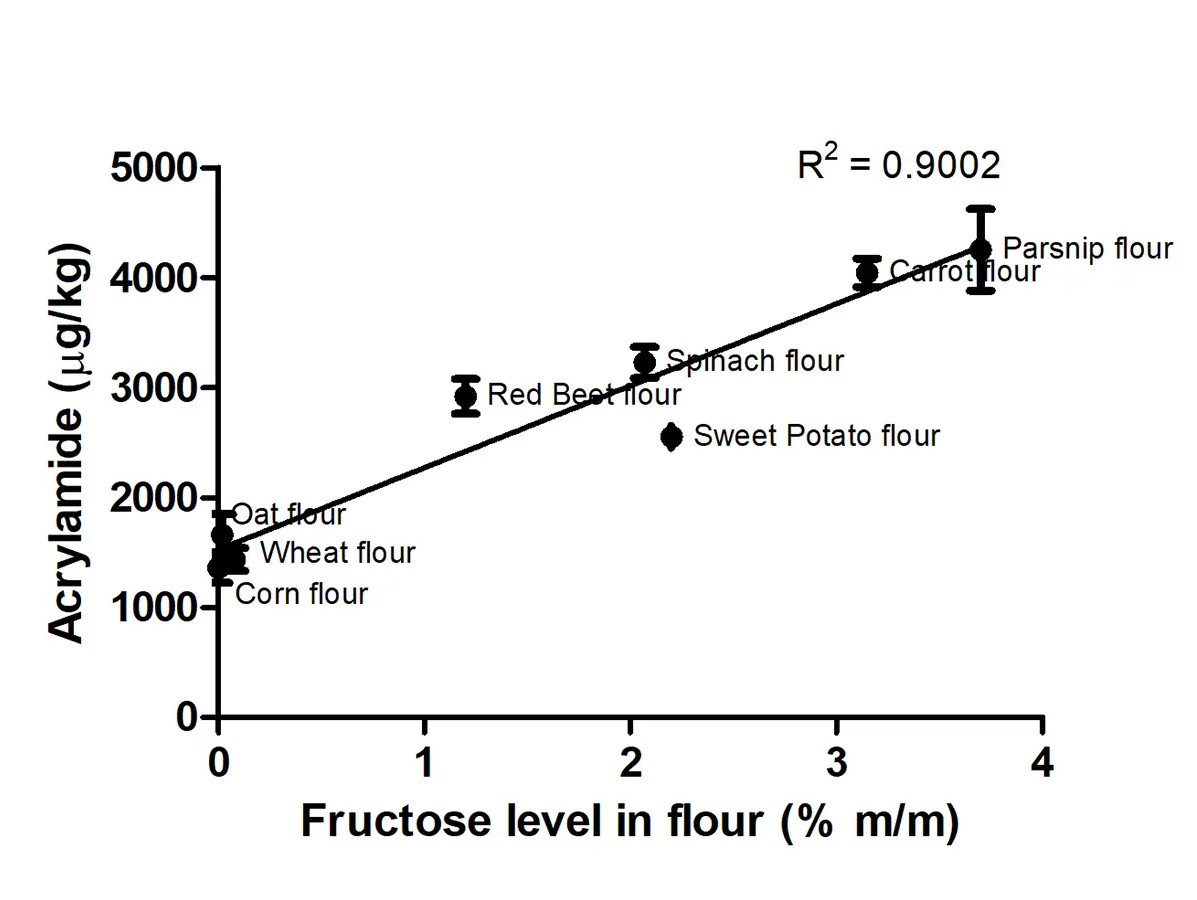
Figure 2 – Correlation between fructose levels and observed acrylamide levels
Our experiments show that cereal-based crackers had acrylamide levels above the BML of 750 µg/kg for potato-based crackers. To limit acrylamide formation, the time–temperature combinations used for baking these crackers would need to be adjusted. More concerning, however, are the higher acrylamide levels found in vegetable-based flours. In some cases, concentrations were up to three times higher than in traditional crackers. Our conclusion is therefore that not only time–temperature combinations are important, but that the choice of ingredients for cracker production also requires additional attention and research. Snacks based on vegetables are often seen as a healthier alternative to traditional snacks. When it comes to acrylamide formation, however, the opposite is often true. Further research is needed to gain insight into acrylamide levels in snacks currently on the market. In particular, vegetable- and fruit-based snacks for toddlers and young children should be investigated further, in order to limit exposure to acrylamide in this vulnerable group wherever possible.
Companies aiming to meet the growing demand for healthier, more sustainable products must realise that baked products made with these ‘new’ ingredients may contain higher concentrations of acrylamide. More research is needed to understand consumer exposure to acrylamide through these types of snacks. WUR is looking for partners who wish to continue this research and gain insight into preventing acrylamide formation in healthier snacks.
Acknowledgements
We would like to thank Eric Raaijmakers for producing the crackers in the WUR pilot facility, Olrik Eijffius and Richetti Look for carrying out the acrylamide analyses, and Martijn Walsem for analysing the reducing sugars in the various flours. We also thank the project partners – Quorn, LambWeston, Duynie, and Pepsico – for their valuable input to this study, as well as their financial contribution. The views expressed in this article reflect those of the authors and not necessarily the position or policy of these partners. Financial support from the Topsector Agri & Food (grant number LWV21.144) is gratefully acknowledged.
Source: Vakblad Voedingsindustrie 2026
Magazine Voedingsindustrie has been made possible in part by:



© COPYRIGHT 2026 VOEDINGSINDUSTRIE | ALLE RECHTEN VOORBEHOUDEN
Powered by Wallbrink Crossmedia © 2026