

Smart food processing means going a step beyond traditional, experience-based methods and recipes. If you truly want to improve efficiency, sustainability, and quality, a scientifically grounded approach is essential.
Food production processes are driven by complex, highly interrelated physical and chemical phenomena. Processes such as heat and mass transfer, evaporation, mixing, phase transitions, and structural changes in food matrices occur simultaneously and influence final product properties, process stability, and resource use. Current food processing is still largely based on traditional, experience-driven methods and recipes. This has resulted in countless widely appreciated products, built on proven technologies. For a long time, there was nothing wrong with that. But to improve both sustainability and economic performance, different, new steps are now required.
By making better use of scientific insights, deeper quantitative understanding of individual processing steps can be achieved, enabling food producers to systematically optimise production conditions and equipment performance. This makes it possible, for example, to reduce energy and water consumption, minimise raw material waste and product losses, improve product quality, safety, and shelf life, and achieve more stable and efficient production with less downtime. Many food producers are already actively looking for ways to further optimise the use of water, energy, and raw materials. Wageningen Food & Biobased Research as part of Wageningen University & Research (WUR) supports companies in this effort: they help businesses optimise food processing solutions and future-proof their production processes.
In the short term, process insight leads to more robust operations and more efficient use of resources. In the medium and long term, it forms a foundation for innovation by enabling data-driven process and product development. It facilitates the development of new products and processing concepts that often remain invisible when relying solely on empirical approaches. Scientific insight into food processing therefore supports both immediate efficiency gains and lasting competitive strength in an increasingly demanding market. In this article, Jeroen van Bon – Business Development Manager – and Jacqueline Berghout – Scientist – highlight three concrete examples of successful cases in smarter food production.
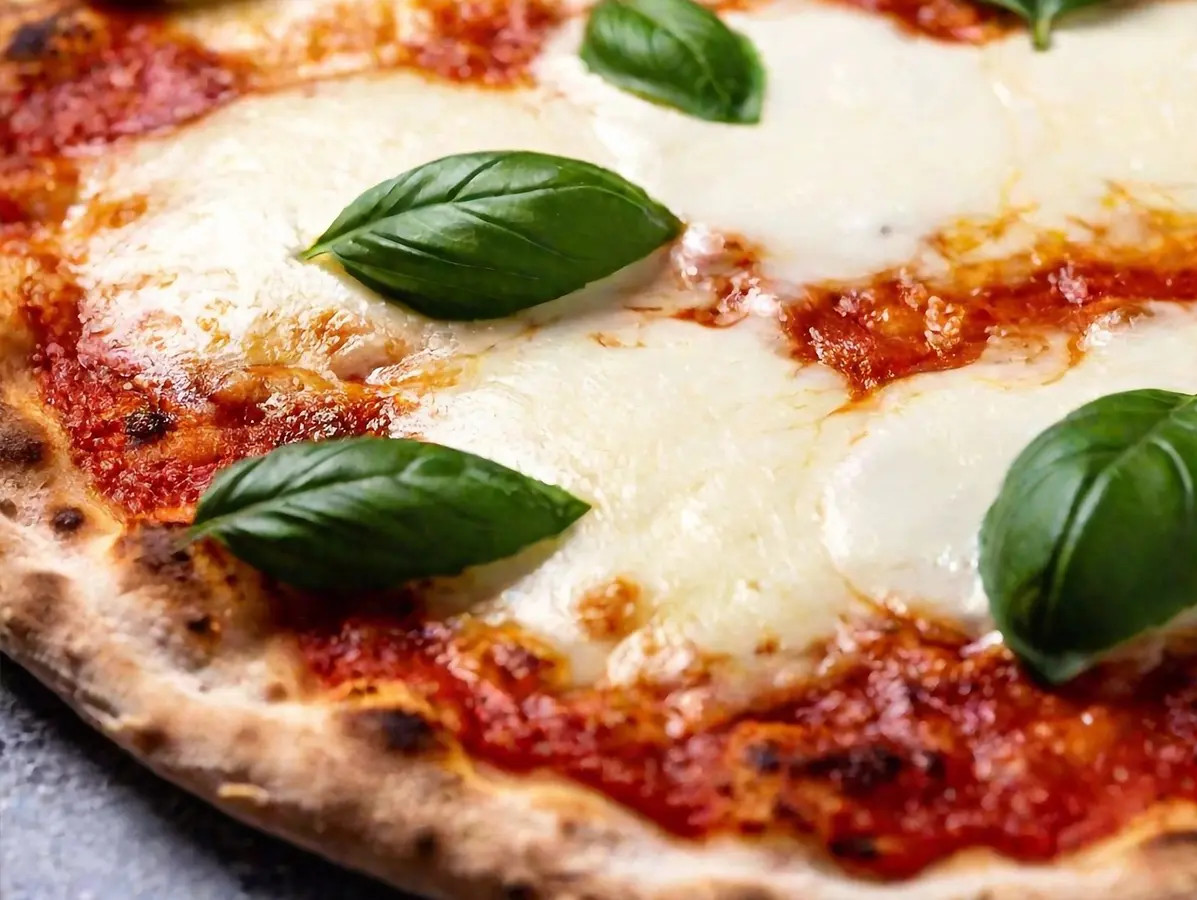
A project partner of WUR encountered significant challenges when translating laboratory experiments into the design of a large-scale process for mozzarella cheese production. The gap between lab tests and industrial-scale processing created uncertainty when determining the required cooling capacity. This increased the risk of oversized installations. This can easily lead to suboptimal energy use and unnecessarily high investment costs due to excessive cooling capacity.
Fat solidification, the process by which fats transition from a liquid to a solid state, is crucial for product quality. To better understand this process, the researchers developed a predictive model that describes fat solidification as a function of temperature. This established a quantitative link between the temperature profile experienced and the development of the cheese structure. The model provides a scientific framework to both understand and predict the behavior of mozzarella cheese during cooling.
By integrating the fat solidification model into the company’s existing computational fluid dynamics (CFD) simulations, the project partner can now represent the physical processes during industrial-scale cheese cooling far more accurately. These improved simulations allow for more precise sizing of cooling installations, preventing overcapacity. The result is a cooling system that better matches actual process requirements, with lower energy consumption, lower investment costs, and more sustainable production, without any compromise to cheese quality.

A project partner specialising in the production of freshly pressed fruit and vegetable juices deliberately avoids conventional thermal pasteurisation. This allows the company to preserve the fresh taste, aroma profile, and nutritional value of the fruit. However, the strong focus on maintaining the natural sensory and nutritional properties of the raw materials also has a downside. The absence of a heating step results in a relatively short shelf life. Pathogenic and spoilage-causing microorganisms are insufficiently inactivated by mild processing alone.
The researchers focused on identifying and validating non-thermal preservation strategies that extend shelf life while maintaining product quality. In collaboration with the company, the commercially available High Pressure Processing (HPP) technology, already in use at the production site, was systematically validated for effectiveness against relevant pathogenic and spoilage microorganisms. This validation confirmed that HPP is a robust and reliable method for microbial stabilisation, without compromising the fresh characteristics of the juices. Alongside the large-scale use of HPP, Pulsed Electric Fields (PEF) technology was investigated in parallel as an alternative non-thermal preservation method for specific niches. An extensive kinetic study was conducted to quantify microbial inactivation as a function of PEF process parameters. This resulted in predictive models describing which PEF conditions are required to achieve predefined levels of microbial reduction. These models provided a scientific basis for process optimisation and scale-up.
Based on the results, the researchers supported the company in the practical implementation of PEF technology for selected niche applications within the product portfolio. Thanks to both research trajectories, the project partner can now maintain the desired juice quality while significantly extending shelf life. Depending on the technology applied, shelf life can be extended to approximately 21 days with PEF or even up to 60 days with HPP. This improves product safety, reduces food waste, and strengthens commercial viability, without losing the product’s unique quality.
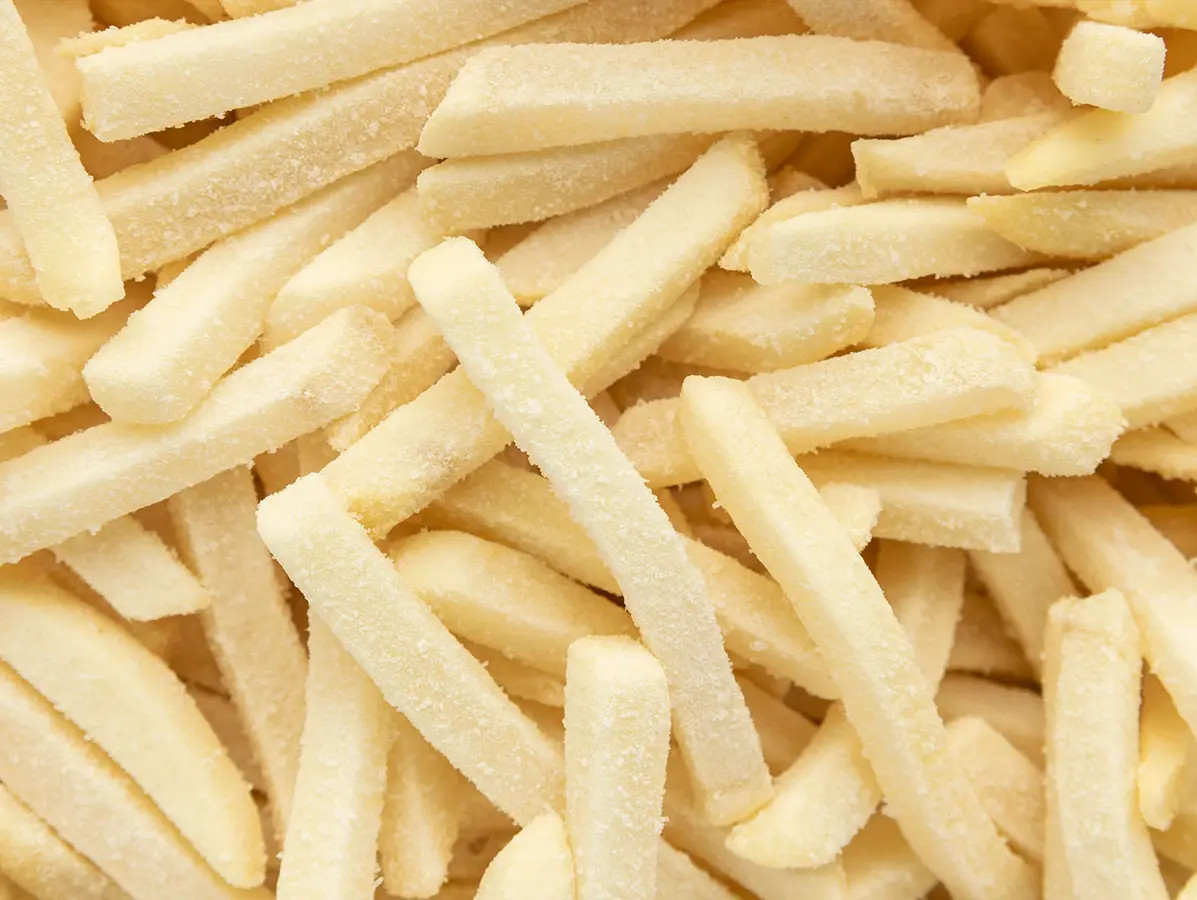
During the final frying step in the production of pre-fried frozen fries, excessive dust formation can occur. This can lead to hygiene challenges, additional cleaning work, and potentially lower product quality. In industrial environments, this issue is particularly relevant because airborne particles can affect process efficiency. Preventing dust formation helps improve both operational robustness and final product quality. Researchers at WUR observed clear similarities between dust formation during the baking of fries and flaking previously observed during the baking of pre-baked French baguettes. In both cases, comparable underlying physical mechanisms—related to moisture transport, structural integrity, and the thermal history of the product surface—play a key role.
By systematically studying these shared physical principles, the researchers demonstrated strong correlations between dust formation and two key process parameters: (1) the moisture content of the fry crust before baking and (2) the freezing rate in the industrial freezing tunnel. Experimental and modelling studies showed that insufficient control of moisture distribution in the crust, combined with unfavorable freezing conditions, leads to brittle surface layers that can partially break down locally under the rapid thermal stress of baking.
The insights obtained formed the basis for optimising the final stage of the fry production process. By adjusting freezing conditions and better controlling the moisture content of the crust, the producer was able to significantly reduce dust formation during baking. This resulted in improved product integrity, fewer hygiene issues, and better final product quality. The example illustrates how fundamental physical insights can be successfully applied across different food processing operations.
Producing smarter yourself
Would you like to know what smarter production could mean for your company? The researchers at WUR are happy to think along with you, from problem analysis to the implementation of solutions.
Source: Vakblad Voedingsindustrie 2026
Magazine Voedingsindustrie has been made possible in part by:



© COPYRIGHT 2026 VOEDINGSINDUSTRIE | ALLE RECHTEN VOORBEHOUDEN
Powered by Wallbrink Crossmedia © 2026





