
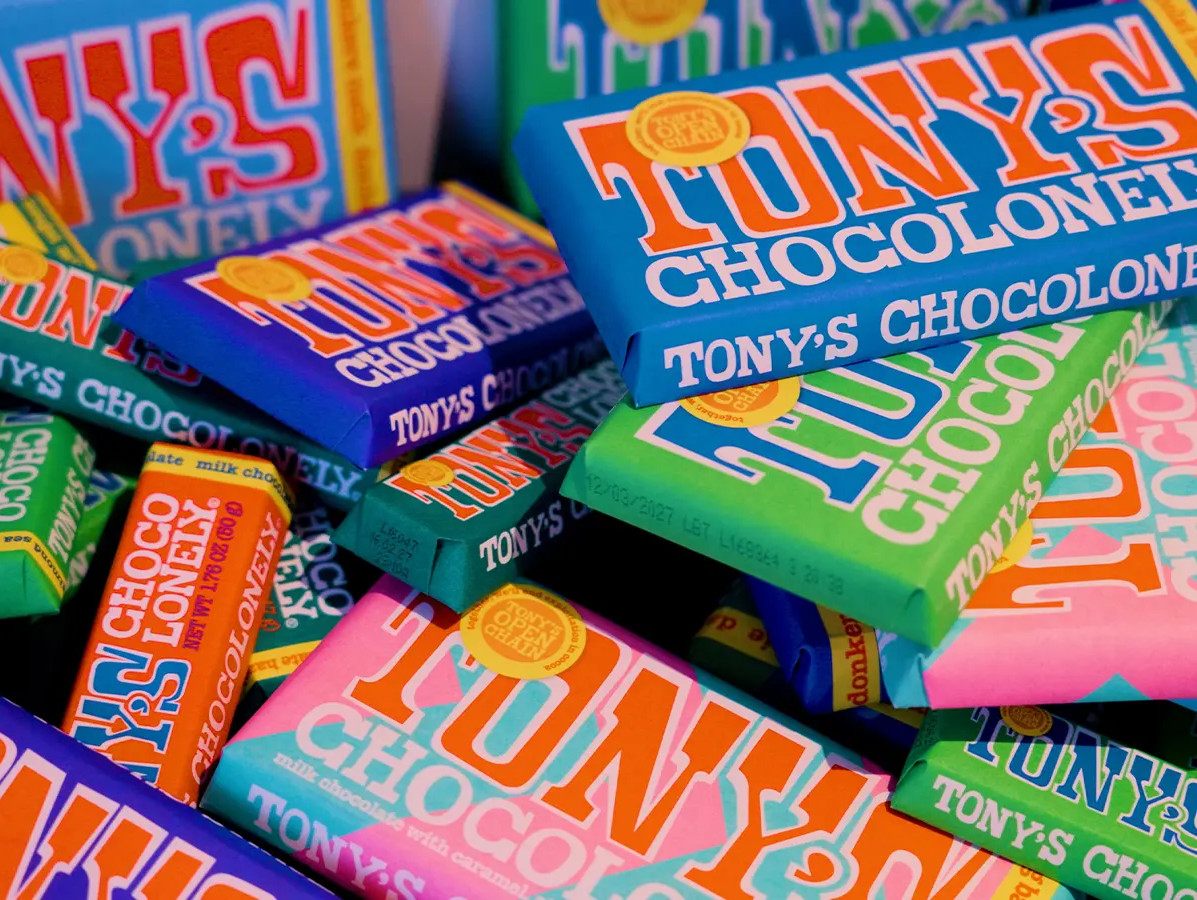
Labeling errors, dependence on servers, and manual work on the production line; for Tony’s Chocolonely, these bottlenecks were holding back growth. By moving the labeling process to the cloud, the company gained stability, control, and a future-proof production environment.
The sound of running lines fills the production area in Borsbeek. Chocolate bars move by at high speed, each with its own weight, flavor, and packaging. The line never stops. Every second counts. And right there, at that speed, lies the challenge of flawless product identification. Across five production lines, data, labels, and packaging come together. Not as separate components, but as one continuous chain that has to run without interruption. A single deviation in data or labeling immediately creates a risk of downtime, rejected products, or corrective work.
At Tony’s Chocolonely, the labeling process operated separately from the ERP system. Operators entered data manually, while label printers were controlled through a local server. The system worked… until it didn’t. Feike van der Werf, Head of IT at Tony’s Chocolonely, recalls the impact. “Our ERP system wasn’t connected to the labeling software. That sometimes led to errors caused by manual input. And if the server went down, for example during a power outage, everything stopped and someone had to travel from Amsterdam to Borsbeek to restart the lines.” Dependence on a physical server made the process vulnerable; not only to disruptions, but also in terms of data consistency and control.
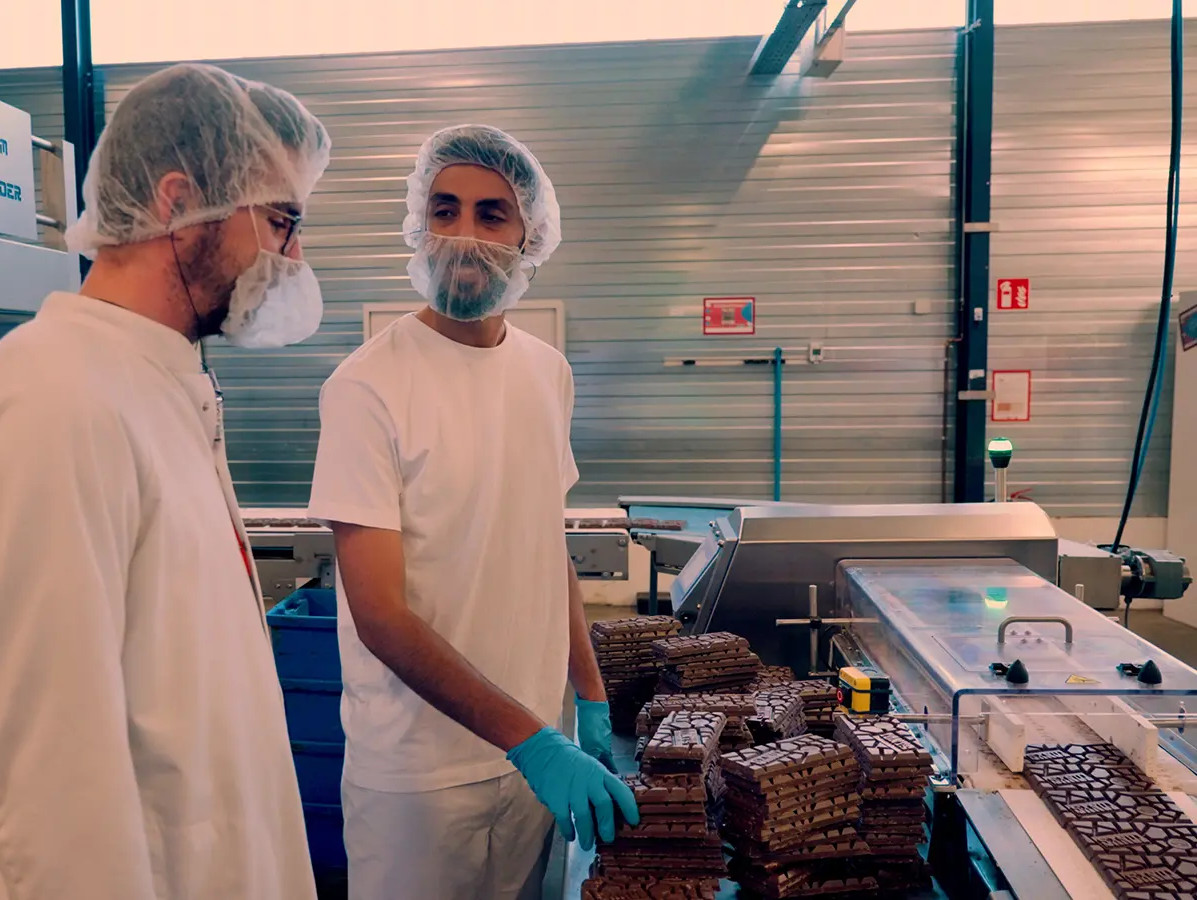
On the production floor, that vulnerability affected every step of the process. Antoine van Delft, Software Expert at De Koningh, saw exactly where the pressure points emerged. “The ERP system was already running in the cloud, but labeling was still local. That created a disconnect in the process. Operators were switching between systems that didn’t communicate with each other.” The situation not only caused inefficiencies, but also raised security concerns: data was stored in multiple locations, while a single source of truth was missing. The need was clear: fewer standalone systems, less dependence on local infrastructure, and above all, greater control over data and execution.
The solution started with mapping out the entire process: from label design to printing and verification on the line. Jean-Paul van Oudhuis, Software Engineer at De Koningh, explains: “We first analyzed the entire process. Then we rebuilt it in three phases. The first phase introduced a hybrid model. The existing label printers remained operational while a connection was established between Microsoft Business Central and Loftware Cloud. The local server temporarily stayed in place as an intermediate layer. Next came the hardware upgrade. Label printers without cloud functionality were replaced by label printers with cloud functionality. In the final phase, the local server was removed from the process altogether. From that point on, all label data came — and still comes — from one central cloud environment, without a local server and without manual settings. That provides full control over versions, access rights, and data flows.”
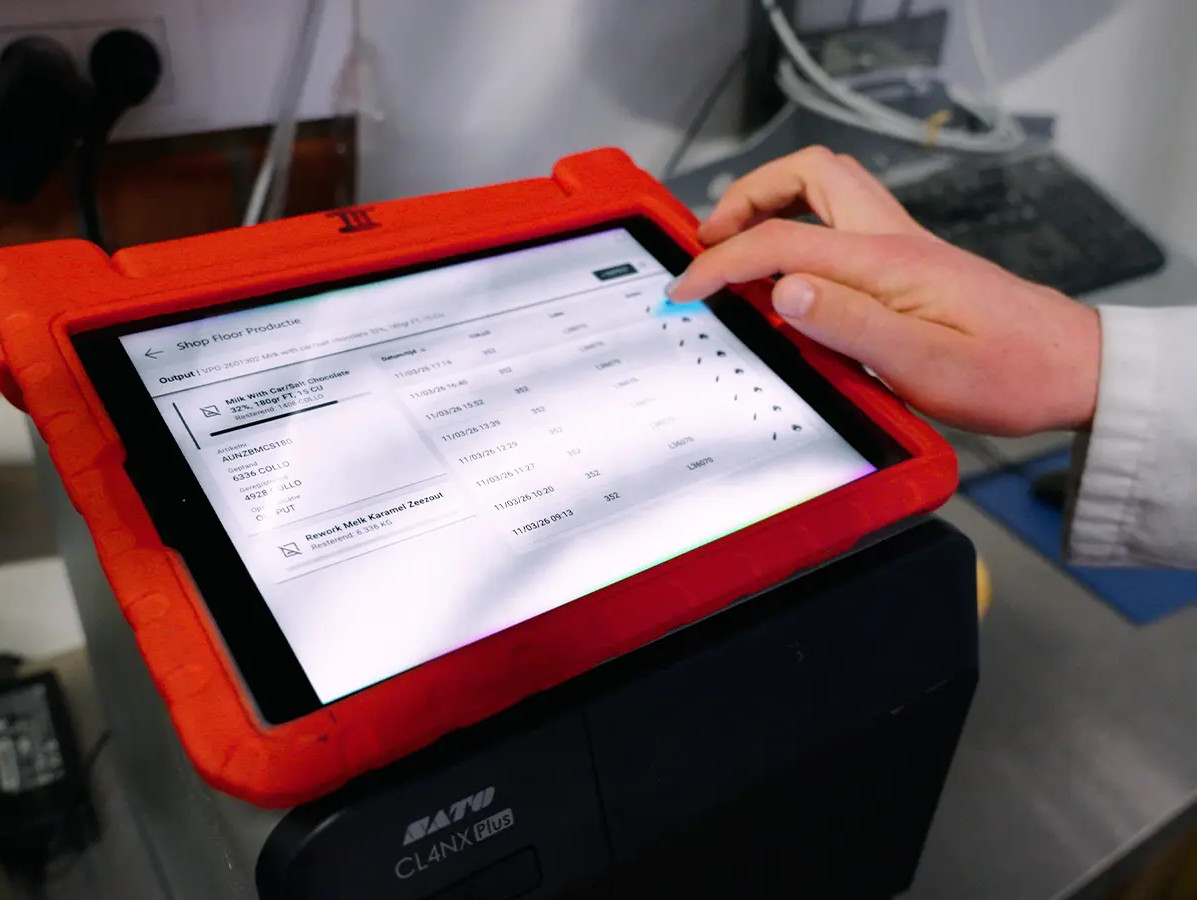
The move to the cloud changed the dynamics of the factory. Feike sees the difference every day: “We now monitor everything from Amsterdam. If something happens, we can intervene immediately without having to travel to the site. That creates peace of mind and confidence, including on the production floor.” Operators select the validated label through the ERP system, after which the system automatically controls the correct printers. Label design, production orders, and the printing process are now fully integrated. “Every print comes from the same controlled source. That reduces the risk of errors and improves data security throughout the entire production process. Risks are now managed far more effectively.”
“In an industry where traceability and brand trust are critical, that’s an important result,” emphasizes Victor van Dijck, Operations Planning Lead at Tony’s Chocolonely. “We now work with a stable system without interruptions. Thanks to monitoring and automated management, we also save around 30 minutes a day, five days a week.” Feike looks back on the project with satisfaction: “We chose De Koningh because they provide both hardware and software, as well as a genuine cloud solution. Most importantly? Everything kept running smoothly the moment the system went live!”
Many food companies will recognize the challenge: production is becoming more complex, quality standards are getting stricter, and margins for error continue to shrink. This case shows how software integration not only speeds up processes, but also improves the reliability and security of product identification. In short: by bringing labeling, data, and line control together in one controlled cloud structure, the result is a factory that operates efficiently, reliably, and with a future-proof foundation.
Curious how this works in practice? Watch the case video at Tony’s Chocolonely below or via this link.
Photos: © De Koningh
Source: Vakblad Voedingsindustrie 2026
Magazine Voedingsindustrie has been made possible in part by:



© COPYRIGHT 2026 VOEDINGSINDUSTRIE | ALLE RECHTEN VOORBEHOUDEN
Powered by Wallbrink Crossmedia © 2026