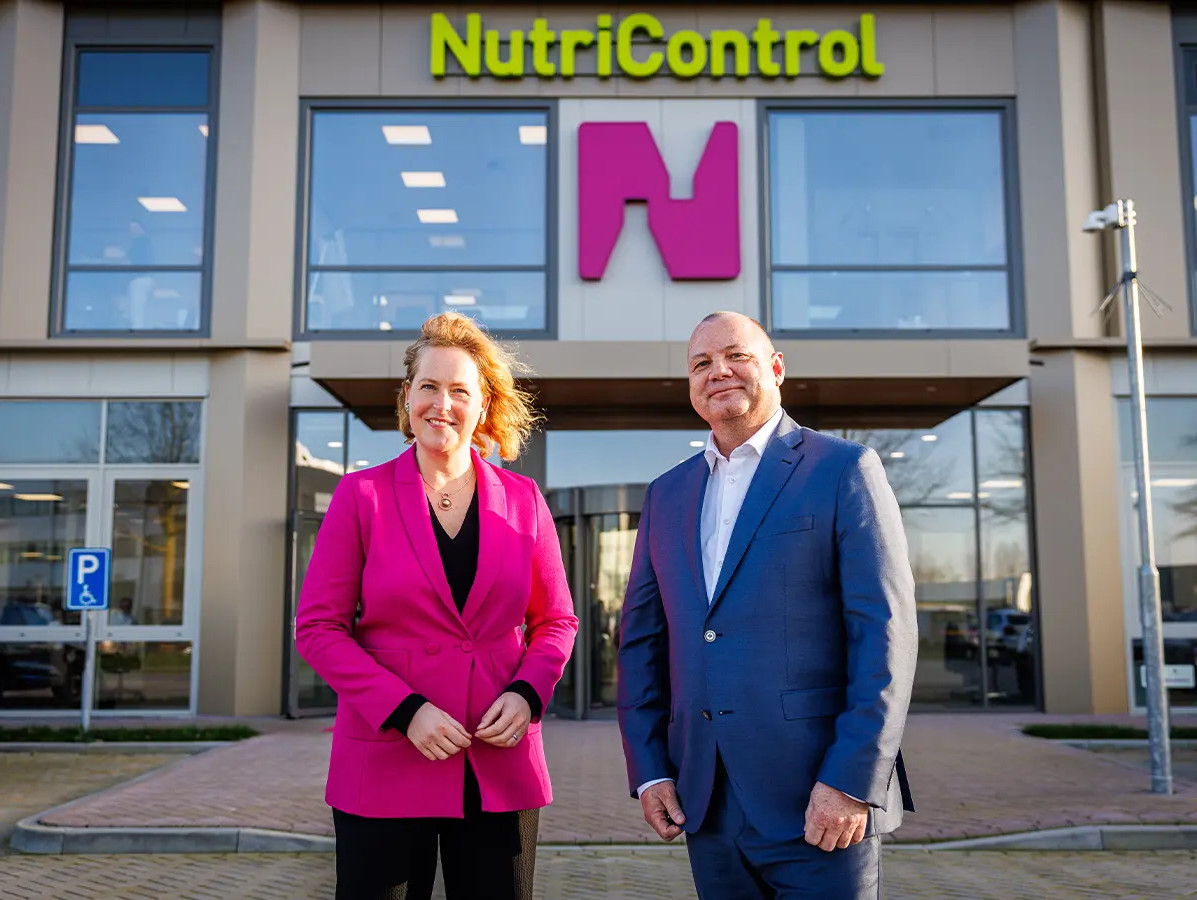
What’s in food, feed, and dairy? And perhaps even more importantly: what isn’t? NutriControl investigates this every single day. With a new laboratory in Veghel, the company is taking the next step in flexibility, tailor-made solutions, and capacity when it comes to finding what others sometimes miss.
Speaking is Jörgen van den Ende, Managing Director of NutriControl. He has been with the company for more than thirteen years and has a background in organic chemistry as well as commercial experience. “What I enjoy is building,” he says. “Building an organization, developing people, and now literally building a new laboratory that we completed in 2025. It was a challenge we needed to take on, because over the past few years we’ve grown threefold. We previously had to split departments and even worked out of portable cabins. That’s when you know it’s time for the next step.”
NutriControl focuses on both bulk and specialized analyses within food, feed, and dairy. The laboratory examines three main areas: nutritional value, additives, and contaminants. More than 300 analytical methods are used, with around 80% of the results carried out under accreditation. “We look at what food does for people and animals, as well as what shouldn’t be in it,” says Jörgen. “That includes bacteria such as Listeria, but also substances like PFAS, pesticides, and antibiotics. If something is present, customers want to know, and you need to be able to detect it.” The lab works for a broad range of clients, including many market leaders. “When they face a challenge, they come to us.”
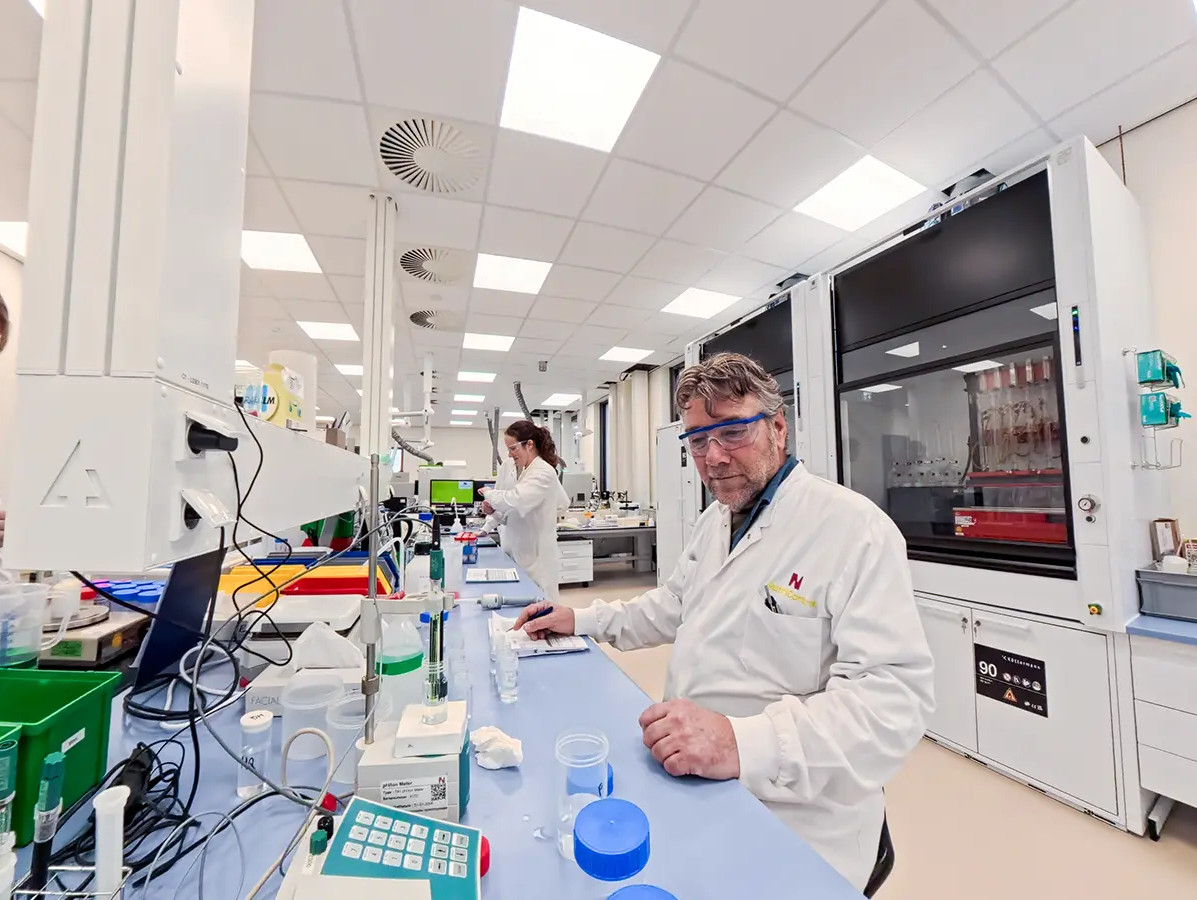
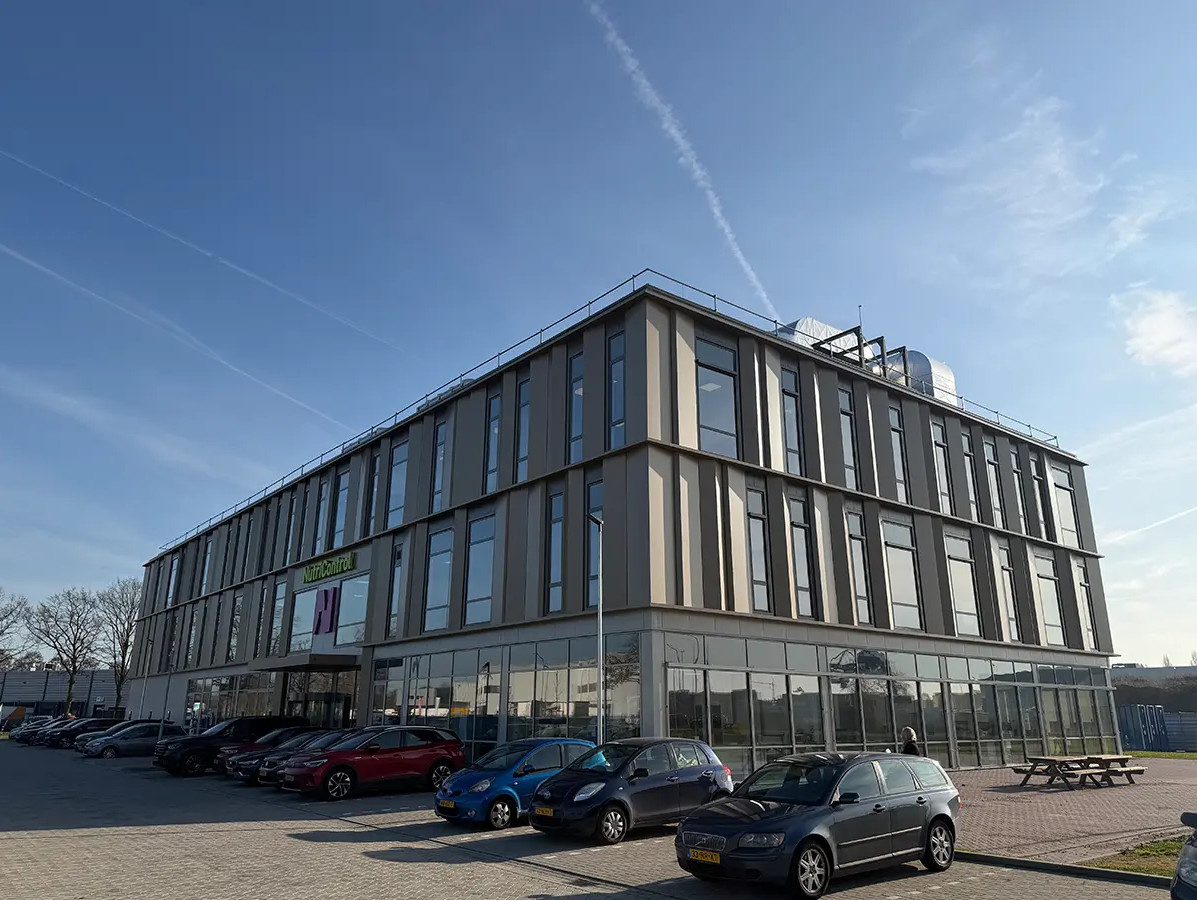
The new laboratory in Veghel covers 5,500 m². Employees from different departments were involved in the design process. “When you start from scratch, you can really think everything through properly and create the right workflow. It makes sense to do that together with people who know the organization inside out.” The result is a laboratory where processes connect seamlessly and capacity has increased substantially. “We can now process two and a half times as many samples,” he continues. Employee involvement also became clear during the relocation. “We moved under accreditation, over the course of a single weekend, without interrupting operations. With the help of 65 employees!” Jörgen says proudly.
The laboratory consists of six departments. From sample logistics and microbiology on the ground floor, to analyses, NIR, and nutritional analysis on the first floor, and chromatography and spectroscopy on the second floor. This layout follows the logic of the process. For example, the microbiology/biochemistry department, which produces a large amount of waste, is located on the ground floor, while chromatography is situated upstairs due to energy emissions. Above that is a technical layer containing installations for water, air, and energy. One striking feature of the building is its transparency. “We regularly give tours without any risk involved. From the office spaces, people can see what we do and how we work.” Sustainability also plays a role. The building is not heated with natural gas and makes use of heat recovery systems.
With the new laboratory, NutriControl can continue to develop further. “Our team of 130 employees, half of whom are under the age of 35, with an equal male-to-female ratio, is highly motivated and contributes to what sets us apart.” According to Jörgen, they achieve this through knowledge & expertise, flexibility, and tailor-made solutions. “That expertise is mainly reflected in our approach. The way you perform an analysis matters. Which extraction steps you take. That requires experience. In addition, we safeguard our knowledge & expertise by documenting procedures and protocols.” Their expertise is supported by advanced technologies. “For example, we have an Orbitrap: an expensive, high-end mass spectrometer. It allows us to zoom in very precisely on substances, down to four decimal places, in order to rule out interfering components and truly determine what is present in a sample. Not every lab has this capability.”
In addition, there is the global NIR cloud service. “We have connected different devices, including portable versions, within one cloud environment,” Jörgen explains. “That’s unique, it speeds up analyses, and it makes it possible to measure and compare results worldwide in the exact same way. We are also working on developments to trace the origin of raw materials. If a problem arises somewhere, you want to know where it came from. That’s becoming increasingly important throughout the supply chain.”
For the coming years, the focus will be on fully utilizing the new laboratory and further expanding the customer base and organization. “We want to become even more valuable to our customers. That means listening carefully and offering specific solutions, both nationally and internationally. We now have the space to continue building on food safety.”
Source: Vakblad Voedingsindustrie 2026
Magazine Voedingsindustrie has been made possible in part by:



© COPYRIGHT 2026 VOEDINGSINDUSTRIE | ALLE RECHTEN VOORBEHOUDEN
Powered by Wallbrink Crossmedia © 2026