
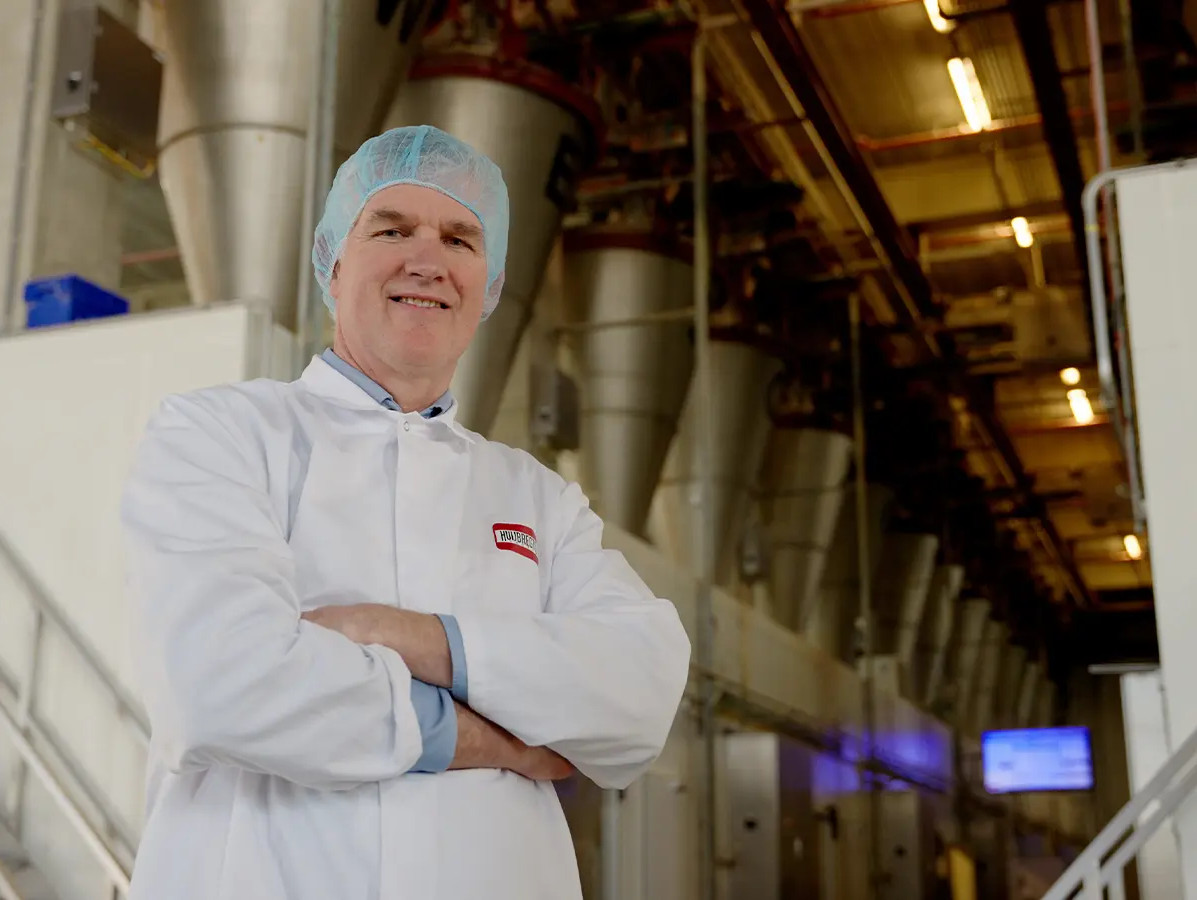
In many food production facilities, powders play a quiet yet critical role. From herbs and spices to starches, flavorings, and colorants, they form the foundation of countless recipes used in snacks, salads, and plant-based products, among others. Behind these seemingly simple ingredients lies a complex logistical operation.
In the fast-growing plant-based sector, as well as the snack and salad industries, countless powdered ingredients are used. For manufacturers, this often involves a highly complex internal logistics process: sourcing raw materials, managing inventory, weighing recipes, and creating premixes. Every raw material must be available on time, correctly identified, and dosed with precision. An error may not become visible until much later in the production chain. Due to this complexity, more and more food manufacturers are choosing to outsource their entire powder logistics operation. One example is the family-owned company Huijbregts Groep. Founded ninety years ago, the company fully specialized in blending raw materials for the food industry. Today, the third generation is at the helm, led by CEO Willem Huijbregts.
With outsourcing, the complexity shifts to the specialist. Huijbregts handles the sourcing, storage, and pre-blending of ingredients. Customers then work exclusively with ready-to-use premixes, making their production processes more manageable and less prone to errors. Hein Hamelijnck, Commercial Director: “With more than sixty blending lines, we can run an enormous number of different recipes in a single day.” A salad manufacturer provides a clear example: many recipes contain combinations of colorants, preservatives, and starches. By combining these components into a single premix beforehand, manufacturers create a process in which ingredients can be added easily and consistently. “The premixes are packaged in such a way that they are virtually ‘foolproof’ to use in the production environment,” Hein explains. “That significantly reduces the risk of production errors.” In some partnerships, Huijbregts even takes on the financing of the raw materials. “Manufacturers then don’t have to tie up that capital themselves. It leaves more working capital available for their own operations. That can be practical for both established players and start-ups.”
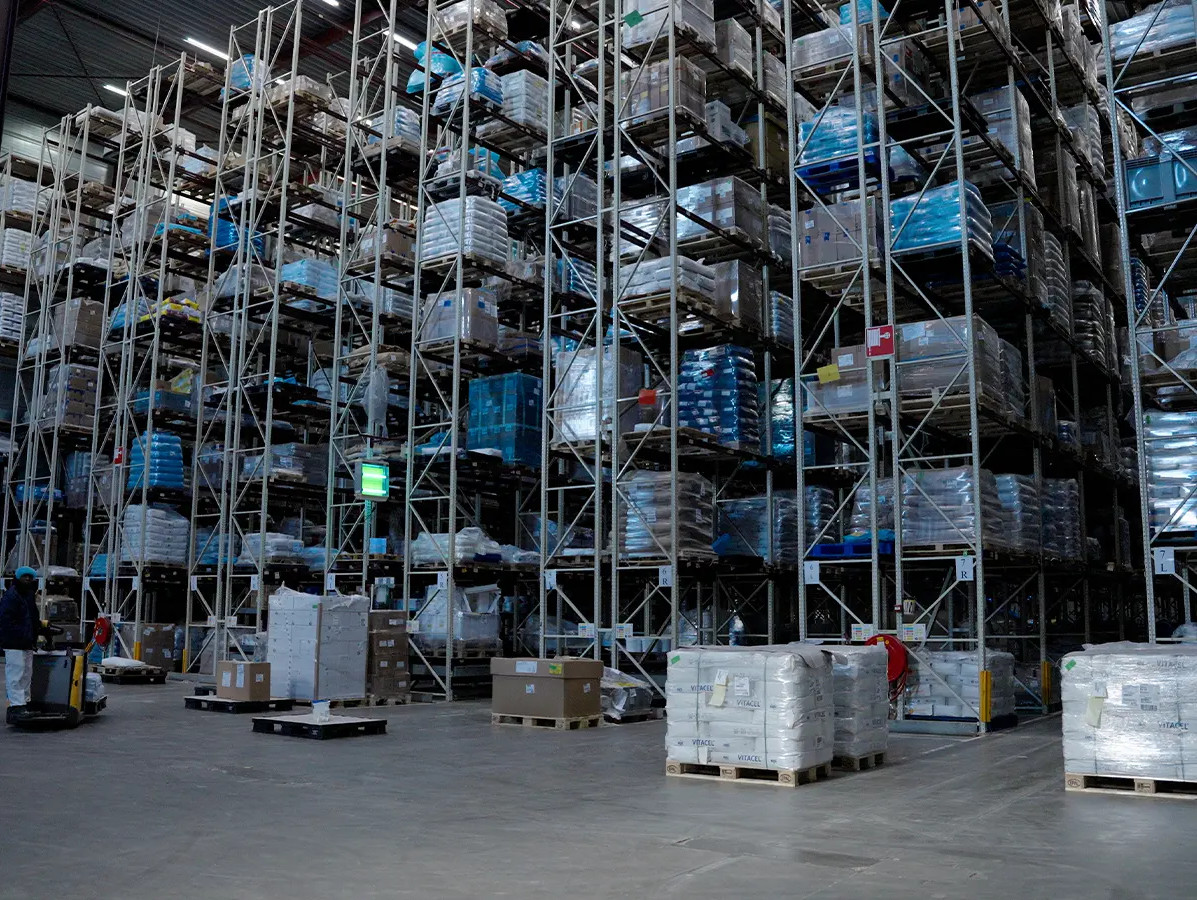
While production becomes simpler for customers, the complexity shifts to the beginning of the supply chain. “Making sure all raw materials are available on time is one of the biggest challenges,” says Hein. “Food manufacturers provide us with their production forecasts, after which we ensure that raw materials — sometimes with long lead times — are stocked in time. If all ingredients are available, we can produce very flexibly and work with short lead times. But when a single ingredient is missing, it can delay the entire process. That’s why most of the complexity lies in inventory management.” The collaboration can take different forms. Some ingredients are sourced directly by Huijbregts, such as generic herbs, spices, and starches. In other cases, customers supply their own raw materials, or Huijbregts Groep purchases from the customer’s supplier.
To efficiently manage the large number of ingredients, Huijbregts invested in an automated mini-load warehouse with 13,000 storage locations for drums containing raw materials. This system is used for ingredients that appear in recipes in small quantities. It enables rapid dosing while keeping a large number of different raw materials readily available. The investment has significantly increased the flexibility of the production process.
When customers use premixes directly in production, responsibility for quality control also shifts. Many customers no longer test the mixes themselves, but instead rely on Huijbregts’ quality assurance processes. “The inspection process starts the moment raw materials arrive. Every batch is analyzed in our own laboratory using near-infrared technology (NIR). This technology provides a unique identification of the material. In a way, the NIR scan acts as a fingerprint of the raw material. We compare that fingerprint with a reference. Only when they match exactly do we know the product meets our standards.” The company has been using this analysis method for more than thirty years. The same technique is also applied to the final blend. “After production, we scan a sample again to verify whether all ingredients are present in the correct proportions and whether the blend is homogeneous. This rapid analysis method allows us to check hundreds of mixes per day without causing delays in the production process. Within minutes, we can demonstrate that the production process was carried out correctly. Our customers need to be able to trust that everything they use in their process has been fully verified.”
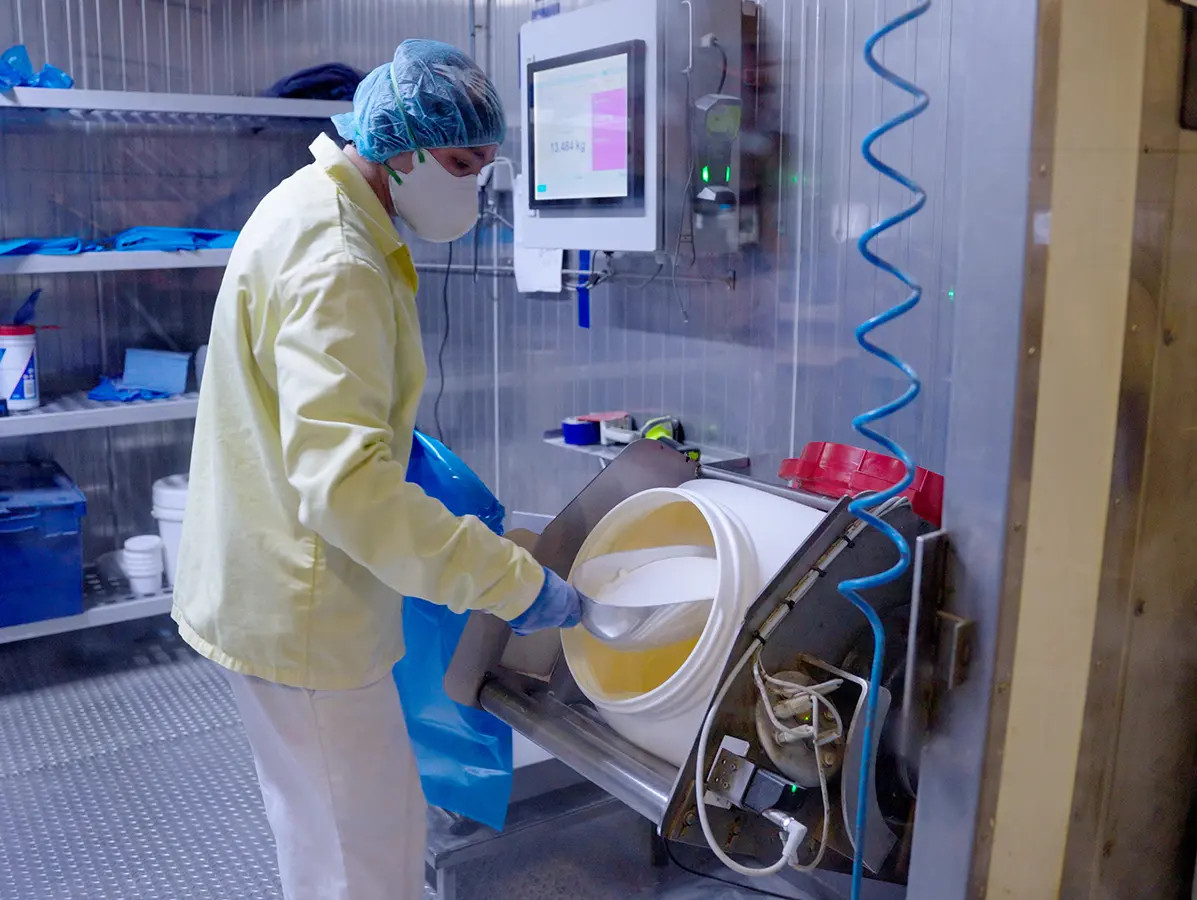
Food safety also plays a central role in the setup of the weighing processes. Ingredients are weighed in enclosed rooms under positive pressure, while powders are extracted downward. This minimizes the risk of cross-contamination, for example with allergens, and is essential for halal or kosher production. Huijbregts operates 44 blending lines in Helmond that are used daily for hundreds of different mixes. It is crucial — both for safeguarding food safety and for process optimization — that the mixers can be cleaned thoroughly and quickly. To switch efficiently between different recipes while preventing cross-contamination at all times, the company developed its own CIP system (Cleaning in Place). The mixers are transported via a rail system to a separate cleaning area, where they are cleaned in approximately twenty minutes and then dried in ten minutes. The result is a changeover time of around thirty minutes.
The company’s growth and the tight labor market are making efficiency increasingly important. At the Huijbregts Innovation Center (HIC), the focus is therefore not on product development, but on improving internal processes. “We continuously look at how we can make work easier for our people while also producing more efficiently,” Hein explains. “For example, we are investigating how automation and cobots can support employees with physical or repetitive tasks.”
Huijbregts’ decision not to develop new recipes for customers is a deliberate one. “Our customers have excellent product developers,” Hein states. “They develop the recipes; we make sure they are produced perfectly on an industrial scale.” The company’s strength in this area is reflected in the speed at which outsourcing projects are implemented. When a food manufacturer wants to outsource its entire spice room or powder warehouse, Huijbregts can take over the operation within a matter of months, including inventory management and premix production. “That requires detailed preparation. All raw material specifications, allergen data, and process information must be collected in advance and entered into the ERP system. Checklists ensure that no crucial information is missing.”
By making process control, quality assurance, and food safety their core priorities, Huijbregts has become a quiet yet essential link in the chain for many food manufacturers. Hein sees ‘being consistent in what you do best’ as a clear common thread throughout the family company’s ninety years in business: “Over the years, we’ve learned that focus is essential. Once you have a plan, you need to follow through and not keep changing direction along the way. We chose operational excellence in powder logistics for the food industry. Behind every premix is a carefully organized process where speed, reliability, and control come together.”
Food Tech Event
Want to know more about what’s possible in hygiene and food safety within the food sector?
Visit the Food Tech Event on May 20 and 21 at the Brabanthallen in ’s-Hertogenbosch.
www.food-tech-event.nl
Photos: ©Mikrocentrum
Source: Vakblad Voedingsindustrie 2026
Magazine Voedingsindustrie has been made possible in part by:



© COPYRIGHT 2026 VOEDINGSINDUSTRIE | ALLE RECHTEN VOORBEHOUDEN
Powered by Wallbrink Crossmedia © 2026