
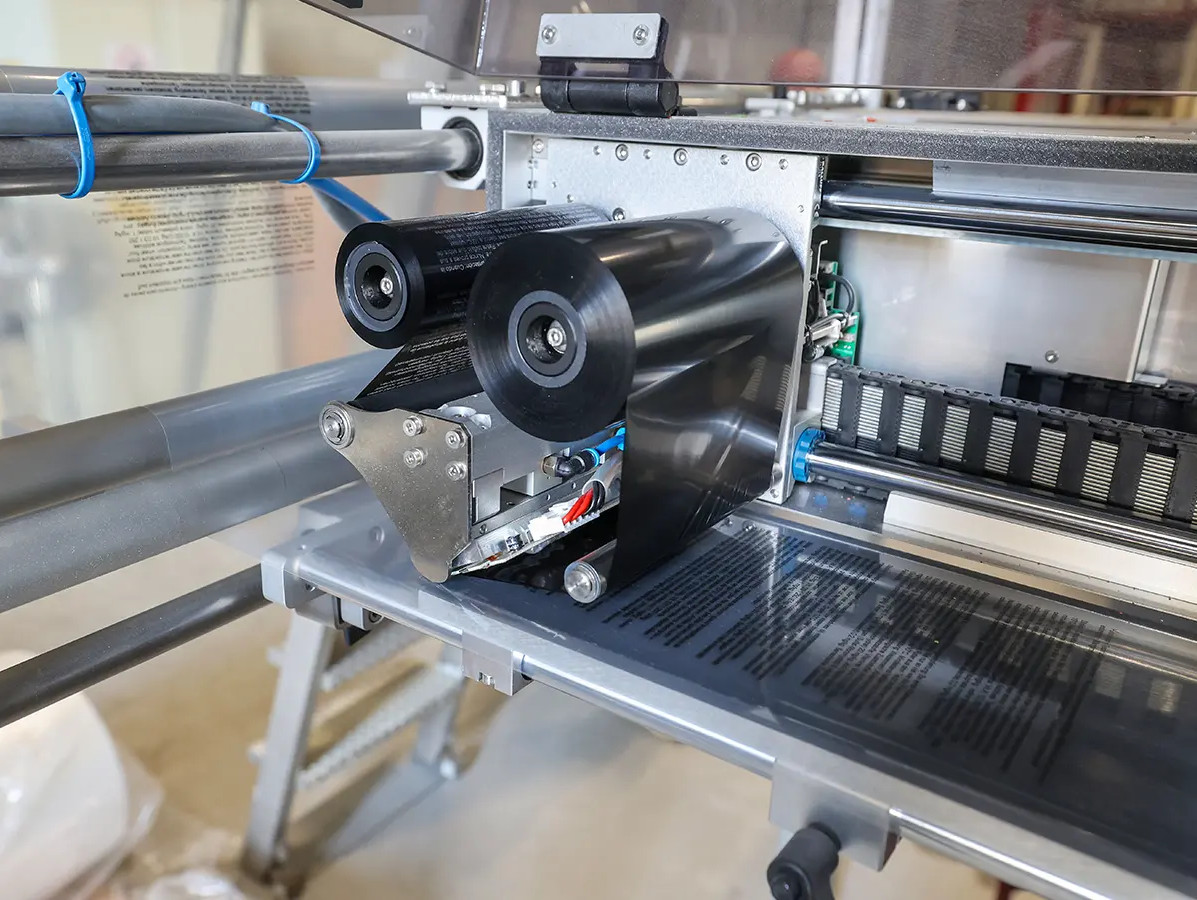
Since its takeover in 2020, Animeal has undergone a remarkable transformation. Under the leadership of Fred Wijnen, the company has grown into a flexible packaging specialist for fish feed. With smart solutions and practical decisions, they continue to tackle new challenges and provide optimal service to their customers.
When Fred Wijnen and several co-shareholders took over Animeal, the company was struggling. Today, it is a thriving business that manages to serve a wide range of customers with flexibility and customization. Fred, besides being the owner, is also the company’s go-to man for everything, the jack of all trades. “I handle planning, purchasing, sales, and even machine maintenance,” he says with a smile. During our conversation, several colleagues pop in with questions that Fred seems to answer off the cuff. It perfectly reflects Animeal’s daily reality: a compact organization with short lines of communication, specializing in packaging fish feed.
Animeal operates five production lines that package sticks and pellets in bags ranging from 8 to 40 liters. These are products with large volumes but relatively low weight: 80 to 150 grams per liter. Some lines can easily be adjusted to different bag sizes, allowing for quick switches between customer requirements. Flexibility within the company plays a key role—but so does the market itself. After all, fish don’t eat all year round. “Once the temperature drops below ten degrees, fish sink to the bottom and stop eating,” Fred explains. “For us, that means the season runs from January through summer. In autumn, there is hardly any demand. We use that time for cleaning, maintenance, and replacing machinery. We also take on other projects.”
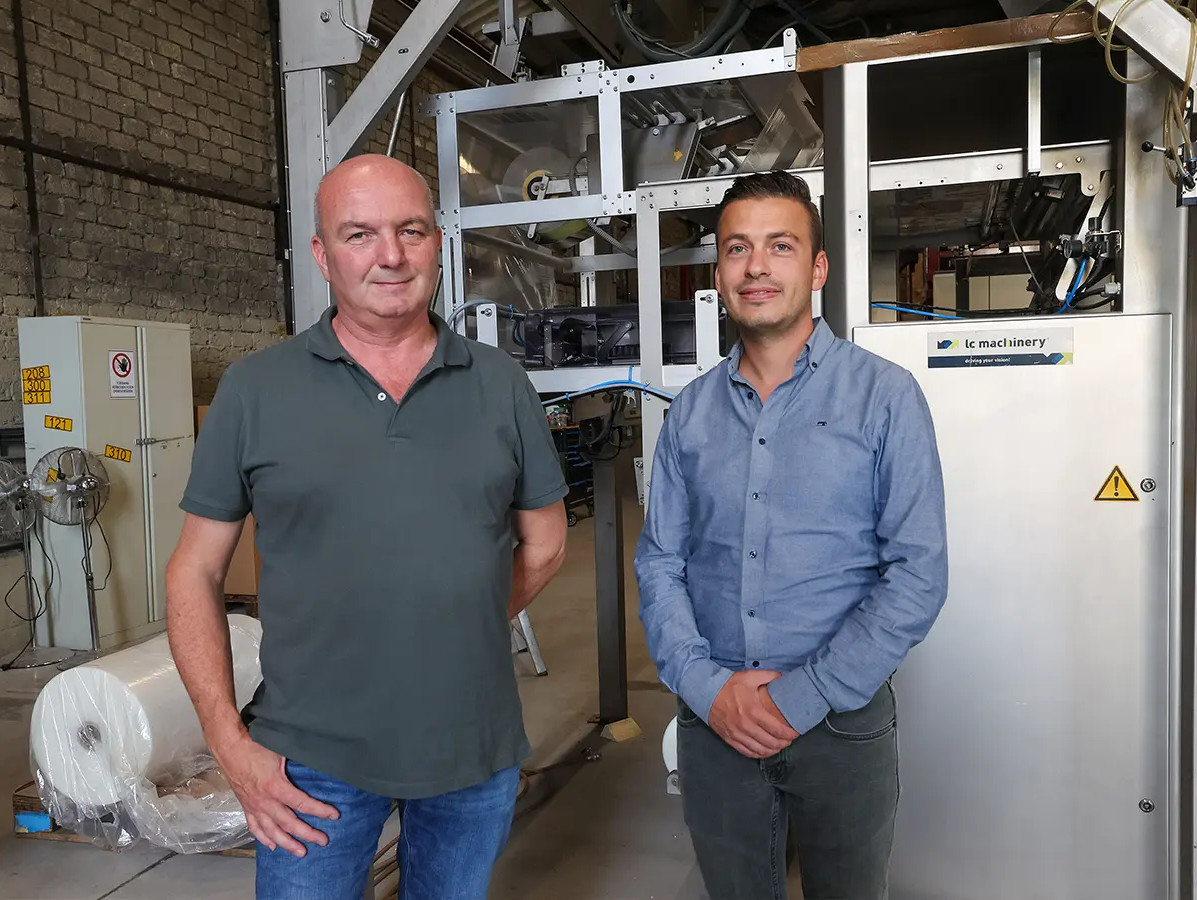
Fred Wijnen (left) and Jeffrey Bouman
At first, the company’s location along the canal seemed to offer a logistical advantage. Brandenburch is located across the water, one of the largest suppliers of the feed that Animeal packages. The packaging company’s innovative mindset became clear when they planned a pneumatic system to transport the feed directly into Animeal’s silos. Fred recalls that the silos were ready to go, but the fish feed turned out to be too fragile for that kind of air pressure. Now, around 350 trucks cross the road each year to deliver the feed. The silos have since been removed, making space for a possible sixth packaging line.
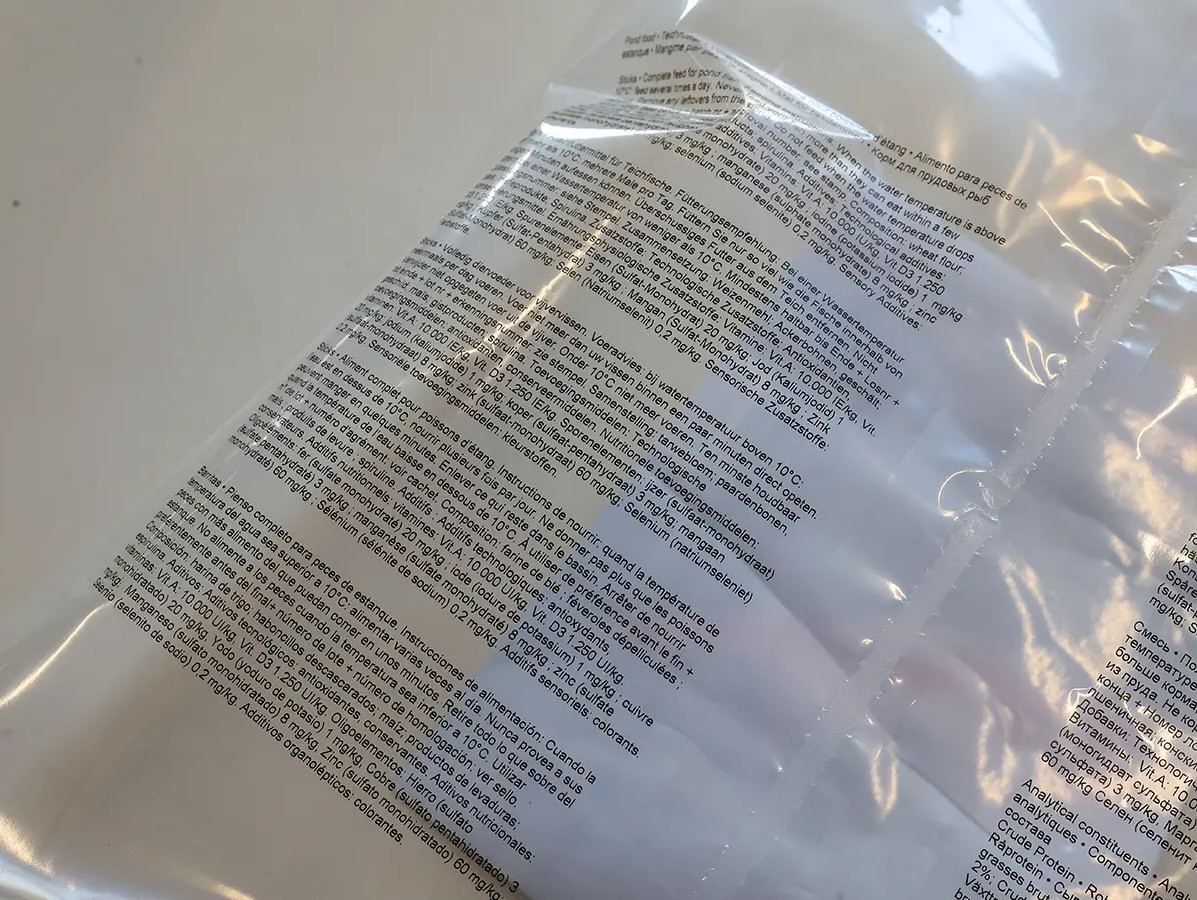
One of the biggest challenges lies in packaging and labelling regulations, Fred continues. For many imported products, the packaging must display information in the local language. The more languages combined, the fewer packaging types are needed, which is cost-effective but also raises technical printing demands. “One of our customers kept adding more text to the bags,” he explains. “It started with a 100 by 200-millimeter panel and kept expanding. Our existing printer couldn’t handle the margins anymore, so we kept getting misprints. That caused frustration—both for the customer, who couldn’t use the products, and for our employees, who ran into the same issue repeatedly.”
Initially, Fred tried to solve the problem locally, without success. That changed when he reconnected with De Koningh Coding Labeling – Inspection, a supplier he’d worked with in a previous potition.
Together with his contact, Jeffrey Bouman, account manager at De Koningh, he explored the options. “At that time, thermal transfer printers were installed in continuous mode,” Jeffrey explains. “That means printing happens while the film is moving. In theory, it’s suitable for long and wide texts that were required. But in practice, we often see problems with this setup—especially with the printer brand Animeal was using.”
The solution came in the form of an alternative thermal transfer printer: the Valentin DPM IV. This printer prints while the film is stationary but can still handle longer texts, thanks to its 128 mm-wide printhead on a traversing system of 340 mm. Jeffrey: “The investment was higher and installation more complex, but the system is robust and designed for intensive use.” After a successful trial, Fred decided to proceed with the new printer. “Integration was quite a job,” he admits. “Since both the front and back of the bag are printed, we needed two large printers. On top of that, the setup had to be combined with the existing labelling system.” He doesn’t complain, though: “The system works perfectly!”
The recent implementation of the Valentin DPM thermal transfer printer illustrates Animeal’s preference for durable, robust solutions. With five packaging lines, room for expansion, and a reliable supplier, the company is laying a solid foundation for the future.
www.animealfactory.nl
www.dekoningh.nl
Photos: © Bert Jansen
Source: Vakblad Voedingsindustrie 2025
Magazine Voedingsindustrie has been made possible in part by:



© COPYRIGHT 2026 VOEDINGSINDUSTRIE | ALLE RECHTEN VOORBEHOUDEN
Powered by Wallbrink Crossmedia © 2026