A packaging line is only truly automated when an operator no longer has to guess whether the required code is legible. At ForFarmers in Heijen, that final check made the difference between daily disruptions and a production team that can trust every bag of horse muesli.
Bags move along the packaging line at high speed. They are automatically filled, sealed, and palletized. Every package carries the required production details and code. This information is essential: what is in the bag, when was it made, and what is its best-before date? Legibility determines whether a product can move further along the supply chain. Is the code incomplete or hard to read? Then the bag is rejected. Not because the product fails to meet quality standards, but because crucial product information is missing. A minor printing error can therefore result in food waste, as well as delays and disruption on the production floor.
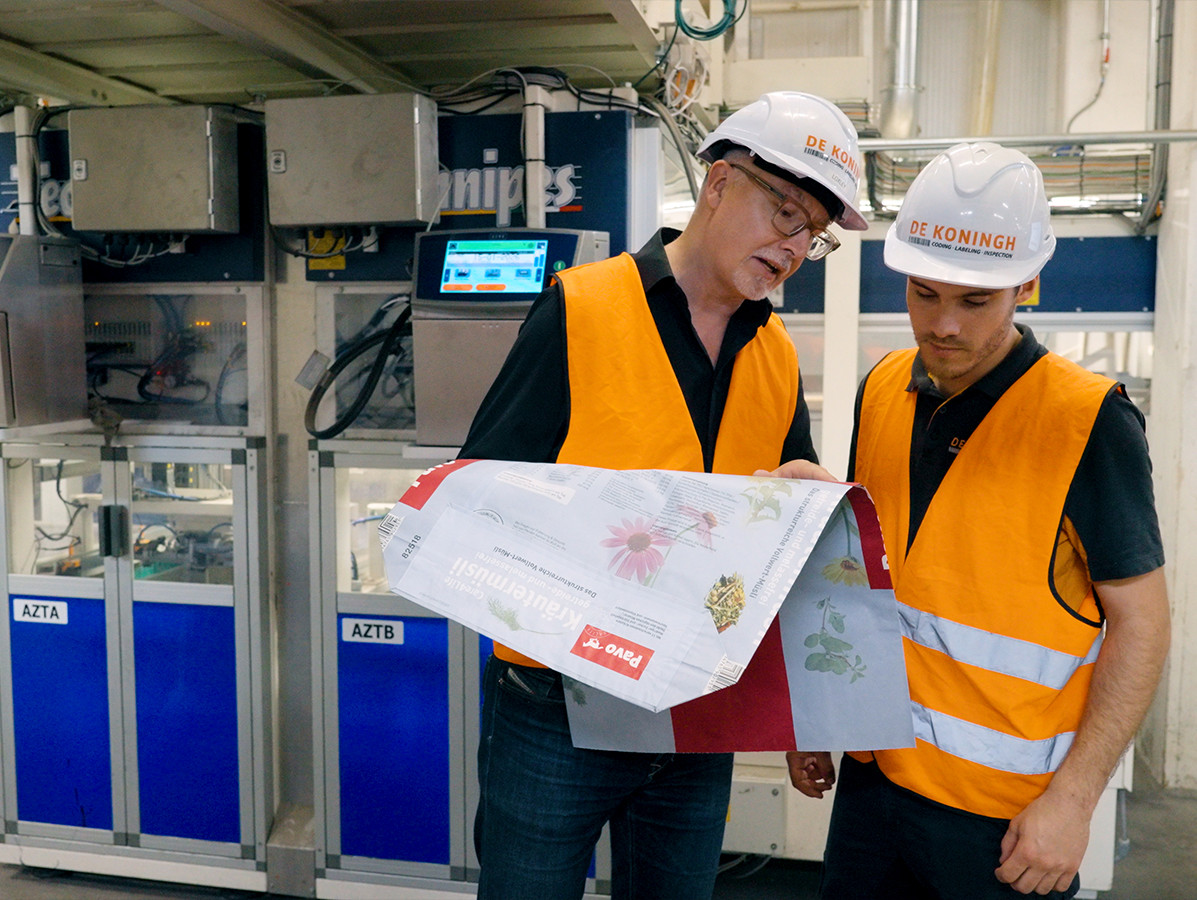
Ludwig Loxley (left) and Luc Breuls
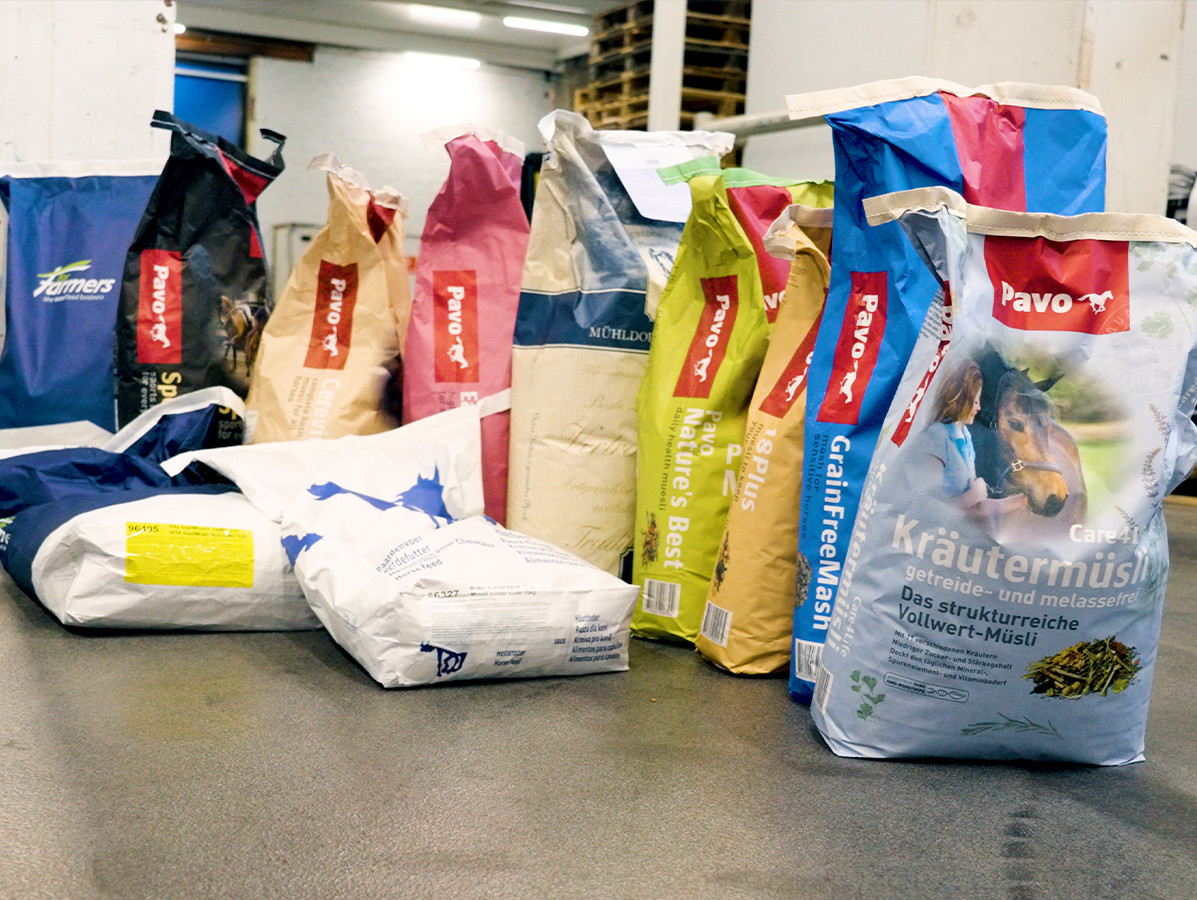
ForFarmers produces and supplies complete feed solutions for the agricultural sector. Guided by its mission, ‘For the Future of Farming,’ the company works side by side with livestock farmers. The goal: to successfully produce healthy, affordable food in a sustainable way. Under the name ‘CirQlar Nutrition,’ the company also processes and trades liquid and high-moisture residual streams from the food industry, such as potato, beet, and wheat byproducts. This cuts feed costs and reduces the carbon footprint. To keep its production operations fully ‘fit for the future,’ ForFarmers takes a critical look at every step. On the horse muesli packaging line in Heijen, the process from filling to palletizing is already automated. One step still needed extra attention: checking that the production code and best-before date on every bag were correct and clearly legible. With the old equipment, the best-before date and production code were not always printed correctly on the bag. An operator therefore checked manually whether the production code had been printed properly on the packaging. Differences in the bags’ appearance made this check particularly difficult for operators. A dark code stands out clearly against light-colored packaging but can disappear against a dark or heavily printed bag. Frank Lamers, Production Manager at ForFarmers, remembers the daily disruption this caused: “Because these checks were carried out on a sample basis, there was always uncertainty about whether the codes on the other bags were clearly legible.”
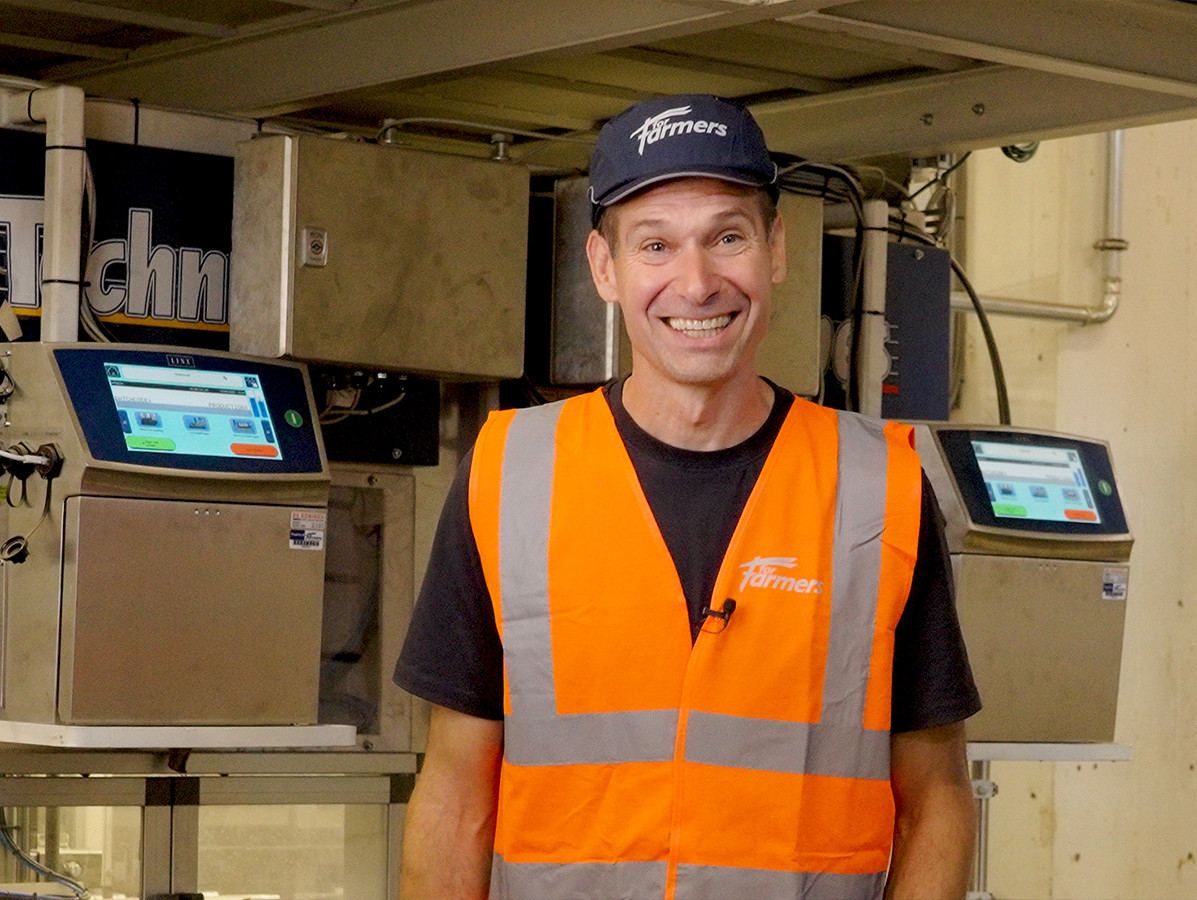
Frank Lamers
To inspect codes, a camera needs both a sharp image and the right light in the right place. The lighting determines the level of contrast between the bag and the code. Red or white light works well on some packaging, but not on every color and material. Service Engineer Luc Breuls tested various cameras and lighting settings on ForFarmers’ bags, then saved the appropriate settings for each bag type. These settings now load automatically during a product changeover. This means the operator no longer has to switch between different systems or select individual settings manually. Ludwig Loxley, Product Manager Coding at De Koningh: “Verification does not stop when data is sent to a printer. It only ends when the packaging has been verified as correct. Coding at the end of the line must be more than a finishing touch; it is a crucial quality check!”
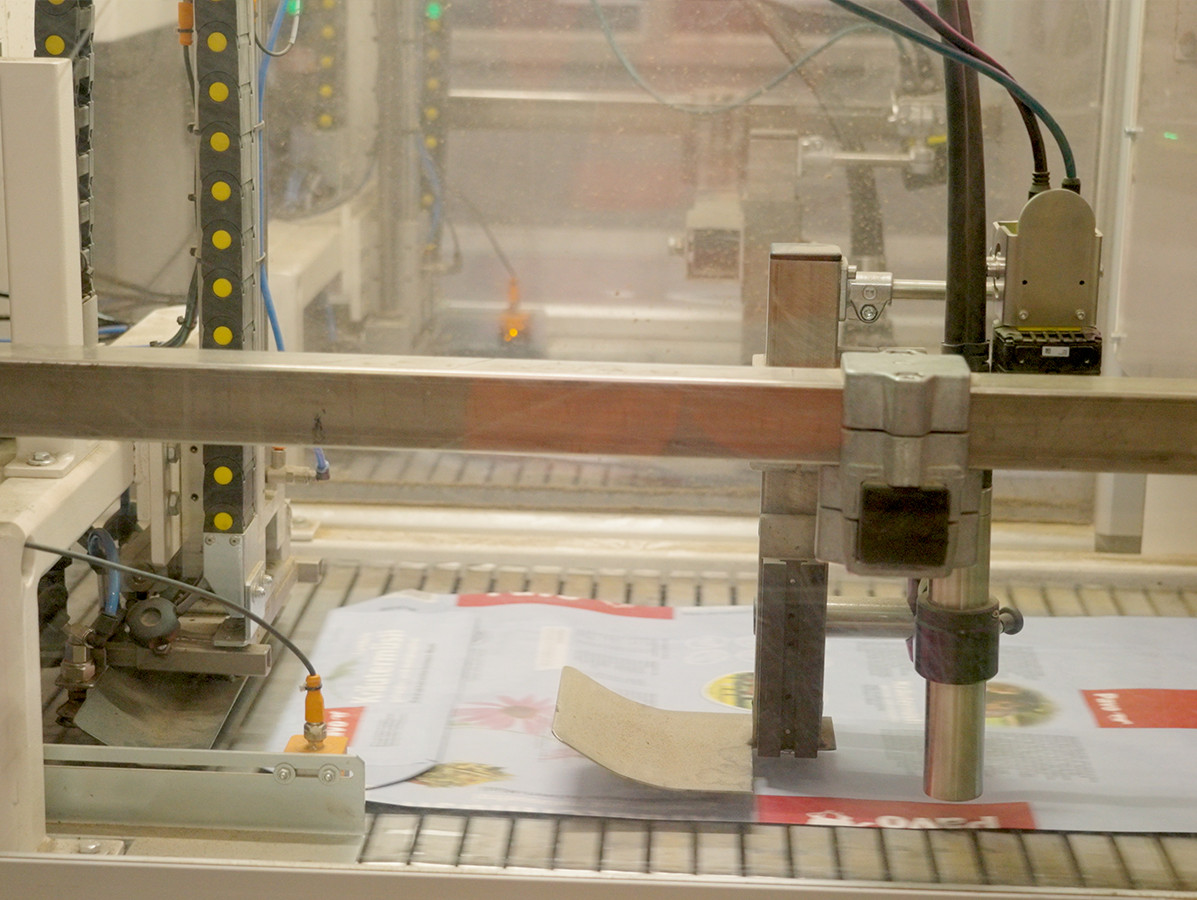
Installing a Linx printer laid the foundation for the solution implemented at ForFarmers. “It prints sharper codes on the bags than ForFarmers’ old coding system could,” Ludwig explains. “But the real difference came from connecting the various systems through our ‘Valid-Code’ printing and verification software.” The printer, adjustable lighting, and camera inspection system are all connected. The camera immediately checks whether all the information is present and legible. “The combination of small-character inkjet printing and code inspection makes this check part of production rather than a separate task. When a line checks for itself that the correct code has been applied and is clearly legible, quality becomes an integral part of the process. And that is exactly what automation is for.”
For Frank, the benefits go beyond the technology. “Colleagues no longer have to search for faint print or wait for the results of a spot check. This system gives every bag its full attention. With the previous system, there were problems every day. Now we just start it up and it runs,” he says with satisfaction. “The fact that De Koningh managed to deliver a reliable solution for all those different bag colors has exceeded my expectations.”
Want to see what this looks like in practice? Watch the ForFarmers case study video below or via this link.
Source: Vakblad Voedingsindustrie 2026
Magazine Voedingsindustrie has been made possible in part by:



© COPYRIGHT 2026 VOEDINGSINDUSTRIE | ALLE RECHTEN VOORBEHOUDEN
Powered by Wallbrink Crossmedia © 2026