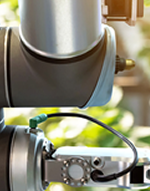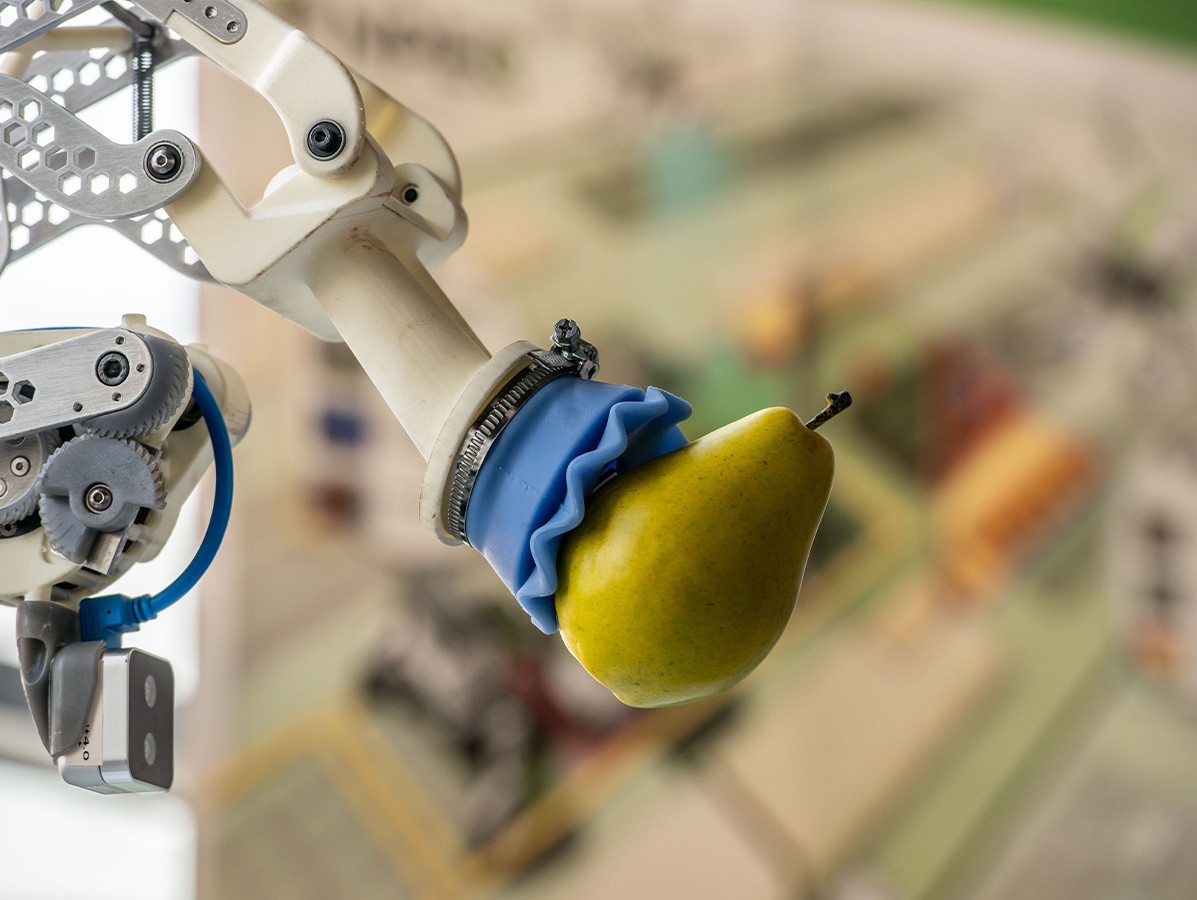
Being immersed in the world of perception technology and robotics, sensors and camera systems, lasers and grippers. Seeing how advances in AI, which connects all this technology and enables the systems to communicate, are taking it to ever higher levels: on September 10, 2026, Vision + Robotics at Wageningen University & Research (WUR) opened its doors for a look behind the scenes.
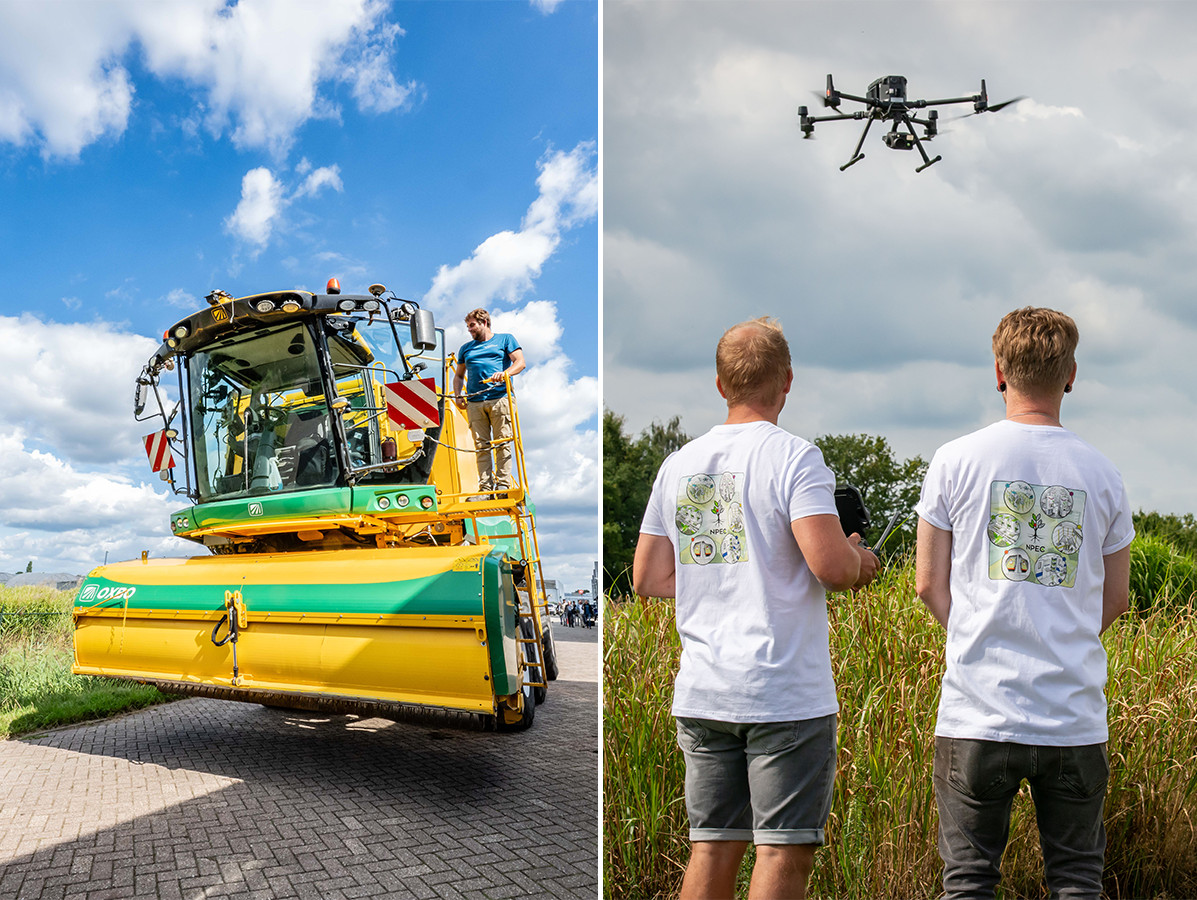
The Vision + Robotics Parcours takes place every two years at Wageningen University & Research (WUR). During the event, 150 participants, including agrifood technology professionals and end users, toured eight themed stations, visiting various sensor labs and robotic setups in small groups. Through practical case studies, visitors were brought up to date on the latest developments in agrifood technology, the successes achieved, and the obstacles still to overcome. This year, visitors did more than just listen; they could operate a robotic arm themselves, watch a drone take flight and view its live camera feed, and see a self-driving pea harvester weighing around 26 metric tons in action.
It became clear that AI, image processing, simulation, robot training, remote services, and continued robot training after deployment at the end user’s site all play a crucial role in answering the pressing question: “How can we take robotic automation to the next level?”
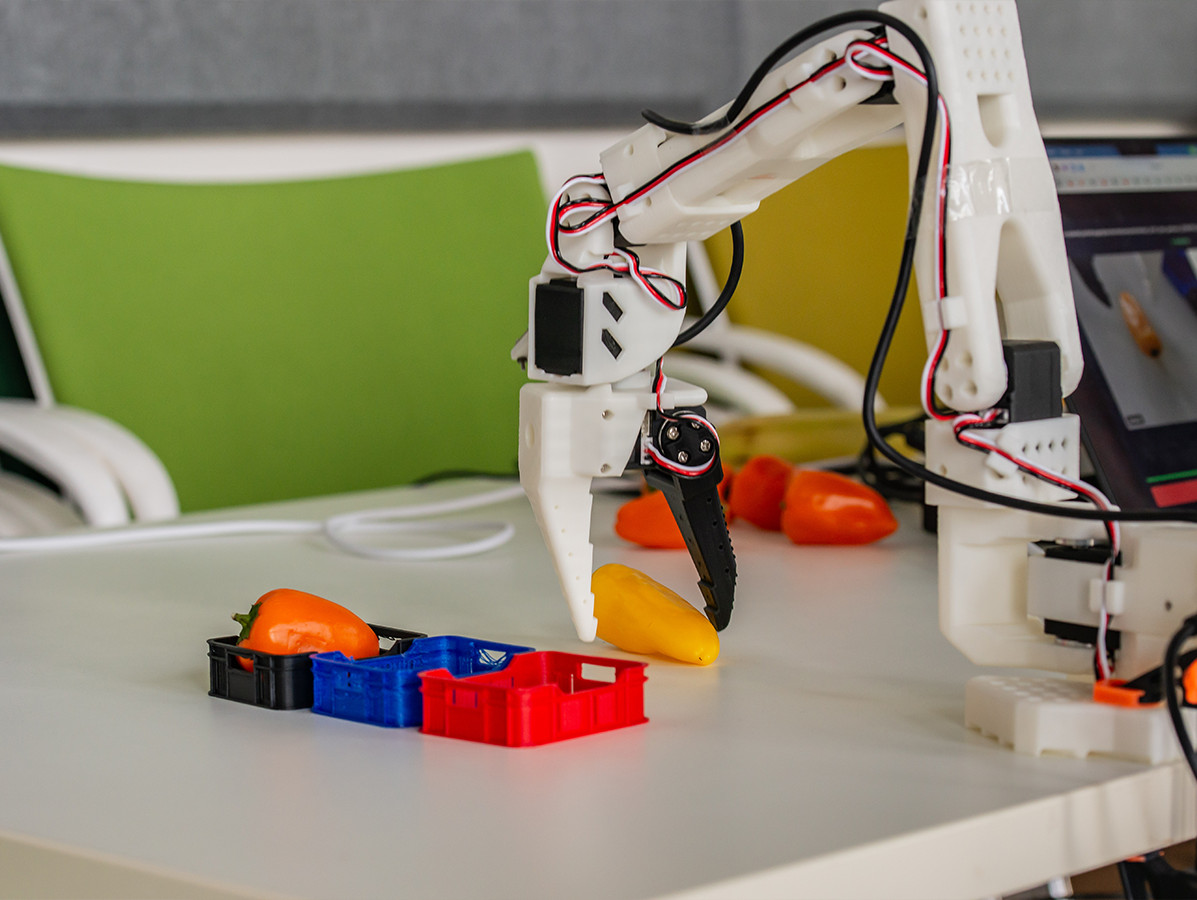
In arable farming, major strides are being made in areas including monitoring, applied data processing, task and route planning for harvesters, biodiversity mapping, and AI-driven machinery. In livestock farming, the focus was on animal monitoring and behavioral analysis using AI. Visitors could watch live demonstrations of how robots and machinery are used on farms to improve animal welfare, among other applications. Robotics is also gaining ground in the fish processing industry, with innovations in sorting and processing fresh products and waste streams under hygienic, climate-controlled conditions. In sensor technology, the latest developments in spectral sensors, 3D technology, Raman technology, Perception AI, and reinforcement learning were on display. There was also a selection of innovative grippers and systems that combine perception with calibration, grasping, and motion.
Robots have to meet demanding requirements. They must be modular, flexible, and highly reliable. At the same time, both researchers and end users face high R&D costs. How do you scale up? Because that is the key to bringing costs down. One answer lies in accelerating R&D through simulation using synthetic data and creating digital twins. But the very fact that AI relies on datasets also raises questions. How do you keep pace with changing datasets? After all, training needs to continue on an ongoing basis. How do you do that? There is clearly still much to investigate, research, and develop.
Missed the event? Or do you run a business or have a project in mind? Visit visionrobotics.eu to stay up to date on the latest developments, insights, research, and opportunities in AI, machine learning, computer vision, robotics, and spectral imaging.
Source: Vakblad Voedingsindustrie 2026
Magazine Voedingsindustrie has been made possible in part by:



© COPYRIGHT 2026 VOEDINGSINDUSTRIE | ALLE RECHTEN VOORBEHOUDEN
Powered by Wallbrink Crossmedia © 2026