High speeds, high standards, and no room for error. That is the daily reality in modern beverage production. Haacht Brewery in Boortmeerbeek knows this better than anyone. Reliable inspection and coding are not a nice-to-have, but an absolute requirement.
With five filling lines processing up to 60,000 bottles per hour, the bar is set high at Haacht. Especially when you produce not only your own brands but also private label beer and soft drinks. Although inspection systems were in place, the brewery still faced a familiar challenge. Inspection was present, but not smart enough. And that began to cause friction.
“During production, we always checked whether labels were present, but not whether they were applied correctly. We had many crooked labels, which led to significant reject rates on the line,” says Kevin Weynants, Teamleader Bottling Plant at Haacht. At the same time, there was no conclusive control over production codes. Were they actually readable? And did they match the database? For a producer working with demanding customers, that posed a risk. Not only for product quality, but also for operational efficiency. Frequent crashes and delays in the line increased frustration. “Operators sometimes sorted out defective bottles in advance to protect the inspection systems. We were looking for a solution to increase efficiency,” Kevin explains.
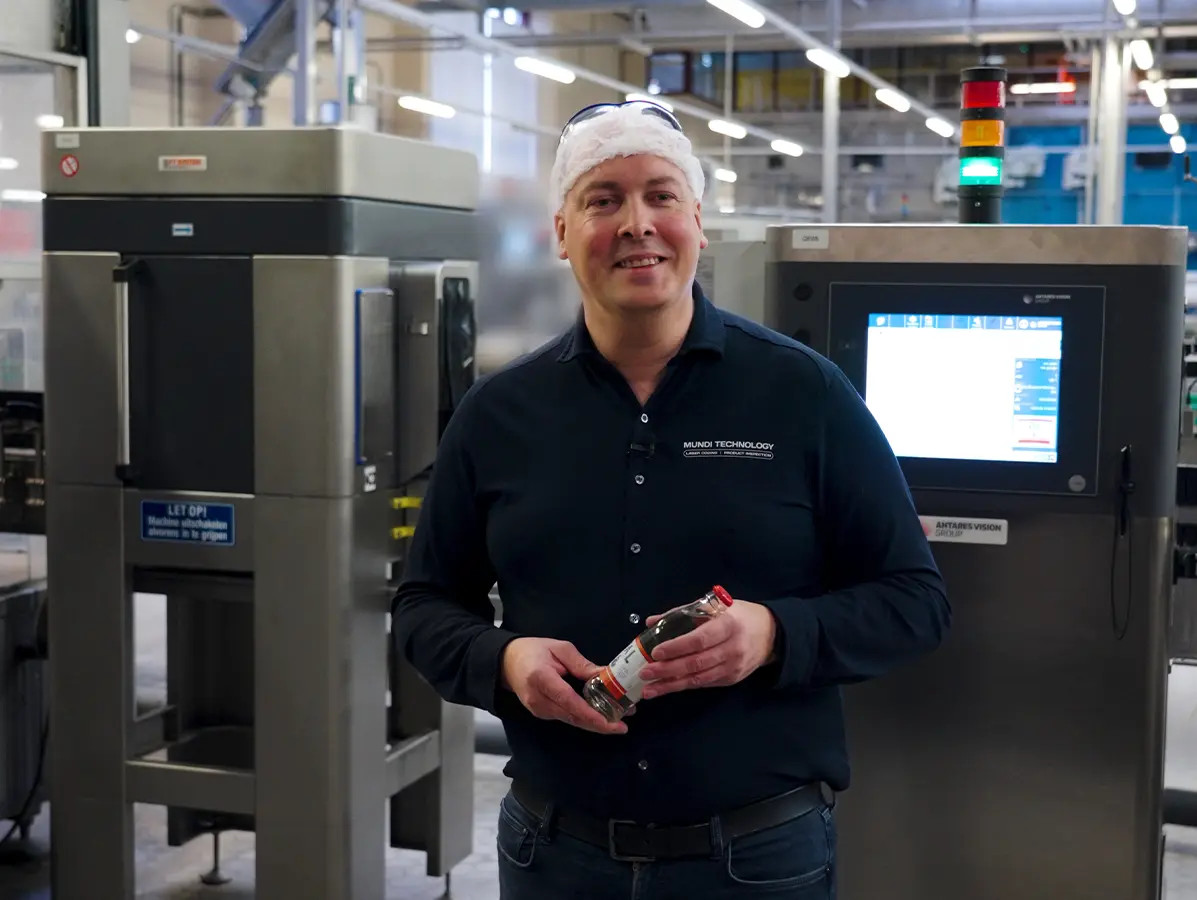
Menno van Zijl (service engineer Mundi Technology) and Kevin Weynants
Haacht Brewery began looking for modern inspection technology that could truly be relied upon. Not as a standalone fix, but as part of a structural quality approach. More than just technology was at stake. The solution had to handle high speeds, fit within the limited space on the production line, and be supported by local technicians who speak the language of the production floor.
Mundi Technology was asked to take a closer look. Not only at what was going wrong, but also at the root of the problem. The goal: make the line future-proof. “The approach started with gaining insight,” explains Dennis Geersen, Inspection Expert at Mundi Technology. “For each production line, we mapped which inspection steps were already in place and which equipment was most critical. That formed the basis for a multi-year plan for inspection and control at high capacity, in compact spaces, and with as many inspections combined as possible, focused on continuity and scalability.”
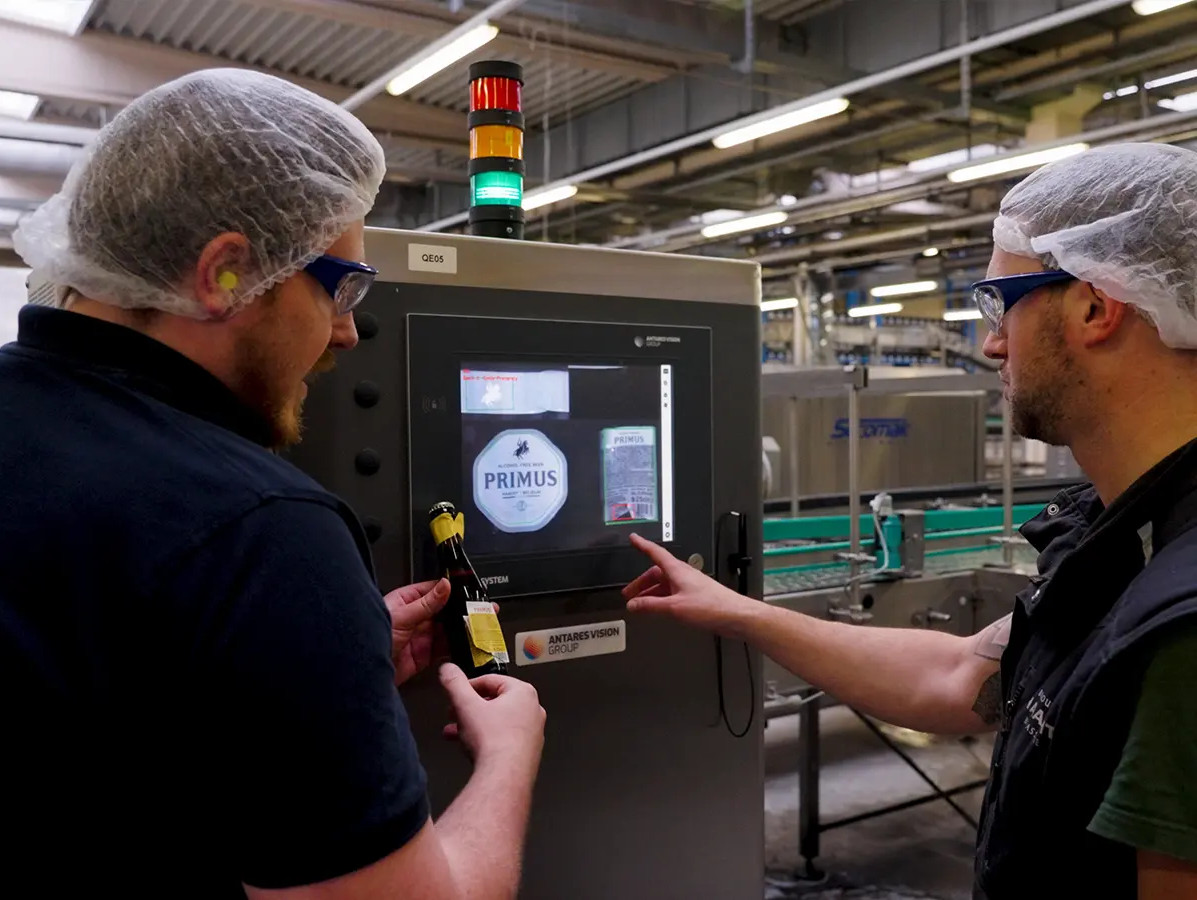
On the returnable bottle line, bottle sorting is applied first. Vision technology checks barcodes to determine whether a bottle has washable labels and whether the bottle shape can be reused or should be rejected. This removes contamination from the line at an early stage. That results in savings in both water and energy consumption. Next, 360-degree label inspection is installed. The system automatically checks the accuracy, positioning, and alignment of the label. At the same time, it verifies whether the production code is correct and readable. The fill level and the crown cap closure are now also inspected fully automatically. The result is an integrated, watertight inspection system that can be operated remotely and keeps pace with production speed.
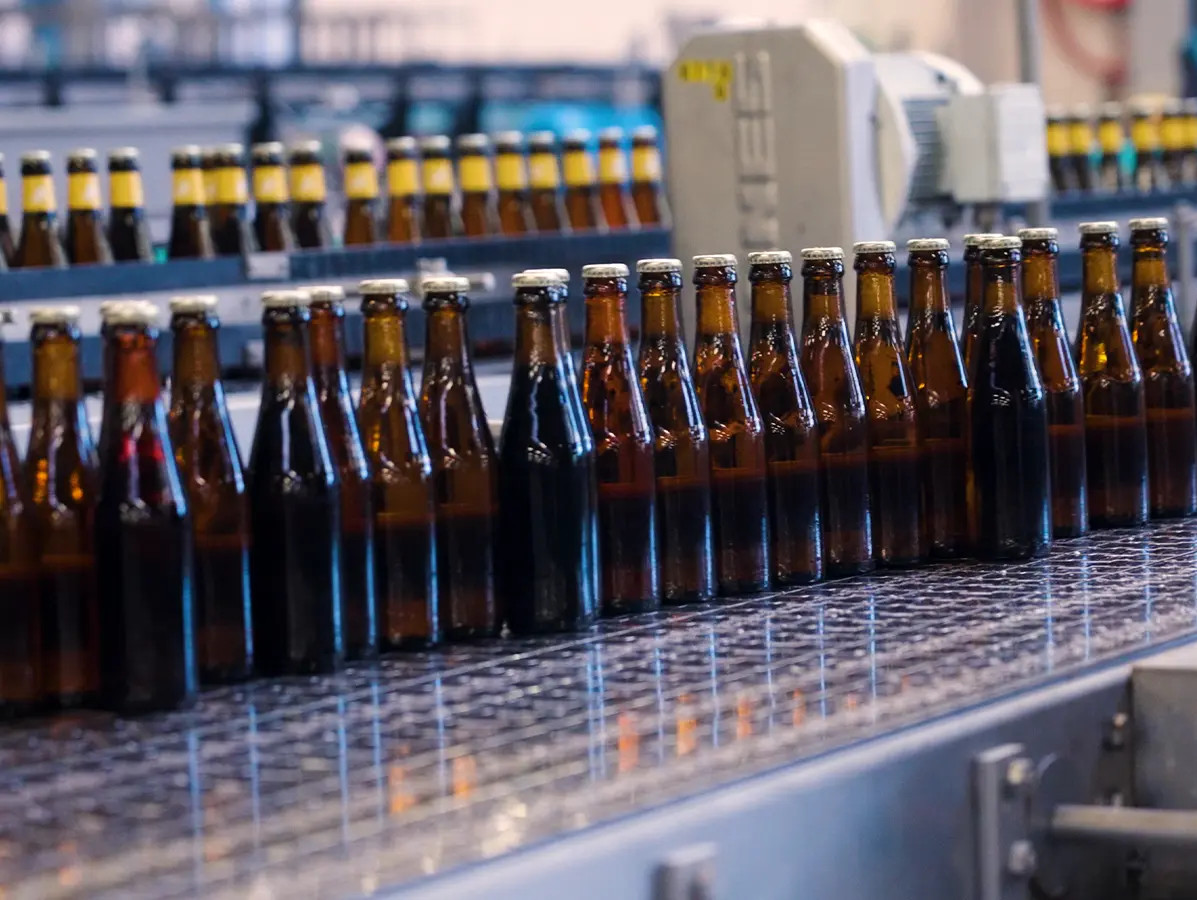
Since implementation, the difference has been clearly noticeable, Kevin says. “Where inspection could previously become a bottleneck, the line now runs in a stable and predictable way. The machines easily keep up with the filler, and production runs can be completed as planned.” That technical stability translates directly to the people on the production floor. Operators experience less stress because they no longer need to intervene constantly. Efficiency has increased, reject rates have decreased, and the atmosphere has improved. Inspection is no longer a source of disruption, but a quiet force within the process.
With the new inspection systems, Haacht Brewery meets the highest quality standards for labeling, fill level, and production codes. That is not only important for compliance, but also for maintaining customer trust. Especially in private label production, demonstrable reliability is a distinguishing factor. This case shows that smart automation goes beyond replacing individual machines. By approaching inspection, coding, and validation as an integrated whole, a production environment emerges that is ready for the future. An approach that aligns seamlessly with modern validation concepts in which data, inspection, and packaging together ensure demonstrable product assurance.
The challenges faced by Haacht Brewery are recognizable to many food producers: higher product requirements, greater variation, and less tolerance for errors. This case proves that investing in reliable inspection not only solves problems, but also delivers peace of mind, efficiency, and room for growth in any sector.
www.haacht.com
www.mundi-technology.com
Curious what this looks like in practice? Watch the case video at Haacht Brewery below or via this link.
Source: Vakblad Voedingsindustrie 2026
Magazine Voedingsindustrie has been made possible in part by:



© COPYRIGHT 2026 VOEDINGSINDUSTRIE | ALLE RECHTEN VOORBEHOUDEN
Powered by Wallbrink Crossmedia © 2026