
The food industry continues to evolve, with a wide range of topics shaping daily operations. From CO₂ reduction and automation to food safety, packaging, and workforce employability, these are issues that play a role on the work floor every day. Developments within family businesses, recall figures, and the progress of the protein transition also attracted significant attention. What captured the sector’s interest most?
These are the 10 most-read articles:
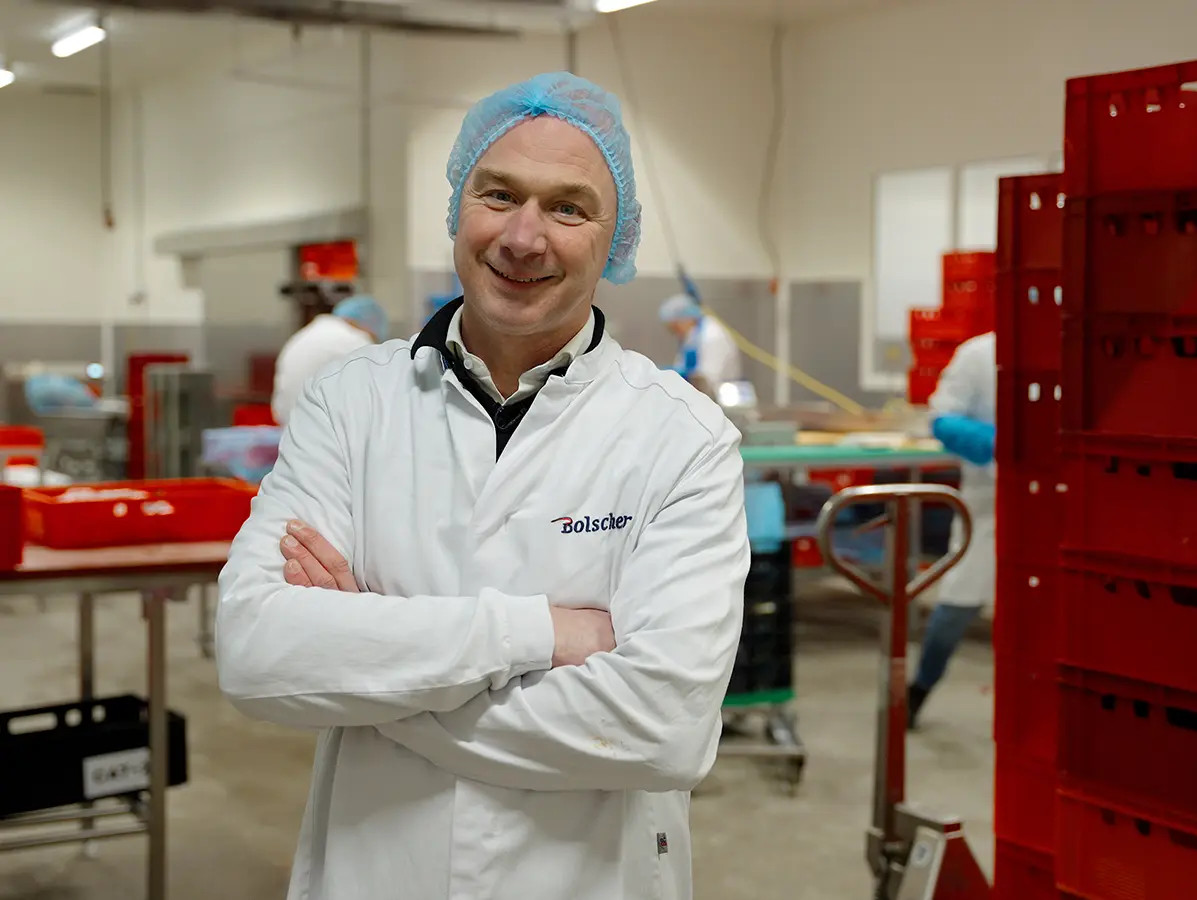
What if, as a meat producer, you decide to look at your own impact in a completely different way? Not starting with solar panels or electric cars because that is what is expected, but with a fundamental question: are we doing things today that we can still sustain ten years from now? That is exactly the approach taken by Roy Bolscher, managing director of meat processor Bolscher in Enschede.
Within four years it will be 2030. And yes, the alarm bells should be ringing, because by then food companies must already start using recycled content in their packaging under the Packaging and Packaging Waste Regulation (PPWR). The bottlenecks and challenges are substantial. What is clear is that successful processing into food-safe recycled materials starts with good packaging design.
The smell of freshly cut vegetables fills the air, yet it is not the traditional work that stands out here. In the production halls of Hessing Supervers, everything revolves around precision, speed, and trust in technology.
Pushing roll containers from a truck to hard-to-reach locations every day is demanding work. Sjaak Luijken, loading supervisor at Chefs Culinar, increasingly noticed colleagues dealing with physical complaints. That had to change, he believed. Electric tuggers now take over the physically demanding part of the job.
“Continue making packaging choices that prevent food waste, because every company achieves its greatest sustainability gains by minimizing the waste of all raw materials.” Toine Timmermans, director of ‘Samen tegen Voedselverspilling’ (Together Against Food Waste), speaks animatedly about the enormous impact that preventing waste has on sustainability. In fact, it’s a no-brainer, because avoiding waste ultimately saves money at the end of the day.
The food industry sets high standards for hygiene and food safety. Yet Jack Pluim of Jackit still often sees work being carried out in environments that are not properly designed for it. With Sealwise panels and his own Food SAVE Seal kit, he wants to change that. With antibacterial impact.
High speeds, high standards, and no room for error. That is the daily reality in modern beverage production. Haacht Brewery in Boortmeerbeek knows this better than anyone. Reliable inspection and coding are not a nice-to-have, but an absolute requirement.
As of January 1, 2026, Bjorn Dokter has been appointed General Director (CEO) at DKB Partner in Foodsolutions (Family Dokter Company). With this step, Bjorn officially takes over the reins from his father, John Dokter. Over the past years, John has been responsible for the growth of the family business, which has been active for more than 70 years.
In 2025, the number of product recalls rose again. By five percent, to be exact. Microbiological contamination and allergens in particular left their mark on 2025, according to the international analysis ‘Recalls: A Review of 2025’ by BRCGS.
The protein transition in the Netherlands is showing little movement. The share of plant-based proteins in the Dutch diet remains stuck at 39 percent. This keeps the ratio at 61 percent animal-based and 39 percent plant-based, virtually unchanged from 2024 and 2023. These findings come from the Eiwitmonitor 2025 by Wageningen Social & Economic Research.
Source: Vakblad Voedingsindustrie 2026
Magazine Voedingsindustrie has been made possible in part by:



© COPYRIGHT 2026 VOEDINGSINDUSTRIE | ALLE RECHTEN VOORBEHOUDEN
Powered by Wallbrink Crossmedia © 2026