The smell of freshly cut vegetables fills the air, yet it is not the traditional work that stands out here. In the production halls of Hessing Supervers, everything revolves around precision, speed, and trust in technology.
“No two days are the same here,” says Sander Mens, Manager Center of Excellence at Hessing Supervers. “We process a wide variety of raw materials, and their quality can change from one harvest to the next. That means we constantly have to adjust our processes.” Hessing supplies retailers and business-to-business customers every day, processing an enormous volume of products: around 4.5 million packages per week, spread across more than 60 packing lines and 40 preprocessing lines.
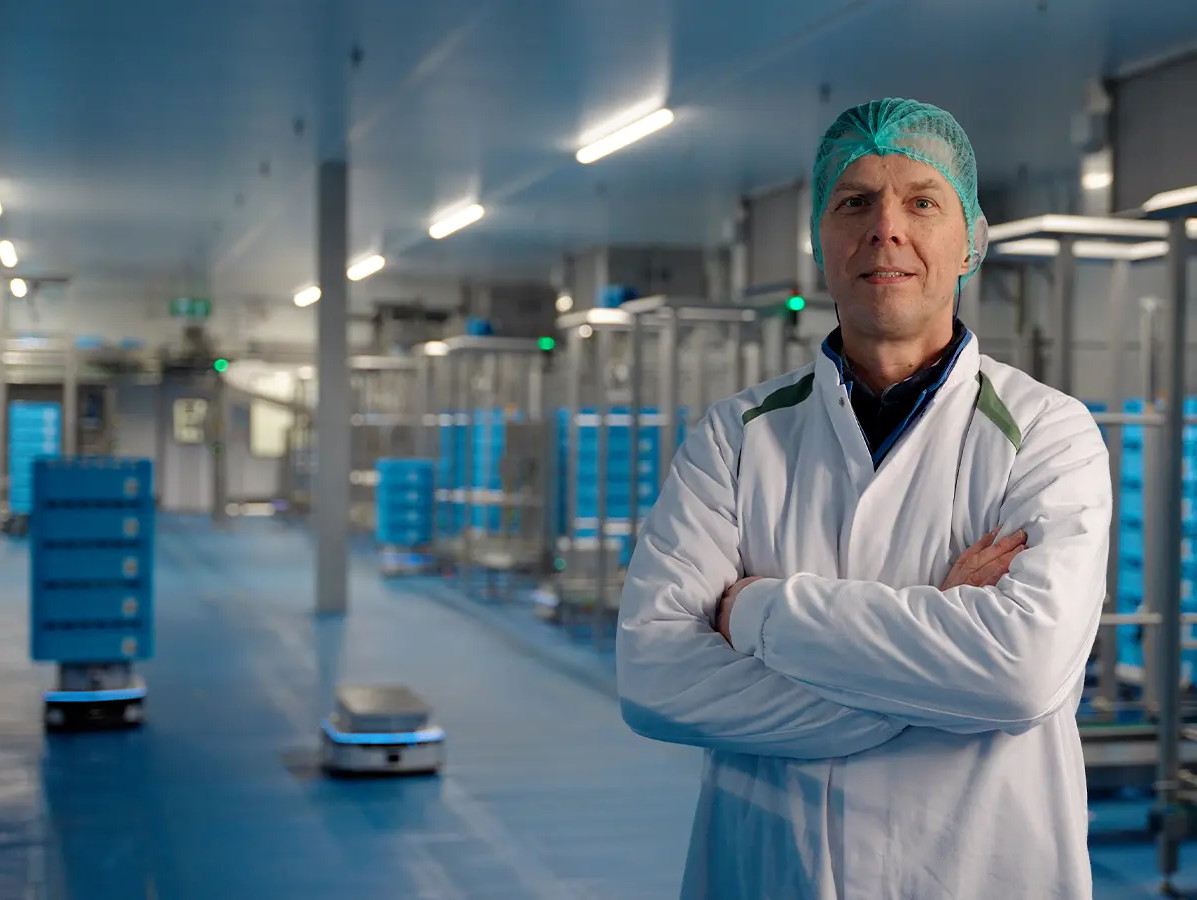
To manage all of this efficiently and reliably, Hessing has been leading the sector in automation for the past three years. “The most important automation in our factory is the 200 AMRs (Autonomous Mobile Robots) in our semi-finished goods warehouse,” Sander explains. “At the front end we preprocess, cut, wash, and dry the vegetables, and if needed we mix products. The semi-finished goods are then packed in two packing departments, where some products are packed on multiple lines simultaneously. Our AMRs handle the storage of the semi-finished goods and deliver them to the packing lines at exactly the right moment. The entire interaction between the forty preprocessing lines and sixty packing lines is fully automated.”
What makes Hessing special is not only the scale and variety of its production, but also the way technology is integrated throughout the operation. The company invested early in automation, particularly in its new factory in Greenport Venlo. “When building our new facility, we immediately looked at where automation could deliver cost savings and efficiency gains. Staff are becoming increasingly scarce, and well-trained personnel even more so,” Sander explains. “Automation allowed us to reduce costs, make production more reliable, and reduce the physical burden on our employees.”
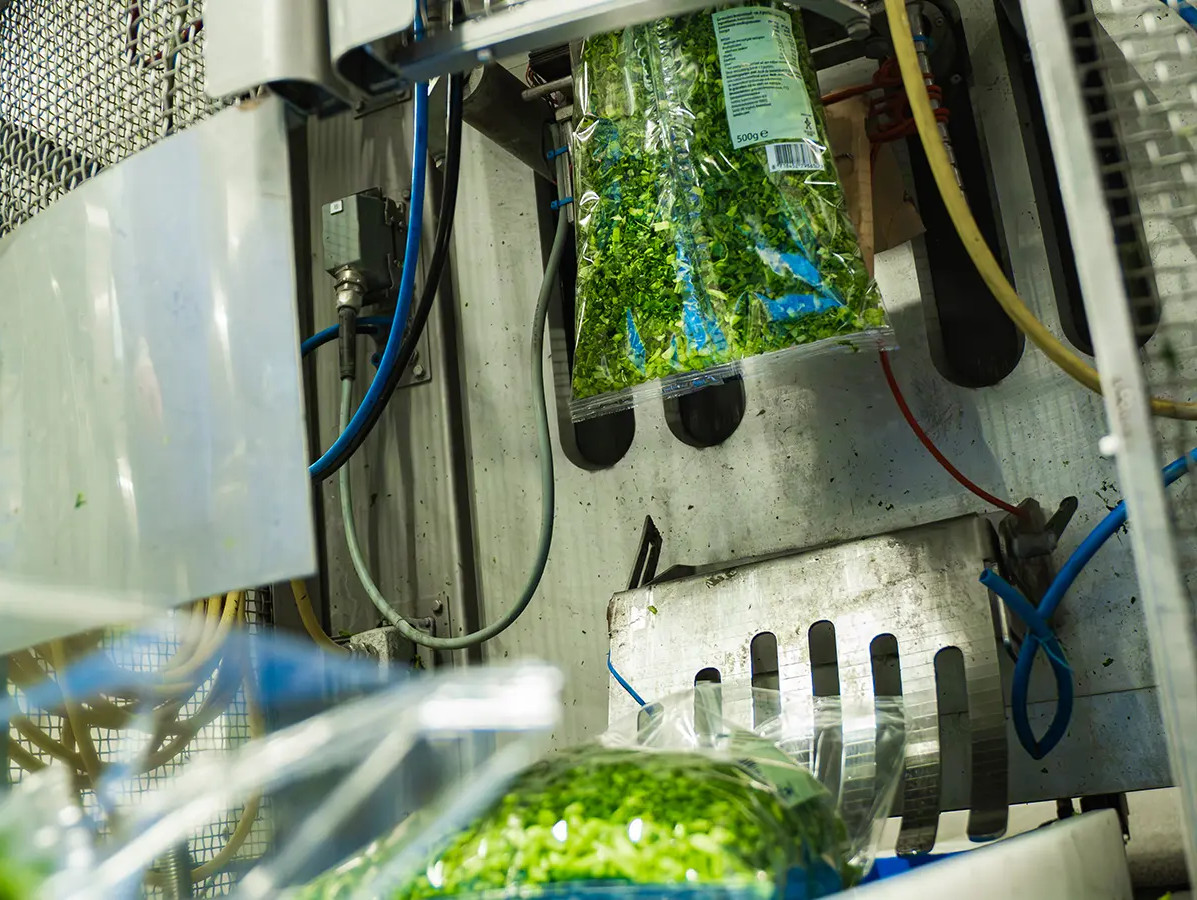
But automation is not just about technology; it also requires trust. In the old factories, semi-finished goods were moved manually from one line to another. In the new factory, operators start orders in our MES system, after which the AMR robots take over. “At first, people really had to learn to trust the system. Sometimes they tried to work around it because they thought it would be faster, but that actually disrupted the process. That’s why we communicated extensively, especially with management and team leaders, to demonstrate that the system works and that they can rely on it. A solid production plan was essential in this.”
Technically, the implementation was also challenging. Different systems had to work together seamlessly, from the AMRs to the planning systems. “The functional operation of all systems has to align,” says Sander. “You also need suppliers to collaborate under your own direction and integrate your internal work processes into the system. Without proper planning it simply won’t work; an overloaded system leads to traffic jams in the factory and lower efficiency.” The scale at which Hessing automates requires professional coordination. “We have 200 AMRs operating and our own control room that manages the entire system,” Sander says. Due to the demanding conditions—such as a humid, sometimes wet environment where product contamination may occur—malfunctions in an AMR are unavoidable. “Our operators and technicians now have a great deal of knowledge in-house, allowing us to keep our systems running independently.”
The impact on employees is clearly noticeable. “For operators, the work has become physically lighter. We process around 320 tonnes of raw materials per day. Lifting and stacking had to change significantly from a workplace safety perspective. Now the semi-finished goods warehouse handles this automatically. Operators can focus on tasks that truly add value. There is a limit to the weight allowed in the crates, ensuring they always remain within occupational safety standards.” Another key success factor is the employees themselves. “In improvement projects, we involve operators, engineers, and team leaders in developing solutions. For example, we implemented vision technology to automatically verify product barcodes at the line. This eliminates unnecessary manual checks and gives operators more time for other tasks.”
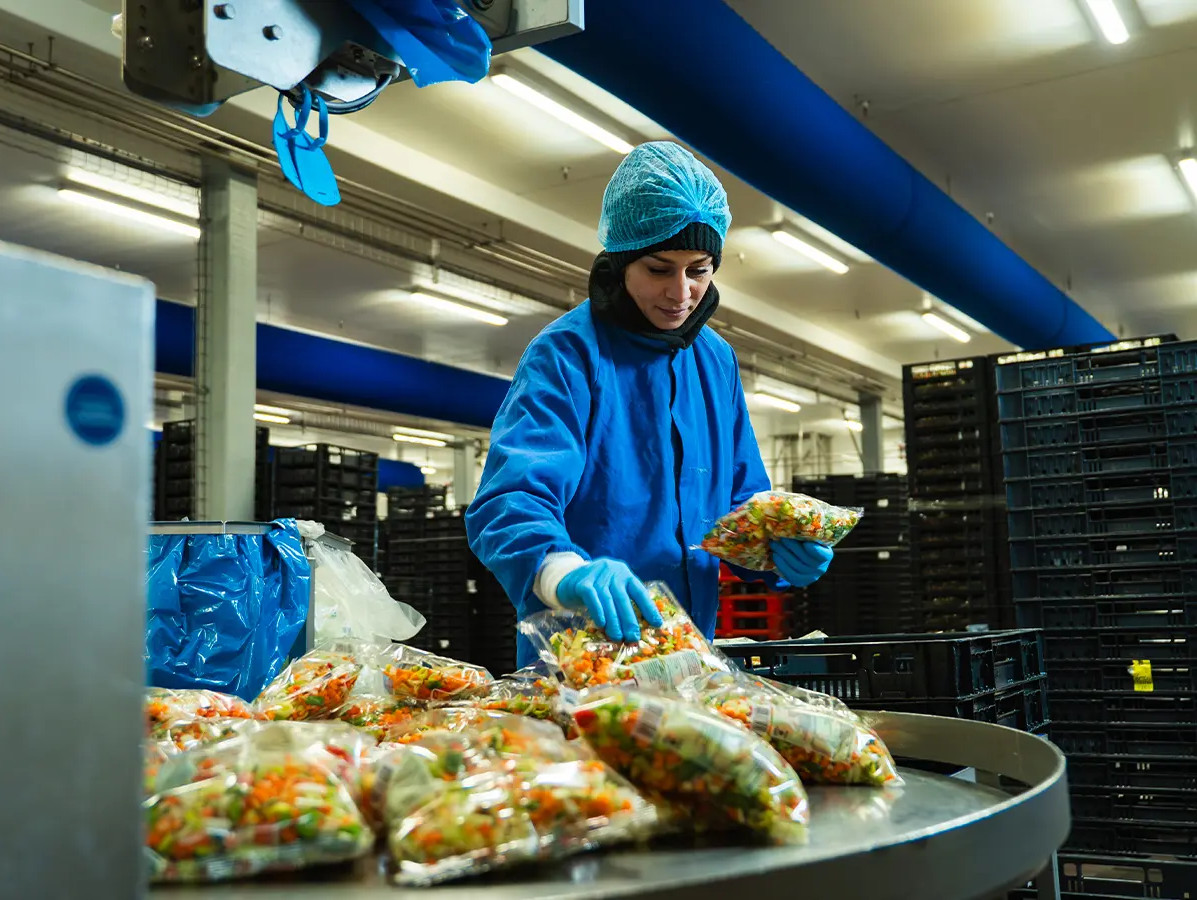
Sander Mens is especially proud of how stable the system now runs. “In the beginning, there were many concerns about the semi-finished goods warehouse, but now, three years later, it is rarely mentioned as a source of problems. People trust it and it fully supports our production. For me, that’s the best compliment.” The next steps for Hessing also clearly lie in further automation. Meal salads, turntables, and the dispatch area for retail order picking are processes that will be automated further. “We produce 4.5 million packages per week that must be on supermarket shelves fresh that same day. That’s where we will be focusing fully in the coming years,” Sander concludes.
For other food producers looking to automate, Sander has a clear lesson: prepare thoroughly and involve your users from the start. “You can’t simply transfer all your manual processes one-to-one; you will have to sacrifice some flexibility and work in a more structured way. That is an improvement in itself.” For smaller companies in particular, he advises collaboration: “Team up with peer companies and develop a concept together. If your processes are comparable, you can share the benefits. That way you divide the development costs and make automation financially viable.”
Hessing shows that automation in the food processing industry is not just about technology, but above all about a smart combination of technology, planning, and engaged employees. The result is a factory that produces fresh products daily with maximum efficiency, while employees can perform their work more effectively and have confidence in the system. “Our goal is simple: make sure the products reach the customer on time, every single day.”
Hessing Superves is a keynote speaker at the Food Tech Event on May 20 and 21 at the Brabanthallen in ’s-Hertogenbosch. There they will present the next step in this story live during a lecture. Join the trade fair as well: meet more experts and see smart solutions in action!
Source: Vakblad Voedingsindustrie 2026
Magazine Voedingsindustrie has been made possible in part by:



© COPYRIGHT 2026 VOEDINGSINDUSTRIE | ALLE RECHTEN VOORBEHOUDEN
Powered by Wallbrink Crossmedia © 2026