

The food industry sets high standards for hygiene and food safety. Yet Jack Pluim of Jackit still often sees work being carried out in environments that are not properly designed for it. With Sealwise panels and his own Food SAVE Seal kit, he wants to change that. With antibacterial impact.
Jack Pluim (Jackit) has been working in the food industry for many years. He renovates, builds, and sees what happens on the production floor every day. “I’m certain that with Sealwise I have the best material available,” he says. “But too few people know that yet.” Richard van den Hout is convinced of this as well. He supports Jack with sales, consulting, and trade fairs. “Together we share the honest story with companies, architects, and wholesalers. These panels are extremely suitable for food environments: antibacterial, and therefore food safe.”
Jack mainly wants to clarify how Sealwise differs from other panels widely used in the food industry, such as FRP panels. “Those consist of fiberglass-reinforced polyester, with a protective top layer. You can clean the top layer, but once it gets damaged, a problem arises. Then bacteria can reach the core and continue multiplying.” According to him, this is an underestimated risk in food production. “And damage is inevitable,” Jack says. “Just think of carts bumping into the walls.”
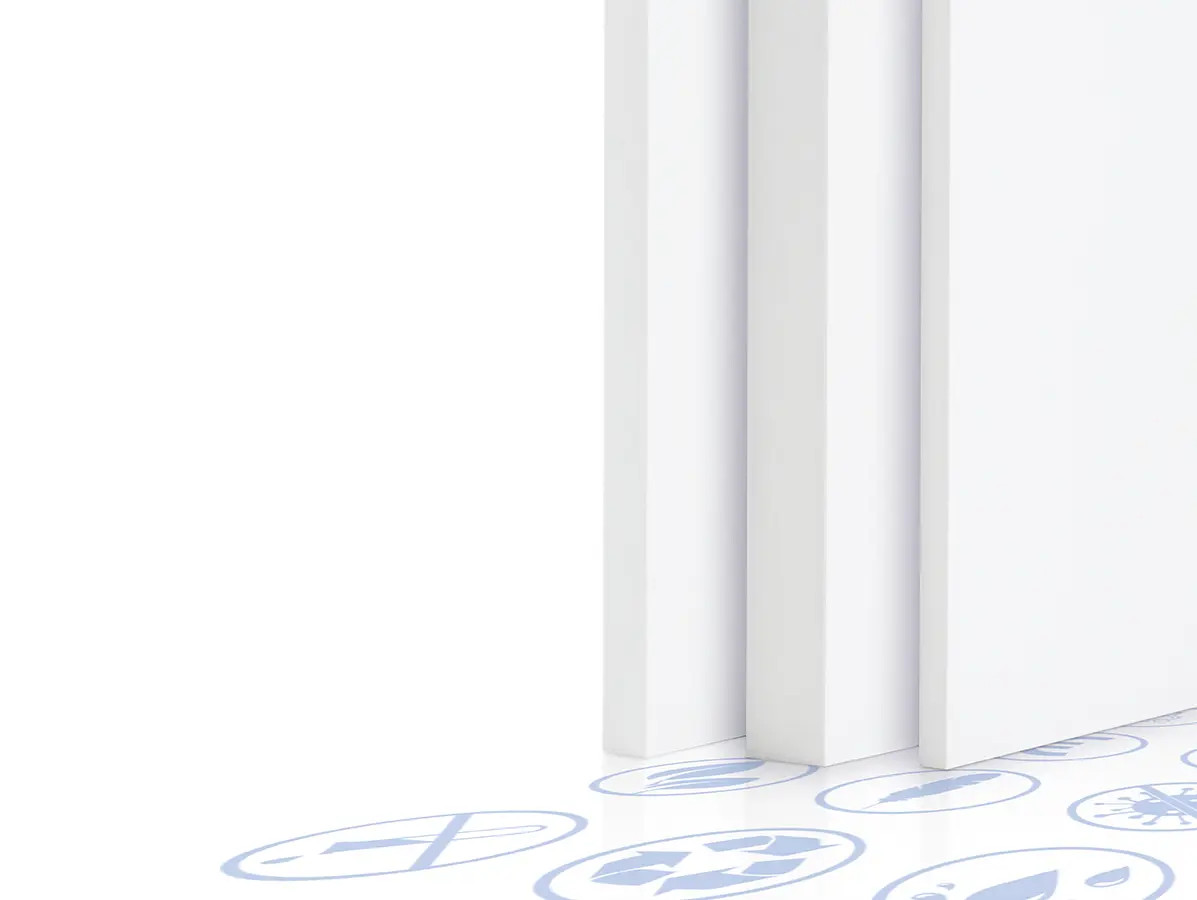
“Sealwise works differently,” Richard explains. “The antibacterial effect is not only on the outside, but throughout the entire panel. It works actively from within.” This is achieved by adding Sealwise Protect, which contains silver ions, among other components.
That means bacteria are actively tackled, both in general and in the event of damage. “If bacteria land on it, they die within 24 hours. That also applies to Listeria, a bacterium that poses a major risk in the food industry and simply doesn’t stand a chance on Sealwise panels.”
Jack mentions the COVID period as an example. “If we had had these panels in the Netherlands at the start of the pandemic, it would immediately have made a difference,” he says. “Within 24 hours the virus on the walls would have been gone.” During that period, Sealwise panels that were already available were used in England and the United States for temporary walls.
In addition to hygiene, fire safety also plays a role. “In the event of a fire, you are only allowed a certain smoke classification,” Jack explains. “Polyester often reaches s2. Sealwise reaches s1. That is simply safer.” Richard adds: “Sealwise panels meet fire classification B-s1-d0 as standard. With other panels you sometimes have to purchase a separate version for that.” The environmental aspect also matters. “FRP is often said to be recyclable. That is partly true. Sealwise panels, however, are fully recyclable. You can shred them and return them to production.” A Sealwise panel has an economic lifespan of at least 25–30 years. “The panels are slightly more expensive per meter, but the advantage lies in installation and in all the strong properties combined in a single panel. If you want those same properties in an FRP panel, you pay at least double,” Jack explains.
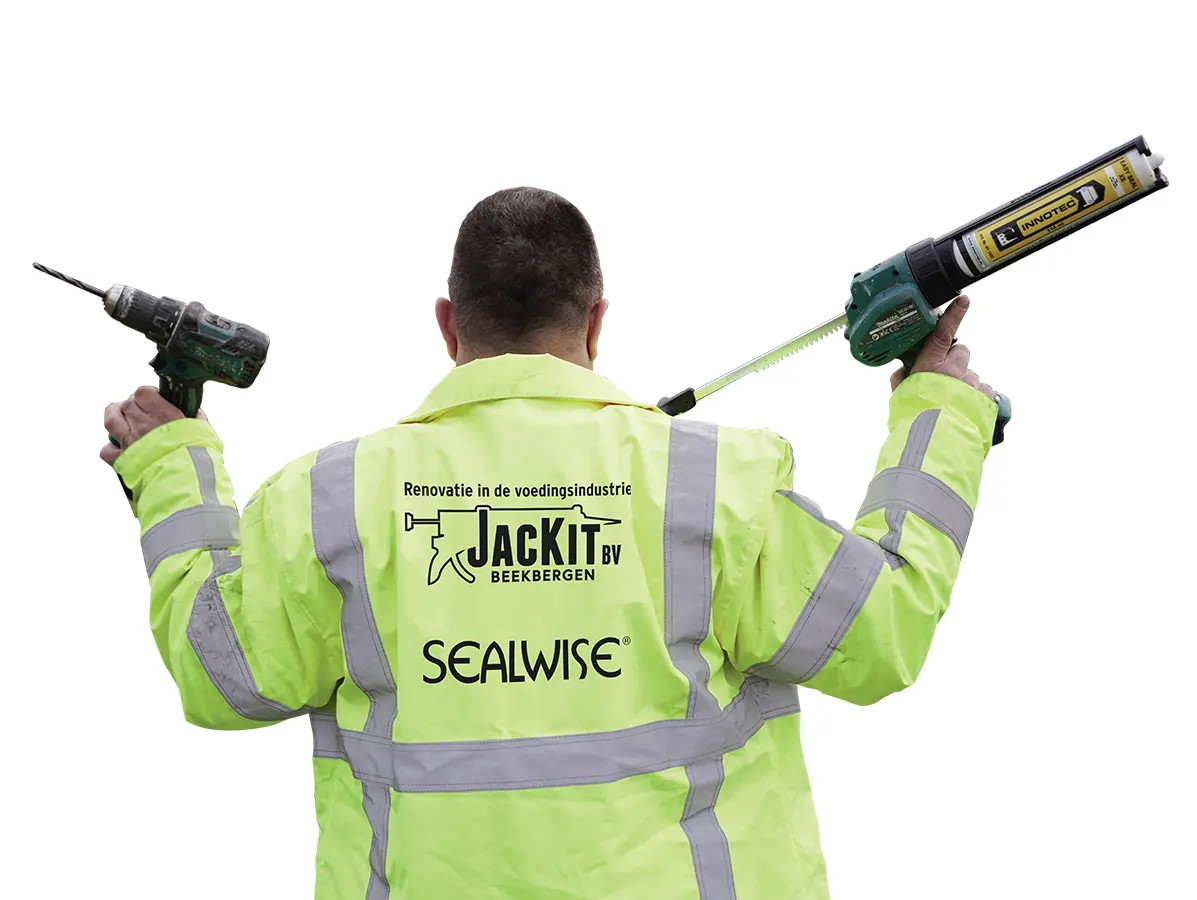
Jack’s team works at night or on weekends if necessary, so production is not disrupted. “The panels fit tightly together. That allows for fast installation, and you do not need a secondary wall for connections. They are also suitable for renovations. With renovation projects you never know what you will encounter, but with Sealwise we can always continue. The customer knows exactly what to expect, with a solid ROI.” Jackit also works with a complete system, including corners and finishing materials. Jack mentions milk powder environments as the ultimate application. “That is one of the most food-safe environments there is. If you meet all the requirements there, you’re in good shape.” According to him, food safety sometimes also requires the courage to make better choices. “Why aren’t they using Sealwise yet? Are companies still unfamiliar with the advantages? Or are other interests involved?”
In addition to the panels, Jack developed his own Food SAVE Seal, a high-quality silicone sealing compound for the food industry. The sealant is available in gray, off-white, pergamon, and white, and is suitable for wet areas (see the box for certifications). “This unique sealant completes the picture: antibacterial panels, corners, and sealant that are easy to keep clean and last for years,” he concludes. His message is simple: “I’m on an enthusiastic mission because I see what my panels and sealant truly deliver in practice. More people should — no, must — experience this.”
Food SAVE Seal has:
Beeld: © Marcel van Engelenburg
Source: Vakblad Voedingsindustrie 2026
Magazine Voedingsindustrie has been made possible in part by:



© COPYRIGHT 2026 VOEDINGSINDUSTRIE | ALLE RECHTEN VOORBEHOUDEN
Powered by Wallbrink Crossmedia © 2026





