
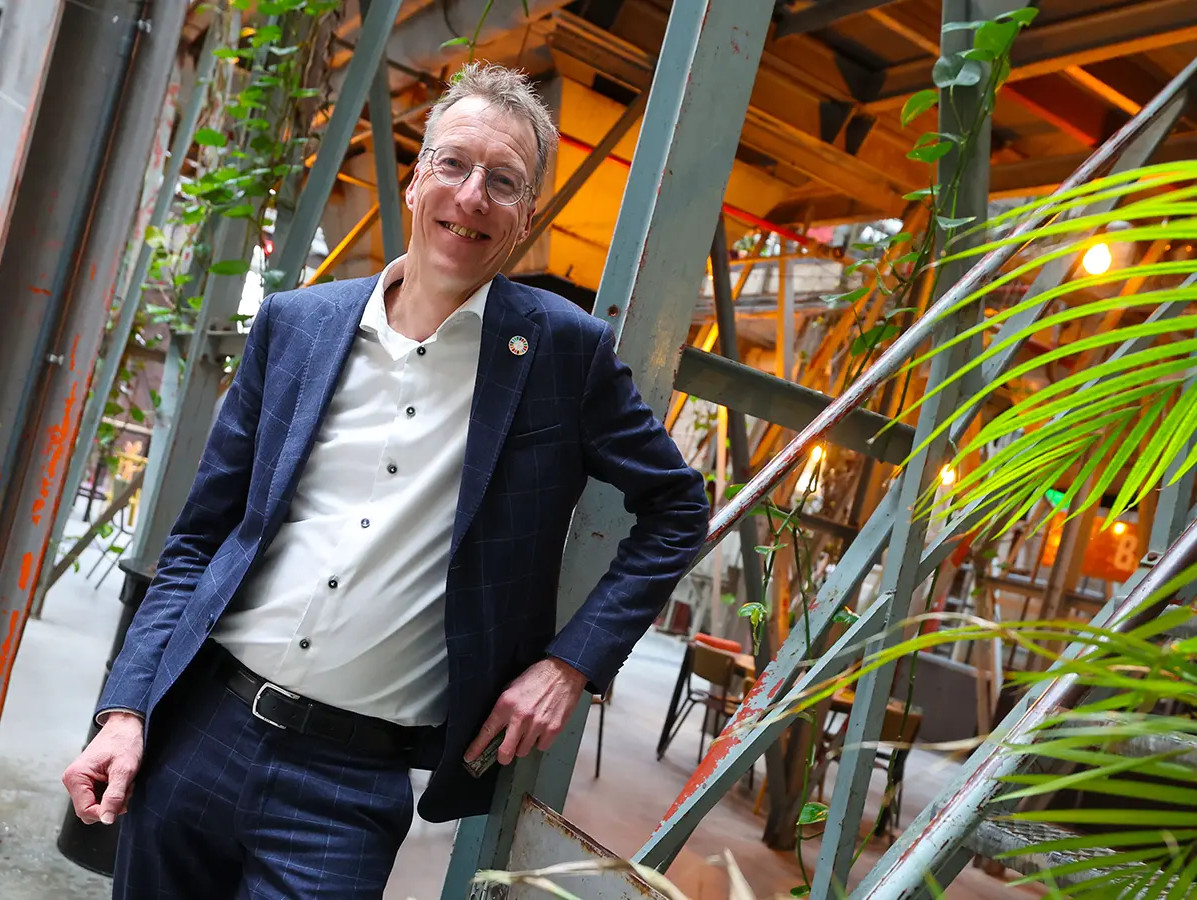
“Continue making packaging choices that prevent food waste, because every company achieves its greatest sustainability gains by minimizing the waste of all raw materials.” Toine Timmermans, director of ‘Samen tegen Voedselverspilling’ (Together Against Food Waste), speaks animatedly about the enormous impact that preventing waste has on sustainability. In fact, it’s a no-brainer, because avoiding waste ultimately saves money at the end of the day.
New laws and regulations around packaging, such as the PPWR, distract from where the biggest gains can be made: preventing waste, according to Toine. He has been working on sustainable food chains for years, including as program manager for sustainable food chains at Wageningen University & Research (WUR). In his work for the foundation ‘Samen tegen Voedselverspilling’, he sees the effectiveness of strong collaboration across the chain.
“Packaging plays an important role in food safety and shelf life. The longer food remains safe to consume, the smaller the chance of waste. Traditionally, shelf life is divided so that one-third of the period takes place with the producer and one-third with the retailer. The final third is for the consumer. The longer the turnaround time, the more time each phase has to process and consume the raw materials.”
“It’s not so much low-hanging fruit as it is the fact that the quickest way to reduce environmental impact is simply by not wasting the food that has been produced. Because of the upcoming PPWR packaging legislation, the focus is currently very much on sustainable, recyclable packaging that fits into a circular processing system. While the circularity of packaging certainly needs improvement, that perspective is too one-sided. The CO₂ emissions of a packaged processed food product can be attributed for 95% to the product itself, and of the remaining 5% of emissions only a small portion comes from the packaging.
The greatest gains therefore come from preventing waste by packaging the product in a way that aligns well with consumer behavior. Think, for example, of appropriate portion sizes and enough time to consume the product through improved shelf life. Within our shelf-life coalition, producers, supermarkets, trade organizations, and government partners work together to improve consumer understanding of shelf-life dates. Each year, people in the Netherlands throw away millions of kilos of perfectly edible food because they misinterpret the dates on the packaging. Packaging can provide more explanation through icons, for example about the difference between Best Before, and Use By.
In addition, the size of the packaging and the portion inside the packaging can better match what households actually use. The number of single-person households is increasing. If they only use part of a package because it contains too much, the rest quickly ends up in the trash. We are also looking for partners to examine which solutions could help address this.”
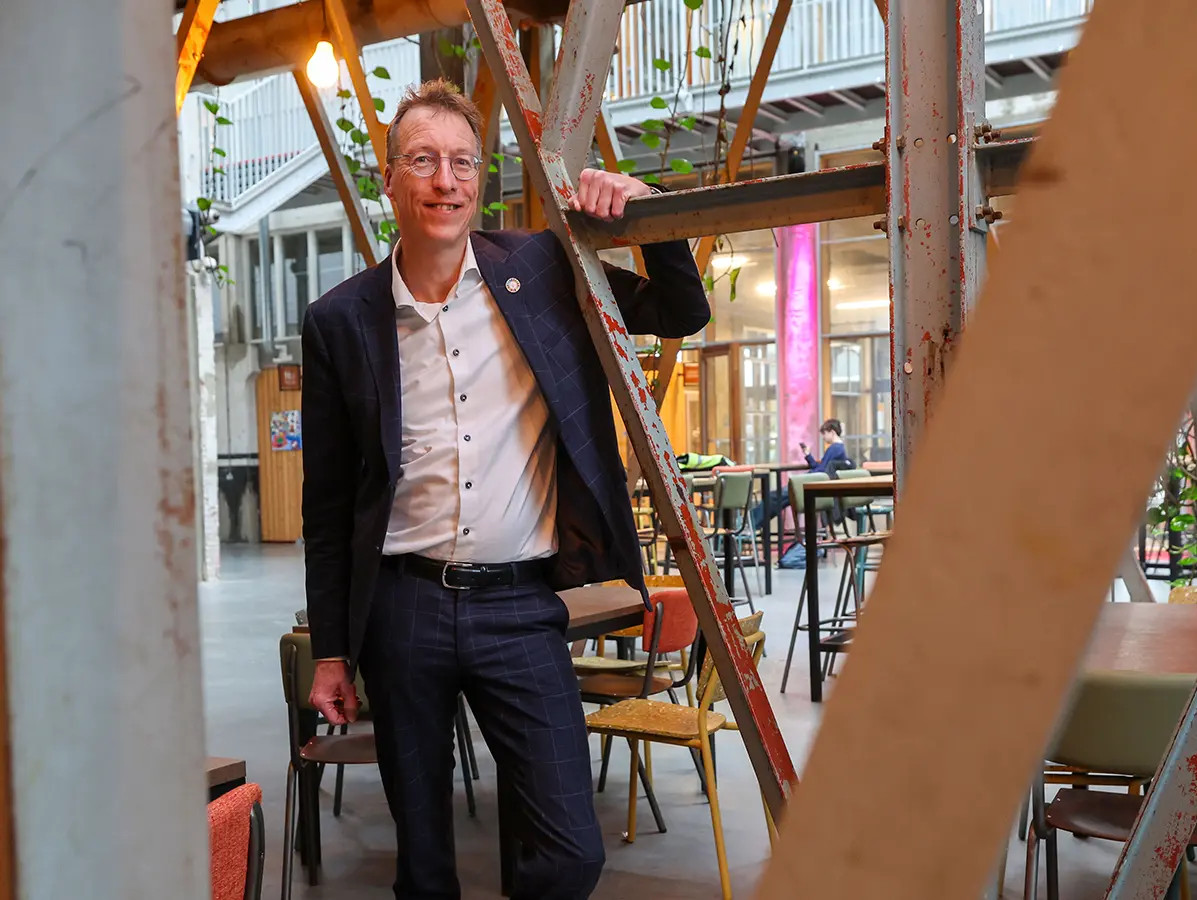
“Yes, and I think that is a major distraction caused by the PPWR. It is a watered-down regulation that focuses only on the packaging material, not on the optimal use of the entire packaged product. Two years ago, we saw a 23% decrease in waste, partly thanks to more portion packaging. That decline in waste in consumers’ homes has now stagnated, partly because of the approach of the PPWR. The regulation actually encourages larger packaging formats, where less packaging material is needed per product. Yet it is precisely that waste at the consumer level that can now be addressed. Most large producers and retailers have already reduced waste in production and on the shop floor and are on track for their 2030 targets. For supermarkets, the largest share of CO₂ is now in scope 3, as much as 95%. That means emissions mainly occur before the product reaches the supermarket during processing and after it leaves the store, in consumers’ homes. Those emissions can be reduced by preventing waste in consumers’ homes.”
“We still see the greatest hesitation when it comes to how consumers will respond to different packaging or product offerings. Take vacuum-packed meat, for example, which has a longer shelf life and is packaged more efficiently with less empty space in the package. The business case was clear; it was essentially a no-brainer. It saved money for the producer, and the consumer used more of the product. Yet it took ten years to introduce that to the market, even though the citizens’ assembly that issued recommendations on climate measures supported our mission as Foundation, Samen tegen Voedselverspilling, with 97% approval. That assembly did not only include environmentally conscious consumers but also climate skeptics. So it does not necessarily have to be difficult to implement measures that prevent waste. There is broad support for it.”
“Yes, I actually expected companies to take it up themselves. There is so much money to be saved and sustainability targets come much closer with such measures. But companies do not want to be the first. The fear is: ‘What if this prices us out of the market?’ It has become clear that one company with one innovation will not convince an entire sector to adopt a certain approach. As a foundation, we are therefore increasingly building coalitions so that supply chain partners can share the risks of such a change. If a retailer takes the lead together with several suppliers, people begin to see the effect of an intervention. That builds confidence. Once an innovation has proven itself in the market, as with vacuum-packed meat, others will naturally follow.
We are also working on developing shared insight into which interventions actually work in reducing food waste among consumers. For example, we are currently developing an ‘impact engine’, a simulation model for interventions such as a specific portion size. We start this on April 1. The model uses data from consumer interventions from around the world, studies on consumer behavior, and demographic data. With the help of AI, the data is analyzed and personas have been developed that represent specific consumer groups. An intervention can then be presented to such a persona, for example a single-person package of chopped vegetables: ‘Which target groups does this appeal to and what is its effect on food waste within the household?’”

“In a broader sense, there is little support to be expected from the European Union, not even for more sustainable packaging. For example, edible coatings already exist that can serve as packaging. For the time being, however, they are not approved by EFSA. Even though they already meet many of the requirements that packaging must comply with, the producer must also prove that the coating is a better solution than the packaging currently in use. That is a multi-year process that costs a great deal of money. Which producer is going to take that on by himself?”
“At the same time, the Netherlands offers a strong innovation landscape where supply chains and retailers are open to experimentation. It was recently in the news that Dutch supermarket chains are among the frontrunners in sustainability. In conversations with foreign retailers, it often becomes clear that they do not even see scope 3 as emissions they need to address. In that sense, I encourage producers to make use of the Dutch testing ground, so that they are well prepared when introducing a sustainable intervention abroad.”
“Innovations such as the edible coatings mentioned earlier are long-term developments. In the Netherlands, the time is ripe for the interventions already discussed that help consumers waste less food. It is important that producers do not lose sight of food waste when choosing packaging. By processing and consuming raw materials as efficiently as possible, a food chain becomes far more agile and resilient. It is absurd that 40% of edible food is lost in the chain. We have just had an excellent growing season with surpluses, and then that issue quickly fades into the background again. But in lean years we simply cannot afford such losses.”
“Ultimately, reducing food waste is the most obvious sustainable solution. Consumers understand this, as the citizens’ assembly has shown. Producers and retailers save money and emit less CO₂. It should be noted that this may, as with vacuum-packed meat, mean that slightly more film is needed per kilogram of product. However, when you calculate that across the entire packaged product and the waste that is prevented, that small amount of additional film and the extra CO₂ emissions are negligible if it results in a product with a longer shelf life that is actually fully consumed.”
Foto's: © Bert Jansen
Source: Vakblad Voedingsindustrie 2026
Magazine Voedingsindustrie has been made possible in part by:



© COPYRIGHT 2026 VOEDINGSINDUSTRIE | ALLE RECHTEN VOORBEHOUDEN
Powered by Wallbrink Crossmedia © 2026