
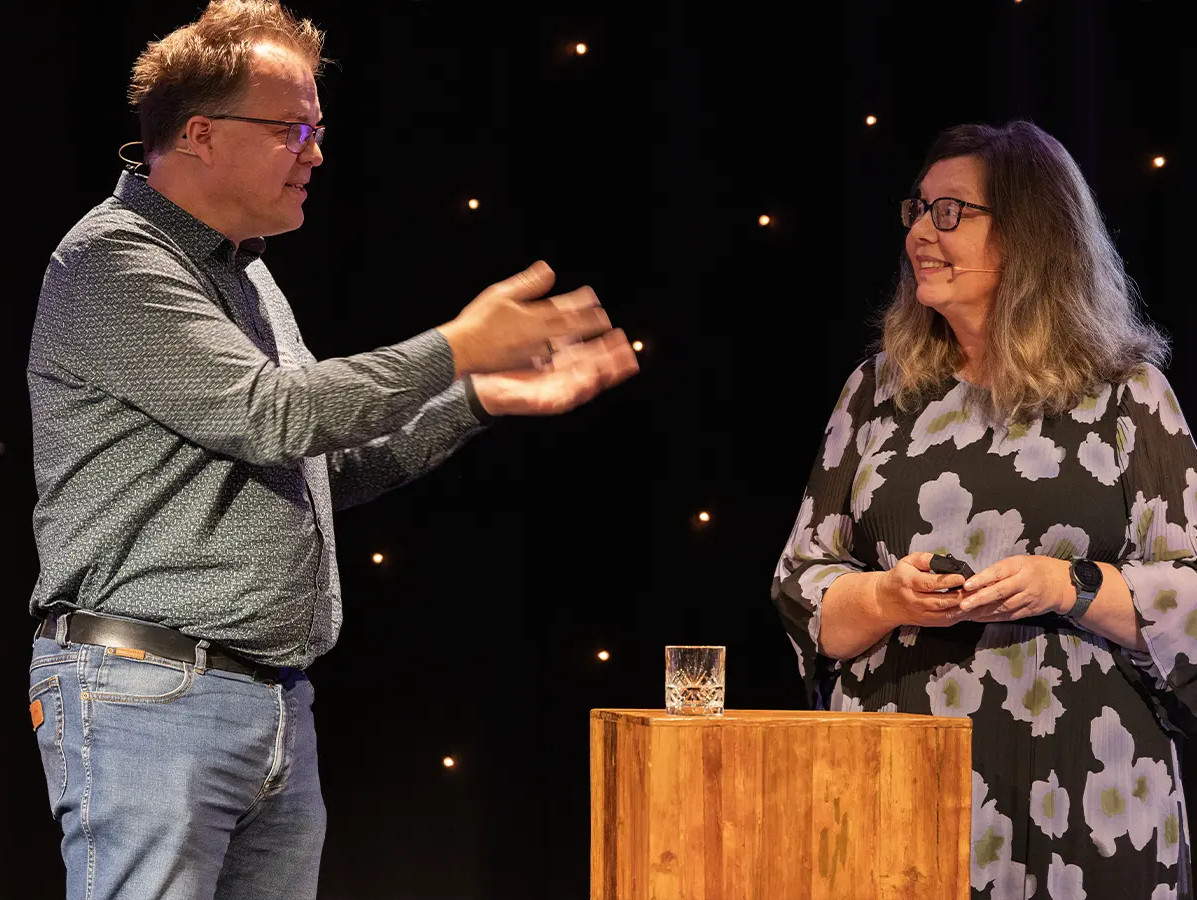
On Thursday 13 November 2025, around 75 entrepreneurs from the food industry and retail came together for the 8th edition of Retail meets food industry. The event, organised by Foodindustrie Experts, addressed The Future of Food with a programme of inspiring speakers.
Legislation, sustainability targets and new technologies are putting pressure on the entire chain. Food entrepreneurs are facing major decisions. Which direction will it take, and how can you make a difference? During The Future of Food & Retail, participants were presented current insights, practical tools and inspiration.
The afternoon opened with a duo presentation on the future of packaging. Marion Beugelsdijk, packaging specialist and sustainability expert at Albert Heijn responsible for the sustainability of private-label packaging, and Ulphard Thoden van Velzen, senior scientist recycling at Wageningen University & Research (WUR), outlined at pace how the European PPWR regulations and the delicate balancing acts around packaging are already turning the packaging world upside down. Complying with the new rules, which will apply from August 2026, is far from straightforward. “This Regulation is really going to change our world,” Ulphard stressed. There will be stricter restrictions on so-called substances of concern in packaging, such as heavy metals, PFAS and dioxins. “Have you already had your own packaging tested?” he asked the audience directly. From the murmuring it became clear that, in many cases, this had not yet been done. “An additional problem,” he continued, “is that the threshold values set for PFAS are so low that they are hardly measurable, if at all. This is a serious concern.” By then, everyone in the room had been properly alerted.
The two speakers continued at speed through the highlights of the legislation. Topics included recyclability and the use of recyclate, packaging that is too small (and will be prohibited), and the use of pigments. Time and again, they addressed the bottlenecks and dilemmas you encounter once you start working on sustainable packaging. Marion illustrated these with numerous practical examples. “The outlines of the packaging policy at Albert Heijn are clear. But the challenges are significant,” she concluded. Their joint call to action: “Do not wait until everything in the law is clear and fully defined, because then you will be too late. Start preparing now.”
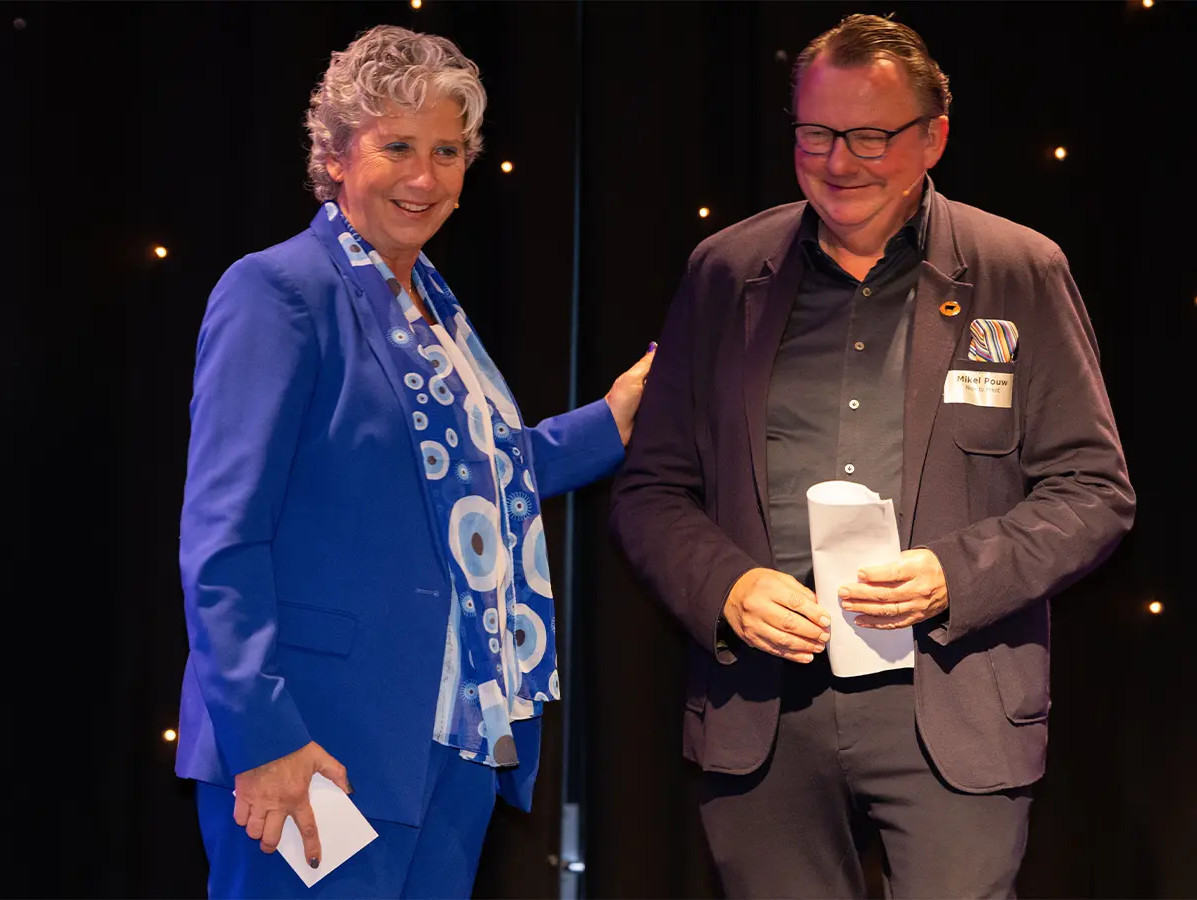
Saskia Stender (co-organiser of the event) next to Mikel Pouw
Mikel Pouw, director of Nice to Meat, spoke about the importance of focus within your company. “Becoming this large was never a predefined plan; it more or less happened to us,” he told the audience modestly. However, anyone listening to his story will recognise that this does not do him justice. Even if ‘becoming very large’ was not the objective, there was a clear mission behind the steps taken over the years. The decision to move away from fragmented activities and instead choose a very specific focus (in his case: quality meat and service) has paid off for the family business. “You need to be able to explain what you offer, and why you do what you do,” Mikel believes. “And you then need to communicate that consistently. If you do not explain what you do and have, and if you are not honest about it, your product will not gain value.”
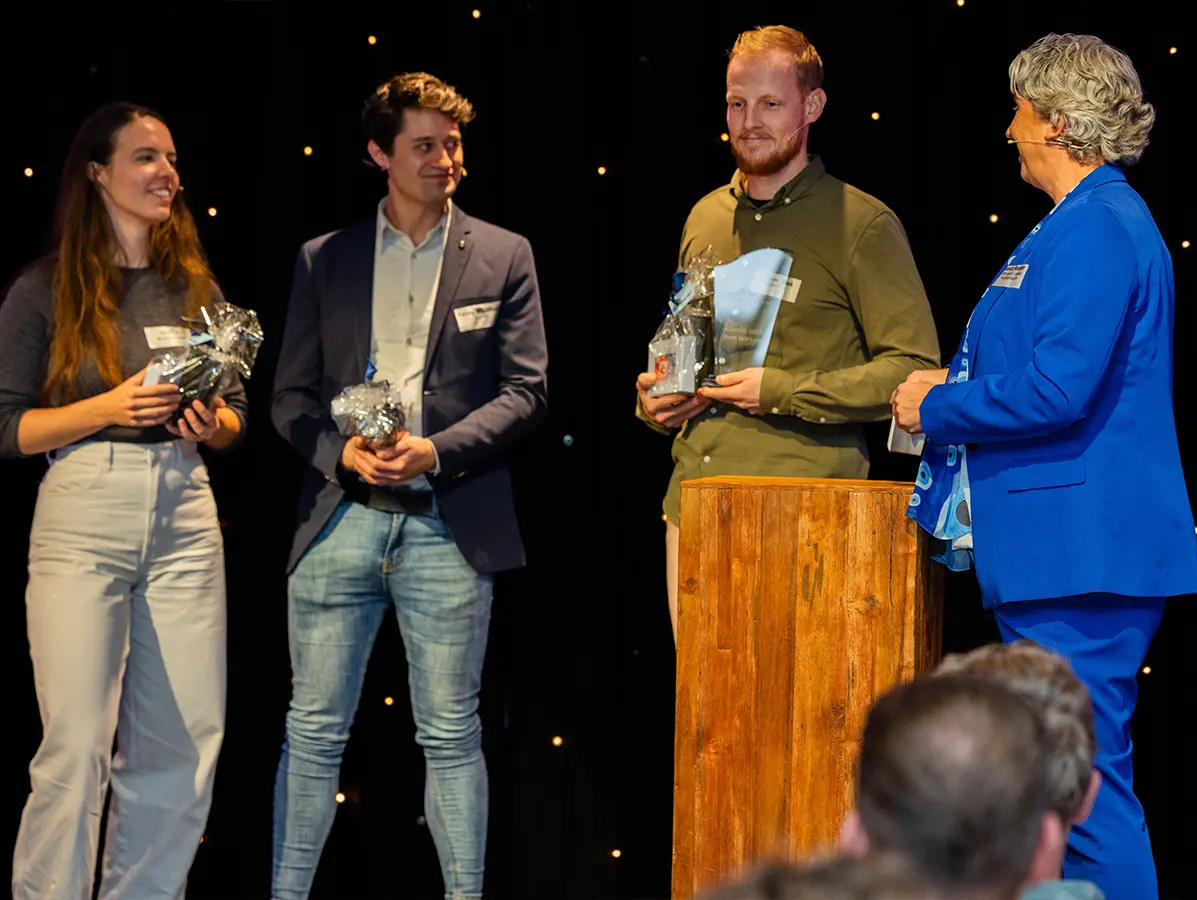
On stage: Mayke Schelhaas, Ferdy Molenaar and Tijmen Blok
After a short break, the stage was given to three startups. With which future-proof food innovations will the new generation enter the market? One by one, Mayke Schelhaas of OmnoMyco, Ferdy Molenaar of The Bugman and Tijmen Blok of Hippotainer presented their products and explained their unique value. Afterwards, the audience voted: the most promising startup was Hippotainer. Tijmen took home the trophy.
John Wallbrink gave a presentation on a new development in AI: the RAG. This is a database that can be filled with the knowledge and expertise present within your company and then used as a personal adviser for business questions in a rapidly changing market. “There is a lot of data and knowledge within companies, but this information is often not well structured. This is especially true for information that exists only in people’s heads,” John stated. “The urgency to collect and bundle this knowledge is increasing, because many employees will retire in the coming years, taking important knowledge with them.”
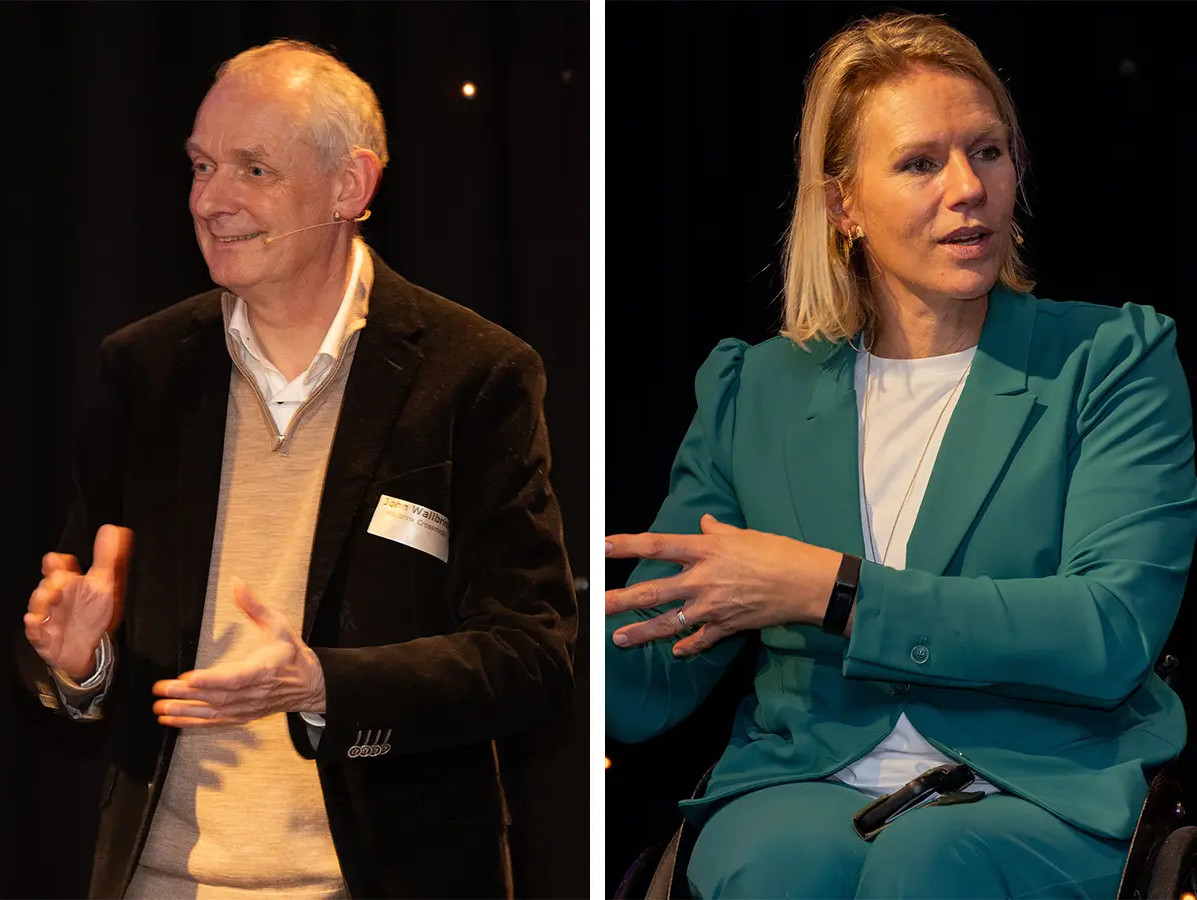
John Wallbrink (links) en Esther Vergeer
The afternoon concluded with a particularly inspiring contribution by Esther Vergeer, seven-time Paralympic champion in tennis and chef de mission at the Paralympic Games. She is also the founder of the Esther Vergeer Foundation. Inspiring and helping children with a disability to participate in sport is a key objective of this foundation. In an open and honest way, she spoke about the process of trial and error after suddenly being confronted with a spinal cord injury at a young age, and about what it means to re-enter everyday life. She described how she discovered where her talent lay, began to follow her dream and learned to manage her energy in order to perform at key moments. She talked about dealing with setbacks, being able to distinguish between main issues and side issues, and the importance of involving a coach to help with that. Her story contained many elements that resonated with the entrepreneurs in the room. It is not without reason that entrepreneurship is often compared to elite sport. For athletes, training and rest are essential to perform at a high level. But nutrition is, as everyone knows, at least as important.
As usual, that aspect was also highlighted at this event. Food and retail entrepreneurs were able to enjoy a range of well-prepared dishes during the informal drinks reception and the walking dinner. It felt almost like work.
Hoofdfoto: Ulphard Thoden van Velzen and Marion Beugelsdijk
Source: Vakblad Voedingsindustrie 2026
Magazine Voedingsindustrie has been made possible in part by:



© COPYRIGHT 2026 VOEDINGSINDUSTRIE | ALLE RECHTEN VOORBEHOUDEN
Powered by Wallbrink Crossmedia © 2026