
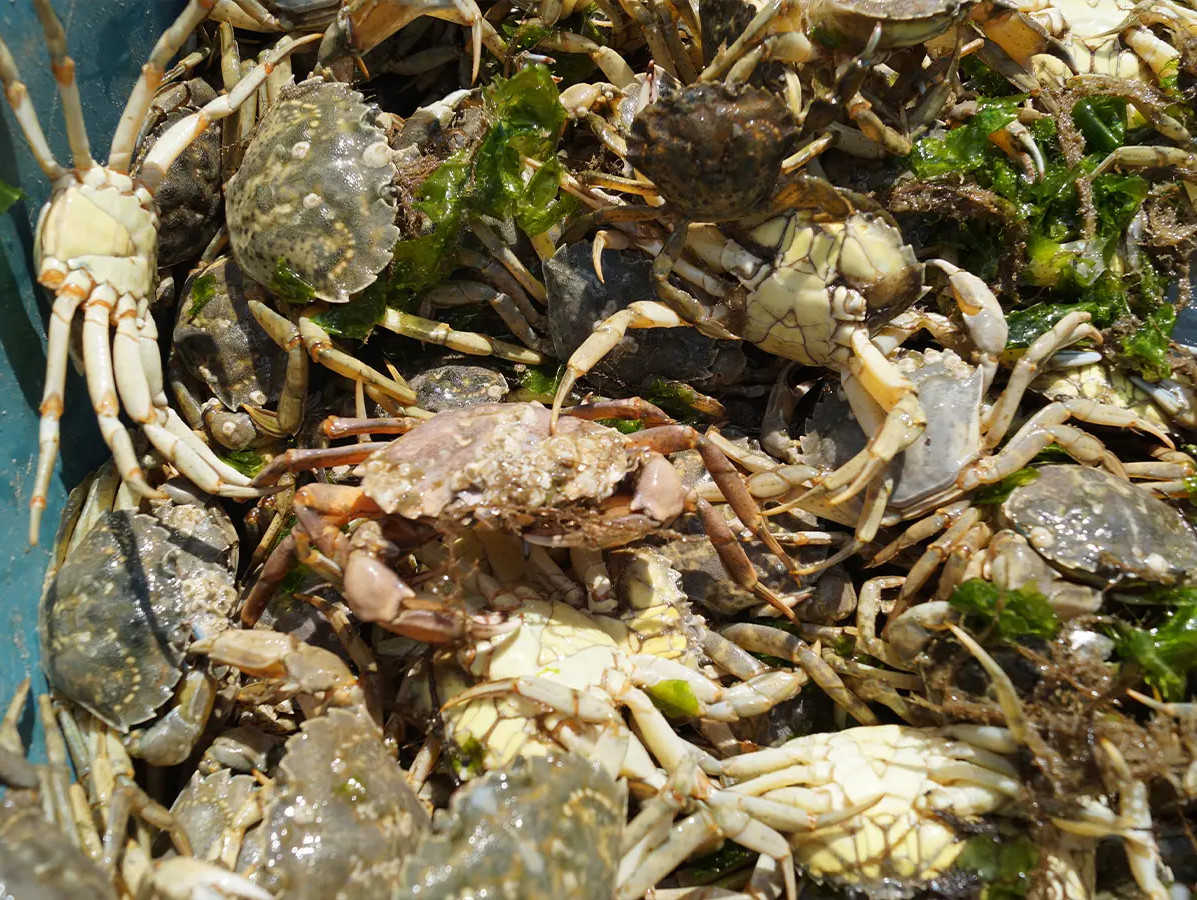
Various native and invasive small crab species are a rapidly growing problem for fisheries worldwide. Numbering in the billions, they displace many fish and shellfish species. Thanks to an innovation by Crustalicious, tackling this infestation has now become an inexhaustible source of tasty protein.
In 2013, entrepreneur Mark Soetman spoke with two fishermen: a mussel fisherman who complained that beach crabs were eating his mussel brood, and a freshwater fisherman who wanted to get rid of the invasive Chinese mitten crab because it eats everything. Controlling these crabs is difficult. And when you do catch them, nobody wants them. Still, Mark took on the challenge. “Often, 95% of the catch consists of small crabs,” Mark explains. “Fishermen just throw them back, because you can’t do anything with them. A crab is made up of segments. You notice that when you eat a large crab. Very tasty, but you need to set aside a good hour to get the meat out. With a small beach crab you have to put in an awful lot of effort for 15 grams of meat. Nobody does that. On top of that, the so-called ‘brown meat’ contain PCBs and heavy metals, which you should avoid.”
How do you extract crab meat from small crabs in a profitable way, and how do you remove the intestines without contaminating the crab meat? In 2016, Mark started looking for the right extraction method together with two business partners. The anatomy of the crab was the starting point. A line on the underside of the crab indicates where the entrails are located; that became the point of departure. “Together with Wetec Europe, a specialist in electrification, and machine builder GP Stainless, all possible extraction methods were tested. For seven years,” says Mark, “just keeping at it until we had the solution.”
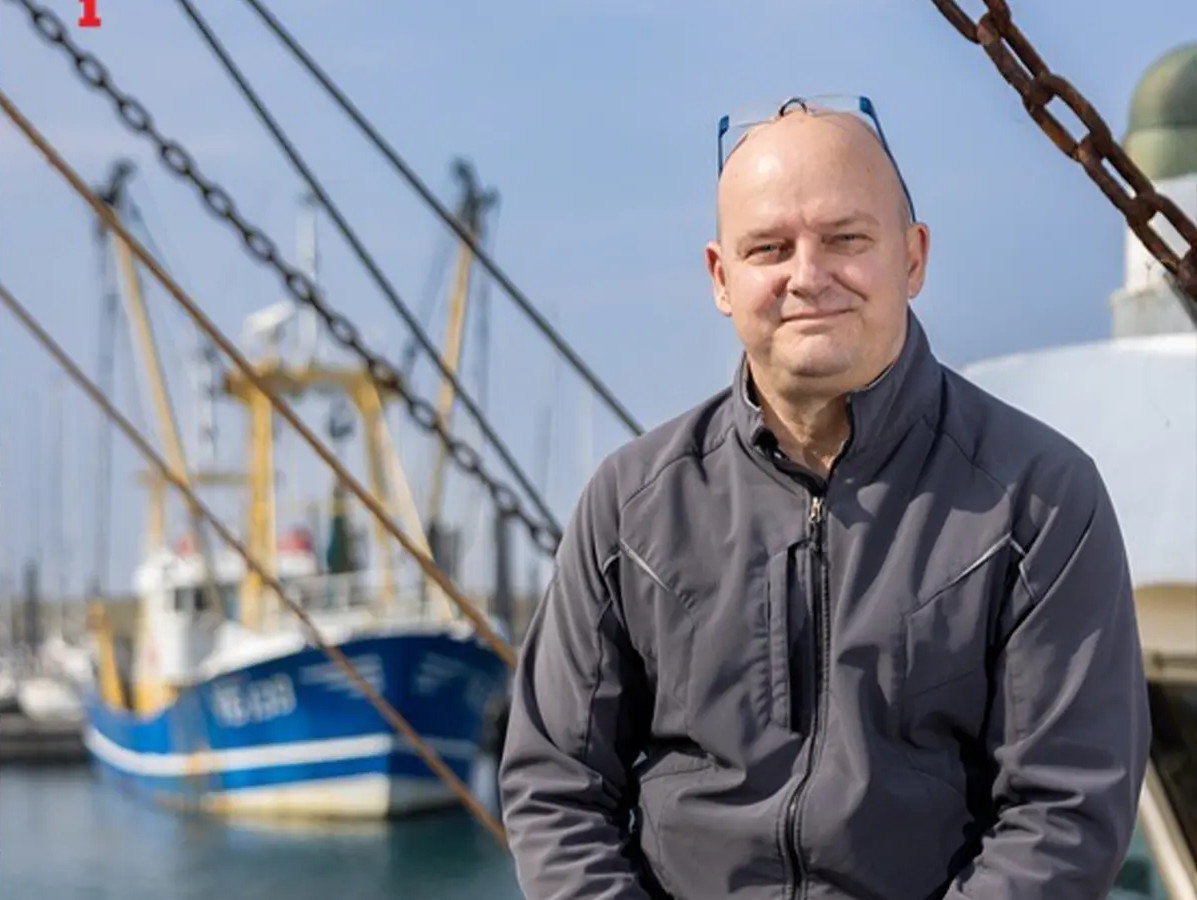
Mark Soetman
With a small subsidy and its own investments, that solution has been operating successfully on Colijnsplaat since December 2024. Smaller crabs with a shell of at least five centimetres are processed into pure, raw crab meat. One thousand kilos of crab yield two hundred kilos of high-quality crab meat. And a number of by-products, because nothing from the crab is discarded. The method developed by Crustalicious is patented, but Mark is willing to explain a few things: “The crabs are first sedated, which immobilizes them. They are then laid out one after another using robotics. The extraction then takes place fully automatically in two process steps. In addition to the crab meat, a residual stream is obtained that contains, among other things, colourants such as astaxanthin and beta-carotene, proteins, chitin and lime. All of these ingredients have various applications in the health and pharmaceutical industries. So it's asustainable solution.”
Crustalicious currently processes green and brown crabs, velvet swimming crabs and Chinese mitten crabs. More species will be added soon, according to Mark. “In the Bay of Venice there is a major problem. The vongole there is being eaten by the blue swimming crab, and on the French west coast the araignée (large spider crab) is starting to become a plague. We are in talks with those countries. Initial contacts have also been made with the US. On both the east coast and the west coast there are issues with the invasive European green crab.”
Fishermen earn around one euro for a kilo of small crabs. Raw crab meat, which consists of 75% protein, costs around €16.50 per kilo. Crustalicious supplies this deep-frozen and vacuum-packed, with a shelf life of two years. “That is one of our business models,” says Mark. “In addition, we offer our machines plug & play in three different sizes. For this we receive a licence fee and we guarantee a return of 20%.” Crustalicious is thus solving a global pest problem while also responding to the growing demand for protein from the increasing world population. “In order to grow, we are now looking for an additional investor. We need to let the market know that we are here. That will require a lot of effort. In five years’ time, I hope we will have machines operating worldwide and that both the fishing industry and the gastronomic world will have discovered us.”
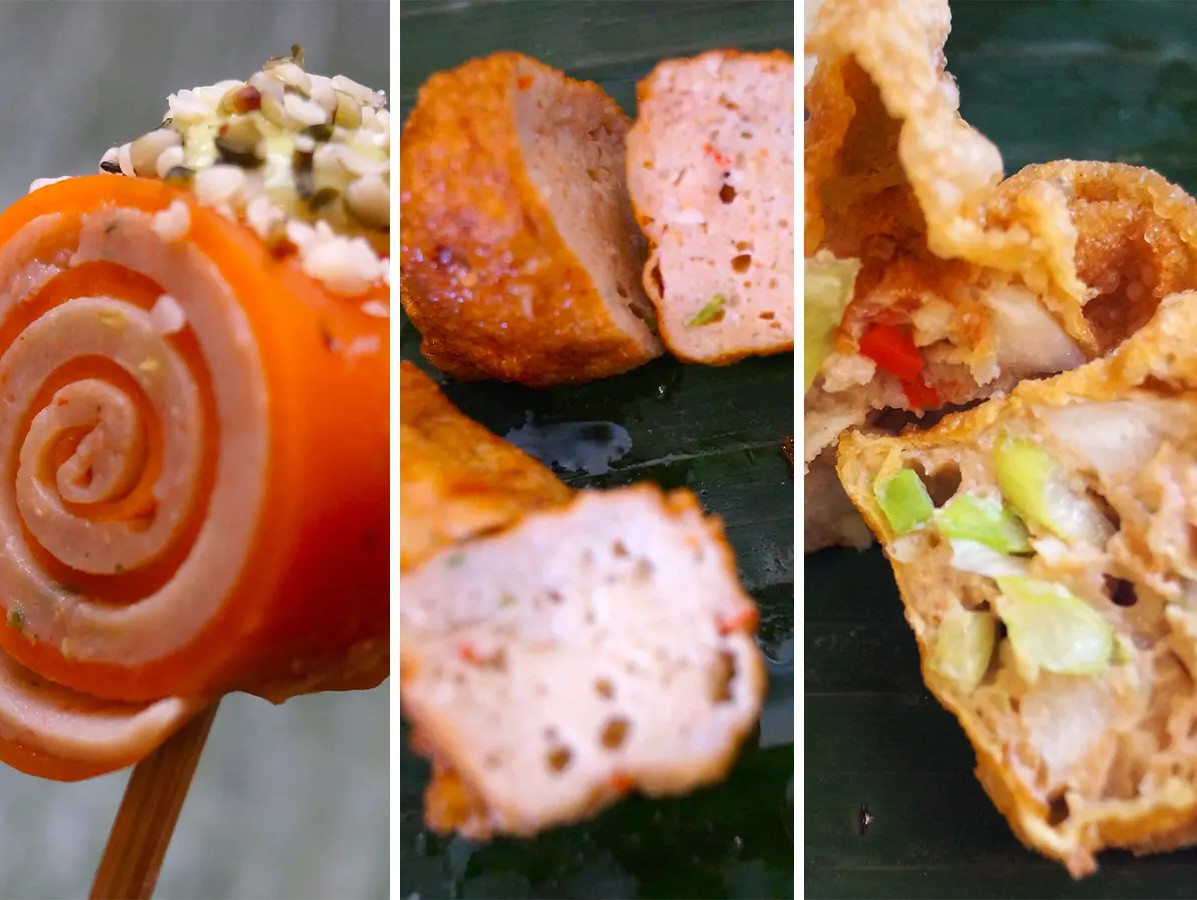
The raw crab meat is a somewhat translucent, greenish substance. “It takes quite a bit of explanation to convince a chef to start using our product,” says Mark. “Fortunately that works, because it really tastes good. A number of top chefs have already worked with it and are very enthusiastic. You can do a lot with it: crab cakes, dim sum, ravioli, soup, surimi made from real crab, and so on. We’ve even developed a new product: krabbeling (crab crumbs). A small amount of fiber added to our raw crab meat, mixed in pieces through the batter, briefly into the fryer… delicious.”
Source: Vakblad Voedingsindustrie 2026
Magazine Voedingsindustrie has been made possible in part by:



© COPYRIGHT 2026 VOEDINGSINDUSTRIE | ALLE RECHTEN VOORBEHOUDEN
Powered by Wallbrink Crossmedia © 2026