
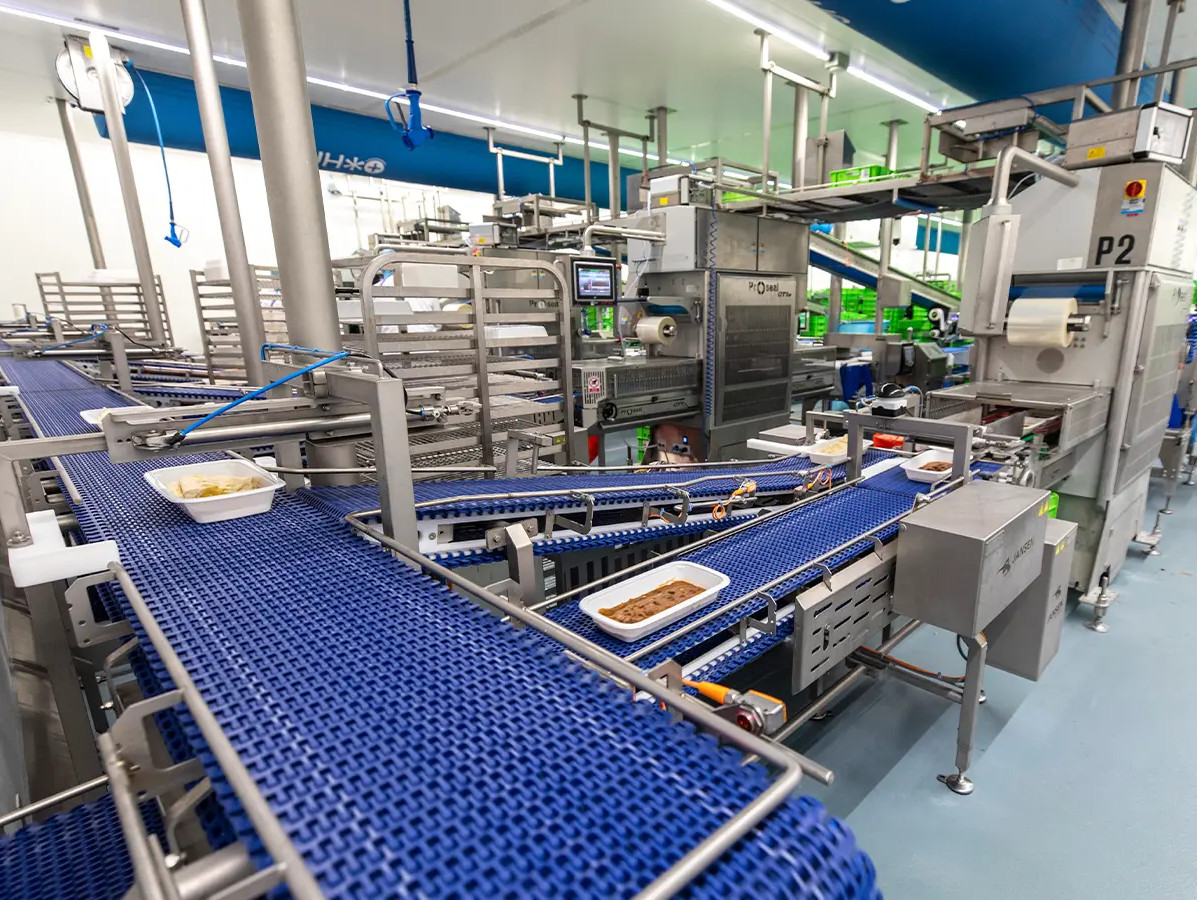
Artisanal butcher Van der Zee is ready for further expansion. The company serves the institutional market and is known as the butcher for Hanos. The production sites in Emmen and Twello have been renovated and expanded. Partner Roma Projects was responsible for the ‘cold store project.’
Van der Zee started in 1925 as a retail butcher and has built a strong reputation over the past hundred years. Today, the company—headquartered in Emmen—is known as the artisanal butcher for all Hanos locations in the Netherlands and Belgium. In addition, roasted meat products and ready-to-eat meal components are supplied to sister company Distrivers for the institutional market. Both business units account for approximately 50 percent of total revenue.
“With Distrivers, we supply healthcare institutions and foodservice with meat, dairy, meals, frozen products, and vegetables. It’s essentially an online supermarket tailored to healthcare,” explains Albert Ensing, Director of Procurement and Production at Van der Zee. Elderly care in particular is a growing market in an aging society. The share of meals continues to increase. Within this category, plant-based options are gaining ground. “That is partly driven by the Green Deal. We are responding to that. Bolognese sauce, for example, lends itself perfectly to a combination with plant-based minced meat, just to give one example,” Ensing notes.
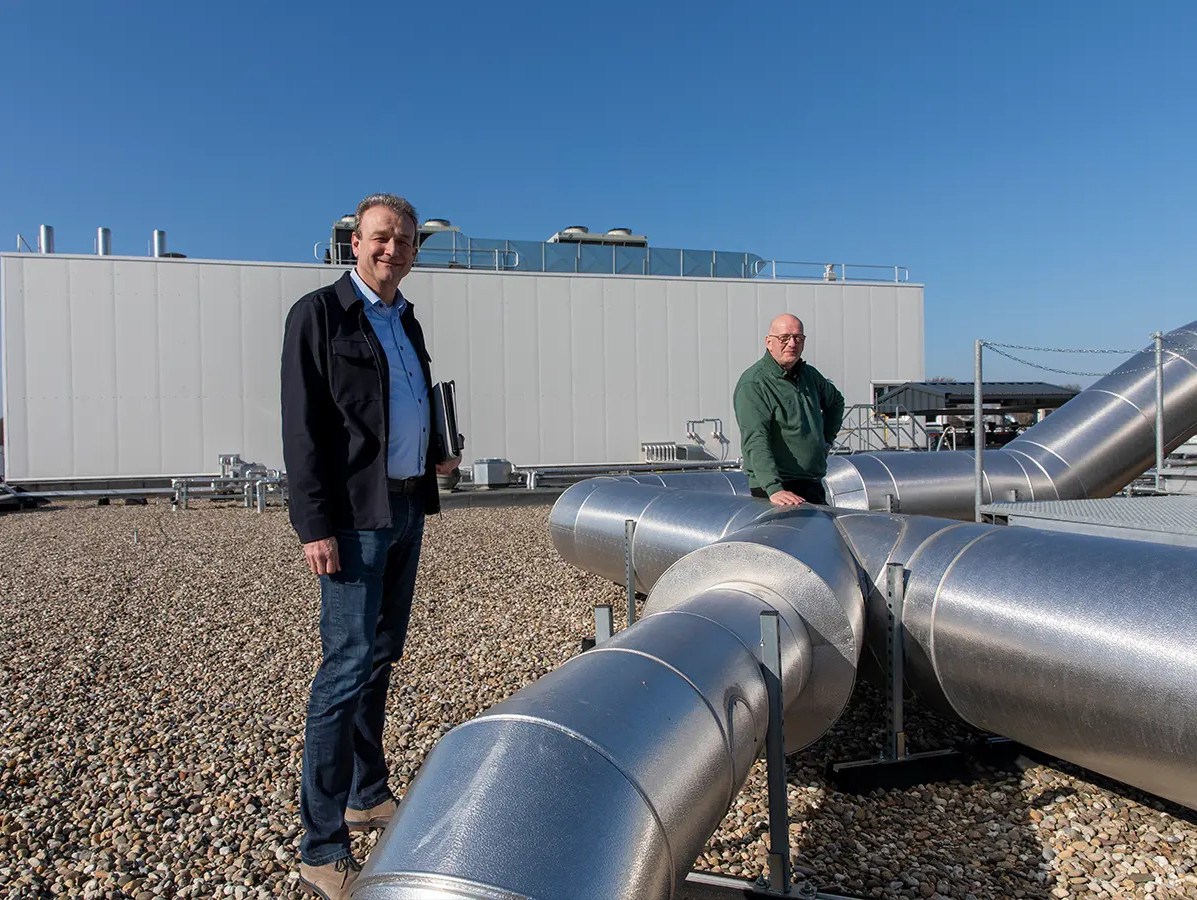
Paul Pallandt (left) and Albert Ensing
To prepare for the growth the company had already anticipated years ago, a new strategy was adopted 3.5 years ago. The production sites in Hoogeveen and Almelo were divested, leaving three locations: Emmen (preparation, such as cooking, smoking, baking, and roasting), Twello (fresh meat and sliced meat products), and Hoogeveen (distribution center). The Emmen site has been expanded and renovated, while Twello has mainly been expanded using the most modern materials. This has resulted in a significant efficiency gain.
Roma Projects was selected as a key partner in this extensive construction process, particularly known for its panels, cooling systems, and sliding doors. With tailored solutions and energy-efficient systems, the company ensures optimal conditions for every ‘cold store project,’ ranging from the bakery sector, fish and poultry processing, and the fruit and vegetable industry to meal services and the pharmaceutical sector, from distribution centers to production facilities. “Modernizing the existing situation in Emmen was highly complex, because the production process could not be disrupted during construction,” explains Roma director Paul Pallandt. The renovation should not be seen as a technical necessity, but as a strategic investment in continuity, food safety, and future readiness. “During the renovation of climate-controlled spaces and the installation of sandwich panels, we maintained continuous coordination with the construction team, of which Albert was also a part. That was a major advantage. It allowed us to keep the process running smoothly and keep communication lines short,” Paul reflects. “We held intensive meetings every two weeks. A lot of recalculations were required, for example regarding the placement of climate-controlled rooms. A great deal was achieved in Emmen within a relatively small surface and in a short time frame.”
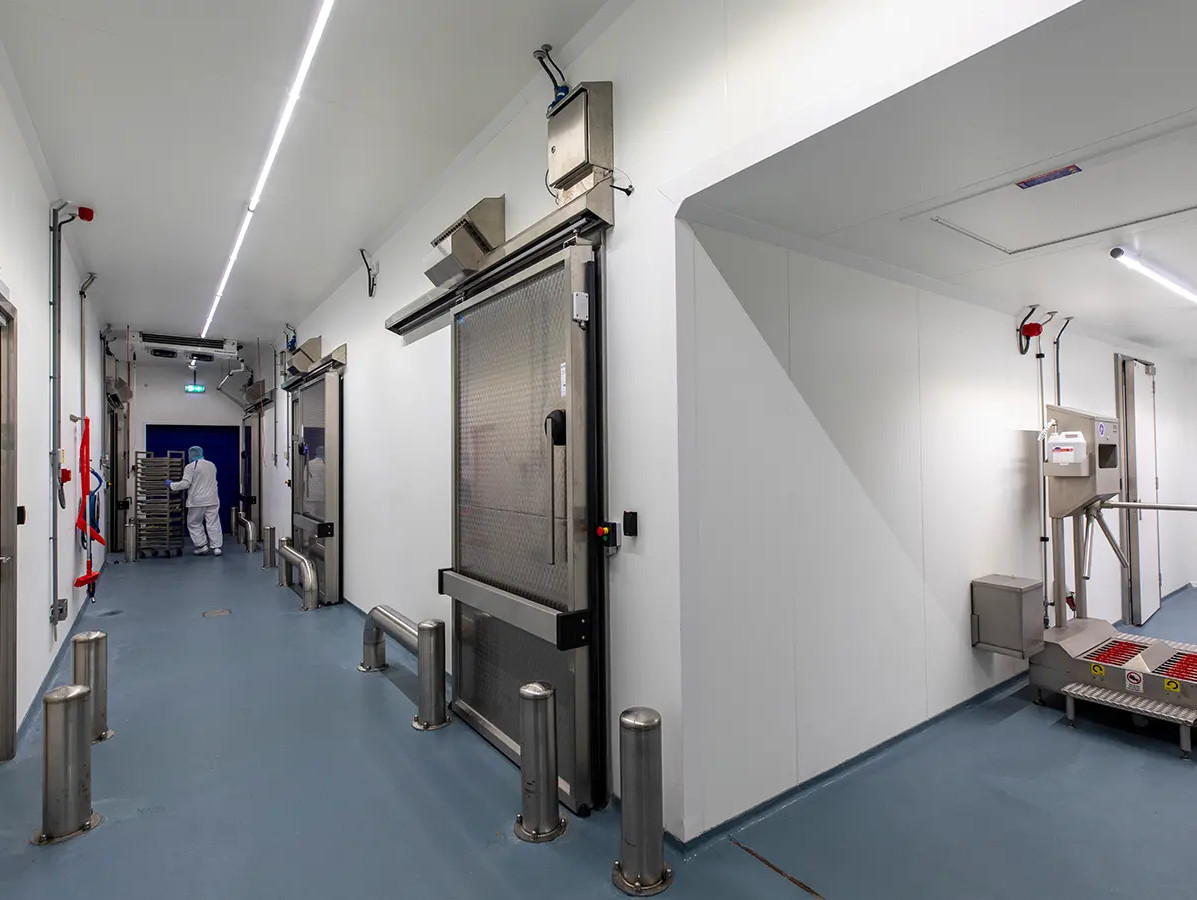
The in-house cold storage and freezer rooms, walls, panels, and the durable doors and windows now meet the latest and most stringent standards for food safety and insulation. “During the process, we did not always know what we would encounter, for example when demolishing certain sections. Sometimes a different wall structure was needed than originally planned. But each time we found the right solution, and we worked together for about two years. On April 22, 2025, the kitchen in Emmen became fully operational,” Paul says. Albert adds that since then, employees have been working more comfortably in the industrial kitchen and sausage production area. “There is now a consistently controlled climate with slight positive air pressure in the space, ensuring that conditioned air always flows inward,” says Albert. In addition to the extensive expansion and renovation in Emmen, the Twello site has been expanded by 2,800 m². Roma was responsible here for the hygienic and insulating shell of the building, as well as the sliding doors. Part of the exterior facade now also serves as an insulating layer.
Both men agree that thorough preparation was essential for these two projects. Now that the new setup has been operational for about a year, they look back with satisfaction. “A major advantage for us was that Van der Zee did not appoint a main contractor but remained actively involved in the construction team. That greatly supported quick and decisive decision-making,” Paul notes. “The use of the latest technological tools, such as 3D visualizations and GPS equipment, also enabled us to complete the project down to the finest details exactly as planned.”
www.vanderzee.nl
www.romaned.nl
Photos: © Anne van der Woude
Source: Vakblad Voedingsindustrie 2026
Magazine Voedingsindustrie has been made possible in part by:



© COPYRIGHT 2026 VOEDINGSINDUSTRIE | ALLE RECHTEN VOORBEHOUDEN
Powered by Wallbrink Crossmedia © 2026





