
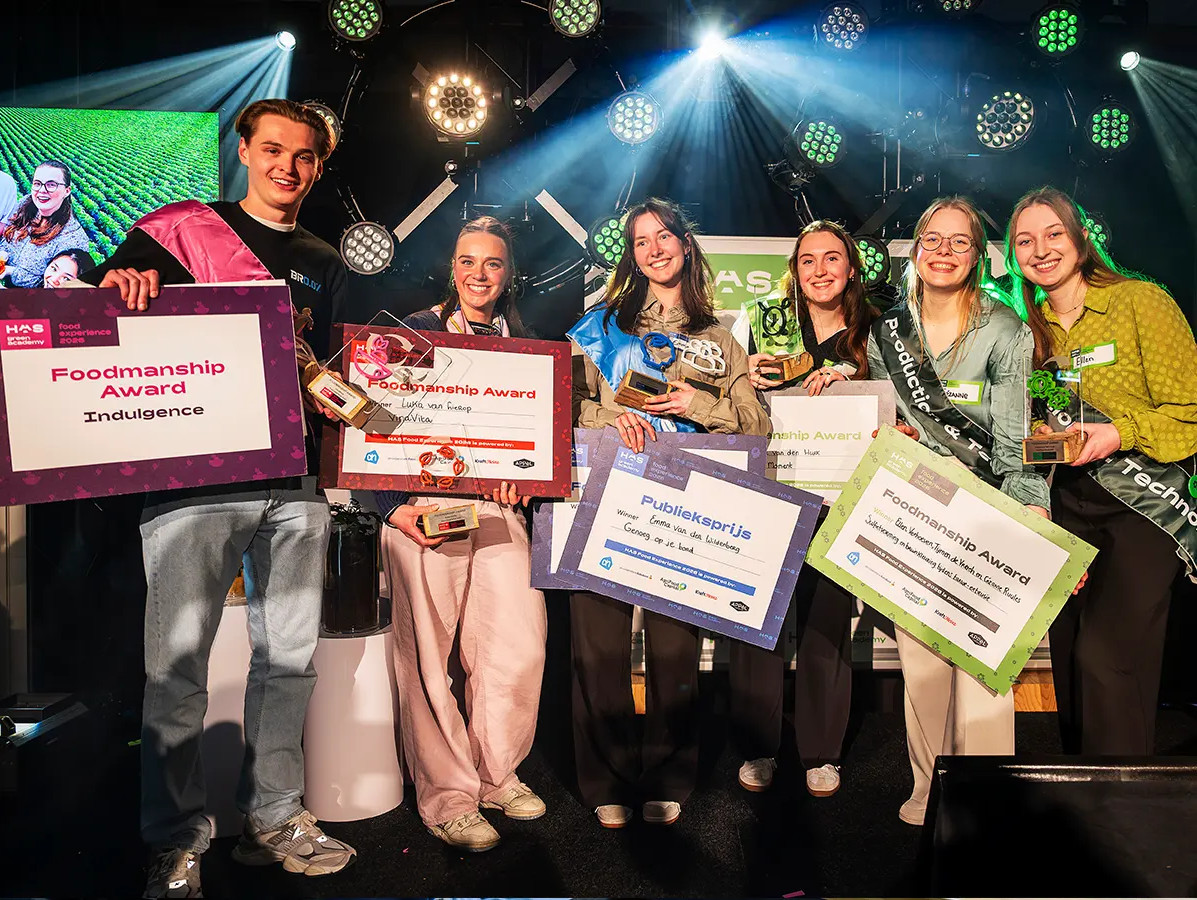
During the annual HAS Food Experience, graduating students in the agri and food sector show what they are capable of; this year’s theme was ‘The Circle of Food’.
Each year, HAS green academy once again turns the Food Experience into a spectacle. More than 800 interested visitors came to see the over 80 projects presented by a total of 120 graduating students. Vakblad Voedingsindustrie was there, as every year, to spot young talent; this edition once again as a jury member. Being immersed in creativity, hope, surprising insights, and the boundless enthusiasm of these students is a remarkable experience.
Several trends immediately stand out during a walk past the stands. A significant number of projects focus on reducing loneliness by combining food with moments of connection. ‘Healthy at the office and on the go’ also receives considerable attention: from solutions for circular corporate lunches to smart snacks that support vitality. Sustainability takes shape in solutions aimed at closing the food loop and in concepts that turn residual streams into valuable new products. Preventing food waste, and safeguarding food security in a changing world, also receive a lot of attention. The students show how we can make smarter use of raw materials, strengthen the resilience of crops, and organize the chain more flexibly, with determination and a forward-looking sense of optimism. The number of innovations in the alcohol-free category is also striking. There is clearly a growing need among young adults to consciously drink less alcohol. Students are responding with new rituals, surprisingly good alcohol-free concepts, and ideas that strengthen social connection without the traditional pressure to drink.
During the HAS Food Experience 2026, the professional jury presented the FoodManShip Awards in a dynamic show to the most innovative and entrepreneurial concepts. Here we once again place them in the well-deserved spotlight. Would you like to get in touch with them? Then please contact HAS green academy.
The HAS Food Experience is made possible in part by Agrifood Capital, Albert Heijn, Appèl Catering, Kraft Heinz and the cooperative Rabobank.
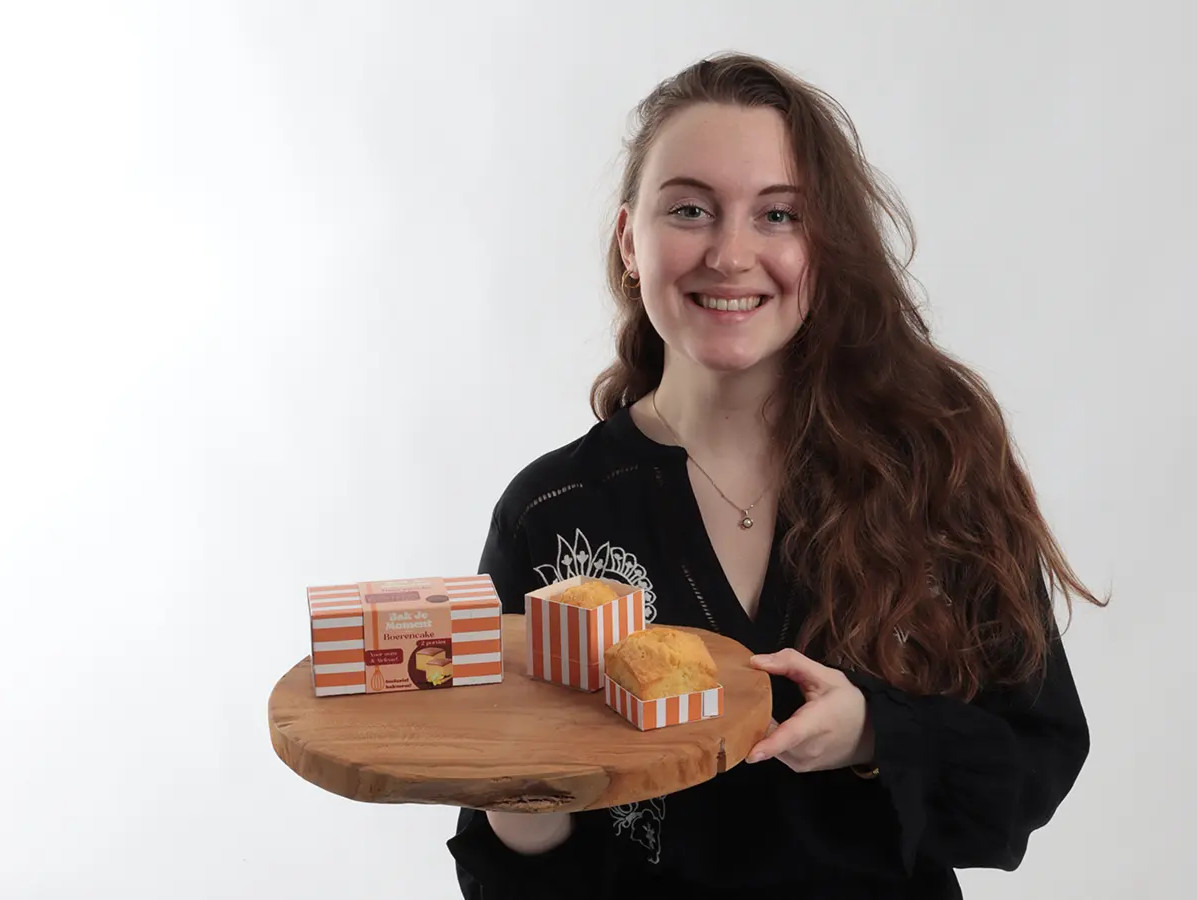
Odeke van den Hurk developed a baking mix package focused on small portions, ease of use, and preserving the full baking experience; designed for baking a delicious little cake for a small moment of enjoyment.
With ‘Bake Your Moment,’ you prepare two single-serve cakes in the oven or the air fryer. The user goes through all the usual steps of the baking process; from weighing and adding ingredients to mixing and baking. A distinctive feature is the multifunctional packaging. It not only holds the baking mix sachet and product information, but also serves as the baking mold and a serving tray.
When asked about the motivation behind her design, she explains: “The current range of baking mixes mainly focuses on preparing large pies and cakes. With the growth of single- and two-person households in the Netherlands, these large portions are not always suitable. There are plenty of occasions when a small portion is preferable. There are single-serve baking mixes on the market, but those only require adding water before preparing them in the microwave. Removing all the steps that make baking enjoyable and meaningful takes away from the baking experience. Because my concept prepares small portions, it also helps prevent food waste and overeating.”
While examining existing packaging for traditional baking mixes, she concluded that innovation in the category has been lagging behind. “The packaging mainly serves a protective and communicative function,” she explains. “It barely contributes to the baking process itself. When responding to the convenience trend, manufacturers have mainly reduced the number of process steps.” Odeke chose a different direction. She focused on adding functionality to the packaging. “It makes buying baking molds unnecessary. And it reduces the dishes,” she adds with a smile.
The decision to make the cakes suitable not only for the oven but also for the air fryer was deliberate. “A significant share of Dutch households now own this appliance,” she says. “Other product categories are already responding to this trend, but baking mixes have hardly adapted yet. This creates room for innovative solutions and preparation methods.”
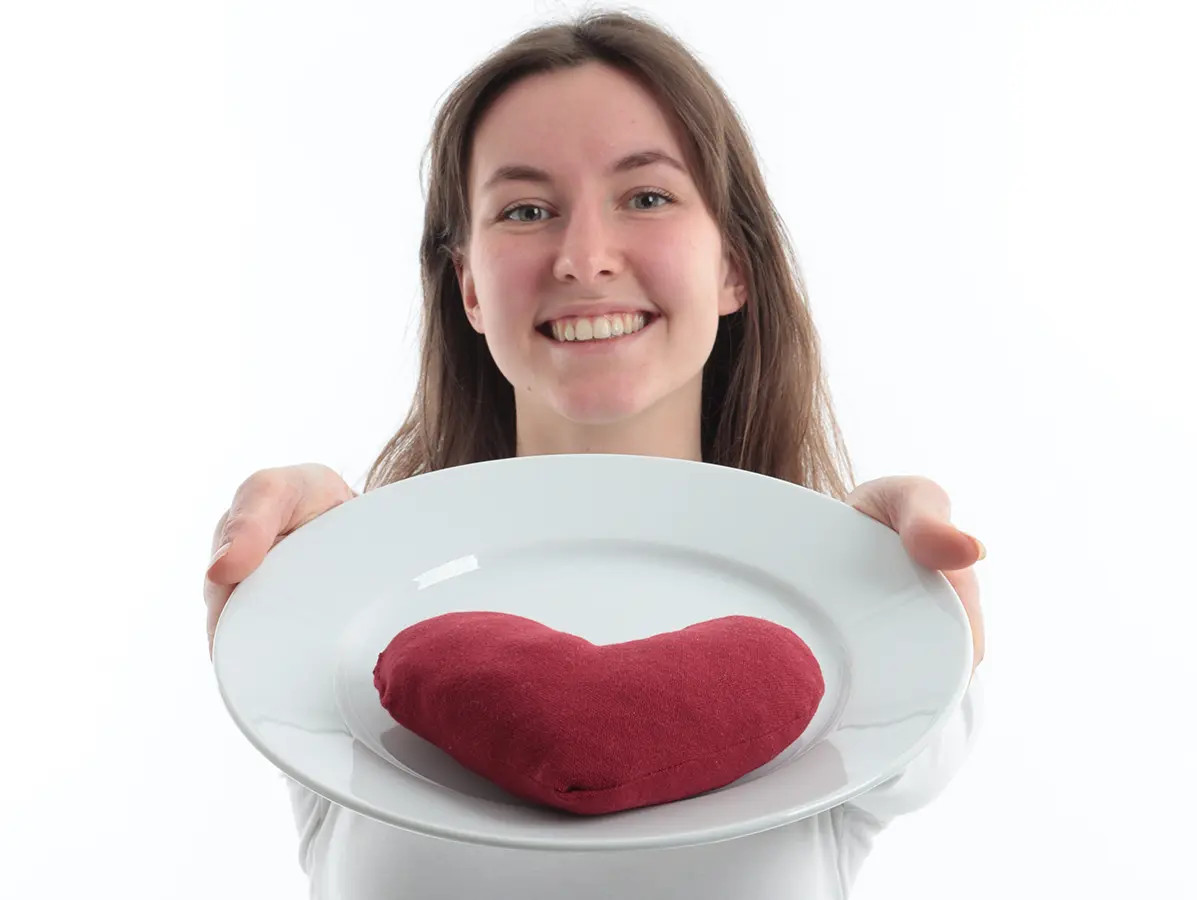
Emma van den Wildenberg tackled a sensitive subject for her graduation project: grief. With her concept, she managed to convince not only the professional jury but also the public. In addition to the Award in the Health category, she also took home the Audience Award.
“Grieving is like running a marathon,” Emma begins when asked about the motivation behind her project. “It takes a tremendous amount of energy. What makes it even harder is that the immediate circle around someone who has lost a loved one often ‘freezes.’ People want to help, but they don’t know how. ‘If there’s anything I can do, just let me know,’ is what they say. However, because of ‘brain fog,’ the bereaved often lack the mental capacity to articulate the practical help they need and/or their needs in general. The painful paradox is that the helper does nothing out of fear of imposing, and the bereaved person ends up standing alone after all. Even though that person deserves both practical and emotional relief.” ‘Enough on your plate’ breaks through this discomfort. It is a practical method that combines emotional support with tangible help.
The concept consists of a two-part guide. In the white section, Emma explains in clear language what happens biologically and psychologically in the mind of someone who is grieving. “It helps you understand why, for example, doing something concrete works better than asking if you can do something.” Her advice: “Everyone grieves in their own way. It’s better to be clumsily present than perfectly absent.”
The green section of the guide contains twenty recipes, specifically developed for the needs of people in mourning, divided into refrigerator meals, freezer meals, and dump-bag meals. She took into account the common portion sizes of standard supermarket packages, partly to help reduce food waste. “It’s a shame if the helper is left with half an onion and 150 grams of chicken.” If five people each prepare one recipe, the bereaved person will have three weeks of good, nutritious meals at home; without awkward supermarket visits, and without having to think about what to put on the table next. “Someone who is grieving already has enough on their plate,” Emma says. After graduating, she hopes to further develop and continue the project. She is currently looking for the right connections to make that happen. Will you help her move forward?
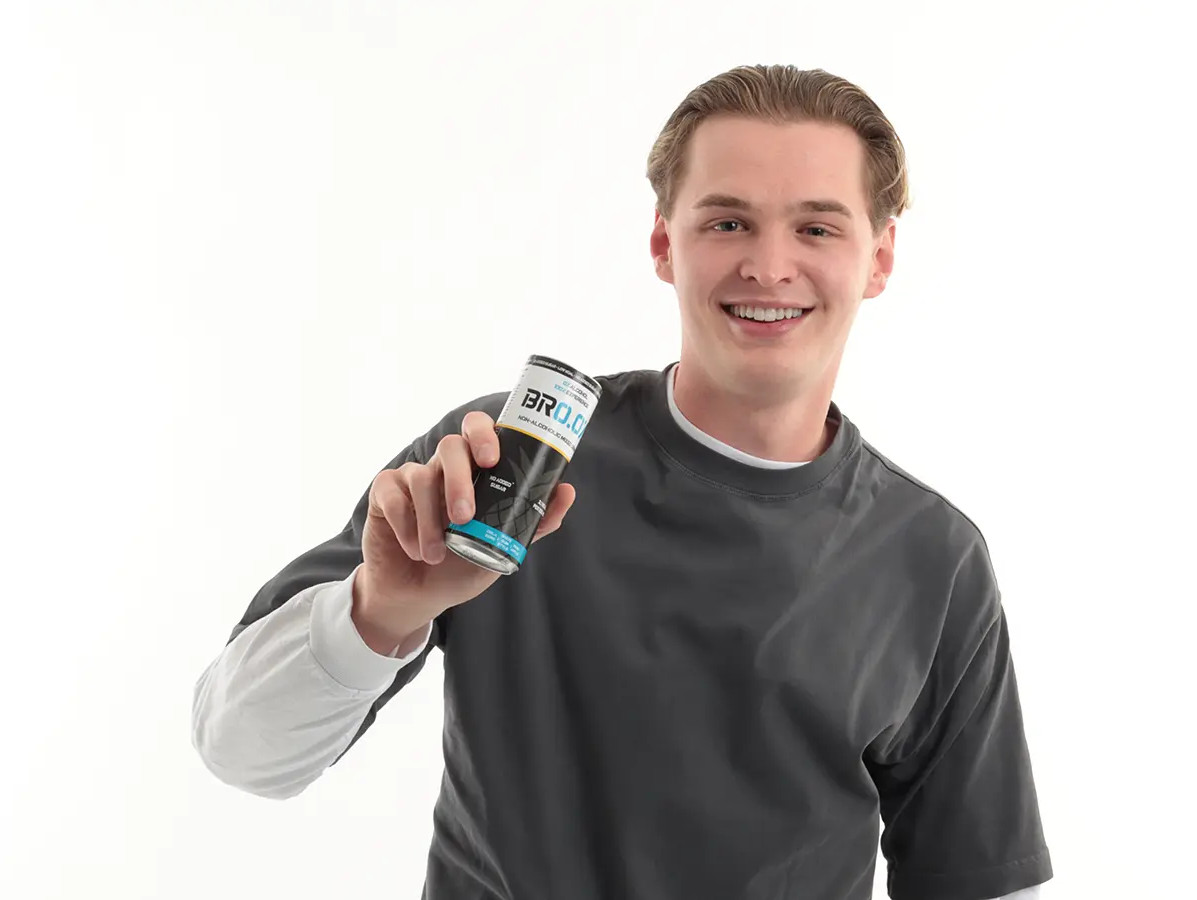
With the slogan ‘We Own The Moment’, BR0.0% by Robin Smeulders claims space for a new generation of alcohol-free, flavorful drinks for young adult men.
A HYROX session, a difficult exam, or an important presentation at work; all require focus. At the same time, young adult men want to fully enjoy social moments, such as festivals and events. Being part of the moment. ‘Belonging’. Is that possible without compromising their (sports) performance, energy, or focus the next day? “Within this target group, alcohol consumption is still often the default. Precisely at moments when they want to make a conscious choice, there is a lack of an alcohol-free alternative that supports them in taste experience, appearance, and confidence,” Robin concluded. “Many alcohol-free alternatives are perceived as too soft, too much like a soft drink, or simply not mature enough in taste and appearance.”
The alcohol-free mixed drinks from the brand BR0.0% contain no added sugars, are low in calories, and combine tropical flavors with characteristic notes inspired by classic spirits. They are complemented with refreshing zero soft drinks. At his stand, Robin allowed Food Experience visitors to taste a delicious alternative to the well-known ‘baco’ (Bacardi coke). He developed the recipe for the alcohol-free equivalent of white rum himself.
BR0.0% has a minimalist, sporty, and premium look that fits an active lifestyle, while the concept clearly positions itself as more than just an alcohol-free alternative. “With BR0.0% I want to help break the stigma surrounding alcohol-free drinking. I want to show that conscious enjoyment and social connection can go hand in hand. The challenge therefore lies not only in product development, but also in perception and positioning,” the student says. “Whether it’s a summer festival day with friends or a night out: consumers should not have to choose between ‘belonging’ and taking care of themselves. With the slogan ‘We Own The Moment’, BR0.0% claims space for a new generation of alcohol-free drinks: mature, flavorful, and relevant for the moments that matter.”
The talented student entrepreneur developed his concept down to the smallest detail and, in addition to the FoodManShip Award, also secured the new recognition ‘Springboard for a talented entrepreneur’
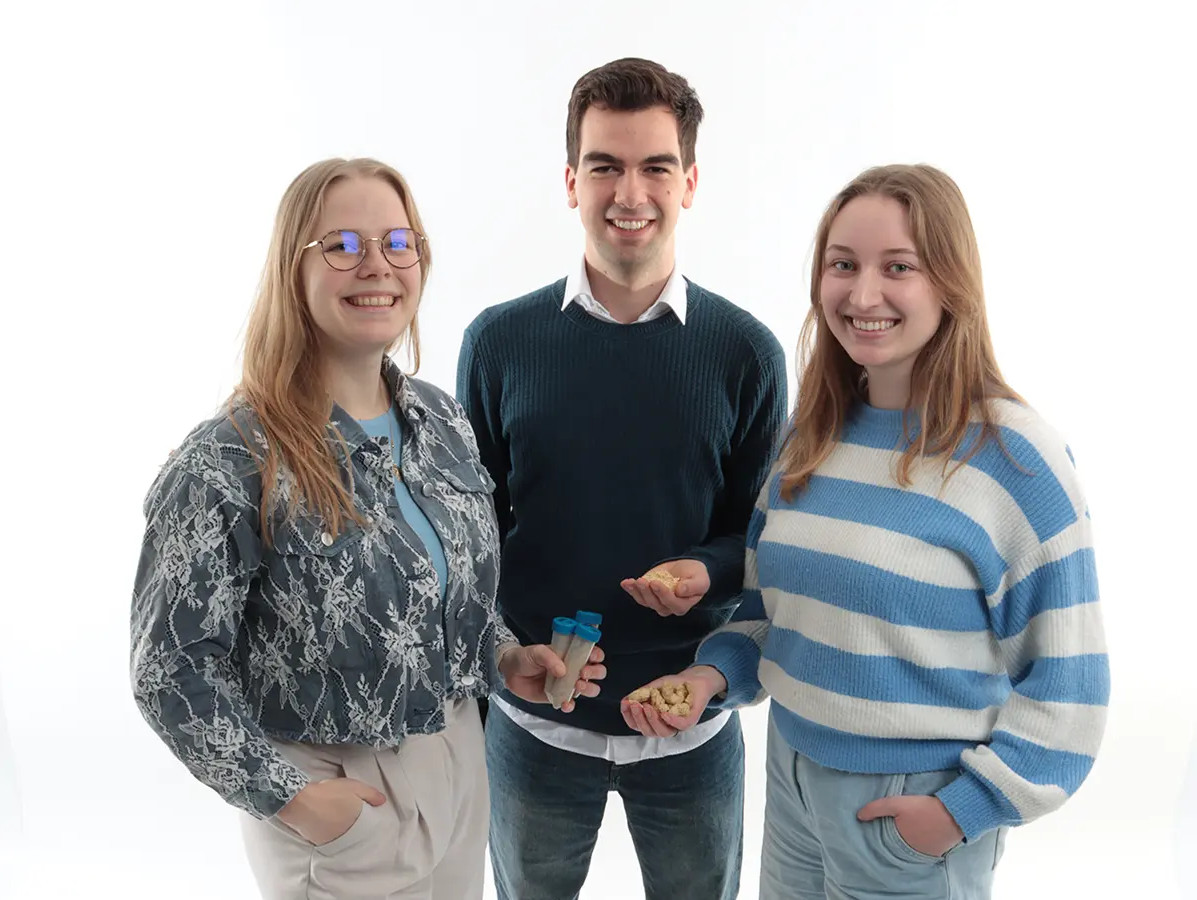
The company Crespel & Deiters produces semi-finished wheat ingredients using an extrusion machine for plant-based products. That process faced stability issues. Cézanne Ruules, Ellen Verhoeven, and Tijmen de Vrueh examined the matter and, based on their findings, prepared an advisory report outlining two possible solutions.
“The first challenge stems from the new PAL legislation (allergen labeling on packaging), which took effect on January 1, 2026,” says Tijmen. “Allergens may only be declared when their origin is properly substantiated. During the extrusion process of the Lorytex fibers, sulfite can sometimes form, exceeding the threshold value of 10 ppm; in that case, the allergen must be listed in the specification. Because this declaration may discourage customers from purchasing the product, the question was whether, and how, its formation could be prevented.” The second challenge was the appearance of brown particles in the final product. Ellen explains: “These stability issues can affect the quality and consistency of the products. The client wanted to know what causes them and how the browning can be prevented.”
As part of the specialization assignment, Lorytex fibers were produced on a pilot plant scale. The students experimented with the amount of sodium carbonate (which affects the pH), the water supply, and the process temperature. They analyzed the fibers for sulfite concentration and the degree of browning. To investigate the formation of brown particles, they also experimented with removing certain components of the extruder. “The results show that a lower water supply and a higher pH resulted in a higher sulfite concentration,” says Cézanne. “Those same conditions also lead to a darker product color. When the mold was removed, hardly any brown particles were observed.”
Based on their findings, the students advised lowering the pH of the formulation and examining how the same product qualities can be maintained at a lower pH. Reducing so-called ‘dead spaces’ and sharp edges in the extruder could also contribute to improvement, for example by making loose components, especially the mold, more conical.
In addition to the Agrifood Capital Award, the project received the ‘Impact accelerator,’ which gives the students access to a relevant innovation network.
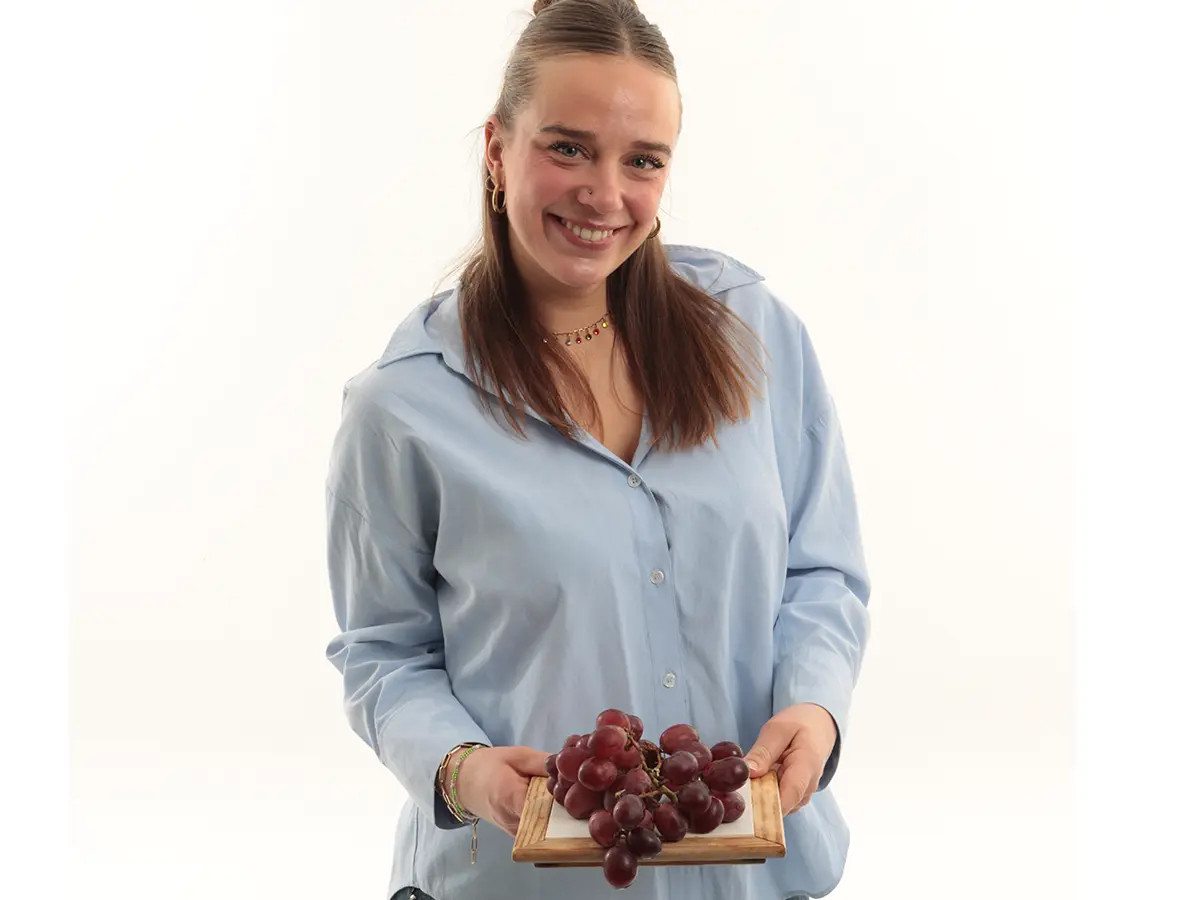
The wine industry produces large volumes of residual streams every year, mainly consisting of grape skins, seeds, and stems. These streams are often processed as waste. A pity, because they are rich in fiber, antioxidants, vitamin E, and natural colorants. Luka van Lierop rightly wondered: “Couldn’t this be done differently?”
“Wine production generates tons of residual waste,” Luka explains. “All those grape stems, seeds, and skins are rich in valuable nutrients. At the same time, demand is growing within both the food and beauty sectors for sustainable, functional, and transparent products. I began researching whether it would be possible to process the residual streams from wine production into multifunctional products in a high-value way.”
With the name ‘Vina (wine) Vita (life), she emphasizes that residual streams from the vineyard are given new life in a powerful food and beauty concept. She developed a 100% single-ingredient grape skin powder that contains an exceptionally high amount of fiber and is naturally rich in antioxidants. It can be enriched with a pure grape seed oil that is rich in vitamin E. “The powder can be used in food applications, for example as an ingredient in smoothies, overnight oats, or yogurt. I also see opportunities within the cosmetics sector; for instance, it can be used as an exfoliating scrub.” And it doesn’t stop there; there are already future plans to produce labels made from grape pulp and stems. “To make the concept fully circular, packaging material could also be produced,” she explains. “That way we can utilize the full value of the grape plant!”
With her concept, Luka primarily targets millennials and Gen Z—generations that want to combine health, sustainability, and convenience. “My research showed that nearly two-thirds of this target group already use supplements and/or functional additions to support their health,” she says. “This multifunctional concept therefore fits seamlessly into their existing eating and self-care moments. It is easy to use and does not require new routines.”
With VinaVita, Luka shows that residual streams do not have to remain residual streams. With a fresh perspective and an innovative mindset, they can be upgraded into premium, circular, and sustainable product concepts.
www.has.nl/foodexperience
foto’s ©Karin Jonkers – Yell & Yonkers
Source: Vakblad Voedingsindustrie 2026
Magazine Voedingsindustrie has been made possible in part by:



© COPYRIGHT 2026 VOEDINGSINDUSTRIE | ALLE RECHTEN VOORBEHOUDEN
Powered by Wallbrink Crossmedia © 2026