
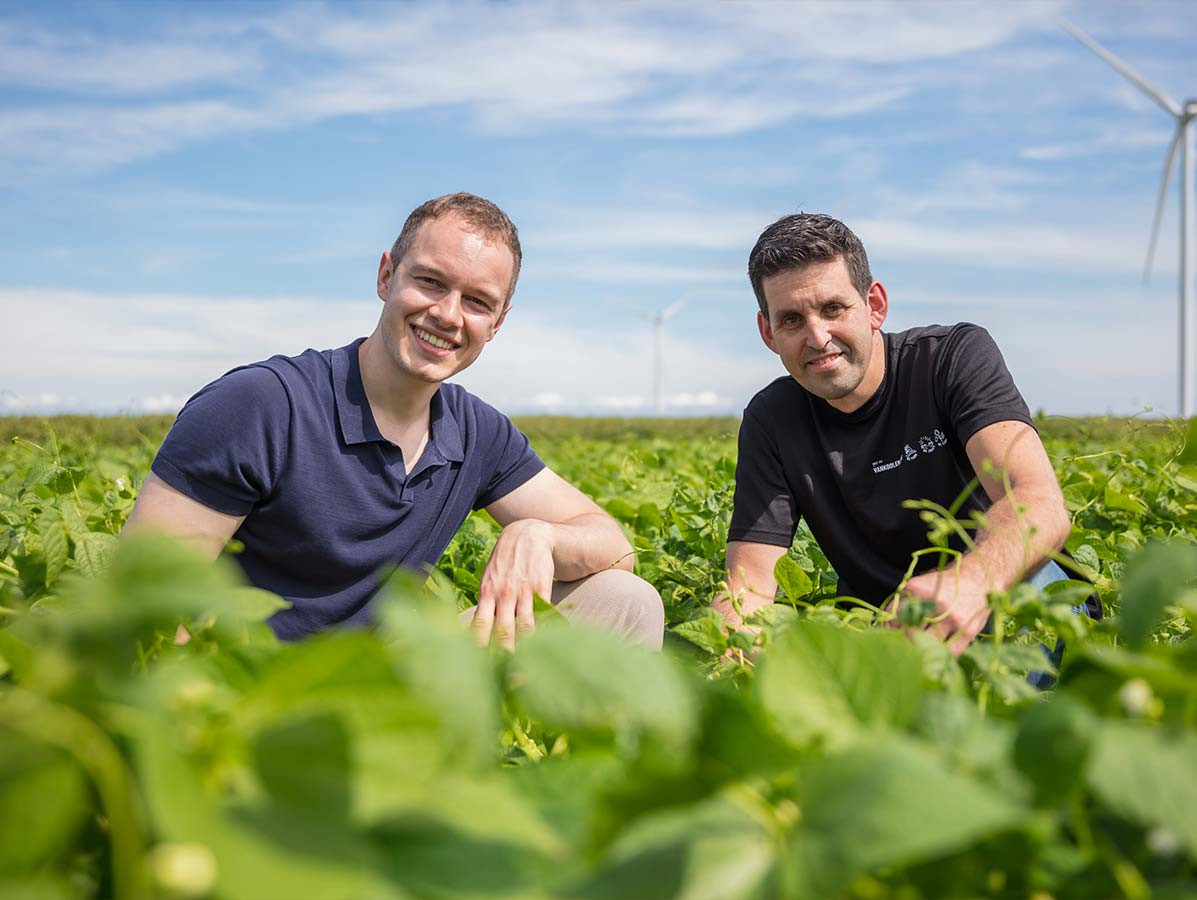
The transition toward alternative proteins is irreversible. GEA understands this, and as of 2025, offers fully integrated production lines for vegan, vegetarian, and fermented food products. Clients across the food industry benefit from the expertise GEA has built over the years—like Van Koolen, based in Wieringermeer, which has made ‘new food’ a central focus.
GEA’s portfolio includes equipment, full-scale systems, and advanced processing technologies tailored to the food industry. This sector is increasingly shifting toward meat alternatives, and scaling up production is now part of daily operations. GEA supports both start-ups and well-established food processors. Its 'Mission 30' strategic plan aims to secure long-term success in a world shaped by sustainability demands, geopolitical shifts, and rapidly evolving market conditions.
“We’re involved in both the ingredient side and the process side—meaning everything that leads to a finished product,” says Edwin Telgenkamp, Account Manager for the Netherlands at GEA. “When it comes to ingredients, a key area is how to extract proteins from various sources. We’re constantly looking at how to adapt our processes to produce meat alternatives more efficiently.”
“Thirty years ago, the first soy burgers hit the market, so this isn't completely new,” adds Marcel van den Heuvel, Senior Area Sales Manager at GEA Food Solutions. “But the range of products has expanded enormously. At GEA, we’re fully engaged in these developments and provide end-to-end production solutions for vegan, vegetarian, and fermented products. We bring the process expertise, technology, and integrated systems needed to help clients scale their new food concepts.”
Tofu (curdled soy milk) and seitan (gluten-based) are well known to most consumers. But GEA’s R&D department—often working directly with clients—is pushing development forward to stay ready for what’s next. For example, animal cells are cultivated through precision fermentation in nutrient-rich media, allowing for large-scale production of cell-based proteins.
“We’re also exploring protein alternatives from microorganisms,” Marcel explains, “such as those produced with bacteria, yeasts, single-cell algae, or fungi. These proteins are then flavored and structured into edible products.” This is all part of GEA’s broader 'new food' strategy.
Progress may not be moving quite as fast as some had predicted, but both Edwin and Marcel are convinced: there’s no going back. Hybrid products and the shift to alternative proteins are well underway.
Edwin: “The global population is growing, and with that, the demand for animal protein. To meet future nutritional needs, we’ll need to consume more plant-based proteins. Producing these non-animal proteins requires advanced machinery and alternatives to conventional meat. Mealworms, for instance, are a strong protein source.”
Marcel adds: “There’s now equipment available for fermentation, separation, spray-drying, wet texturizing of proteins, drying, tumbling, fat emulsions, and mixing doughs for vegan and vegetarian products.”
One company taking full advantage of GEA’s knowledge and expertise is Van Koolen, based in Wieringermeer. Originally an agricultural business, since 2009 it has expanded its focus beyond fresh mushrooms and arable crops to developing plant-based convenience products. The company now cultivates and processes a variety of new food ingredients, including chickpeas, mycelium structures, fava beans, and white bean fibers.
“We test different soil types and cultivation methods for these crops in our own fields and greenhouses,” says Koen Koolen, managing director. A pioneer in meat alternatives and sustainability, Koolen was surprised early on by how many meat substitutes were soy-based. “We thought, why not mushrooms?” That thought sparked the beginning of their journey in 2009. Their mushroom burger has been on the market since 2013. “We’re continuously working with customers to expand and improve our range in terms of variety, quality, and sustainability.”
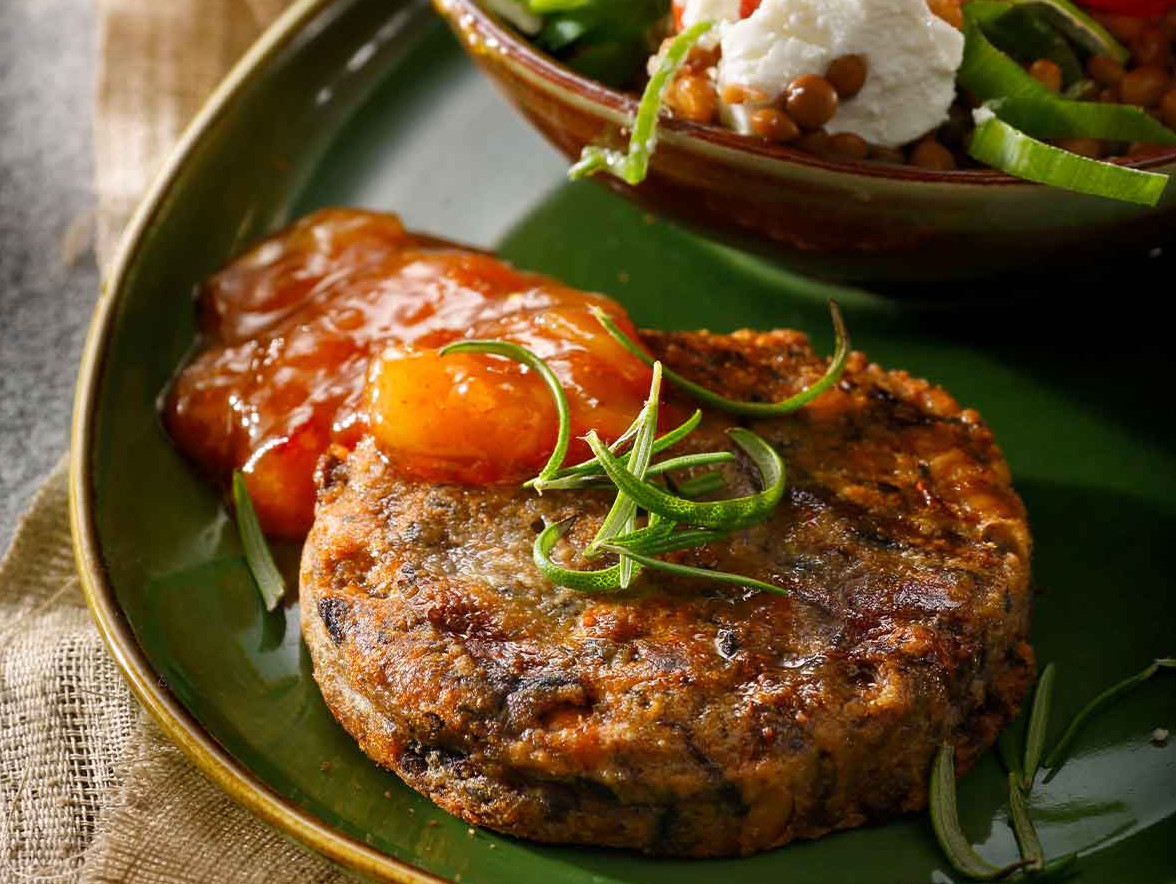
Mushrooms are the core ingredient for Van Koolen’s vegetarian product line. Combined with other vegetables and plant-based proteins, various mushroom types are used to create a range of new products—organic or conventional, frozen or fresh, raw or pre-cooked, vegan or vegetarian. The line also includes, among other things, falafel partly made from fava beans and chickpeas.
Innovation is moving quickly. “We’ll soon be working with GEA at the Technology Center in Bakel to assess whether our tofu innovation can be produced at scale,” Koen says. “Tofu hasn’t seen much change in recent years, and we’re focusing on areas with real potential for innovation.” New food ingredients are also used in existing production lines. “It’s not easy,” Koen admits. “Plant proteins often leave an aftertaste and lack bite, so extensive testing is needed—something we do at the Technology Center.”
Circularity is central to the family-run company’s philosophy. Waste streams from mushroom cultivation are reused on the arable side of the business as soil enhancers. Crops such as fava beans, chickpeas, white beans, and wheat serve as raw materials for new food. To close the loop, straw from wheat cultivation is used as a growing medium for mushrooms and mycelium. “A growing portion of our raw materials is cultivated on our own land. The rest is purchased,” Koen explains. The company now focuses on private label production. To support this, Van Koolen has invested in a complete GEA production line—including systems for mixing, coating, frying, cooking, and packaging.
GEA clients working in the alternative protein space, like Van Koolen, benefit from decades of experience across nearly every food and beverage processing area—from dairy to brewing. GEA’s expertise in fermentation goes well beyond bioreactors and physical equipment. The company uses cutting-edge digital tools, including computational fluid dynamics, to simulate and predict cell behavior and yields under various bioreactor conditions. This expertise plays a key role in the fast-evolving domains of precision fermentation and recombinant proteins.
“We’re constantly investigating how to make our processes as efficient as possible for meat alternatives,” Marcel says. Edwin adds, “It’s a relatively new field for many. We’re focused on identifying promising new raw materials for protein production. Microorganisms are at the forefront.”
Marcel concludes: “It’s a privilege to support companies like Van Koolen in optimizing their processes so that new food products become more accessible to a wider audience.”
Source: Vakblad Voedingsindustrie 2025
Magazine Voedingsindustrie has been made possible in part by:



© COPYRIGHT 2026 VOEDINGSINDUSTRIE | ALLE RECHTEN VOORBEHOUDEN
Powered by Wallbrink Crossmedia © 2026