
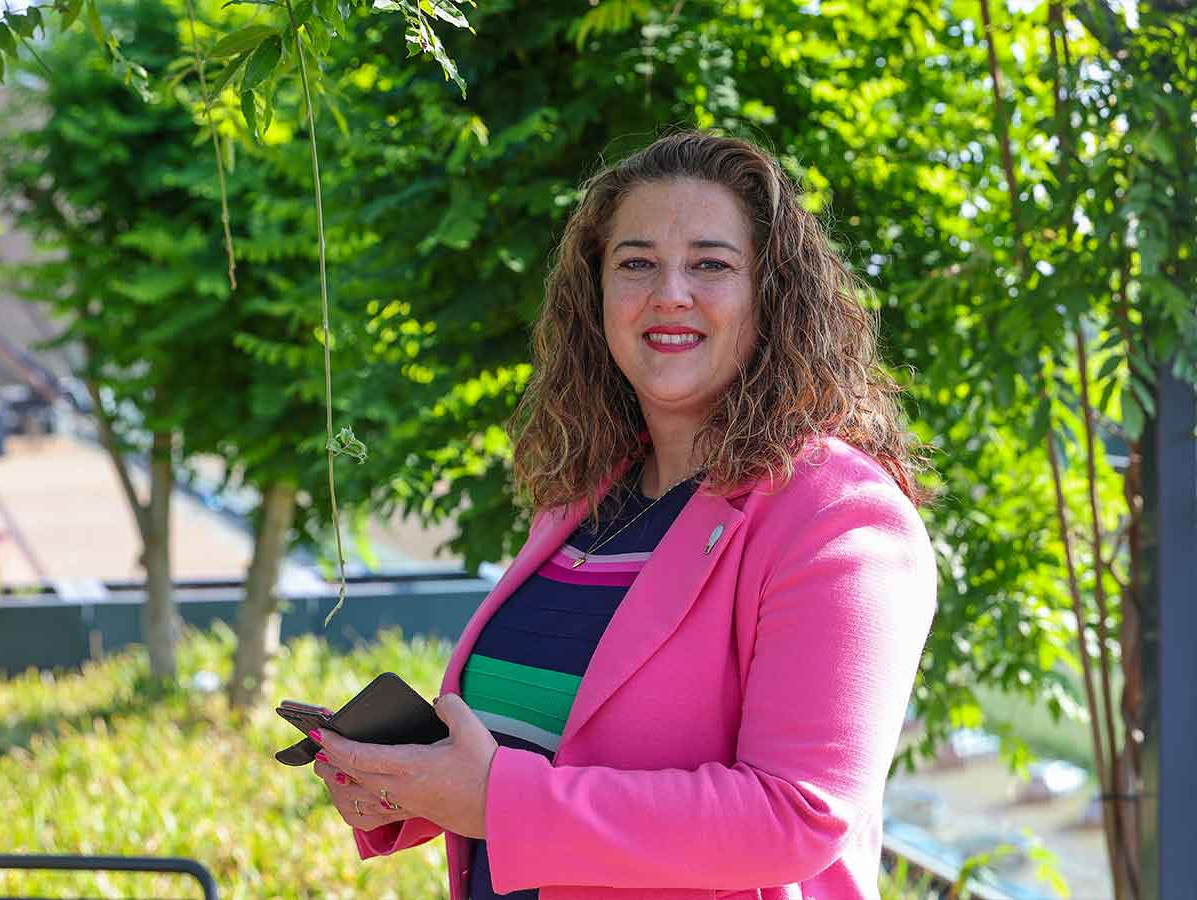
Successful innovation calls for a fool — a court jester. Someone who walks into closed doors and still gets back up. Mary van Hoek–Hendriks is that person. Throughout her career, she’s encountered resistance more than once. Fortunately, she brings plenty of perseverance and enthusiasm to the table. In her new book, Mastering Food Innovation, she offers support for the fool — the one brave enough to keep going.
If Mary van Hoek–Hendriks wasn’t born with the courage to go against the grain, she certainly picked it up along the way. She’s always stood by her ideas — and during her time at HAS (from 2012 to 2023), she encouraged her students to do the same. The result? Her former colleagues in the food industry found themselves in lively debates with her defiant students at events like the HAS Food Experience.
“It was great,” Mary says with a wide smile. “The students approached innovation from trends and consumer needs, far more than those who had been in the industry for years. A real clash of can-do mentality versus the established order. It made for an interesting dynamic — and still does.”
“During my ten years working as a food innovator in industry, I often faced resistance. I saw opportunities that didn’t have names yet. I had ideas that clashed with the status quo and visions that came too early. Innovation means pushing back against slow processes, skepticism, colleagues, systems that cling to the familiar — and your own self-doubt. And most of all, it means resisting the temptation to give up.
It takes guts to go against the current. Early in my career, as a product developer, I often felt lost. I lacked a mentor, someone to cheer me on. This book is my way of saying: you’re not crazy, you’re just the first. It’s a strategic and practical guide for entrepreneurs, food professionals, and innovation teams — whether they’re in startups or multinationals — to help them innovate smarter and faster.”
“Almost. In my first job at a bakery in North Brabant — where I had all the freedom I needed — I had to learn the importance of building internal support. At school, I’d been taught all about product, price and promotion, but nothing about people and politics. That hit me hard.
Later, at Peijnenburg, it was tough at times too. We poured our hearts into developing an oat-based snack concept — a new category, new margins, lots of potential. It took some convincing, but eventually I had the production team on board. Then new management came in and scrapped the project. That was tough. I had to really dig deep to find motivation again. But I also learned that successful innovation isn’t just about hard numbers.”
“At Peijnenburg, I’d occasionally interview candidates who had studied Food Design at HAS. I rarely hired them. They were creative, but often lacked the ability to translate their ideas into commercially viable concepts. So when HAS asked me if I wanted to help strengthen that side of the curriculum, I jumped at the chance. It turned out to be a fantastic time.
Together with industry partners, alumni, current students and colleagues, we reshaped the course. That was an innovation in itself — with all the challenges that come with change.”
“Later I took charge of the HAS Food Experience, where fourth-year students present the concepts they’ve developed to friends, family, lecturers, fellow students — and the market. Rather than launching new products, I was helping to launch new talent. That energy, all those stakeholders, all that hope — it’s amazing. The atmosphere at HAS during those days is electric — it’s like carnival!”
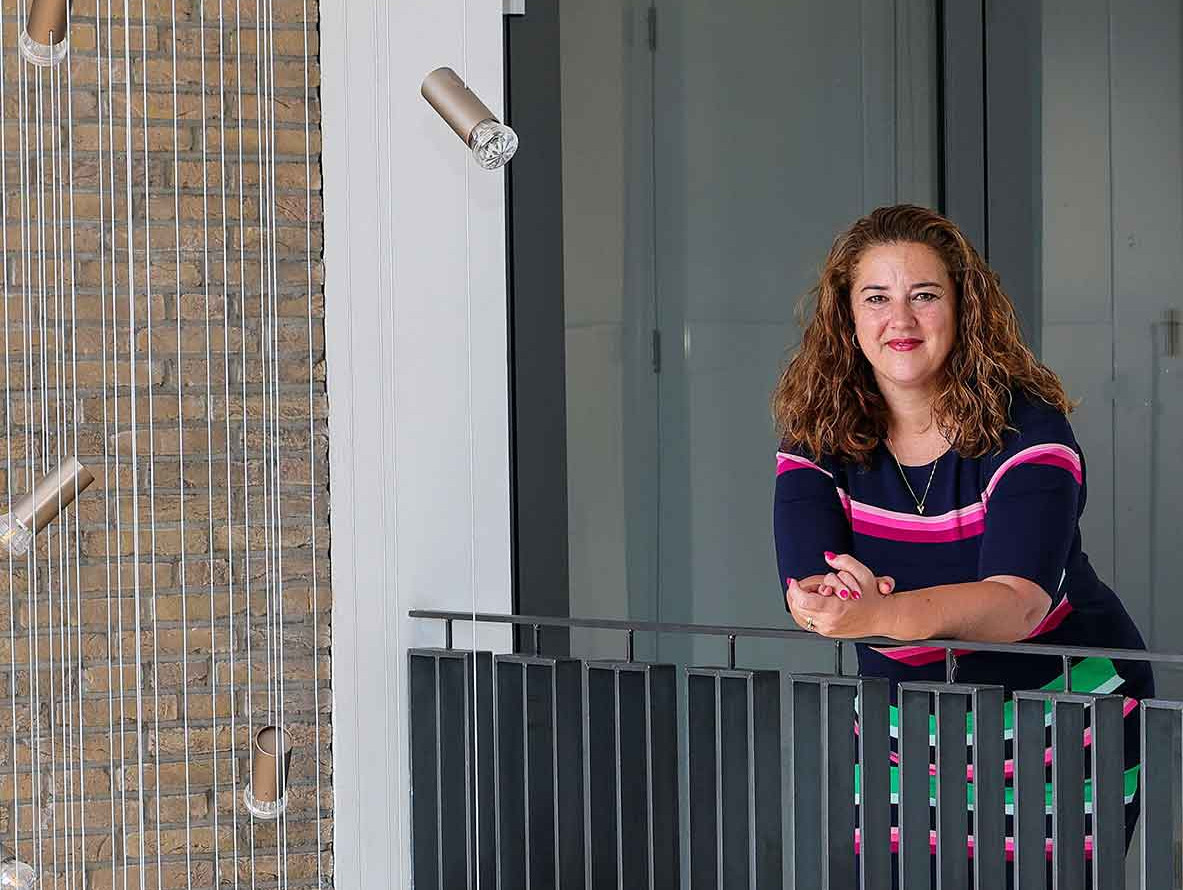
“When you're innovating, you always have to work within a set of rules and boundaries. The rules include things like available budgets and staff capacity. The tools are research, data analysis, existing machinery, and technical capabilities. You can’t just make unlimited plans without considering these.”
“Take a closer look at how existing production lines can be repurposed for new ideas. That’s really the best route in food production.
For example, those oat-based snacks were produced on lines that were originally used for making traditional Dutch cookies. And actually, I’ve noticed that those tools — the basic infrastructure — rarely change much. Even though AI is now considered a game changer for the food industry, we were also in the middle of an automation wave 20 years ago. The software was different, but the principle was the same.”
“Absolutely. The fool is the jester, the wildcard — the one bold enough to pitch their ideas and stick with them. Fools keep their eyes fixed on the goal, even when no one else sees it. They come in all shapes: inventors, entrepreneurs, visionaries.
Ruud Zanders, the man behind Kipster, is a great example. He stepped outside the conventional model of industrial poultry farming and built a green, closed-loop chicken farm. And it worked — the concept has now made its way to the US, and Lidl has signed on. That kind of buy-in is often key to making an innovation succeed.”
“I’m working on a food incubator — a network of experienced professionals who share their mistakes and lessons with each other and the wider world. Because anyone who’s tried to innovate has failed at some point.
I’ve kept examples of products that didn’t make it — they’re almost impossible to find online now. Sometimes I show them during talks, and you can see the wave of recognition in the room.
It’s funny, sure, but those failures — or unexpected outcomes — are incredibly valuable. They help others move faster, better, and with more impact. My book is a step toward building that incubator.”
“There’s no single future of food. But we do need to move toward healthier eating patterns. Meals with fewer carbs and more fibre are going to gain ground — they help fight obesity and improve things like blood sugar and metabolism.
Market channels are going to play a big role too. I was in the US this past spring, and I was shocked by the food environment there. Healthy food is unaffordable. A small box of strawberries costs ten dollars! When I buy groceries for my family at a responsible supermarket like Erewhon, I blow my entire holiday budget. That’s not the direction we should be heading.
At the Groente & Fruitbrigade for Voedselbanken, I see how crucial it is to make healthy food accessible to everyone. In the long run, the whole of society benefits from that.”
Driven and full of energy, Mary van Hoek–Hendriks (born 1978) started out at vocational level and worked her way up through Commercial Technology and Microbiology (Fontys University of Applied Sciences in Eindhoven) and Food Technology (Wageningen University & Research). She’s worked for companies such as Purac America, Koninklijke Peijnenburg, HAS green academy, and the Groente en Fruitbrigade for Voedselbanken.
Her work has earned her several awards, including Duurzame Dinsdag and the Gezonde Innovatie Award.
Under the name Start a Food Story, she now helps entrepreneurs, SMEs, and multinationals develop ground-breaking food innovations — from idea to successful launch. In her book Mastering Food Innovation, she sits down with pioneers in food, including Floating Farm, Fairtrade Original, and Kipster.
Photos©Bert Jansen
Source: Vakblad Voedingsindustrie 2025
Magazine Voedingsindustrie has been made possible in part by:



© COPYRIGHT 2026 VOEDINGSINDUSTRIE | ALLE RECHTEN VOORBEHOUDEN
Powered by Wallbrink Crossmedia © 2026