
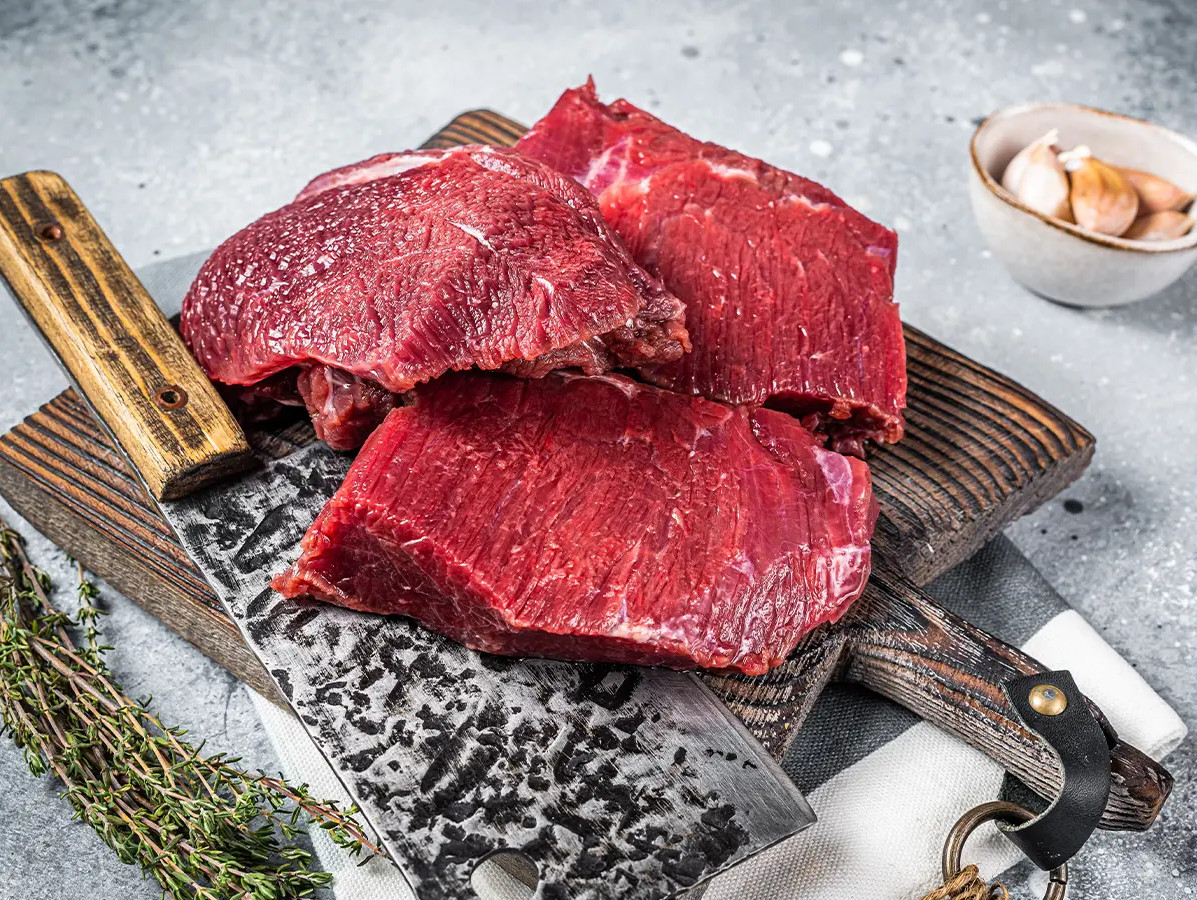
A steak does not need to be cooked all the way through. However, that does raise food safety questions. The sides of thicker cuts, in particular, appear to heat up more slowly. KNS is therefore investigating exactly what happens during cooking. The results should provide greater clarity on an appropriate safety assessment.
The NVWA considers game steak and beef steaks ready-to-eat products that pose a risk. A confirmed STEC contamination can therefore have serious consequences. Products may then be withdrawn from sale or recalled. This already happens in some cases involving venison steak sold through retailers.
According to KNS, consumers do not eat these products raw. They cook the meat at home before eating it. The organization aims to demonstrate that this preparation eliminates the risk. Prepackaged products must include clear cooking instructions. Consumers must also prepare the meat according to these instructions.
The NVWA considers insufficiently cooked game meat particularly risky. This is related to how wild animals are shot and processed.
Eurofins conducted the cooking tests on behalf of KNS. The tests focused on the outside and sides of the meat. If the meat has not been pierced or cut, contamination remains on the surface. According to KNS, the inside of the meat contains no bacteria.
Eurofins used wild boar meat and ribeye for the tests. These relatively fatty cuts represented the least favorable conditions. Fat conducts heat less effectively.
On cuts up to 2.5 centimeters thick, the sides reached 70°C within several minutes. This applied to both wild boar and beef. With thicker cuts, the temperature increased considerably more slowly. The sides of cuts measuring 4 and 4.5 centimeters sometimes reached only 62°C to 66°C.
The results provide a basis for guidance for butchers and poultry specialists. This guidance concerns cutting thicknesses and cooking instructions for consumers.
According to KNS, the NVWA is receptive to this approach. However, the regulator requires additional challenge tests involving pathogenic bacteria. These must confirm that no bacteria remain after cooking. KNS specifically mentions STEC, Listeria, and Salmonella. The organization will keep its members informed.
Source: KNS
Magazine Voedingsindustrie has been made possible in part by:



© COPYRIGHT 2026 VOEDINGSINDUSTRIE | ALLE RECHTEN VOORBEHOUDEN
Powered by Wallbrink Crossmedia © 2026