
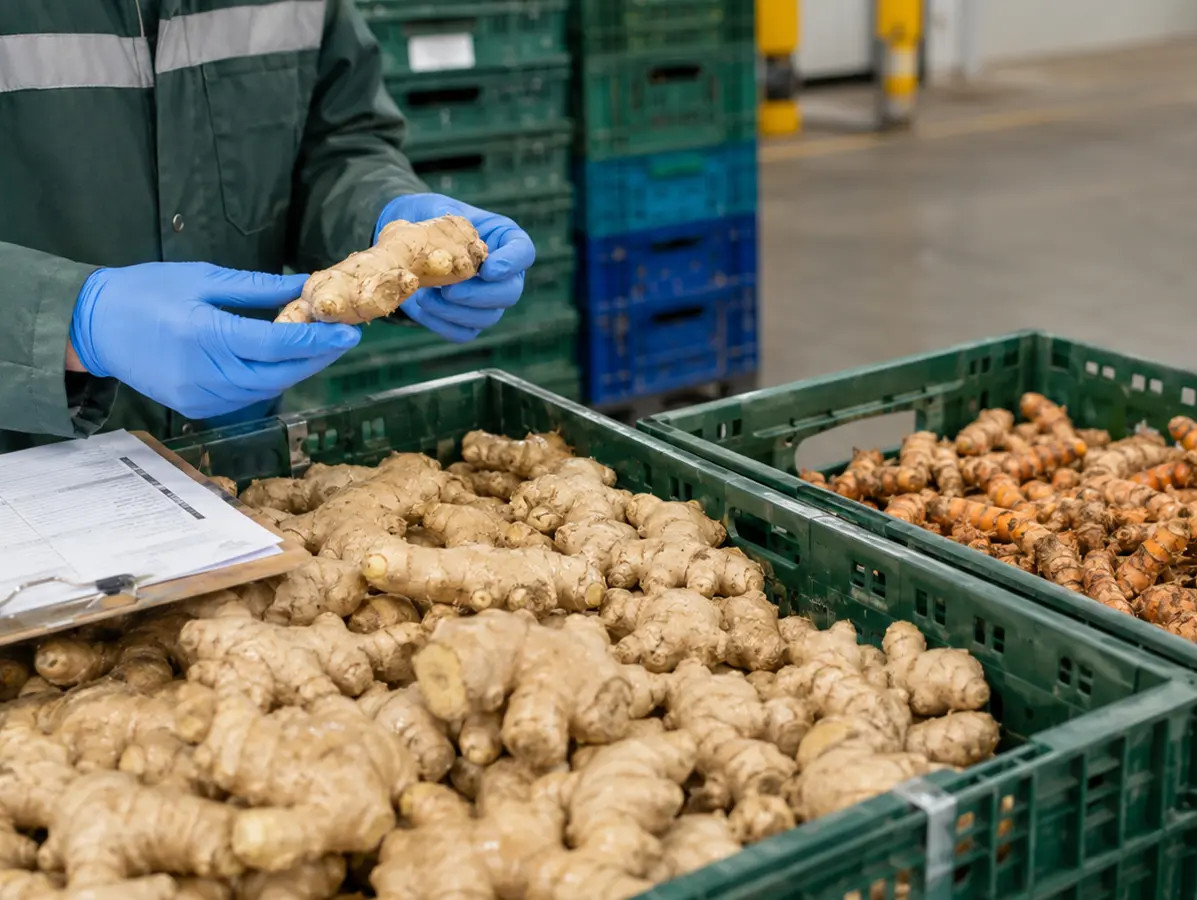
Import requirements for several food products will change on October 15. These include ginger, turmeric, and citrus fruits. Some products will require a new additional declaration on the phytosanitary certificate. The new requirements apply when products enter the European Union. They aim to keep new quarantine pests out of the European Union. The measures must also prevent these pests from spreading. Certain street trees, fruit trees, wood, and wood products are also covered.
The rules apply to fresh ginger and turmeric roots. This includes roots for consumption and plants intended for planting. The requirements address the bacterium Ralstonia pseudosolanacearum. They apply to imports from countries outside the European Union. Switzerland is the only exception.
A shipment must originate from a country free of the bacterium. An area where the bacterium is absent also qualifies. A registered production site or registered field is another option.
Additional conditions apply to these production sites and fields. Inspection, sampling, and molecular testing are required before export. The phytosanitary certificate must state which requirements the shipment meets.
The Netherlands Food and Consumer Product Safety Authority has added the declarations to its checklists. These checklists specify the declarations required for products upon import. New requirements for citrus fruits also take effect on October 15. The NVWA also lists various street trees and fruit trees.
Requirements apply to Castanea and Quercus due to Agrilus bilineatus. For Actinidia deliciosa, Annona cherimola, and Diospyros kaki, the requirements concern Naupactus xanthographus. The conditions for certain wood products will also change.
Source: NVWA
Magazine Voedingsindustrie has been made possible in part by:



© COPYRIGHT 2026 VOEDINGSINDUSTRIE | ALLE RECHTEN VOORBEHOUDEN
Powered by Wallbrink Crossmedia © 2026