
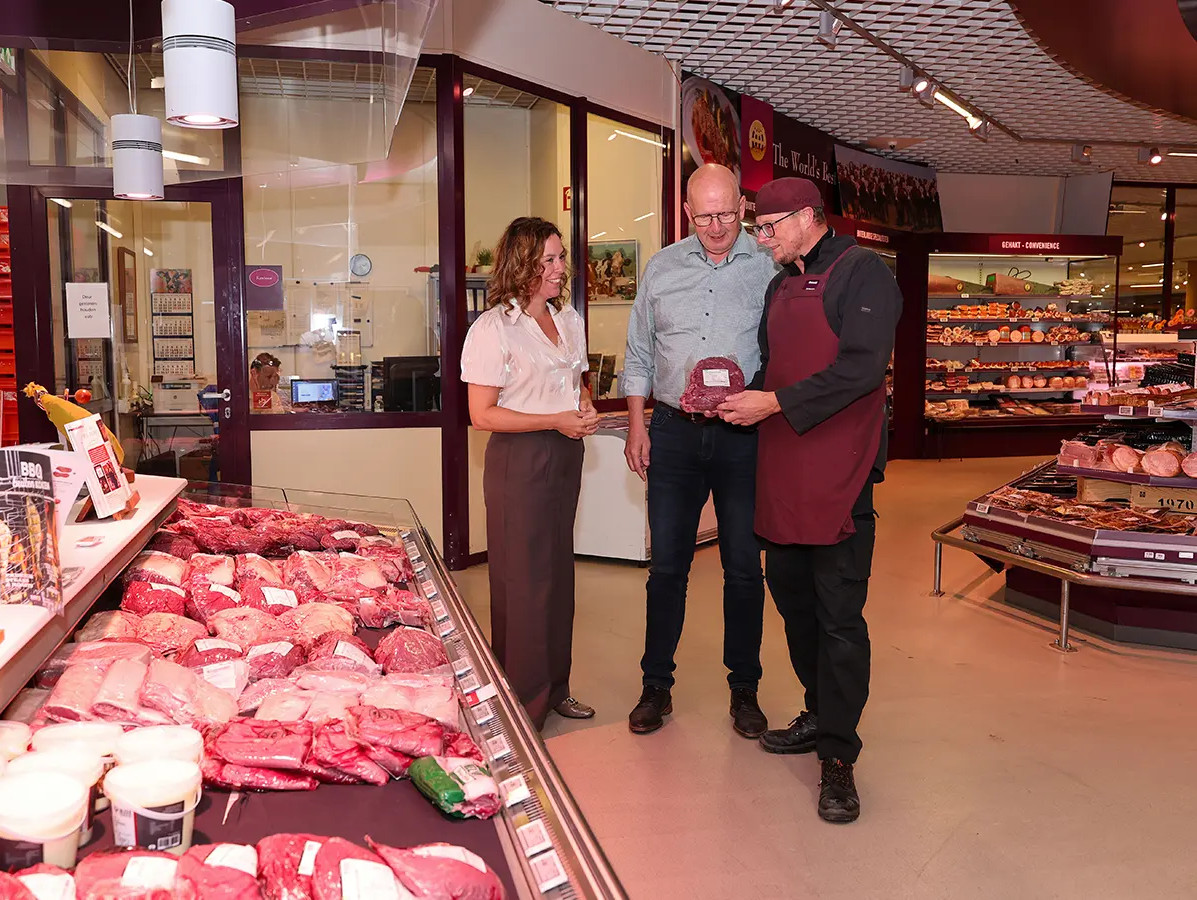
Slagerij Van der Zee values skilled professionals who can share their knowledge with customers at the butcher’s counter. Through its own training programme, the company educates and trains butchers who use their expertise to provide professional customers with targeted advice and enthusiasm.
It is nine o’clock in the morning when Albert Ensing joins us at HANOS Eindhoven. The timing has been chosen for practical reasons, as the schedule of Van der Zee’s Director of Purchasing and Production leaves little room to spare. Earlier that morning, he was still in Friesland, and later that day other appointments are already waiting. His travel schedule says something about the scale on which Van der Zee operates. The company started 101 years ago as a local butcher’s shop for consumers, but has since grown into a catering butcher with locations throughout the Netherlands. Since the end of 2013, Van der Zee has been part of HANOS and, among other things, operates the butcher departments within its wholesale locations. Van der Zee itself remains responsible for the day-to-day management of these operations.
Van der Zee focuses on products that add genuine value. At its production site in Emmen, processed meats and meal components are prepared, cooked, baked and roasted. This is done in small quantities and according to the customer’s own recipe. It saves time without forcing the customer to become a run-of-the-mill supplier. This preference for quality over quantity is also evident in Van der Zee’s butcher departments within HANOS. Its customers are professional buyers with extensive knowledge of meat. The butchers behind the counter need to be able to engage with these professionals on a technical level. They have to understand how the different parts of the animal are structured and which preparation methods suit them, so they can give chefs and business owners targeted advice. Albert calls them ‘butchers in front of the counter’: skilled professionals who know how to build trust through their knowledge and enthusiasm. “The aim is to turn customers into fans. That is why we look for people who are passionate about the profession and who can explain things well. To us, that is more important than how many portions they can cut per hour.”
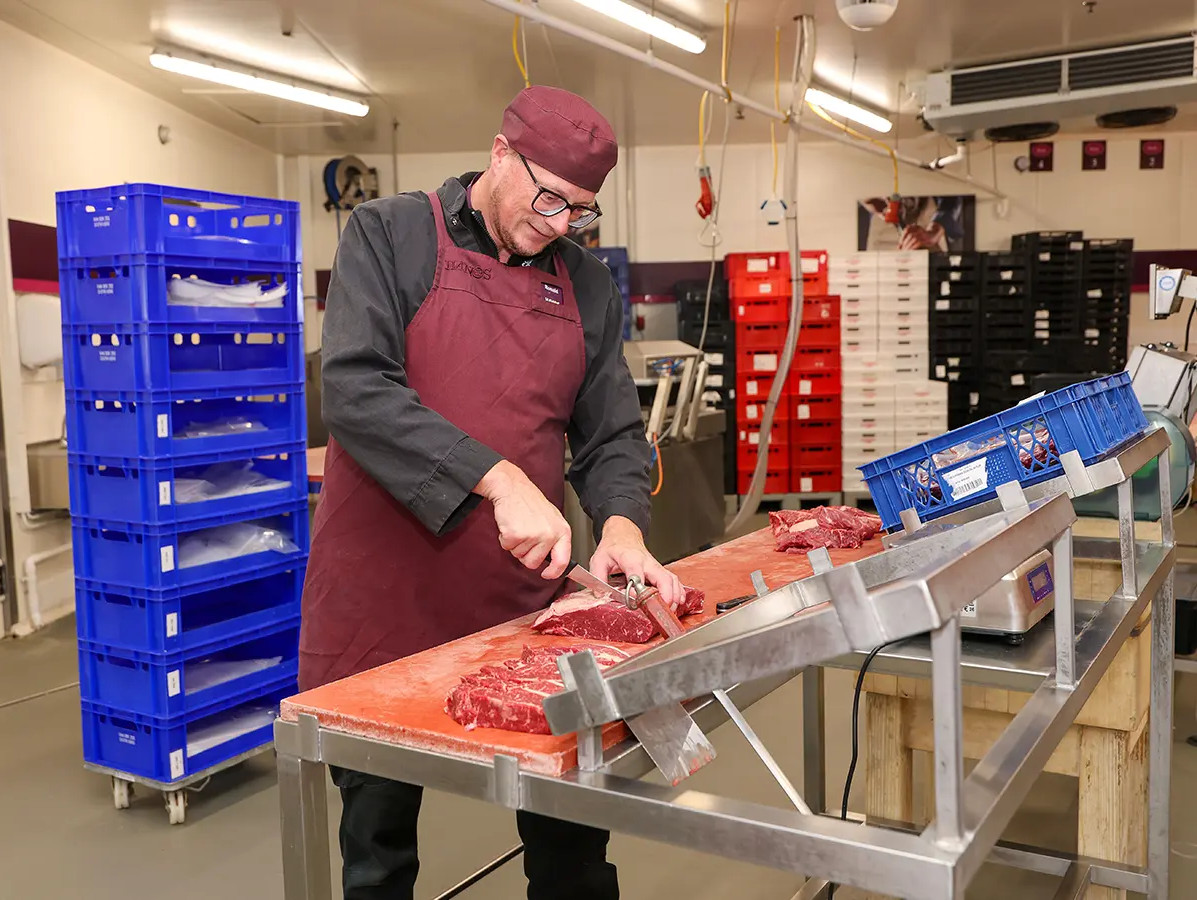
Providing advice at this level requires butchers who know their profession down to the finest details. Because existing butcher training programmes are often broad in scope and specialised professionals are scarce, Van der Zee developed the ‘Snijvaardig Slager’ training programme together with Flexspecialisten seven years ago. Participants learn the butcher’s trade mainly through practical training at a Van der Zee location. Once every four weeks, they attend a full-day group session covering the theory. In this way, they can train or retrain as butchers within two years. The practical structure makes the programme accessible to a wide range of people. Albert gives the example of chefs who are looking for a different profession because of the working hours. “They already have basic skills and can often pick up the butcher’s trade quickly.” Van der Zee also provides information sessions at vmbo secondary schools. “Many pupils have very little idea of what the profession involves, even though the training is particularly suitable for those who prefer working with their hands to spending long periods in the classroom.”
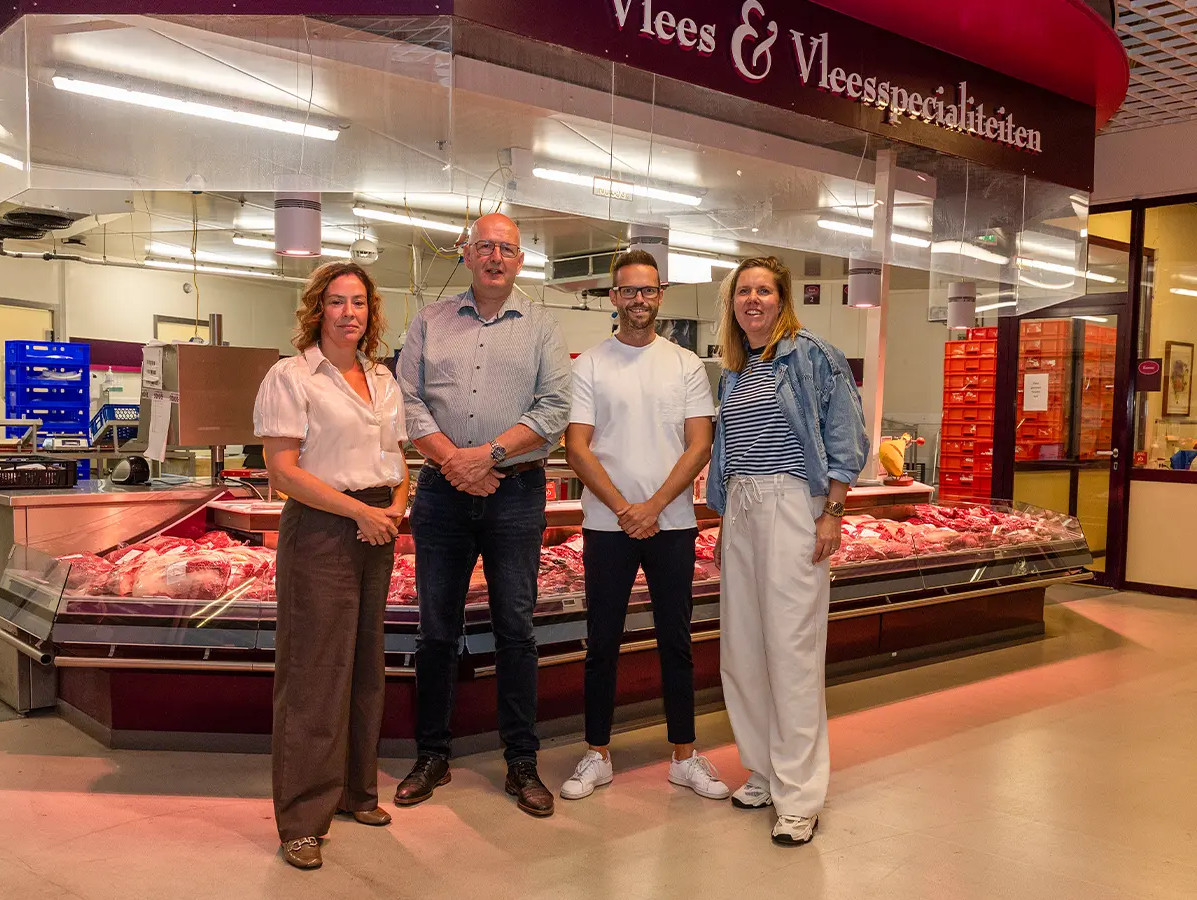
From left to right: Miriam de Munnik (Manager Mens en Organisatie at Van der Zee), Albert Ensing, Henri Mels and Birgit Toonen
Henri Mels, Fresh Food Account Specialist at Flexspecialisten, spent many years as a coordinator for the training programme. “I also acted as a mentor to the students,” he says. “As a result, I got to know Van der Zee extremely well and understand exactly what type of people they are looking for.” Although Van der Zee now organises the training programme itself, the knowledge Henri gained remains indispensable. Together with Birgit Toonen, Business Development Specialist at Flexspecialisten, he continues to put forward suitable candidates for the butcher training programme. The two know the company and understand the requirements of the profession, allowing them to assess in a targeted way which candidates are a good fit. They do not always wait for a specific vacancy to arise. “When we speak to someone who we believe would fit in well at Van der Zee, we bring that person to their attention,” Birgit explains. “Suitable skilled professionals are scarce,” Albert adds, “and extremely valuable. They do not always become available at exactly the right time. If Birgit tells me she has found someone who genuinely fits our organisation, we look internally to see whether there is a way to create an opportunity.”
New legislation is meanwhile changing the use of flexible labour in the meat sector. Although Birgit is positive about the Wtta, which will introduce an authorisation system for labour providers from 2027, she is more critical of the announced ban on temporary agency workers at companies that slaughter and process meat. “I believe a better solution would be strict enforcement of the existing rules, for example regarding employment conditions and accommodation, rather than excluding temporary agency workers and migrant workers altogether,” she says. At the same time, she sees many people who are willing to work but are not yet a match for the roles currently available. “With a training programme such as ‘Snijvaardig Slager’, people can gain the skills they need to make that connection.”
Photos ©Bert Jansen
Source: ©Vakblad Voedingsindustrie 2026
Magazine Voedingsindustrie has been made possible in part by:



© COPYRIGHT 2026 VOEDINGSINDUSTRIE | ALLE RECHTEN VOORBEHOUDEN
Powered by Wallbrink Crossmedia © 2026