
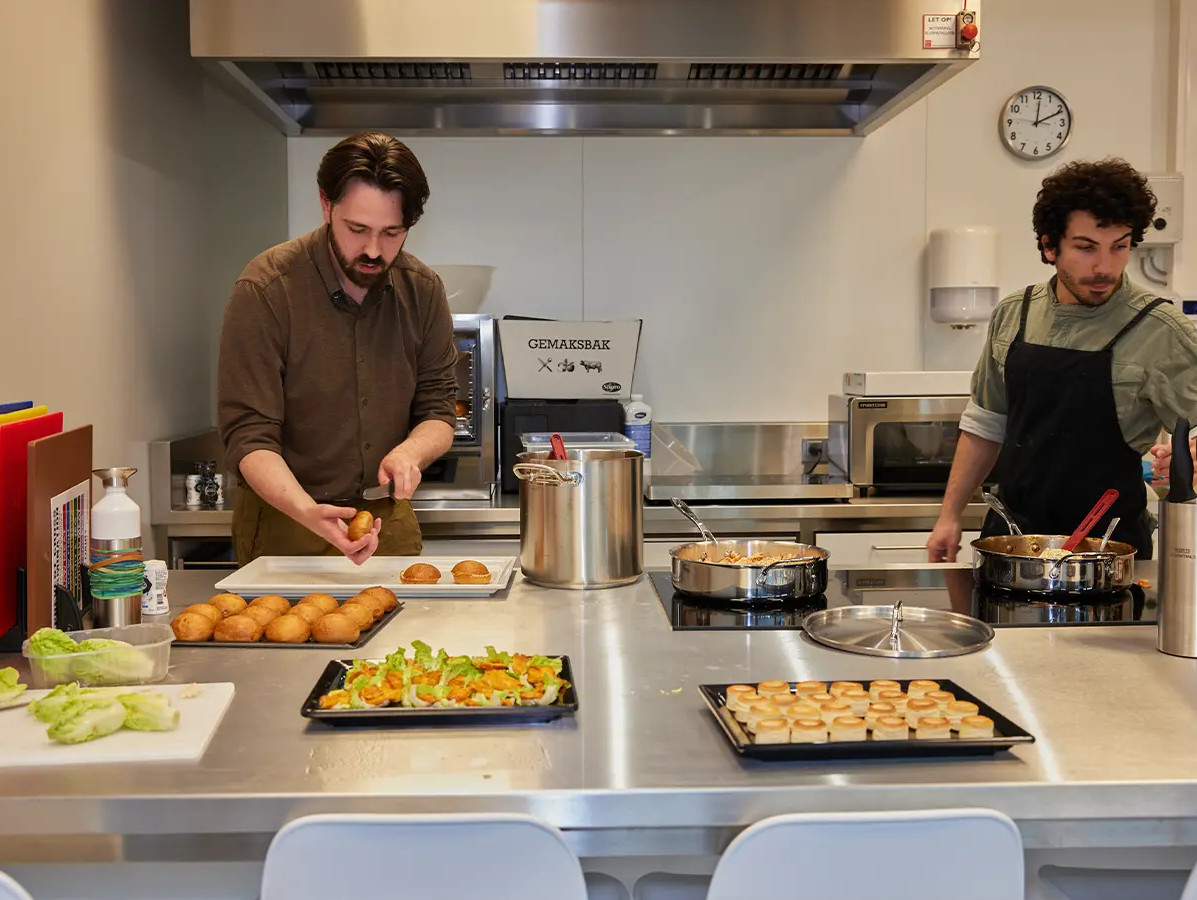
Omnomyco wants to shake up the protein transition. Not with heavily processed meat substitutes, but by domesticating a unique mushroom. The idea did not originate in a corporate R&D lab, but around a student table in Wageningen. “We simply didn’t like those vegetarian burgers.”
The meat substitute market is struggling. Consumers are turning away from salty, heavily processed burgers and high prices. Wageningen start-up Omnomyco is taking a different route. By domesticating and breeding wild mushrooms with a naturally meaty texture, the company aims to supply the food industry with a high-quality base ingredient.
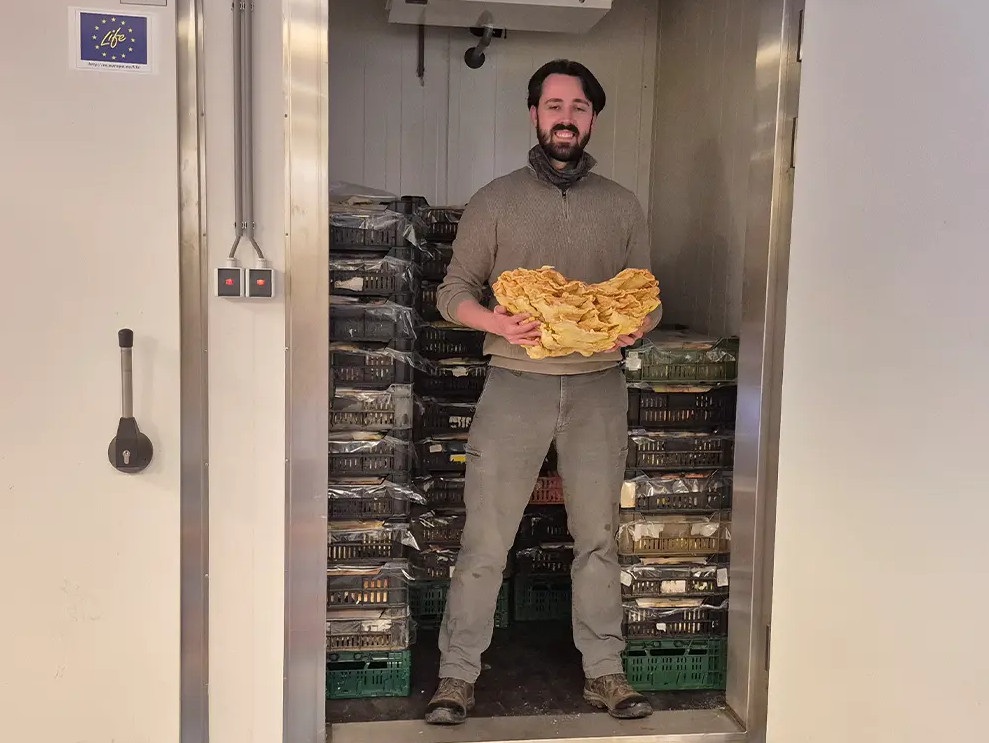
The idea for Omnomyco did not originate in a corporate R&D lab, but around a student table in Wageningen. Founder and Managing Director Milo Kleijnjan noticed there how disappointing the choice of meat substitutes could be when eating with a mixed group. “When you’re in a hurry, it’s easy to reach for a vegetarian burger. We simply didn’t like them,” says Milo. “The more we looked into it, the more we realised just how complex the processing is. Consumer research shows that people specifically avoid processed meat substitutes for three reasons: they don’t taste good, they are not healthy, or they are too expensive.” According to Milo, the current generation of plant-based substitutes is missing the mark. While many companies focus on high-tech protein isolates and then try to turn them into an appealing product using binders and salt, Omnomyco – which, alongside Milo Kleijnjan, consists of Mayke Schelhaas, the scientist, and Alejandro Campillo, the culinary developer – reversed that philosophy. The focus shifted to *Laetiporus sulphureus*, a mushroom whose English name, ‘Chicken of the Woods’, says a great deal about its characteristics.
“Chicken of the Woods naturally has exactly the fibrous texture of chicken,” he says. “Chicken itself has relatively little flavour; it is mainly about the *juiciness* and the *bite*. This mushroom has had those characteristics for hundreds of years.” The problem is not the eating experience, but availability. In the wild, the fungus grows for only a few weeks a year, and large parts of the fruiting body dry out. Wild harvesting also results in prices per kilo that are unaffordable for the food industry. That is where the technological challenge lies for the start-up, which currently operates from laboratory facilities in Wageningen. “The innovation lies in controlled cultivation. By carefully controlling humidity and carbon dioxide, you can prevent the mushroom from becoming woody.” In the long term, Omnomyco wants to domesticate and breed mushrooms in the same way humans domesticated grains and fruit centuries ago. By selecting specific strains, the company aims to steer characteristics such as protein content, growth rate and flavour. Through breeding and smart substrate blends – the growing medium – the mushroom should ultimately become a fully fledged protein source suitable for industrial production.
One notable element of Omnomyco’s strategy is its decision not to raise large amounts of capital to build its own large-scale processing facilities. Many pioneers in the sector ran into difficulties because they wanted to own the entire chain themselves, from cultivation to finished product. Omnomyco is opting for a B2B model that makes use of the existing horticultural and mushroom-growing infrastructure. “In vegetable production, you have companies that breed seeds, companies that produce substrates and growers. That top of the pyramid is still missing in the mushroom sector,” Milo explains. “We want to become that top layer. Around 60,000 kilos of oyster mushrooms are already grown in the Netherlands every week. Once our biological process is established, conventional growers will be able to cultivate our strains at scale. We do not need to build the factory; we supply the biology.”
The fact that the concept also appeals to traditional industry players became clear during OSVnetwerk’s annual summer barbecue. Omnomyco served sliders with pulled Chicken of the Woods. Milo: “The reactions from experienced butchers and meat processors were surprisingly positive!” The contacts established there also resulted in the company gaining an experienced sales coach from the food sector.
Meanwhile, R&D work is in full swing. The team is currently screening more than 170 different wild strains to select the strongest growers. Omnomyco is also placing a clear emphasis on circularity. “For example, we can breed strains capable of digesting specific substrates that are produced in large quantities in the Netherlands but currently have little further use.” The company’s ambition does not stop with Chicken of the Woods. Milo points out that humans mainly rely on plants and animals for food, while the fungal kingdom is vast and still largely unused as a food source. “We use fungi to ferment beer, bread and soy sauce, but we hardly eat the fungus itself. Yet fungi are a major natural source of umami.”
In three to five years’ time, Omnomyco therefore does not see itself as another burger brand on supermarket shelves. Instead, it aims to have taken important steps towards becoming a strategic B2B ingredient supplier for branded food manufacturers and meal producers. Milo sums it up pragmatically: “We do not need to reinvent the wheel. There are thousands of edible mushroom species in nature waiting to be used. We simply need to give them the right role on the plate.”
Photos ©Omnomyco
Source: ©Vakblad Voedingsindustrie 2026
Magazine Voedingsindustrie has been made possible in part by:



© COPYRIGHT 2026 VOEDINGSINDUSTRIE | ALLE RECHTEN VOORBEHOUDEN
Powered by Wallbrink Crossmedia © 2026