Requirements for hygiene in the food industry are becoming stricter year after year. At the same time, companies are under pressure to save water and energy, reduce environmentally harmful substances, and cope with labor shortages. As a result, cleaning and disinfection have become strategic themes. Three experts share their view on the future of cleanliness.
European legislation is a major driver of innovation: biocides, plastic packaging, wastewater, energy consumption – the list keeps growing, and everything is increasingly regulated. Next year, stricter Listeria legislation will come into force. Aldo Evers, Technical Director Microbiology at Normec Foodcare and Listeria expert, explains: “Under the tightened rules, effective 1 June 2026, Listeria must be absent in 25 grams throughout the entire shelf life, or the producer must demonstrate that growth remains below 100 cfu/g throughout the shelf life. The Netherlands and Belgium were already operating in line with these stricter rules. Still, the industry can be more critical when it comes to Listeria in the factory. That requires testing, validation, and sometimes reformulation of products.”
The stricter Listeria requirements mean that product development, a core activity, becomes intertwined with cleaning, a necessary routine. “Because consumers want healthier, less salty, and preservative-free products, the risks of bacterial growth increase,” Aldo says. “Many manufacturers focus on controlling growth, but preventing Listeria in the product is both important and manageable. Listeria can grow even at 1°C, especially in minimally processed fresh salads and sandwiches. Product developers and quality teams therefore need to work much more closely together.”
Stefan Naten, Vice President Growth Enablement Europe at Ecolab, adds: “Pressure from customers and retailers is high. It’s not just about meeting current rules and guidelines, but about anticipating what’s coming. Major supermarket chains want full traceability and sustainable certification. That pushes suppliers to document and optimize their cleaning processes.” At the same time, regulations for cleaning agents are becoming not only stricter but also more complex. “Biocides are under pressure,” he says. “The list of approved substances is shrinking, and registration requirements are becoming more demanding. New agents are being developed, but in the meantime, it’s essential to prioritize safety, operational efficiency, and environmental management using the solutions available today.”
Effective, food-safe cleaning often requires a substantial amount of water for the complete cleaning process. And water use is now a central topic, with increasing pressure on water availability. Stefan: “Even in the Netherlands and Belgium, where water scarcity hasn’t traditionally been an issue, discharge and reuse standards are becoming stricter. Water remains indispensable for effective and food-safe cleaning. The challenge lies not only in using less, but in using it smarter, reusing it, and treating it properly.”
Where suppliers of cleaning agents once came only for the cleaning after production, they are now expected to provide solutions for all water flows, including treatment and recycling. “We see a clear trend toward water security: every liter counts. At some plants, we reduce rinse water by 30 to 40 percent without compromising cleaning quality. Simply using less water during cleaning or processing isn’t an option. A change in water use usually triggers a domino effect. Less water means a higher contamination load per liter,” Stefan explains. Companies increasingly want to reuse their water. “Some do so in their own treatment facility, but the dynamics of that facility change fundamentally if the system has to process water with a higher contamination load after each cleaning cycle. That requires chemical knowledge and insight into process flows and wastewater parameters.”
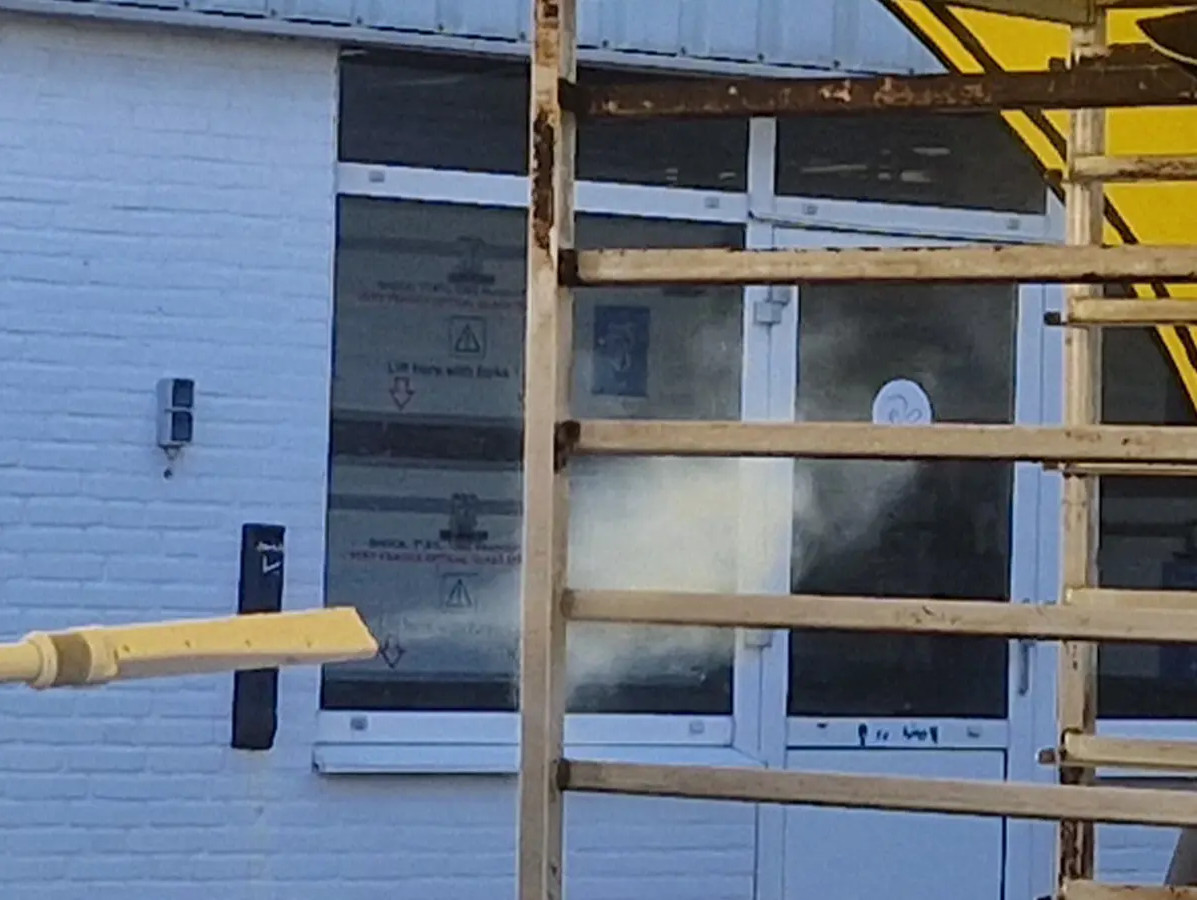
A completely different approach comes from Edwin de Vries, Product Specialist at Kärcher. As a supplier of total hygiene solutions for food production, Kärcher addresses today’s challenges head-on. He expects strong growth in the use of dry ice blasting in the food industry. This technology uses compressed air and dry-ice pellets to remove contamination from surfaces. It is used in areas where traditional cleaning is difficult. “Think of control cabinets, weld seams, conveyor belts, or machines with many edges and corners. With dry ice, you can clean these effectively without risking corrosion or damage to electrical components,” he explains. “In many production processes and packaging lines, water is unwanted. The unique aspect of this method is that it is completely dry: no water, no chemicals, no residues on the surface, and no waste. And the CO₂ used to make dry ice comes from recycling processes, so there is no new emission.” The benefits are clear: no rinse water, no chemical residues, and shorter downtime.
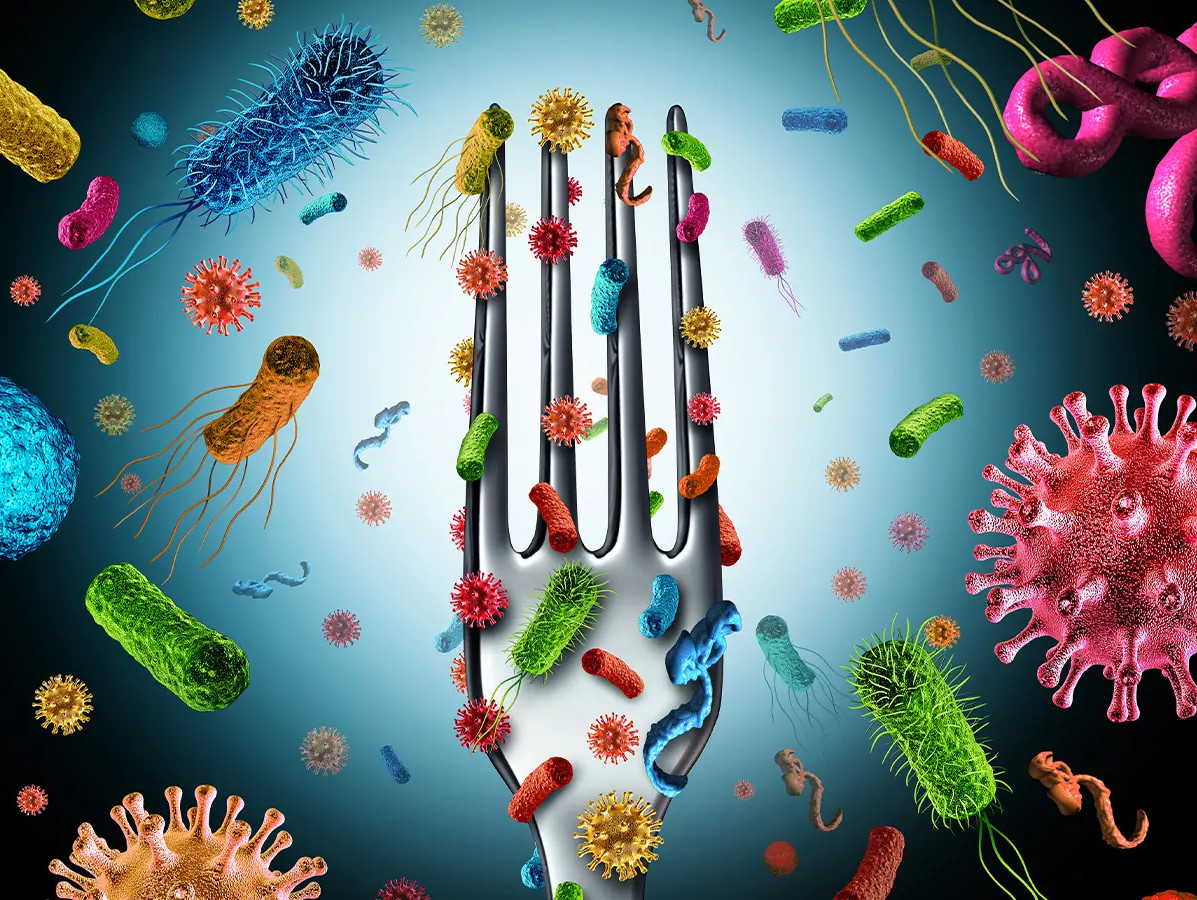
The areas where dry ice can make a difference can easily become unnoticed breeding grounds for Listeria, Aldo confirms: “Listeria is present in soil, so all raw materials are a source. But people working with the products can also bring along contamination. Lines where biofilm has developed also pose a significant risk.”
Dry ice can quickly and precisely remove biofilm or contamination through a combination of thermal and mechanical action. Edwin: “Dry ice carried in a compressed-air jet is gentle and does not damage the surface. At the same time, the temperature shock loosens hardened contamination. For example, during a short production stop, dry ice blasting can remove hardened residue from a nozzle. The CO₂ in solid form sublimates immediately upon impact. Nothing is left behind.”
There are challenges, however. “It requires training and proper safety measures, such as good hearing protection and adequate ventilation,” the product specialist says. “Dry ice must be purchased beforehand, and the equipment requires a compressed-air supply. Even so, companies are increasingly adopting this method alongside their regular cleaning routines – especially where wet cleaning is not possible.”
Trying out technologies such as dry ice fits the new conditions needed for hygienic production: less routine cleaning, more critical assessment. Aldo advocates more targeted environmental monitoring: “The FAVV and NVWA now require zoning, fixed swab points, and trend analyses. You must be able to prove that you are not contaminated. Continuous evaluation and documentation are essential. Only stop testing for contamination and pathogens once contamination has actually been found! And stay curious; in practice, contamination often hides in seemingly clean environments. Take, for example, the small rubber cap on a piece of conveyor belt that is added to the line every so often. That cap is never cleaned properly – it can become a permanent niche for a Listeria strain that keeps reappearing. Cleaning and disinfection are not only about chemistry; they also require knowledge of your own house flora and critical control points. Suppose a pipe or filter repeatedly causes contamination and is replaced time and again, but the problem persists. What then? An external specialist can identify a broader set of root causes and arrive at more effective solutions. I still too often see hesitation to take action and bring in external expertise. After a positive Listeria test, a customer quickly asks whether the lab made a mistake.”
Stefan: “Digital monitoring and AI provide 24/7 insight into whether cleaning is effective and whether deviations in water use or temperature occur. We increasingly deploy digital tools that allow us to support food companies remotely with research and refinement of their hygiene plans. This approach does require mutual trust, and that’s a sensitive matter. Companies must share data with their cleaning partner; transparency is crucial. The sector is still searching for the right balance.”
It is clear that no single party can solve everything alone. “The future lies in integrated quality management. Cleaning, microbiology, and process control are no longer separate islands. Everything is connected,” Aldo says. Stefan also sees more joint initiatives emerging. “Food producers, cleaning partners, and technology companies work together on water and energy management, on new biocides, and on alternative methods. Transparency and collaboration will be key.” Edwin recognizes this. “The food industry has traditionally been cautious with new techniques. But once companies see that a different approach or technology results in less downtime and leaves no residue, confidence grows. We are reaching a tipping point.”
Cleaning and disinfection are becoming proactive disciplines, driven by data, knowledge, and technology, the three experts conclude. Based on vibration data, temperature, and water-use sensors, predictive analyses can be made. “A pump that vibrates more than usual may have an early bearing issue,” Stefan explains. “By linking that to CIP data, we can predict when a cleaning cycle may no longer run properly or when a failure is imminent. That allows us to intervene before food safety is at risk.”
Prevention is also a key focus for Kärcher. “With dry ice blasting, you can remove product residues without having to dismantle everything,” Edwin says. “That shortens cleaning time and prevents bacteria from attaching. And because we can clean machines more frequently and faster, the risk of cross-contamination decreases.”
For Normec Foodcare, prevention lies in knowledge and control. “Companies must understand which bacterial strains are present in their facility,” Aldo says. “By characterizing isolates, you can see whether you are dealing with the same strain over and over again. Then you know that your source hasn’t been eliminated but keeps coming back.”
In the coming years, the food industry will have to adapt to a new reality: smarter water use, targeted chemistry, more data, and more knowledge. The structural shortage of well-trained personnel across the entire sector – including in cleaning and quality assurance – is part of that reality. To tackle this challenge, Kärcher focuses on simplification. “Our machines are becoming increasingly intuitive,” Edwin says. “A supervisor can set standard programs so that the operator only needs to start them. That minimizes errors and increases safety.” Technology is one thing, but behavioral change remains crucial, Aldo believes. “Even with the best products, hygiene is human work. With proper change management, cleaning can become an integral part of the process.”
In short, cleaning and disinfection are becoming smarter, more sustainable, and more visible. “Hygiene is no longer a hidden process,” Stefan says. “It is becoming a strategic part of operations and brand trust. Those who understand that are building future-proof food production.”
“Listeria or other pathogens will never disappear,” Aldo states. “But with knowledge, discipline, and innovation, we can control the risks.” Edwin: “The technology is available. Now it’s up to the industry to invest. Proper cleaning is not a expense – it’s a condition for continuity.”
Source: Vakblad Voedingsindustrie 2025
Magazine Voedingsindustrie has been made possible in part by:



© COPYRIGHT 2026 VOEDINGSINDUSTRIE | ALLE RECHTEN VOORBEHOUDEN
Powered by Wallbrink Crossmedia © 2026