
The key to greener nutrition is in the air. Literally — because the start-up Arborea converts CO₂ into microalgae by cleverly industrializing photosynthesis, without cutting down a single tree. An innovation that raises a thousand questions. We asked a few of them to Commercial Director Kaly Chatakondu.
What drives someone to give up the security (and perks) of a senior position at a food multinational to join a start-up? In January this year, Kaly Chatakondu (59) took the leap and joined newcomer Arborea. Adventurous? Perhaps a little. But as a scientist — Chatakondu earned a PhD in Chemistry from the University of Oxford — he did his homework before making the switch. He thoroughly researched the potential of the BioSolar Leaf®, the revolutionary technology developed by Arborea that is now ready to take on the world.
In short, the technology turbocharges photosynthesis to convert carbon dioxide (CO₂) and sunlight into virtually unlimited microalgae-based food ingredients — without the need for any fertile land. In his new role as Global Commercial Director, Chatakondu travels the world to put Arborea — and its technology — on the map. And he’s full of enthusiasm.
“The scalability. That’s what makes this technology commercially realistic. I’ve been approached by start-ups before, but never by one where both the technology and the business case made perfect sense. The cultivation technology behind the BioSolar Leaf® works anywhere in the world — from California to the Middle East, from Indonesia to the Netherlands. Sunlight and carbon dioxide are the only essential feedstocks, along with a minimal amount of water and fertilizer.”
It took about ten years, several (European) grants and patent applications, and multiple funding rounds — the latest closing in a few months — to bring founder Julian Melchiorri’s vision to life: developing a tool that mimics the principle of photosynthesis and harnesses solar energy for the production of sustainable food (and other) ingredients. According to Chatakondu, the timing couldn’t be better:
“For years, scientific studies have praised the potential of microalgae in our food system. Now there’s an efficient and affordable way to mass-produce them — in a closed system where taste and nutrition are fully controlled. And the timing is perfect: thanks to AI, we can rapidly analyze which beneficial compounds are present in the more than 30,000 known types of microalgae. The possibilities are endless.”
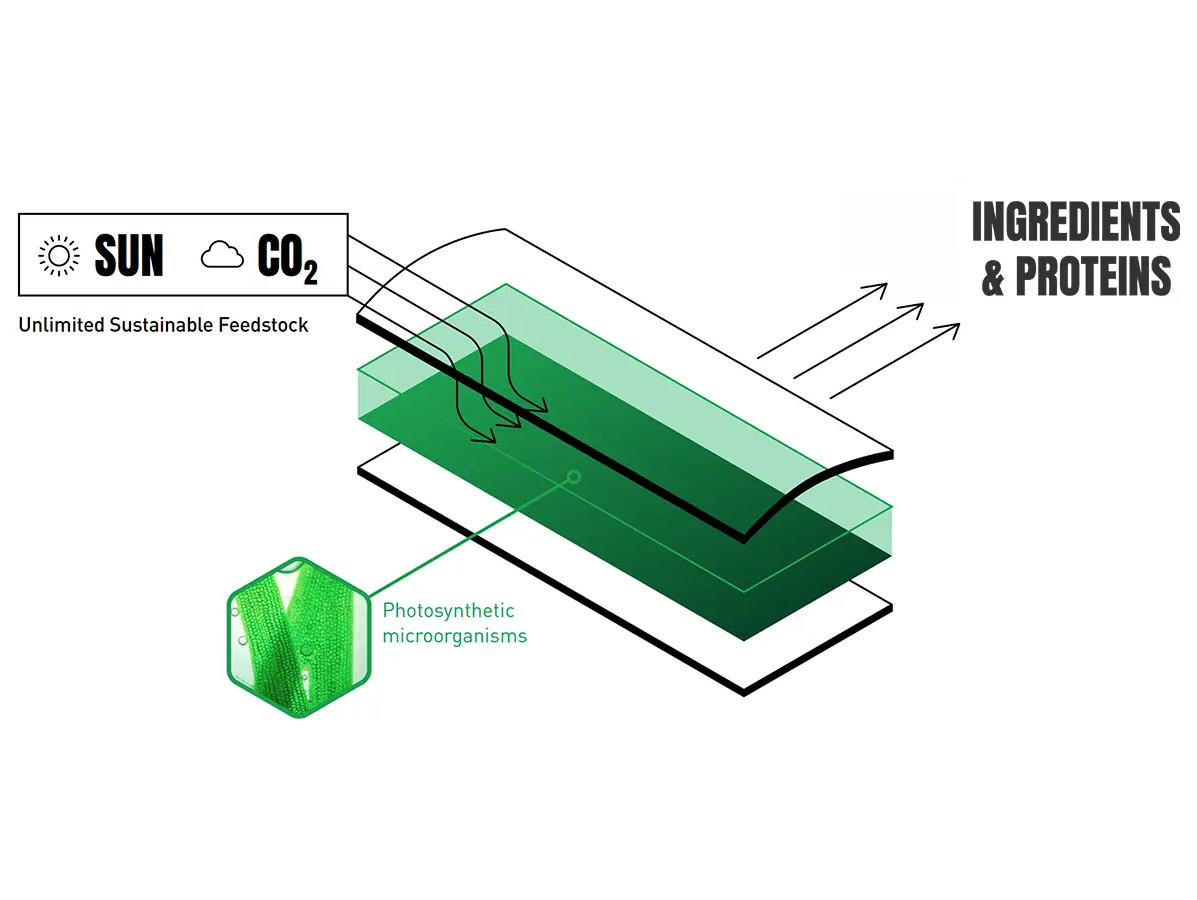
“Plants can convert less than 2% of solar energy into nutrients. The BioSolar Leaf® technology applies the same principle, but far more efficiently. It can convert two tons of CO₂ into one ton of microalgae. The process takes place in horizontal plastic tanks — closed systems containing only minimal amounts of water. Inside, the microalgae grow rapidly — tiny ‘superfood’ plants rich in nutrients and sustainable protein.
We can harvest them daily, instead of only once or twice a year as with traditional crops. No more trees need to be cut down to produce nutrients. The tanks function like human lungs, but in reverse: they ‘breathe in’ carbon dioxide and ‘breathe out’ oxygen — which becomes a natural byproduct. And the tanks can be installed anywhere: on rooftops, or on unused farmland.”
“The Aztecs already grew microalgae in open ponds, but that method is difficult to control and prone to cross-contamination from toxic organic and inorganic materials. Later came traditional glass bioreactors — large, expensive, and hard to scale. Both approaches typically produce only one type of algae. Our tanks, however, can produce any of the 30,000 photosynthetic microalgae species. Looking for a protein-rich variety? No problem. One with natural pigments? Or rich in omega-3 fatty acids? All possible. The system is modular — with one single technology, you can do it all.”
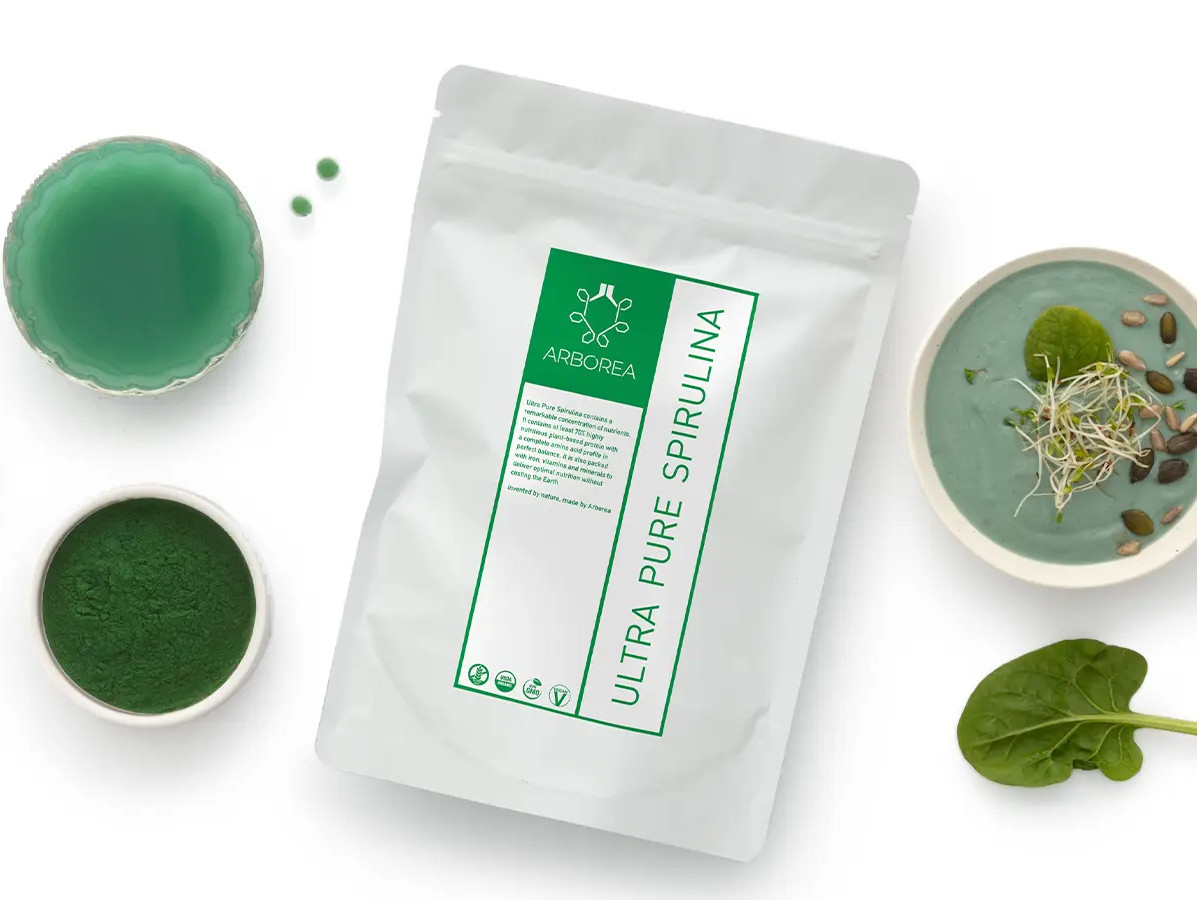
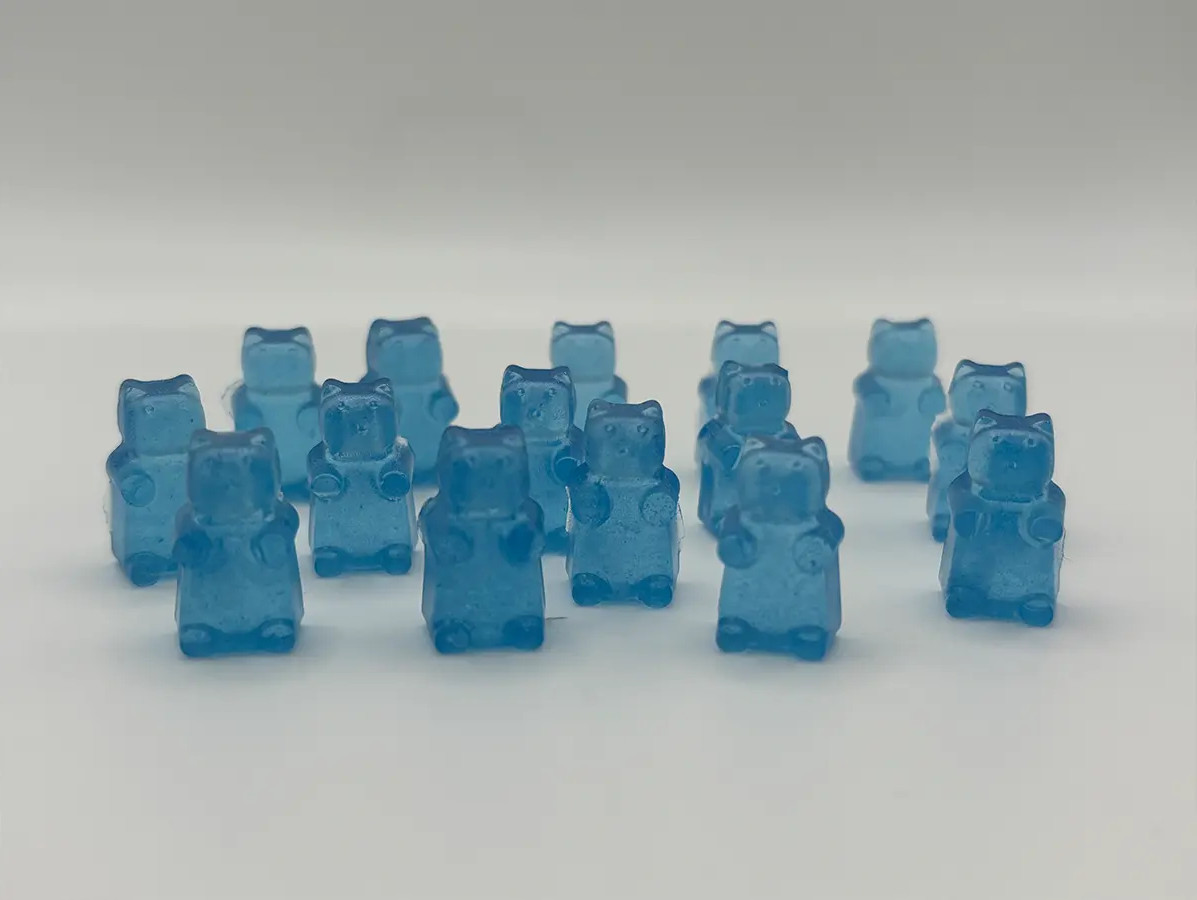
“Microalgae are true superfoods — rich in proteins, vitamins, and minerals such as iron, magnesium, and B vitamins. They contain a complete amino acid profile and are easily digestible. Unlike synthetic nutrients, which the human body largely excretes, microalgae-based nutrients are recognised and absorbed as real food. GLP-1 therapy, such as Ozempic, is sparking debate these days — not only because people consume less unhealthy food, but also because they may miss out on healthy, nutrient-rich foods. Microalgae can help bridge that gap. At Arborea, we create complete products with microalgae and microalgae extracts: plant-based milk, nutrient-enriched pasta, reduced-sugar chocolate, protein-rich bakery items like muffins, and gummies naturally colored and enriched with nutrients. All designed for use in food manufacturing — with no compromise on taste.
We can also isolate functional compounds from microalgae for use in processing industries — such as water-soluble, neutral-tasting proteins, natural blue and green pigments, and bioactive concentrates for human, animal, and plant nutrition.”
“Beyond nutrition, the BioSolar Leaf® technology is a true game-changer for carbon-emitting industries such as fermentation, brewing, bioethanol, biogas, chemical and agricultural waste, and even data centers.
Today, CO₂ is often captured, transported, and stored underground — an expensive process for both companies and taxpayers. Our technology can capture and convert CO₂ — 25 times more profitably.
After extracting proteins, the byproducts serve as natural soil enhancers for farmers, enriching fertile land for the same crops that feed bioethanol plants.”
“Extremely well! People are excited when they hear about the technology. In my thirty years in this industry, I’ve never seen such willingness to collaborate — even among multinationals opening their R&D divisions. We’ve already completed several successful pilots and formed partnerships with major international dairy companies and food producers in New Zealand, the UK, the US, and France. And yes, Dutch companies are interested too.”
“I immediately think of a conversation with representatives from a major Dutch retailer. They saw the technology as a way to make multiple parts of their supply chain more sustainable. Meetings with other start-ups were also very valuable. A plant-based meat producer, for example, saw huge potential for collaboration — microalgae can be both an excellent and affordable raw material for innovative categories such as plant-based meat. The Netherlands is a particularly interesting market for us because of Wageningen University & Research and its strong food-tech infrastructure.”
“Our current food system is unsustainable. Every minute, forests the size of eighteen football fields are cleared to make room for fertile land — not to mention the enormous water and chemical use involved in food production.
And food isn’t always consumed where it’s produced, leading to trade barriers and food insecurity. That must change — and it can.
With our technology, a non-fertile area the size of Greater New York could produce as much food as an area the size of Africa does today — for the 2050 world population — using minimal water and producing only oxygen as a byproduct.
Many players in the food industry could benefit from this technology, but they simply don’t know it yet. That’s what I’m working on.”
“As a start-up, we must stay agile and move fast. Large multinationals, even when interested, move much slower — and both sides often don’t understand each other’s pace. Bridging that gap is a major challenge.
We’re also working to convince financial institutions that this technology is worth investing in — so that we can truly scale up. Right now, we have a food science lab in London and a biotech lab in Lisbon. In the first quarter of 2027, we’ll open our first large-scale factory in Portugal, where we’ll produce our products on an industrial scale. That’s when we’ll be ready to go global.”
Photos: ©Arborea
Source: Vakblad Voedingsindustrie 2025
Magazine Voedingsindustrie has been made possible in part by:



© COPYRIGHT 2026 VOEDINGSINDUSTRIE | ALLE RECHTEN VOORBEHOUDEN
Powered by Wallbrink Crossmedia © 2026