
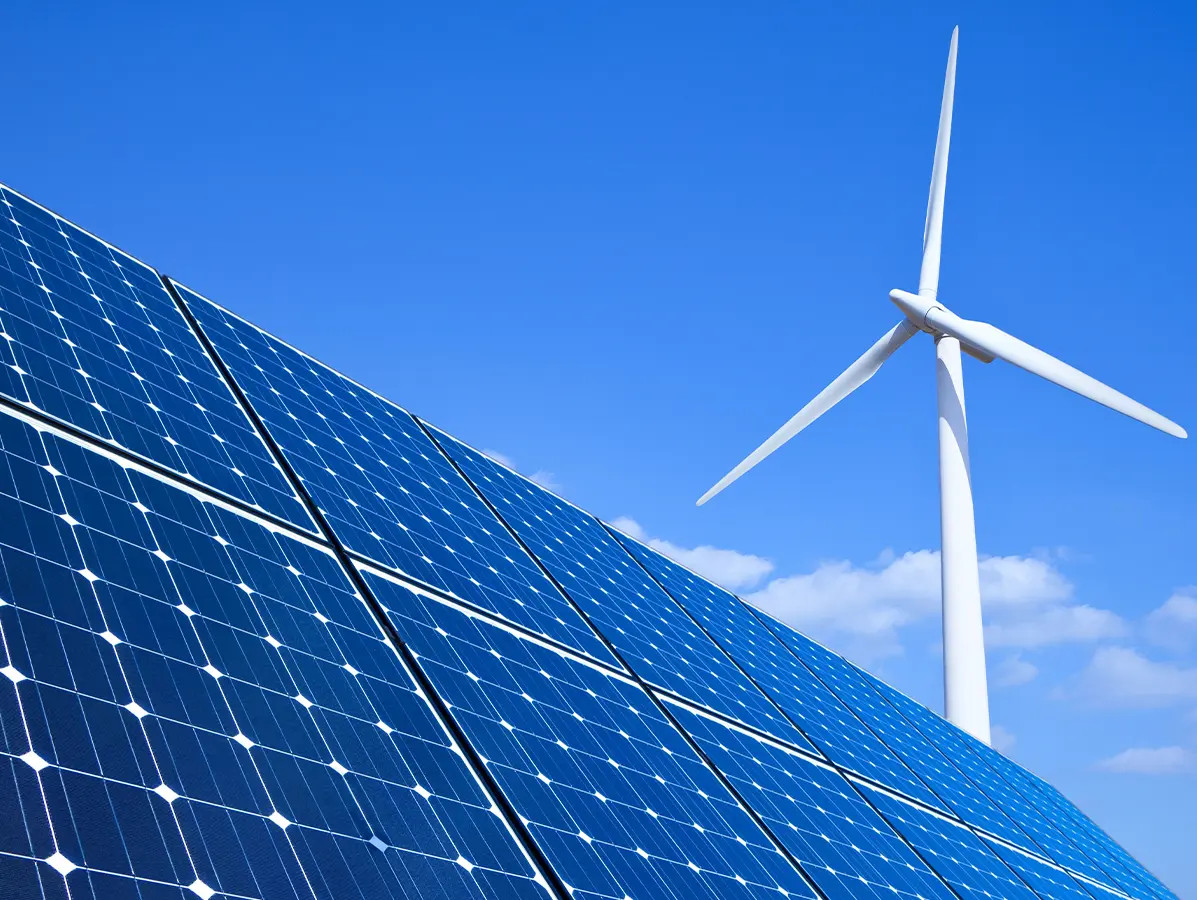
Since the war in the Middle East, energy prices have risen to unprecedented levels. To become less dependent on fossil fuels, entrepreneurs are looking for alternative ways to keep their businesses running. With wind power, solar energy, and battery storage, they have greater control over their electricity supply. That is reassuring. But it is not easy. It requires attention, time, and investment.
A new study by research organization World Benchmarking Alliance (WBA), examining major banks, insurers, and asset managers, shows that only 2 of the 400 companies assessed have robust plans to phase out fossil fuel financing: ING and Zürcher Kantonalbank. These plans include a concrete timeline for winding down existing investments in fossil fuel producers and refraining from making new fossil fuel investments. ING aims to achieve this over the next fifteen years. A good reason to discuss the energy transition with this international outlier when it comes to phasing out fossil fuel financing. Samantha Reily is Sector Banker Food at ING. “We want companies to become more sustainable,” she confirms. “That is why we finance on-site energy generation, such as solar panels, charging infrastructure on business parks, and combined heat and power plants.”
As Sector Banker Food, Samantha visits many companies in the food industry. “My experience is that many of them do not have a clear understanding of their energy consumption,” she says. “They want to expand and/or electrify, but think: ‘That’s not possible because we’ve already reached our energy limit.’ That is why everyone should start by mapping their actual energy use. For example, install additional meters at strategic points in the production process. Establish a baseline! It does not have to cost anything. Subsidies are available through the FlexE subsidy scheme, and there are consulting firms that can help.” In her experience, these baseline assessments often reveal that there is still considerable capacity available around one or more peak loads. “The next question is whether those peaks can be shifted.” With the help of new technologies such as AI and Digital Twins, patterns in energy data can be identified, deviations can be detected more quickly, and opportunities for optimization can be uncovered.
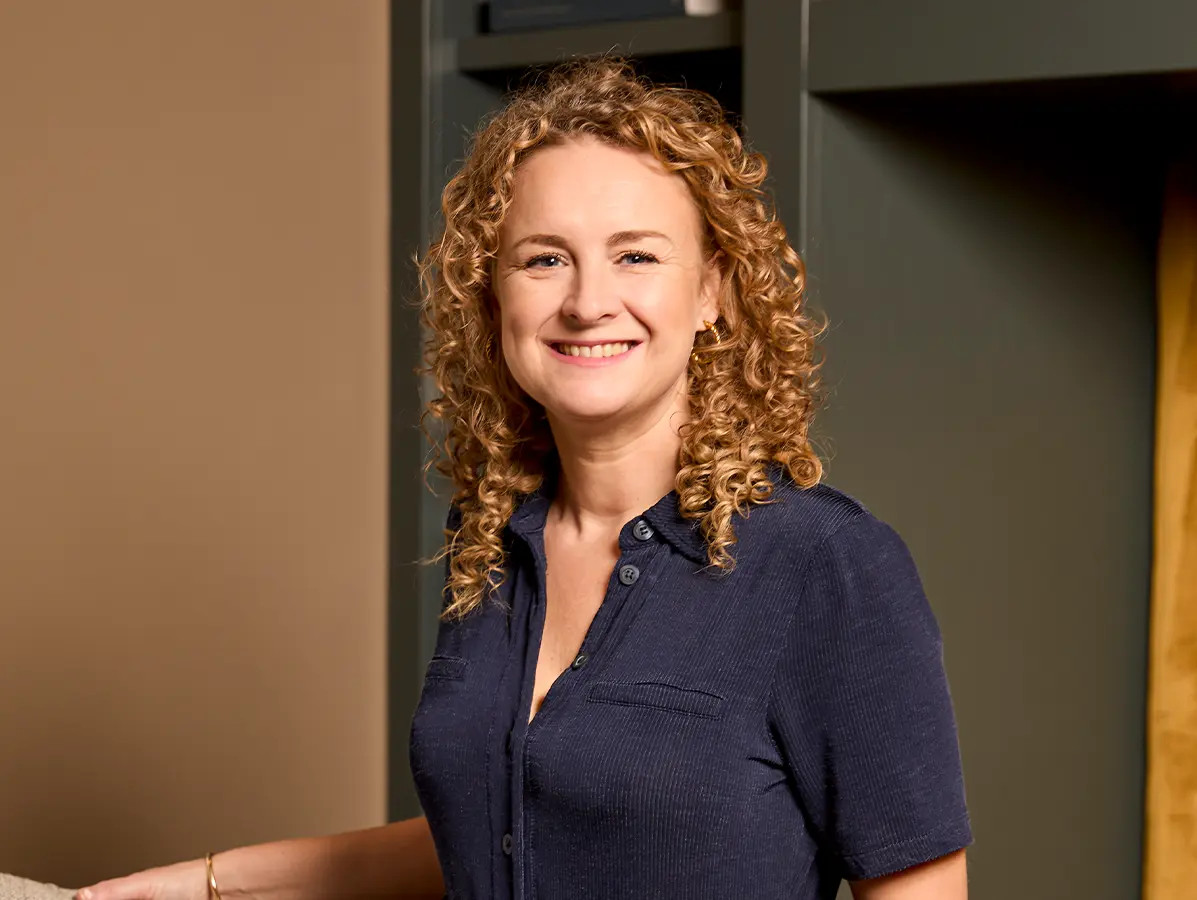
Samantha Reily
Also joining the conversation is Erik van Acht, owner and managing director of the family business Van Acht Logistics. Originally established as an agricultural company, Van Acht has grown into a specialist in the storage and transportation of a wide range of goods. “Our specialty is the storage of plants, fruits, and vegetables,” he explains, “but we also store other, less temperature-sensitive goods for our customers, all in separate compartments. For example, we work closely with milk powder companies.” The company also offers so-called Value Added Services, such as extensive registration, product labeling, and shipment inspections. “Cold storage facilities have long been the batteries of the market,” Erik states. “For decades, we have been managing cooling systems by switching them on and off at the right moments to reduce costs. We may only need to cool for one or two hours every 24 hours. Why would we do that when electricity is expensive, or when there is a power shortage elsewhere in the business?”
Today, the roofs of Van Acht’s facilities are covered with solar panels. “We generate more energy than we need ourselves. In Veghel, we have a very large battery for energy storage. It is equipped with an advanced energy management system. This allows us to know exactly when electricity is expensive and when we should feed power back into the grid—or not.” It is a highly dynamic process, carried out in cooperation with TenneT and the local grid operator. To maximize the benefits of energy generation and consumption, Van Acht invested in a company specializing in customized energy management systems for businesses. The company has its own management team, but Van Acht remains a co-owner.
One of the lessons Van Acht has learned over the years is the importance of creating stability. “Once you go beyond the optimum, you end up switching far too often,” Erik explains. “Starting up a machine consumes more electricity than letting it run steadily. It is like a car: short trips cause more wear and tear, while long journeys are much more fuel-efficient. So, you need to keep your machinery running as smoothly as possible. We have now automated that process completely. Of course, we can always override the system if needed. Product quality comes first; everything else is a bonus. We use 80 to 90 percent of our electricity during the storage phase. For manufacturing companies, it is usually the other way around: 80 to 90 percent is used in production and only 10 to 20 percent in storage. In that case, the opportunities are more limited.”
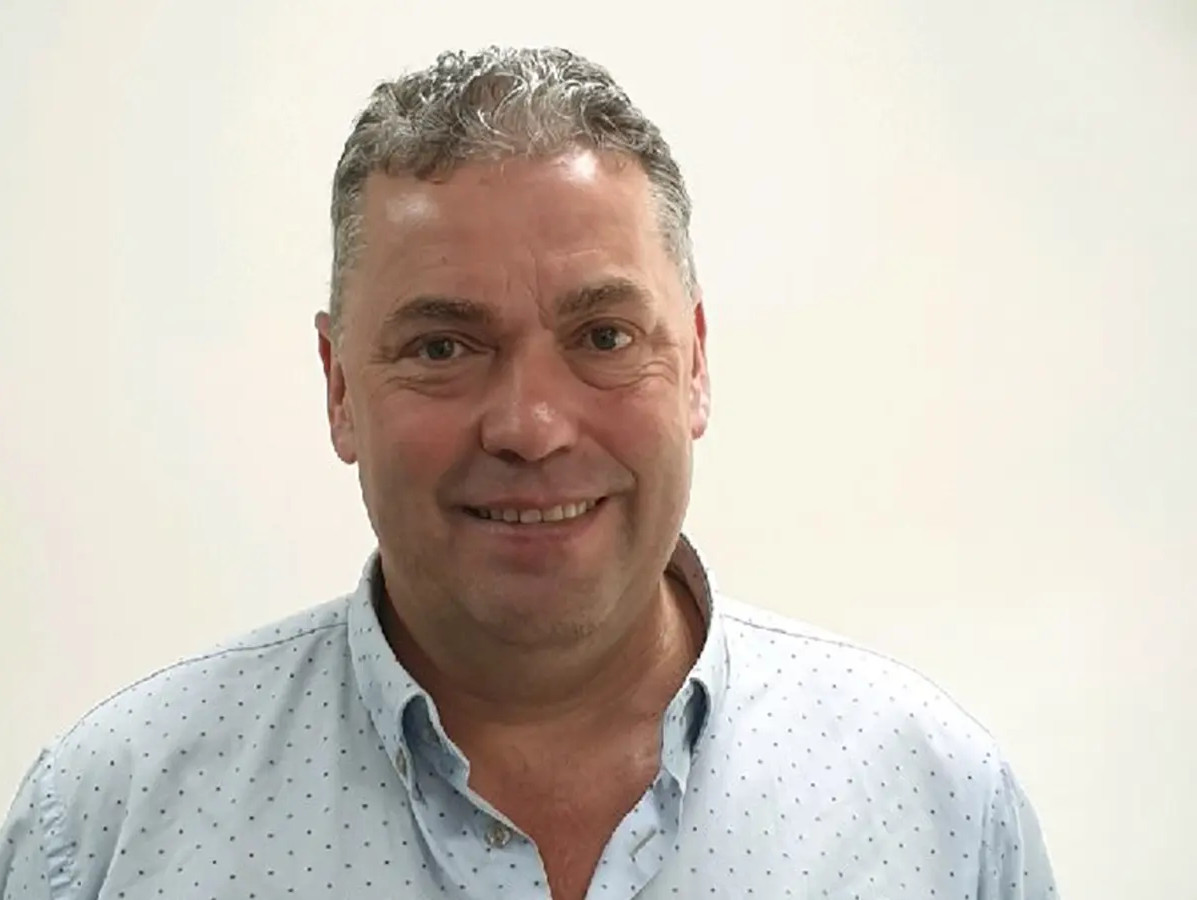
Erik van Acht
Even so, manufacturing companies can often take simple measures fairly quickly to reduce their energy bills. Better insulation of pipes, for example, or behavioral changes such as switching off lights in unused areas and, where possible, turning off machinery during weekends. “If shifting peak demand is not an option, you can investigate storage solutions such as batteries,” Samantha says. “Or talk to your neighbors! Suppose your company’s peak demand occurs in the morning, while your neighbor mainly needs electricity in the evening. Then you can explore opportunities to exchange power. Can you support each other’s energy needs? In my view, there is so much potential in solutions like these. They are still being overlooked far too often.” Another option is peer-to-peer trading, where self-generated electricity is shared with or sold directly to another end user without involving a traditional energy supplier.
“The problem with Collective Grid Connection Agreements is that companies without an energy shortage see no reason to participate,” Erik notes. “Everyone who does have a problem wants to collaborate, but has nothing to contribute. Another issue is that when you supply electricity to your neighbor, the government loses out on energy tax revenue. They are not particularly enthusiastic about that. Fortunately, this does not affect us. We operate on a large private site with several companies behind a single connection, but all of those companies belong to us. As a result, this legislation does not apply to our situation. I believe an important bottleneck for companies with spare capacity is the fear that they will not regain their original transmission capacity if they want to leave the agreement after a few years. As long as that exit route is not properly arranged, these agreements are unlikely to gain traction.”
Samantha acknowledges that this type of contract is still relatively new and that there is room for improvement. Nevertheless, she remains optimistic. “These agreements are always tailor-made, of course, but I can point to several examples where cooperation between neighboring businesses works very well. Many entrepreneurs genuinely want to be part of the solution. Some companies have spare capacity in their contracts and know for certain they will not need it in the future. They may value local business activity, for example, or want to retain certain companies on their business park. Sometimes they have a clear interest of their own: if you want to sell plots of land, they are only attractive if power is available. It is worth working with the grid operator to investigate what is possible. Liander, for example, is very willing to permit and support local energy hubs. A great deal is possible, but effective energy management is challenging. There is no single best solution…”

Erik: “Absolutely. Every situation is different. Some companies have space for solar panels, an energy storage unit, or a battery; others do not. Some have spare capacity in their contracts, while others face shortages. Some generate their own electricity; others do not. By managing energy more intelligently, there is often far more possible than entrepreneurs realize. There are often solutions for block power contracts as well (a type of contract offered by grid operators that guarantees electricity consumption or feed-in during pre-agreed time blocks, editor’s note). In that case, you can store energy at night and use it during the day. Once you have installed a battery or storage system for self-generated energy, it can become financially very attractive to use it in additional ways. There are many opportunities to generate extra revenue from it.” The entrepreneur himself is currently developing a large public charging hub for electric trucks. “We have the land, the grid connection, and the electricity. The location is perfect—right next to the highway,” he says enthusiastically. “But…” he continues. “It falls under the category of a ‘fuel station.’ We do not have a permit for that. It is still a long process to get everything approved. We could easily be two years down the road before it is all in place.”
“The energy challenge has become extremely demanding for entrepreneurs. It requires attention, time, and investment,” Samantha emphasizes. “As a business owner, you have to think about how your energy demand will develop in the years ahead. In the past, that was more or less a fixed factor. Today, your energy bill can represent a significant business risk. This is therefore a topic that requires a clear strategy, especially if you want financing. When assessing a financing application, it is a major advantage if we know a company has control over its energy costs. So start developing scenarios. ‘What if gas prices move in a certain direction? How will we deal with time-based grid tariffs?’ Companies that gain a clear understanding of their energy profile today will benefit greatly in the future.”
And that future is approaching quickly: “The grid congestion issue is not going away anytime soon. The situation is only expected to become more severe in the coming years,” Samantha predicts. “For a long time, the mantra was: ‘We need to phase out natural gas before 2030.’ That has proven unrealistic. Electrification is progressing more slowly than anticipated. That is why we need to remain open to interim solutions, such as hybrid heat pumps. Blue hydrogen is another option. In this case, ‘perfect is the enemy of good.’ The most practical and realistic way to make progress is through smaller steps. They may not be perfect, but they move us forward.”
Source: Vakblad Voedingsindustrie 2026
Magazine Voedingsindustrie has been made possible in part by:



© COPYRIGHT 2026 VOEDINGSINDUSTRIE | ALLE RECHTEN VOORBEHOUDEN
Powered by Wallbrink Crossmedia © 2026