
Few companies in the food industry are unaffected by power-related challenges. Bas te Riele of Aan de Stegge Twello regularly works with colleagues to determine the most efficient solution. “Yes, it takes some calculation and careful thought. But there are often viable solutions.”
Nitrogen regulations, land availability, and electricity: for many food companies, these are major headaches. Especially when renovating, expanding, or constructing a new facility. Bas te Riele, Commercial Manager at Aan de Stegge Twello, knows all about it—at least when it comes to the electricity challenge. “Sometimes companies rule themselves out from the start because of a lack of available power, even though solutions are often within reach.”
Aan de Stegge Twello completes around twenty turnkey projects each year, including projects for companies in the food industry. Bas explains: “Before the so-called ‘grid congestion’ became an issue, companies could draw almost unlimited electricity from the grid—via TenneT. As we all know, those days are over.” In recent years, many entrepreneurs have approached Aan de Stegge Twello with electricity-related challenges. “In principle, office and industrial buildings can still obtain a grid connection, at least for now, but only a low-voltage connection of up to 3 x 80 amps. Depending on the province, however, even low-voltage connections may no longer be available after July 1 of this year.”

Bas te Riele
Mapping a company’s consumption profile is essential to determine how much electricity is required and which solutions should be deployed. Bas: “What machinery and building systems are currently in place? What will be added? How much electricity do they consume throughout the day? And, most importantly, what is the peak demand of the customer’s processing equipment? The challenge is to reduce peak demand.”
According to Bas, peak demand from the grid and electricity fed back into the TenneT grid are the main contributors to congestion. “Solar panels have been used for years, but because feeding electricity back into the grid in the Netherlands has become increasingly difficult, and electricity prices remain volatile and relatively high due to geopolitical tensions, batteries are being used more frequently to create the right energy solution. They are typically deployed to reduce both peak demand within your own installation and peak loads on the grid,” says Bas.
The key question is: how do you ensure that all components within the installation work together optimally? According to Bas, this has become increasingly important. “In the past, you designed an installation, connected it to the grid, plugged it in, and you were done. Today, much more time is spent upfront calculating how to use electricity as efficiently as possible. Building systems, refrigeration equipment, charging stations for cars and trucks, and auxiliary equipment are all being scrutinized more critically. Do they really need to be that large? Software alone can often reduce a facility’s energy profile by 20–30%.”
Over the past few years, Bas and Aan de Stegge Twello have completed four projects for companies facing serious electricity challenges. Recently, a company in the packaging industry approached them. “It involved a new facility that had yet to be built and, unsurprisingly, they were also facing power shortages. Management wanted to eliminate any risk of machinery shutting down due to insufficient power.”
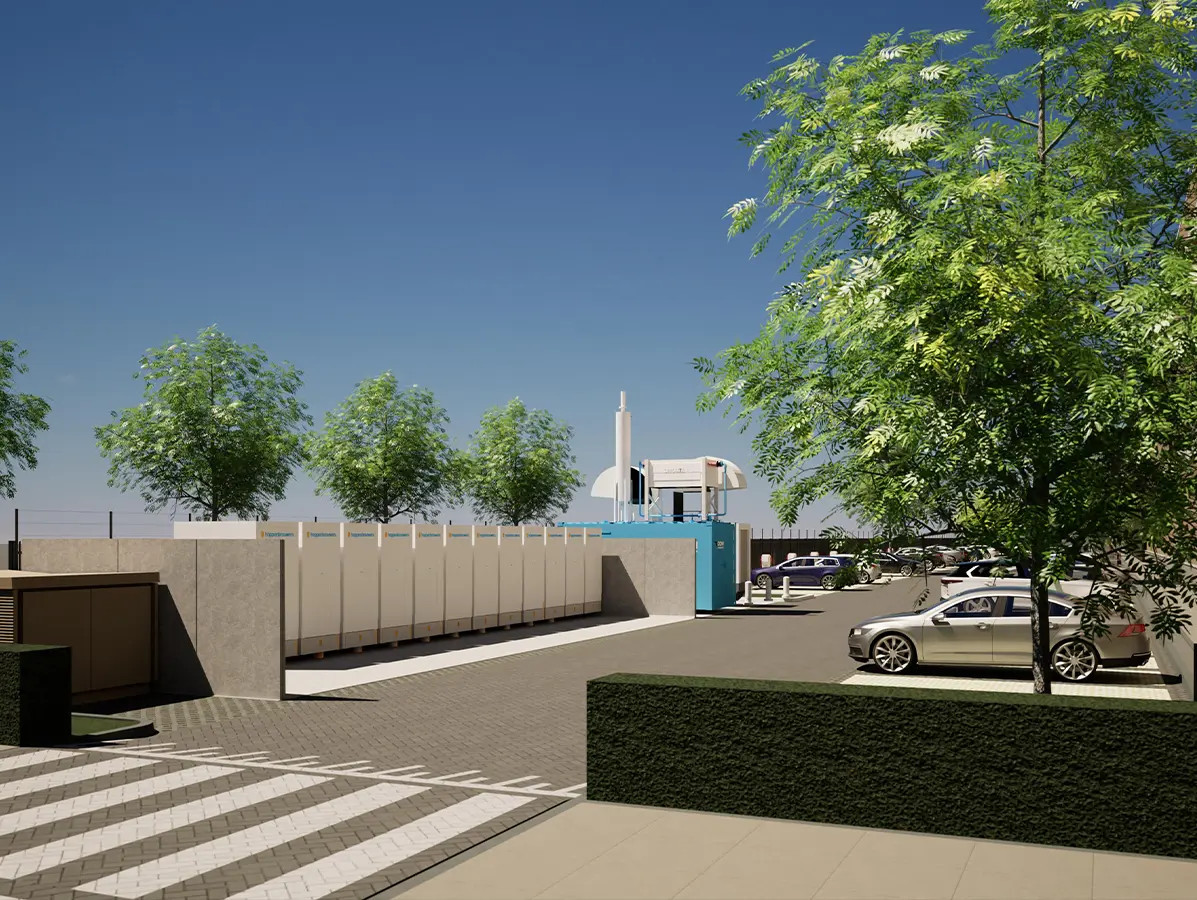
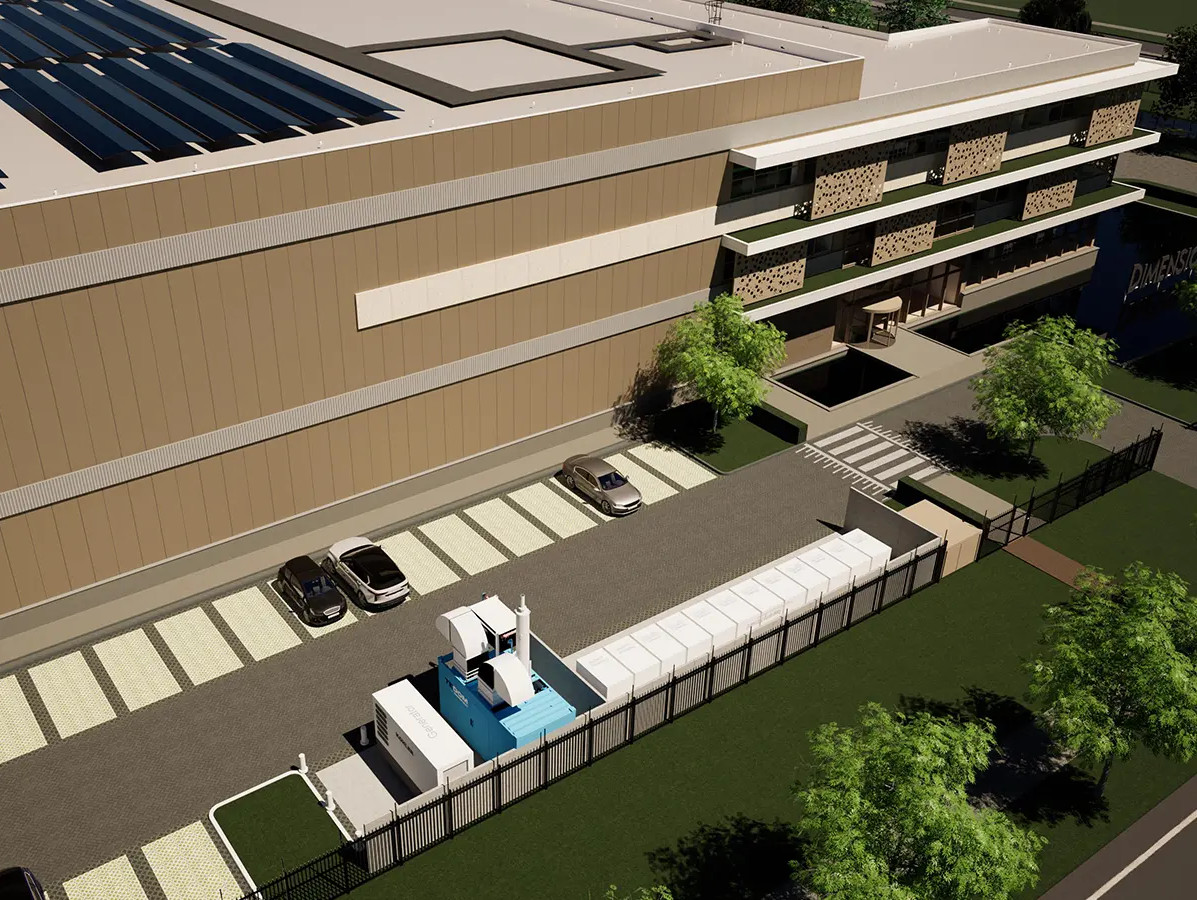
Bas and his colleagues designed a system through which the company is expected to obtain 84% of its electricity needs from the grid, batteries, and solar panels. In this particular case, a low-voltage grid connection is available. Bas explains: “That connection will supply approximately 15% of the required power capacity. The company has chosen to install batteries with a total capacity of 2.15 MWh. For comparison, that is roughly equivalent to the capacity of 30 electric vehicle batteries. The batteries are primarily used to absorb peak loads, for example when heavy processing equipment is switched on.”
The batteries will be installed in a cascade configuration. “Unlike a shipping container filled with batteries—which is also a common solution—you can remove individual batteries for repair or replacement. It also gives you greater flexibility if you want to expand in the future,” says Bas.
He explains that an advanced near off-grid system has been designed to meet the remaining energy demand, including a gas turbine. “That may sound contradictory because the government wants to reduce gas consumption. However, a gas turbine is permitted, provided nitrogen emissions are properly managed.”
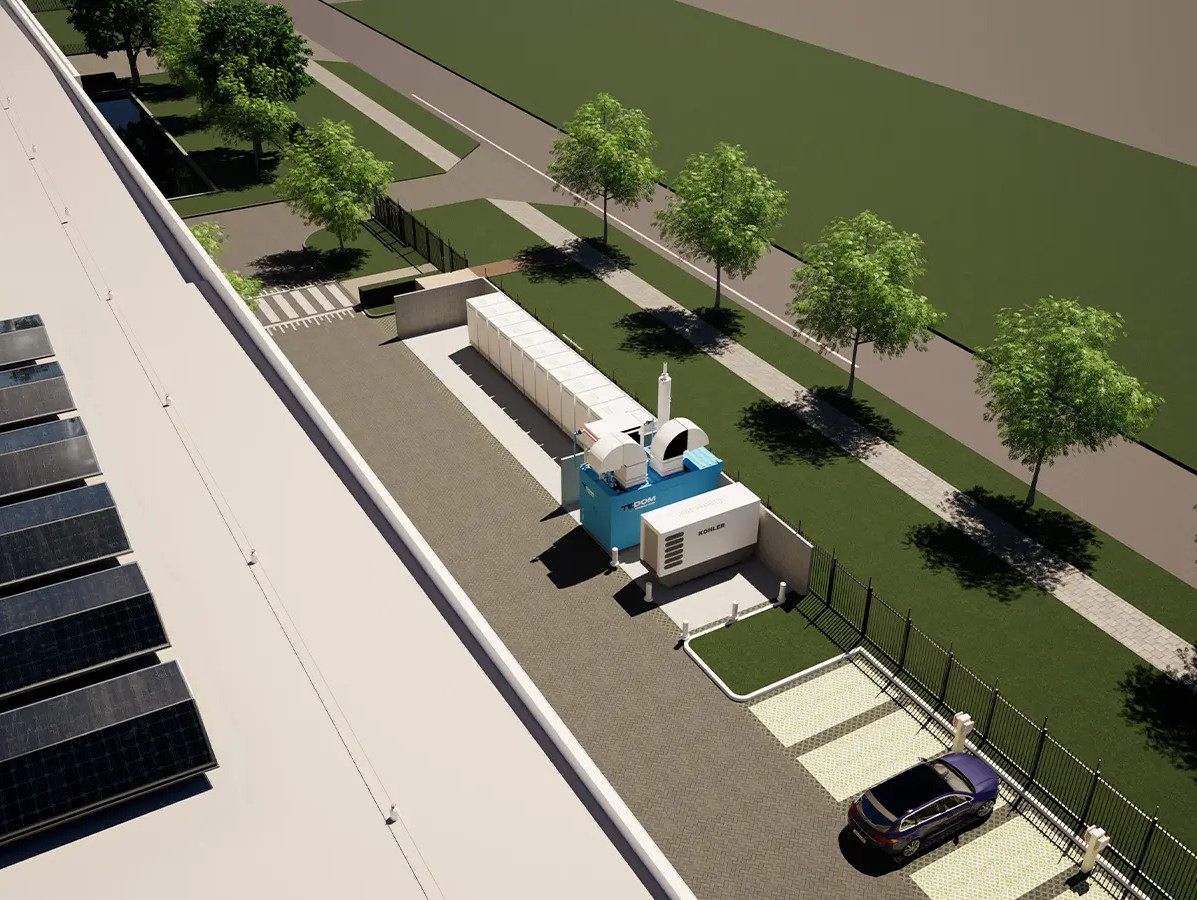
Solar panels are a crucial component of the near off-grid installation, Bas explains. “They power the installations during operation while also charging the batteries. More than 3,200 panels will be installed on the roof. The determining factor for the number of panels is the autumn and winter period, when there is less sunlight. Since electricity cannot be fed back into the grid, there is no point in covering the entire roof with panels in this case.”
Based on the system design, nearly 70% of energy consumption will be generated by the PV panels, with the batteries required both to achieve that percentage and to absorb peak demand. “Another 15% will come from the grid. Only during the months of November through February is the gas turbine expected to be needed to generate the remaining electricity.”
However, the entrepreneur wanted complete certainty. Bas explains: “Suppose it is the middle of winter, solar generation is limited, the grid goes down, and the gas turbine also fails. In that case, part of the machinery could indeed shut down. If the outage lasts longer, there is a backup solution: an emergency generator.”
For this project, an emergency generator powered by HVO100, made from used cooking oil, was selected. Bas: “Biogas or another fossil fuel could also be used. Some emissions are unavoidable. The best part is that the final cost per kilowatt-hour, including all management and maintenance costs, remains competitive with electricity purchased from the grid. The entrepreneur does, however, need to invest in the near off-grid installation. Another option is to lease the entire system.”
The new facility, including the off-grid installation, is scheduled for completion next summer. Bas and his colleagues are also working on electricity-related challenges in existing facilities. “Even a relatively small investment in batteries or software can make a significant difference. Your current installation is often capable of much more than you think.”
Source: Vakblad Voedingsindustrie 2026
Magazine Voedingsindustrie has been made possible in part by:



© COPYRIGHT 2026 VOEDINGSINDUSTRIE | ALLE RECHTEN VOORBEHOUDEN
Powered by Wallbrink Crossmedia © 2026