
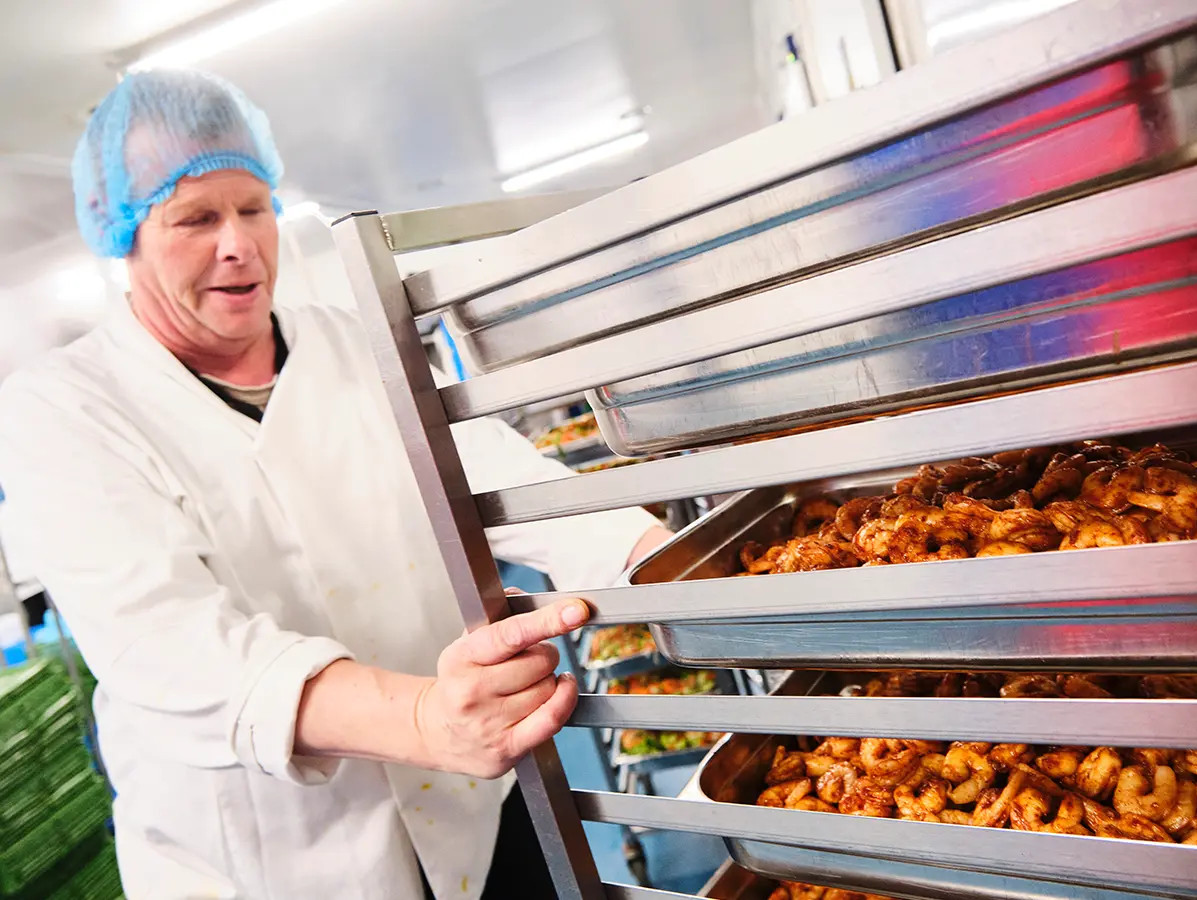
StarCuisine produces fresh meals for the Dutch retail and foodservice markets. The arrival of sister company Sushi Ran in Bleiswijk calls for a doubling of production capacity. But before any construction begins, Operations Manager Ronald Jansen believes you first need to gain control over what is already in place.
StarCuisine’s ready-made meals are prepared by chefs from around the world using authentic recipes. While its roots lie in Asian cuisine, the product range has grown to include a wide variety of international cuisines, from Italian and French to Surinamese and Mexican. A tour through the kitchen tells the story of where StarCuisine came from.
The company started in 2009 as a catering business, and that heritage is still visible today: much of the work is done by hand, from preparation and cooking to assembly. Last year, the first fully automated production and packaging line was commissioned. It marked the first step in the transition toward scalable production. At StarCuisine, craftsmanship and ambition come together on the production floor: scaling up without compromising on taste and quality. It is a challenge Ronald is committed to every day: “Growth should never come at the expense of the craftsmanship that made us successful.”
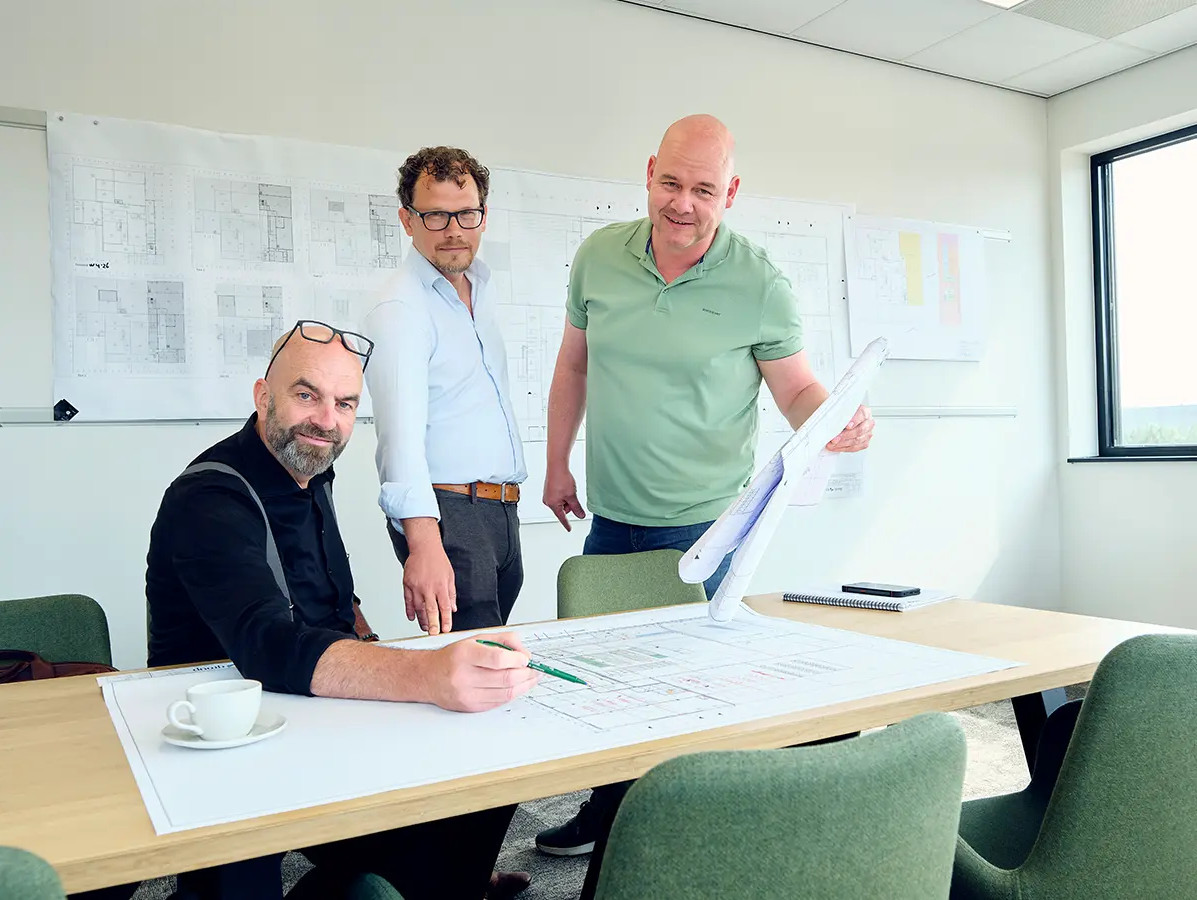
From left to right: Rinke Kortenbach, Elmar Hammers, and Ronald Jansen
The arrival of Sushi Ran requires the next phase of growth. Both companies produce carbohydrate-rich products, serve some of the same customers, and share common ground in logistics, order picking, and workforce planning. The synergy is clear, but how do you translate that into an efficiently operating factory without disrupting existing production while preserving each product’s unique identity? Ronald explains: “You can’t double the size of a factory if you don’t have a clear understanding of the operation. Whether it’s the refrigeration system or the construction schedule, insight gives you control and prevents chaos.” StarCuisine opted for a tender process, with Food Projects—part of RBK Group—acting as a trusted advisor, responsible for the architectural and technical design as well as coordinating between the contractor and the ongoing production operation. According to Ronald, this approach works extremely well: “The preparation is much more thorough, which leads to fewer surprises during execution. That, too, is a form of insight: knowing what lies ahead before it happens. We always produce fresh products, so downtime is not an option.”
Rinke Kortenbach of Food Projects is responsible for the design. He analyzed the production flows, mapped out the growth potential, and translated this into a layout that enables future expansion without requiring a complete redesign. “We created a clear structure,” he explains. “The primary side for incoming raw materials, the production core in the center, and the secondary side for assembly and shipping. By positioning logistical pathways strategically, we also create flexibility: new lines or processes can easily be integrated without disrupting the existing flow. This gives the factory a logical, scalable layout. StarCuisine can continue expanding until there is no land left.”
Naturally, the plan also incorporates efficient energy management. Smart routing of energy flows and heat recovery are not afterthoughts but integral parts of the design, allowing StarCuisine to continue optimizing its energy performance. Since the beginning of this year, StarCuisine has been using FOPRO®—one of the other companies within RBK Group—for this purpose. Ronald says: “With this software, we can monitor the operational processes of the refrigeration systems in real time. It’s still too early to talk about hard numbers, but we now know that the existing refrigeration system is capable of more than we initially thought. By intelligently balancing cooling demand against available capacity, we’ve found significantly more room than expected. Enough to support part of the new facility as well.”
According to Rinke, the equation is simple: “Existing steel, greater returns. Naturally, we incorporated findings like these into the master plan.” Elmar Hammers, who serves as the integrated project manager on behalf of RBK Food Projects, adds: “Refrigeration systems generate residual heat. By managing them more intelligently, that heat can be used not only for cleaning but also reused for heating or other processes within the factory.” The FOPRO® software connects cooling, heat recovery, and energy management, controlling everything as a single system. In a sense, the building becomes its own battery. Through insight and effective management alone, you can achieve a tremendous amount without adding extra hardware.
Ronald concludes: “Whether it concerns logistics, the building, or the technical installations, you make use of what is already there while preparing for what may come in the future. To me, that is the definition of smart and sustainable construction. The site theoretically offers enough space to quadruple our current capacity. The master plan already takes that into account. But one step at a time. First, we need to complete this phase. The foundation piles are in the ground and the floors are being poured. Completion is expected in early 2027.”
Photos: ©Fred Libouchant Fotografie
Source: Vakblad Voedingsindustrie 2026
Magazine Voedingsindustrie has been made possible in part by:



© COPYRIGHT 2026 VOEDINGSINDUSTRIE | ALLE RECHTEN VOORBEHOUDEN
Powered by Wallbrink Crossmedia © 2026