
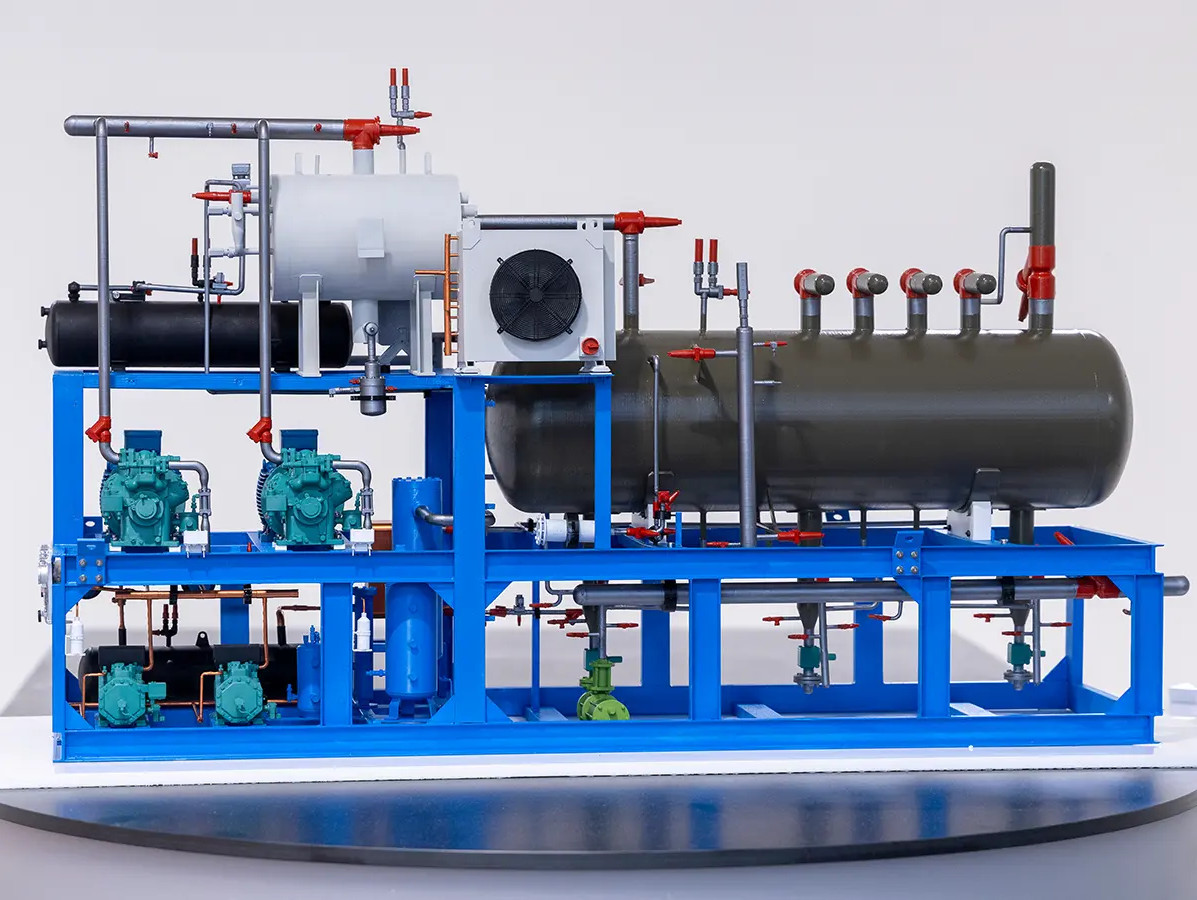
Grid congestion, the phase-out of synthetic refrigerants, and a rapidly changing energy market are among the factors making the construction of energy-efficient, sustainable refrigeration systems that are future-proof an increasingly complex challenge. “The market mainly focuses on TCO,” says Edwin Ernste, Director of Celsis. “But you also need to take environmental impact (TEWI) into account. That aspect is often overlooked.”
TCO (Total Cost of Ownership) is an excellent way to determine which type of refrigeration system is the best financial fit for your business. However, if you want to install a refrigeration system that delivers not only optimal efficiency but is also sustainable and future-proof, you also need to consider TEWI (Total Equivalent Warming Impact). “And especially the balance between TEWI and TCO over the long term,” says Edwin Ernste of Celsis, a distributor of refrigeration and climate-control technology. “That requires a long-term vision of developments such as the energy market and the availability of natural refrigerants. Companies in the food industry are also aiming to become energy-neutral by 2050. Achieving that requires a broader perspective than TCO alone. In practice, we still see too many companies focused on the here and now, and that is not a wise approach for the future.”
Grid congestion is also leading to decisions that run counter to the goal of energy-neutral production. Diesel generators are regularly used to provide additional power, including for new installations. “Naturally, we want to avoid that as much as possible,” says Edwin. “And it is possible, because you can design efficient systems that provide optimal cooling with natural refrigerants while keeping energy consumption to a minimum. That often requires a customized approach, and as a supplier, we are happy to provide guidance. One example is a customer that received a cooling request from the dairy industry and was running into grid congestion issues.”
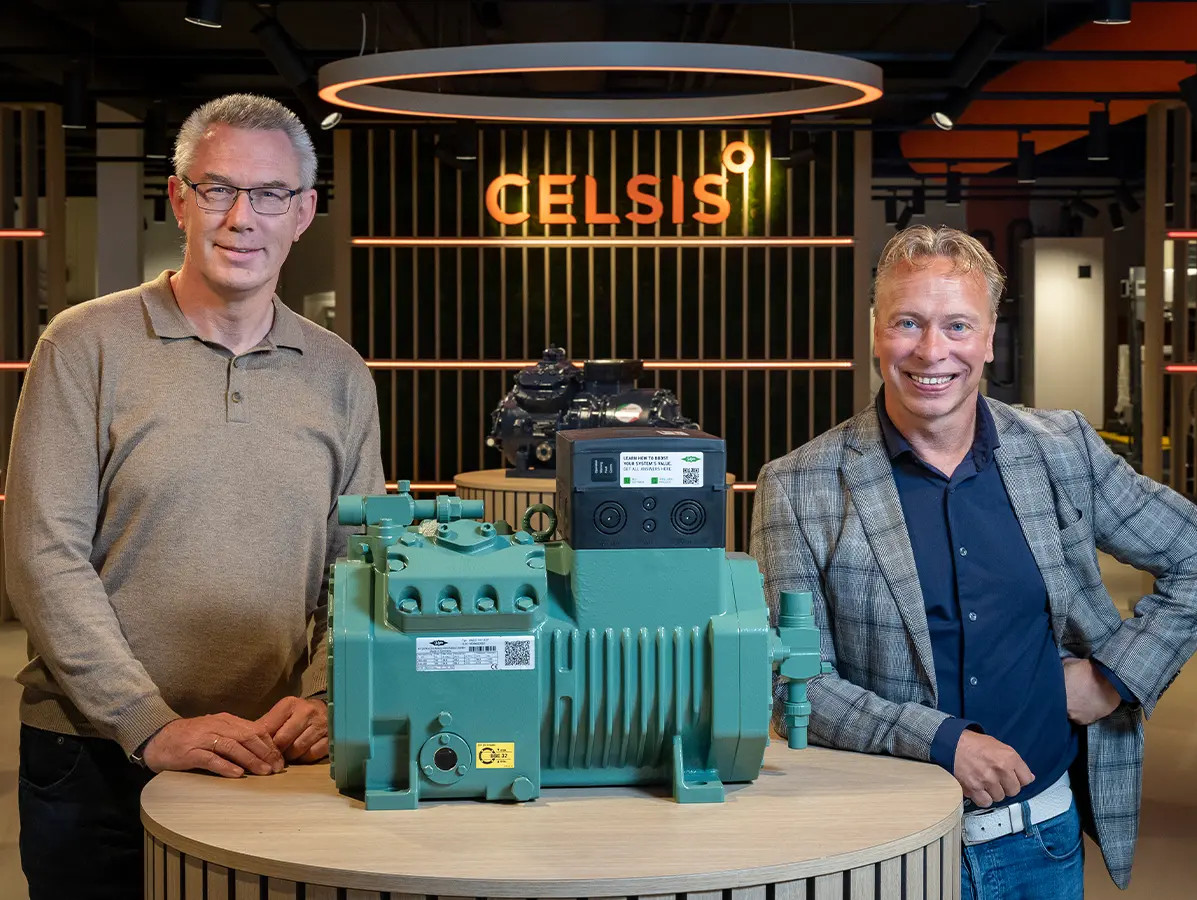
Klaas Dijkslag (left) and Edwin Ernste
The new refrigeration system installed at this dairy company is an excellent example of an energy-efficient, future-proof solution. The company supplies packaged cheese, both grated and sliced, throughout Europe. The business has been growing steadily and continues to expand. At its Westzaan facility, storage capacity more than doubled by the end of 2025 with the addition of 6,000 square meters. Alongside extra cooling capacity, underfloor heating, hot water, and limited freezer capacity were also required. In the near future, the installation will require a total cooling capacity of 1,050 kW. However, at the end of 2025, only a connection capable of supporting 240 kW of cooling capacity was available.
To achieve high energy efficiency and a low environmental impact, a combination of two systems using natural refrigerants was selected: CO2 for the indirect low-temperature (LT) system and ammonia for the high-temperature (HT) system above it. A cascade heat exchanger transfers heat between the CO2 pumping system and the ammonia system, ensuring an optimal COP (Coefficient of Performance). To make the installation future-proof, it was designed to be expanded in phases. Phase 1, providing 240 kW of cooling capacity, became operational at the beginning of 2026. According to Celsis Technical Advisor Klaas Dijkslag, the indirect system is fully prepared for each subsequent phase.
“In practice, each new phase only requires the addition of an extra ammonia reciprocating compressor. All other system functionalities, such as the heat recovery exchanger for hot water production, have already been installed and will continue operating as normal. The second phase, providing 400 kW of cooling capacity, is expected to be completed during 2026.”
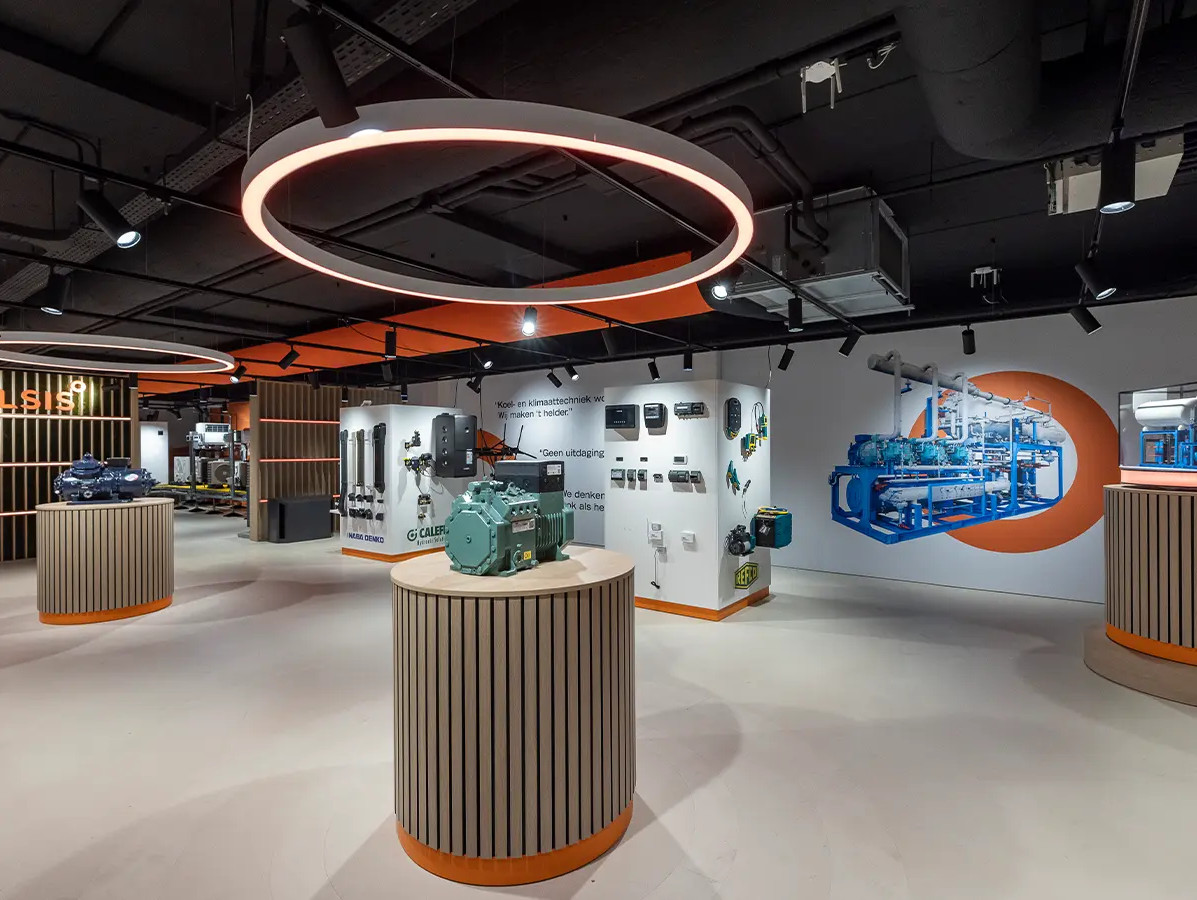
“Choosing an ammonia-based system is a smart decision in any case,” says Klaas. “Although the initial investment is higher than for a synthetic system, maintenance costs are much lower and the service life is considerably longer. As a result, the TCO is far more favorable. Add to that the low environmental impact of 0 GWP (Global Warming Potential), and ammonia provides a highly energy-efficient system with a small ecological footprint.”
Like many other companies, the dairy business uses solar panels to generate electricity. On sunny days, these panels cover up to 40% of its energy demand. “In today’s energy market, we are seeing developments that companies can respond to very effectively,” says Edwin. “Until recently, it made sense to reduce electricity consumption for cooling during the day because power was cheaper at night, allowing additional cooling to take place then. However, with solar energy and feed-in charges, it is now more advantageous to increase cooling during the day and reduce energy consumption at night. Five years ago, we could not have predicted that. It clearly shows that when designing new refrigeration systems, you need to look far beyond TCO based solely on current conditions.”
Photos: © Koos Groenewold
Source: Vakblad Voedingsindustrie 2026
Magazine Voedingsindustrie has been made possible in part by:



© COPYRIGHT 2026 VOEDINGSINDUSTRIE | ALLE RECHTEN VOORBEHOUDEN
Powered by Wallbrink Crossmedia © 2026





