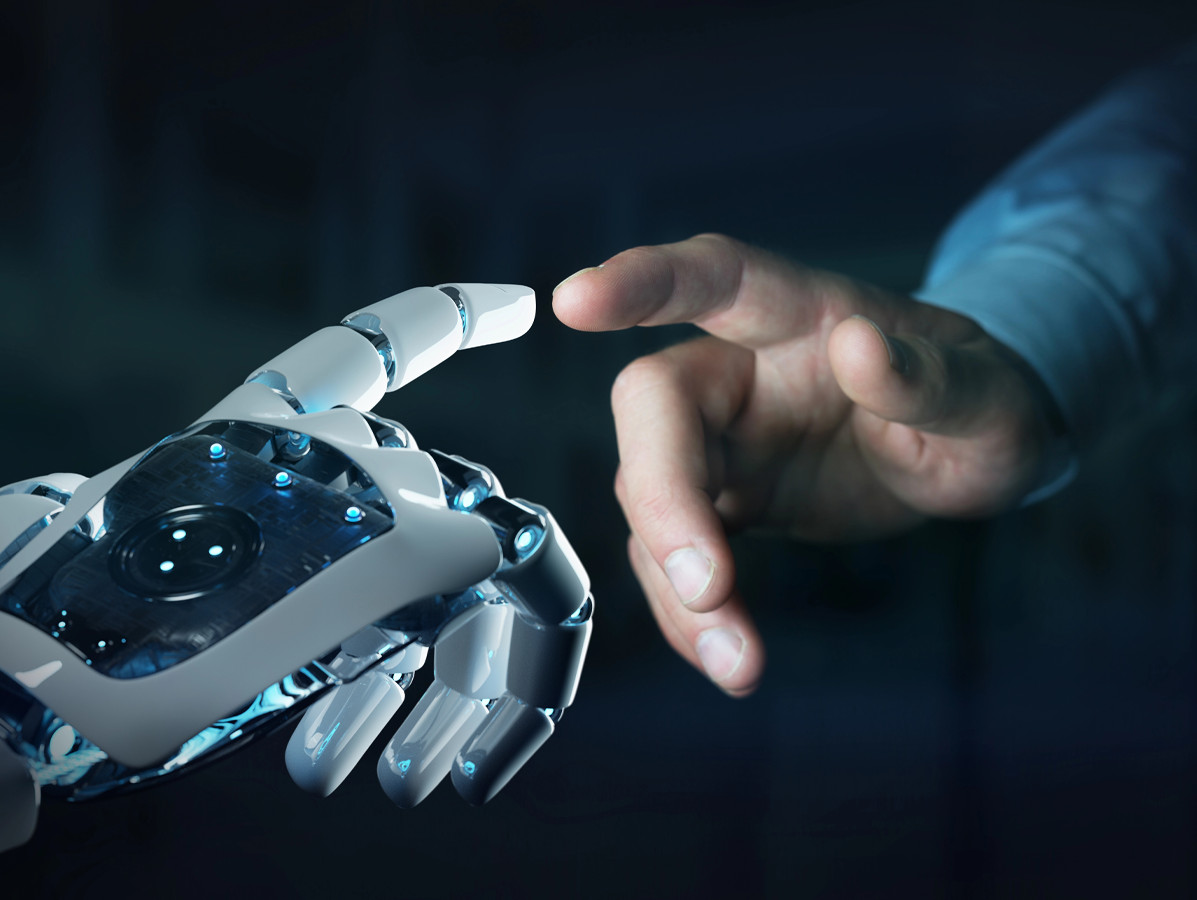
Picking up a croissant without damaging it. Harvesting a delicate crop. Or assessing a product’s quality simply by handling it. These are effortless tasks for the human hand, but far more challenging for robots.
Wageningen University & Research (WUR), Eindhoven University of Technology (TU/e) and Next Tech Food Factories are therefore developing a new project proposal focused on the use of soft grippers in the agrifood sector. Their ambition goes beyond creating a robot that can handle products gently. The next generation of robots should be able to feel, learn and adapt to whatever they are handling.
Robots are already commonplace in industrial production. They excel at performing repetitive tasks quickly and accurately. But this strength also reveals one of their main limitations in agrifood: food and agricultural products are inherently variable.
“Food and agricultural products are not standardised,” explains Mahboubeh Keyvanara, Assistant Professor of Agricultural Biosystems Engineering at WUR. “Crops vary in shape, size and physical properties, and the environments in which robots have to operate are often unpredictable. This makes robotic manipulation in agrifood much more complex than in a traditional industrial environment. At the same time, soft robotics doesn’t mean that every component has to be soft. We can combine soft designs with rigid components to perform more complex tasks, much like the human hand does. Our hands combine soft tissues with rigid bones, and it is precisely that combination that gives us both flexibility and control.”
Keyvanara’s research focuses on robotics for agricultural applications, including robot planning, coordination and control. By combining established robotics technologies with advances in AI and machine learning, she aims to bridge the gap between theoretical robotics and real-world applications such as robotic harvesting.
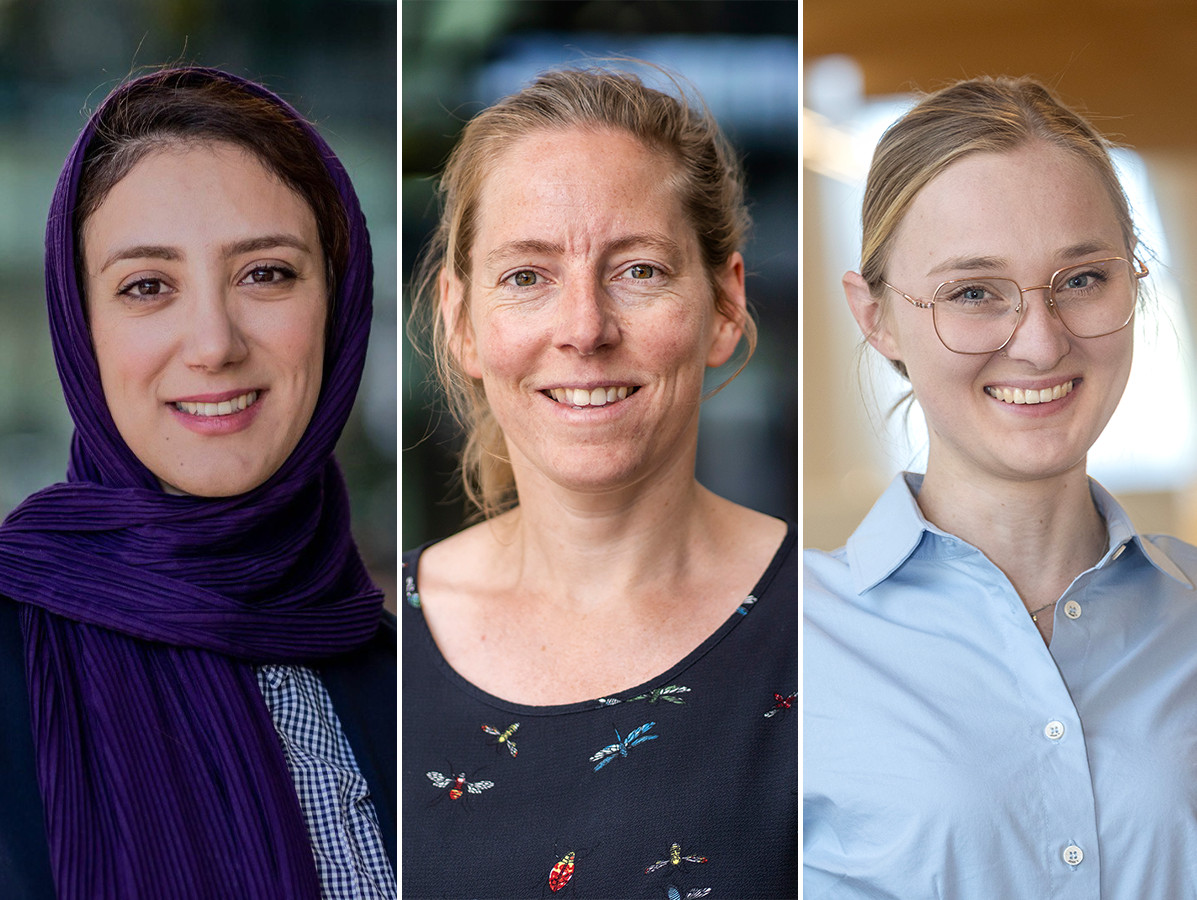
Mahboubeh Keyvanara, Femke van Beek and Lisanne van Oosterhoud
Soft robotics offers a promising way forward. Instead of conventional rigid grippers, soft robots use flexible, deformable materials such as silicone. This allows them to adapt to different shapes and handle delicate products more carefully. But according to Femke van Beek, Assistant Professor of Robotics at Eindhoven University of Technology, being able to grip something gently is only part of the challenge. Her research focuses on combining soft robotics with haptic perception: enabling robots to gather information through touch.
“Being able to grip softly is ultimately not enough,” Van Beek explains. “We don’t use our hands simply to move an object. The moment we pick something up, we also feel something about it. We want to bring that combination of careful handling and information gathering to robots as well.” Van Beek studies the development of soft haptic sensors and how the movement of a robotic hand can be used to gather better sensory information. The ambition is to give robots a form of tactile perception inspired by the human sense of touch.
For Van Beek, this interaction between movement and sensing is crucial. A robot should not simply execute a predefined movement: the information it receives while touching and handling a product should ultimately help determine what it does next. “The human hand combines handling and sensing almost automatically. That is what makes it so powerful. For robotics, the interesting question is how we can use movement not only to manipulate a product, but also to collect the information needed to interact with it more intelligently.”
A croissant is a simple but telling example. A robot needs to grip it firmly enough to move it, while remaining gentle enough not to damage it. A human worker, meanwhile, does more during that same action: by looking and feeling, they can also assess whether the croissant has been baked properly and meets the required quality standards. This illustrates exactly why haptic perception could add another dimension to automation. A gripper could potentially become both a handling device and a source of information about the product itself.
Elsewhere in food production, the challenges can be very different. In meat processing, for example, products may be slippery, deformable and highly variable. Production speeds are high, while strict hygiene standards require equipment to withstand intensive cleaning. A robotic gripper therefore needs to do much more than handle a product gently. It must be flexible, fast and intelligent, while also being robust enough to operate reliably in demanding food production environments.
This is where the combination of soft robotics, sensors, data, software and AI becomes particularly powerful. Instead of simply moving a product from A to B, a robot could gather information as it grips the product and use that information to adapt its actions. The aim is to learn from what human hands already do naturally in food production and translate those capabilities into robotics. Ultimately, a robot should learn not only how to handle a product, but also what it needs to sense and understand while doing so.
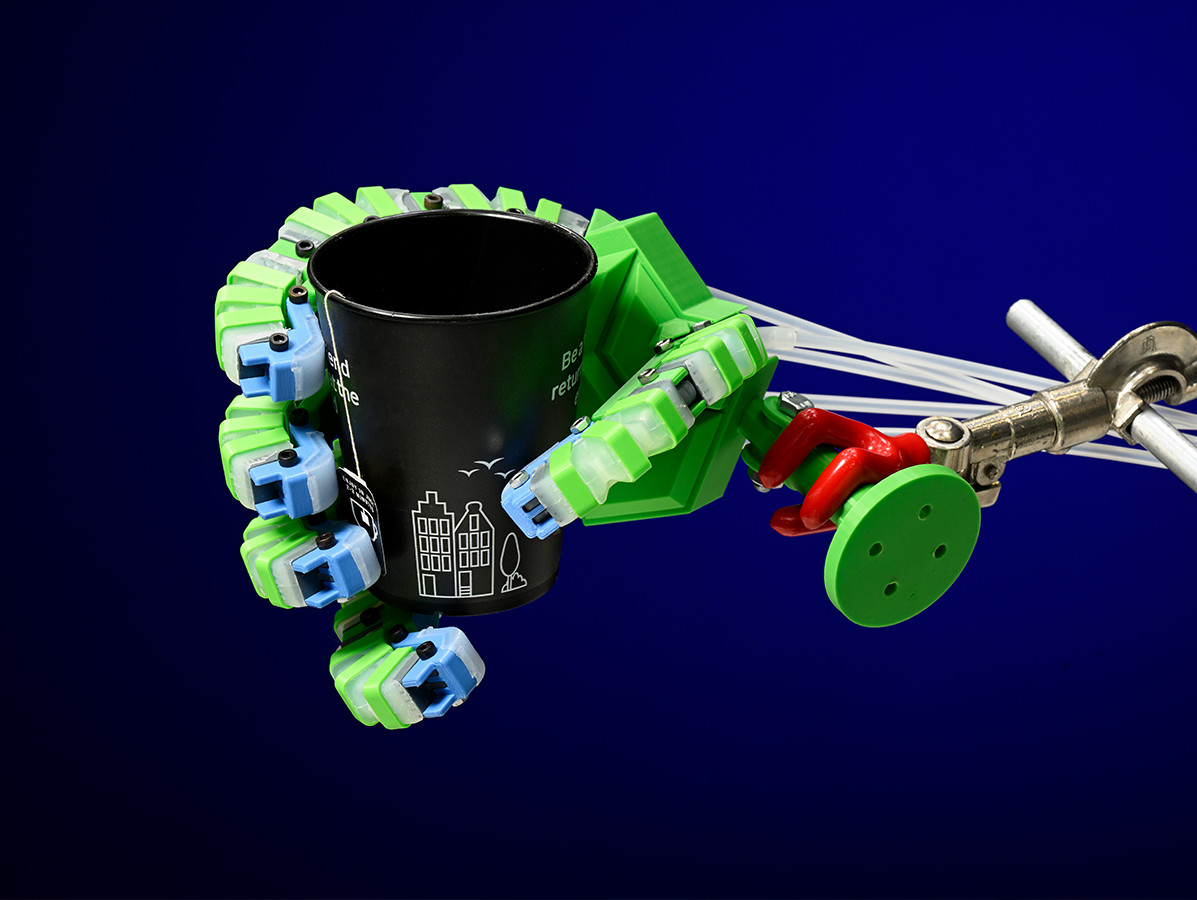
Soft robotics is developing rapidly within academia and has already found applications in areas such as healthcare. Its use in agrifood, however, is still at a relatively early stage. According to Lisanne van Oosterhoud, Programme Manager at Next Tech Food Factories, that creates a major opportunity. “The technology is there, and rapid advances in software and AI are opening up even more possibilities. The next step is to connect that knowledge to the concrete challenges faced by agrifood companies. Within Next Tech Food Factories, food processing companies, high-tech suppliers and machine builders are already working together on robotics, AI and other smart technologies. This project can help accelerate the transition of soft robotics from academic research to practical applications.”
There are still several technological and practical hurdles to overcome. Soft grippers must meet strict hygiene and safety requirements, while also being affordable and easy to integrate into existing production processes. Speed and robustness are equally important. Many current solutions are also still designed for one specific task or product. The challenge therefore goes far beyond the gripper itself. Software, AI, data-processing speed and the integration of different technologies will ultimately determine whether a robotic solution can perform reliably at industrial production speeds.
This is why WUR, TU/e and Next Tech Food Factories are actively looking to collaborate with industry. As part of the project proposal, they are gathering concrete use cases from agrifood companies, machine builders, sensor companies and technology suppliers. “The challenges from industry must lead the way,” says Van Oosterhoud. “Where are companies struggling today? Which products are difficult to automate because they are delicate or highly variable? And where could the combination of soft gripping, sensors, software and AI really make a difference?”
Machine builders and technology suppliers will play an important role in answering those questions. Considerable expertise already exists in developing soft grippers, sensors and other components, but many solutions remain highly customised. Bringing technology, scientific knowledge and real-world use cases together could create a broader technological foundation, making soft-gripping solutions easier to deploy across different agrifood processes.
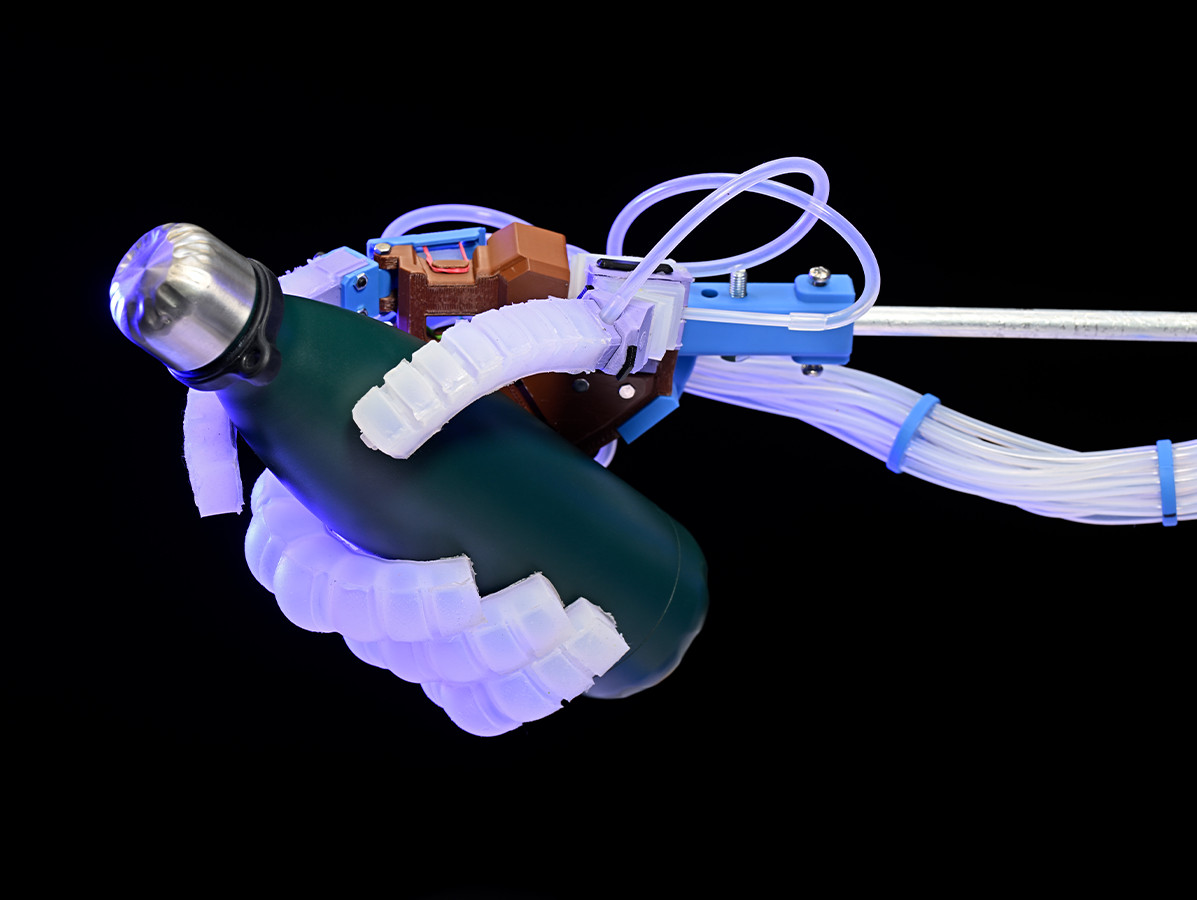
The potential impact is significant. Agrifood companies are facing labour shortages while simultaneously being challenged to produce more efficiently and sustainably. Automation can play an important role, particularly in processes that have so far been difficult to robotise because products vary so much. “People are extremely good at dealing with variation,” says Keyvanara. “A robot has to learn how to do that. If we can teach robots to perceive, plan and act more effectively in an environment where every product is different, we can automate many more processes.”
Soft grippers could therefore help bridge the gap between the rigidity of conventional industrial robots and the adaptability and sensitivity of the human hand.
The project partners believe the Netherlands is well positioned to play an international leading role in this field. Dutch technical universities have strong expertise in soft robotics, while experience with the technology has already been gained in fields such as healthcare. At the same time, the Netherlands has a substantial agrifood industry and a strong ecosystem of machine builders and technology companies. The proposed project brings together expertise in robot design, control and sensing. The next step is to connect these capabilities much more closely to the specific requirements of agrifood production and to real-world industry challenges.
The ambition therefore extends beyond a single research project. Ultimately, the partners want to build a community in which researchers, agrifood companies, machine builders and technology suppliers can connect more easily and jointly develop new applications.
The initiative is currently in the pre-proposal phase. Over the coming months, the partners will bring together academic and industrial partners as well as concrete use cases. The aim is to have a strong consortium and sufficient use cases in place by November 2026 to further develop the proposal. The final application is scheduled for May 2027. If successful, the five-year project is expected to start towards the end of 2027.
The long-term ambition is clear: a robot that does not simply pick up a product, but increasingly understands what it is holding. Gentle enough for a croissant, adaptable enough for a crop, fast and robust enough for demanding food production environments, and intelligent enough to continuously adjust its actions. For Van Beek, bringing these different capabilities together is the logical next step: “We are becoming increasingly capable of creating and controlling soft robots and equipping them with sensors. Now is the time to connect that knowledge with agrifood and demonstrate what this technology can achieve in practice.”
Source: Vakblad Voedingsindustrie 2026
Magazine Voedingsindustrie has been made possible in part by:



© COPYRIGHT 2026 VOEDINGSINDUSTRIE | ALLE RECHTEN VOORBEHOUDEN
Powered by Wallbrink Crossmedia © 2026