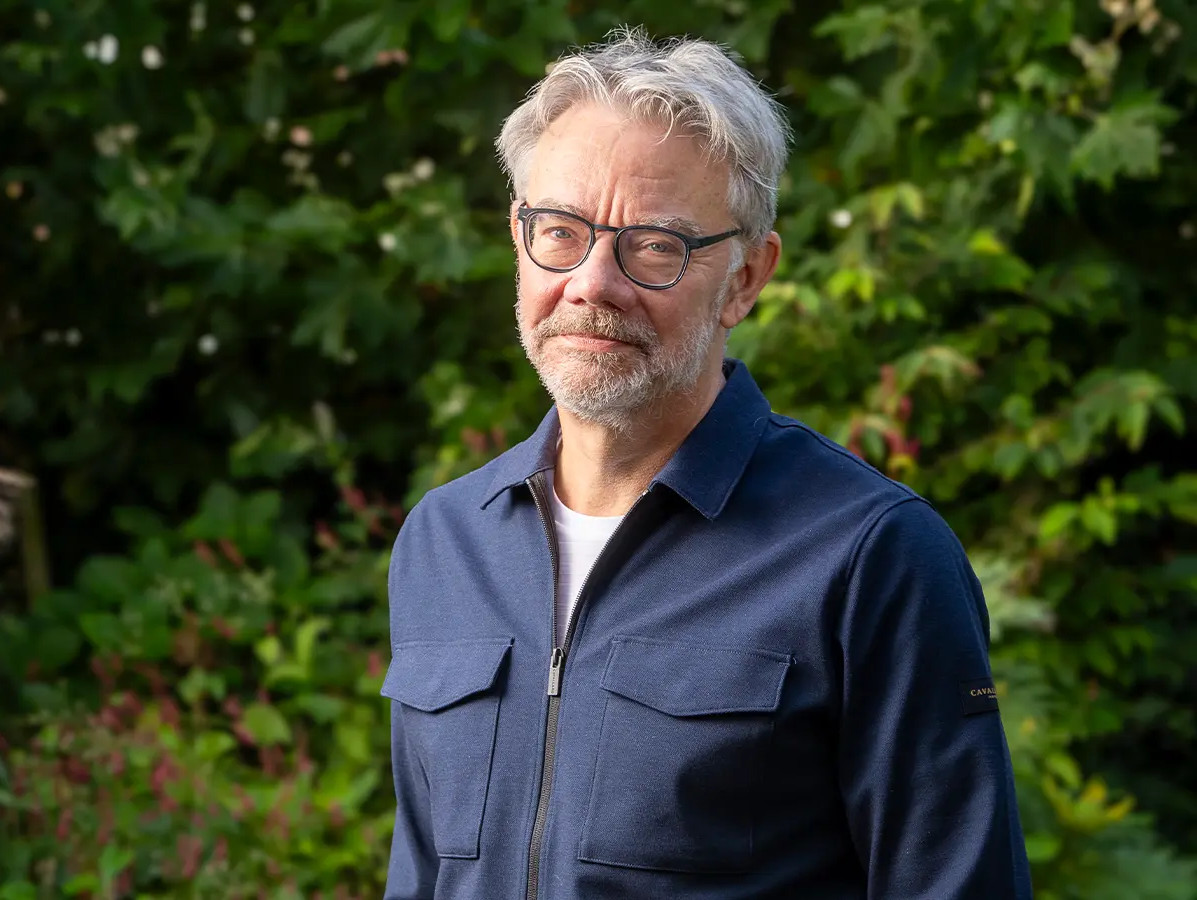
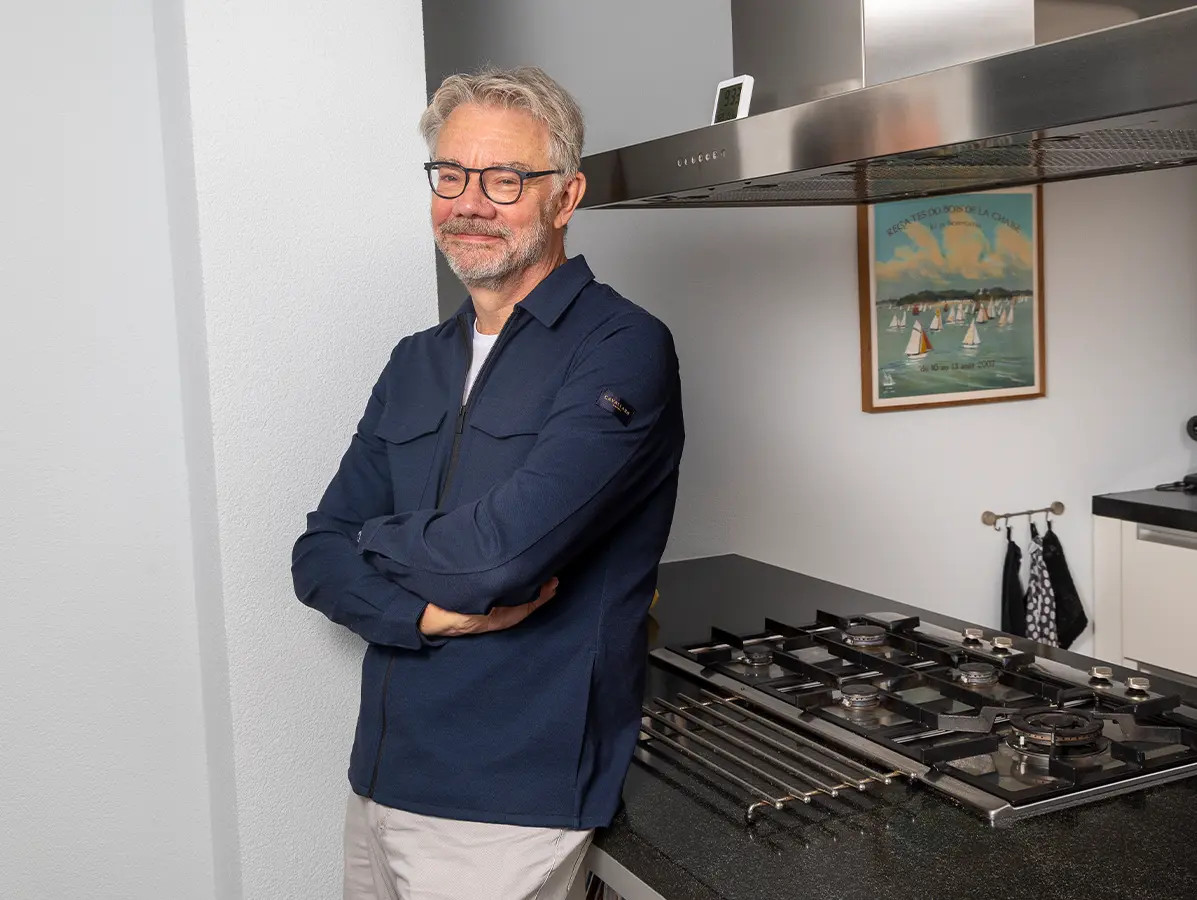
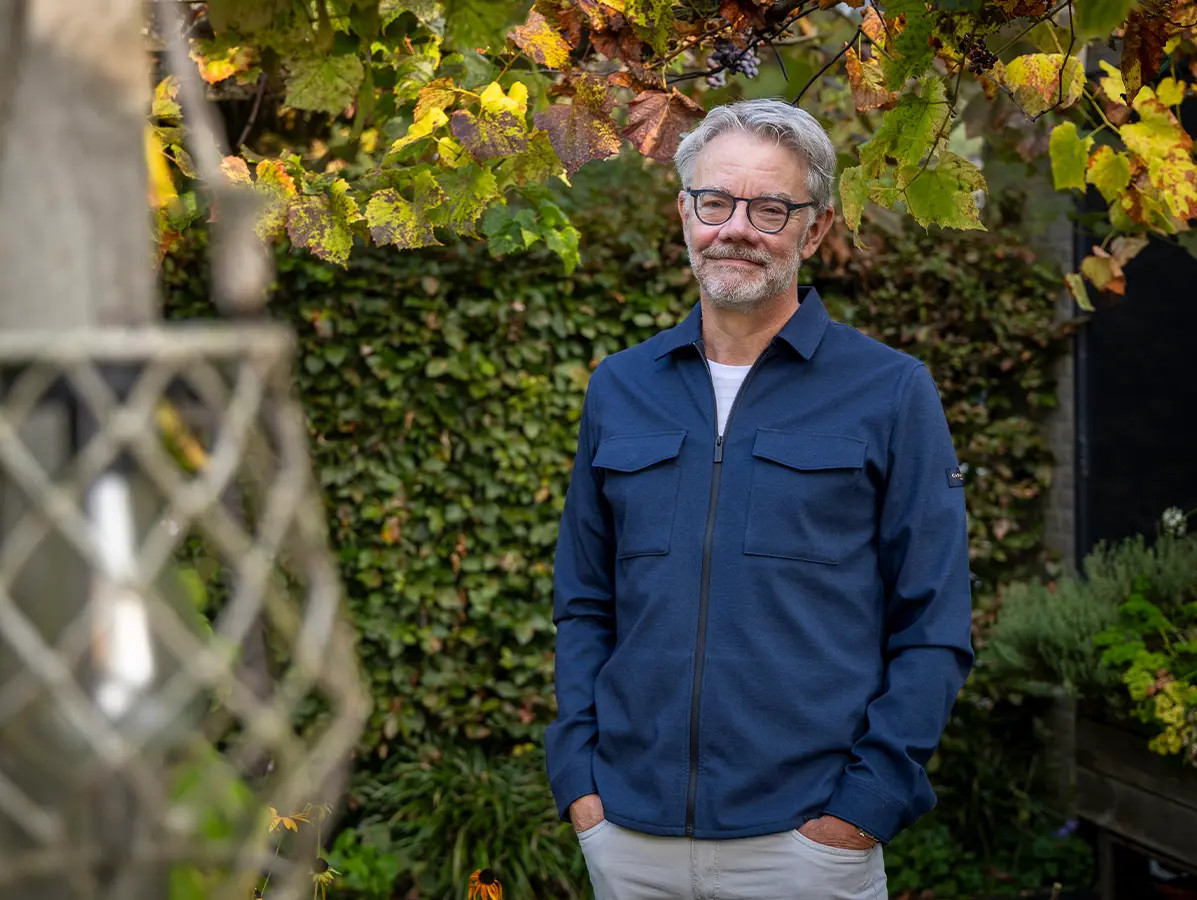
Peter Verstrate’s journey into cultivated meat, as co-founder and COO of Mosa Meat B.V., began in the early 2000s. More precisely, it started the day Willem van Eelen—widely regarded as the ‘The Godfather’ of cultivated meat technology—walked into the Stegeman offices in Deventer, unannounced. At the time, Peter was responsible for R&D and quality. “We sat down in the central lobby enjoying a cup of coffee, and he told me about his ideas and plans. I was intrigued instantly.”
“Cultivated meat is an alternative with enormous potential”
Like many people, Peter Verstrate is a meat lover. “You can have all sorts of opinions about it, but the fact that humans eat meat is just part of our reality,” he says pragmatically. “Aside from the animal welfare debate—and the fact that producing meat involves killing animals, something no one enjoys doing—the production of meat and meat products has a negative impact on the planet in several ways.”
‘Isn’t there another way?’ That’s the question many people, including Peter, have asked themselves. It’s led to a wide range of mostly plant-based meat alternatives. Their makers work hard to get as close as possible to the real meat experience—with mixed results. But there’s another path. And that’s the alternative we discuss further, on a sunny late summer day.
“Willem van Eelen had secured the first patent on cultivated meat technology and was looking for partners to develop and finance that technology. The Ministry of Economic Affairs was willing to invest two million euros in the project. The consortium already included scientists from the universities of Utrecht, Amsterdam and Eindhoven. But the Ministry insisted on adding a commercial partner too—based on the somewhat naïve idea that the product could hit the market within four years,” Peter laughs. “I saw cultivated meat as an alternative with huge potential and felt we couldn’t afford to miss that opportunity. Long story short: I became the project lead.”
“That’s right. During the project, one of the Eindhoven leads fell ill and was replaced by my colleague Mark Post, a physiology professor in Maastricht who also worked in Eindhoven. Mark was just as fascinated as I was by the technology and its potential. When the project ended—without a concrete product, unfortunately—he wanted to continue the work in his own lab in Maastricht. The idea of cultivated meat was brand new, almost magical. Journalists loved the idea and wrote about it. We tried every possible way to raise follow-up funding, but the government wouldn’t go any further. I think the concept was just too controversial at the time.”
“Surprisingly, Sergey Brin, Google’s co-founder and one of the richest people in the world, reached out to us. He thought cultivated meat was a brilliant idea and wanted to help us. He also told us to stop publishing yet more photos of scientists in lab coats with petri dishes. ‘You just need to make a product and eat it while the world watches. Doesn’t matter what it costs,’ he said. So we built on the technology we’d already developed to create small muscle tissues. If you produce enough of those—20,000 to be exact—you’ve got yourself a hamburger. In 2013, the moment came. We slid the cultivated burger into a hot pan and had two independent people eat it while the world watched. That burger cost €250,000. Now, we are 99.999% cheaper—we make one burger for around €2.50.”
“The fundamental process of creating muscle fibers hasn’t changed. But the way we create it has improved enormously. Initially, we only produced muscle tissue, but meat consists of more than that. We learned how to differentiate cells to create fat cells as well. We also discovered that many meat characteristics—especially flavor—are already present at the cellular level. And that you can create a significant animal-based impact with just a small inclusion of animal cells. Other major developments include a huge increase in the yield per liter in the bioreactor. And we no longer use serum—or animal blood—as a growth medium. The growth medium is one of the biggest drivers behind the price of the product.”
“The growth medium we started with was a pharmaceutical product, designed for cell cultures in the medical sector. In that sector, cost isn’t a major concern—money hardly plays a role in medical experiments and the pharmaceutical industry. But for making our hamburger affordable, that was a major issue. You need to balance the price of the medium with how efficiently it converts into cells and tissue. The original medium had about 70 ingredients and was a ‘one-size-fits-all’ solution for different cell types. We started searching for alternative ingredients—identical but cheaper, for example by buying in bulk or using versions with a different purity. Some ingredients could even be eliminated entirely.”
“Our partnership with feed manufacturer Nutreco played a big role in developing our new, fully animal-free growth medium. Nutreco has deep expertise in sourcing and maintaining the quality of these types of ingredients. They recently opened a pilot plant to produce cell growth media. We now buy it for a fraction of what we paid in the pharmaceutical world.”
“AI is speeding everything up. One example is digital simulations of the production process. Scaling up this technology usually involves costly and time-consuming experiments. But we’re increasingly able to simulate the process digitally. The models are fed with data from real experiments. That lets us better predict how fast to stir, where to place paddles, when and where to inject oxygen, and for how long, and so on. Of course, we’ll eventually have to validate everything at real scale, using real bioreactors and a real medium.”
“We discovered that many of meat’s properties, especially its flavor, are already present in the cells.”
“There are databases with tens of thousands of molecules—containing data about their shape, functionality, and reactivity,” Peter continues. “If you can translate all of that into a biological system, you can virtually mix them together and let an AI model calculate the outcome: which substances are consumed, what kinds of tissue form, and so on. That’s when real progress happens. One thing we do to improve efficiency and cut costs is to screen endless alternatives for the ingredients in the growth medium. Digital screening saves us enormous amounts of time. And thirdly: the bioreactor experiments generate a mountain of data—on oxygen use, waste by-products and yields. AI helps bring order to that chaos and uncover patterns that no human brain could ever process at this scale.”
“It’s true: if we make significant changes, we’ll need to submit a new dossier. That’s just part of the game. Chances are, by the time the approval comes through, we’ll have developed something even better, cheaper, or faster. We’re not just sitting around for two and a half years. We’ve written the dossier in a way that allows us to incorporate as many of the future changes as possible, changes that could be predicted in some way, for example through amendments.”
“Yes, it is. At the same time, I think it’s incredibly important that there’s a solid, independent assessment of food safety—especially from the consumer’s point of view. Let’s be honest: the concept of ‘cultivated meat’ takes some getting used to for a lot of people.”
“That has indeed been announced. But the question is whether that decision holds up within the EU. What we’ve seen is that in countries with more right-wing governments, there’s more political resistance to this kind of innovation and technology. Personally, I’m not too concerned. Consumer research across multiple European countries shows that Italy is on the same page as its neighbors. The overall response is positive: over 50% of people say they’d be willing to give cultivated meat a try if it became available in stores. Of course, we’ll need to prove that cultivated meat is more than just another plant-based meat substitute. We’re also spreading our bets. Besides Europe, we’ve submitted applications in the UK, Singapore, and Switzerland. The safety checks are essentially the same everywhere—and very thorough.”
“Companies in the US are already bringing cultivated meat to market, and approvals are in place in Singapore, Australia, and New Zealand. We fully support that. To me, it’s proof that this is a viable technology. And besides, the market is unbelievably large—there are really no limitations.”
“We still don’t generate revenue and are dependent on investor funding. That’s how it works in a startup. Unfortunately, the current investment climate is very poor, partly due to global instability. Thankfully, the government is stepping up. Tastings with cultivated meat have been approved, and InvestNL and several regional authorities are backing us. We’re extremely grateful for that.”
“At this stage, we’re opting for the shortest possible route to market—with technology that may not be 100% mature, but good enough to convince our current funders to stay on board. Over the coming years, I’ll be focusing more on product development and market introduction. Step by step, we’ll lower the cost, increase output, and scale up. The bar is high. If cultivated meat doesn’t match the experience of real meat, it won’t have the impact we’re aiming for.”
“I believe that with our core ingredients, combined with extrusion techniques and 3D food printing, we can create some truly upgraded products. Some plant-based steaks already look pretty decent. Now imagine turning them into hybrid products—with animal muscle tissue and marbling—without raising or slaughtering any animals. That’s where we can make a big leap forward, especially in terms of flavor experience.”
Source: Vakblad Voedingsindustrie 2025
Magazine Voedingsindustrie has been made possible in part by:



© COPYRIGHT 2026 VOEDINGSINDUSTRIE | ALLE RECHTEN VOORBEHOUDEN
Powered by Wallbrink Crossmedia © 2026