
We’re sitting across from each other, my husband and I, analyzing the color of the wine in our glasses. Soft yellow. We swirl it gently in the glass and take in the aroma. Full and rich. Time for a sip. I let the wine roll slowly through my mouth, tasting ripe peach and nutty tones, and feeling a smooth, coating texture. Between us lies the book ‘Taste like a pro’ by Cees van Casteren. Wine tasting has never been this much fun!
Throughout the day, I turn it into a little game. I take a deliberate bite of a crisp red apple. That crunch, the juice running down my cheek – delicious! Had the bite been soft and powdery? Yuck. Crisps that crackle so loudly I have to turn up the TV – great! A chewy, ‘silent’ bite? No, thanks. And oh, that smell of freshly baked bread in our kitchen on a Sunday morning. My mouth starts watering just thinking about it. We taste with all our senses.
The contrast with the world of automation, digitalization, robotization and sensors – in which I was also immersed this month – couldn’t be greater. It made me crave real human interaction. At the Food Matters Live event in Rotterdam, I got my fix: roundtable discussions and a session by Tate & Lyle titled ‘Master the Marvel of Mouthfeel’. We were challenged to switch all our senses to ‘on’ and use them to taste and describe the flavors of the products presented to us. Easier said than done. Yoghurt and mayonnaise are both described as ‘creamy’, yet we mean very different things. “If you’re limited in the words you use to describe mouthfeel, you’re also limited in your ability to innovate,” said one of the experts. Fascinating.
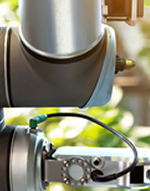
There’s certainly no lack of innovative power in our industry. The robots and sensors used in production processes are becoming increasingly capable. They measure a liquid’s viscosity, moisture content, and chemical composition simultaneously, detect whether an apple’s skin is smooth or wrinkled, and can even see if brown spots are forming under an apparently flawless surface. Robots are getting more advanced, and automation and data make production lines more efficient.
Does that make the human role redundant? Never! Because in the end, when all is said and done, one decisive factor determines whether your product sells: does it taste good?
Good luck innovating!
Judith Witte
[email protected]
Source: Vakblad Voedingsindustrie 2025
Magazine Voedingsindustrie has been made possible in part by:



© COPYRIGHT 2026 VOEDINGSINDUSTRIE | ALLE RECHTEN VOORBEHOUDEN
Powered by Wallbrink Crossmedia © 2026