
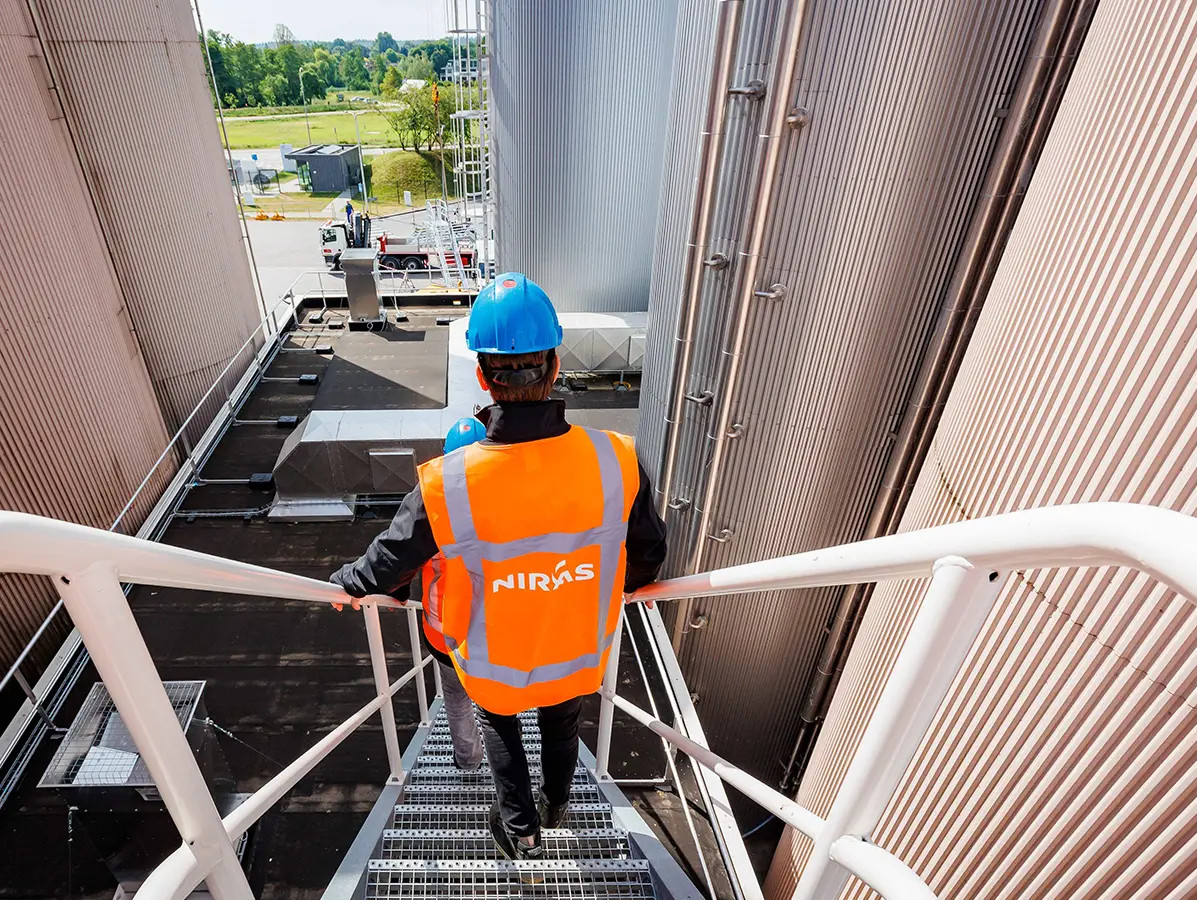
Every construction project is unique: there are countless factors to consider. The food industry is no exception. Or is it? In this sector, “countless” is actually an understatement. But Pim Bles, Project Manager Buildings at NIRAS in the Netherlands, and his team take it all in stride. It’s what they do every day. And they genuinely enjoy it.
“Building in the food industry is always tailor-made,” says Pim. “Whenever a producer optimizes operations or expands capacity, it always has an impact on the building. Factors such as hygienic design, hygiene zoning, fire and general safety, and an efficient production facility layout are just a few of the key considerations. Implementing the desired changes requires insight, planning, preparation, and coordination. In food industry construction and renovation projects, these aspects are especially critical. About 90 percent of our work involves construction projects within operational food production environments. No food producer wants downtime. That means that in existing facilities, construction often has to take place quite literally around the production process.”
NIRAS is a consulting and engineering firm that offers services including project management, architectural design (including building-related systems such as HVAC), and construction supervision. Other departments within the company focus on process and packaging engineering, food technology, digital design, and automation. Through close collaboration between these areas of expertise, NIRAS develops the best solutions for the often complex, multidisciplinary engineering challenges faced by food manufacturers.
Back to that downtime, which must be minimized as much as possible during construction activities. Pim explains: “A tight schedule is crucial. If possible, we even prefer to make use of a planned maintenance shutdown.” Whether it is a previously scheduled shutdown or one arranged specifically for the project, construction work always involves many different departments. Production, QA, logistics, technical services, SHE, and others all need to be involved in decision-making. “In practice, we often act as the intermediary between our client and the contractor,” says Pim.
Based on experience, he knows that effective planning delivers more than just efficiency; it also provides clarity and oversight. “We are highly skilled at analyzing the impact of changes and developing designs in a thorough and structured way, whether or not they are fully based on BIM principles. Carefully documenting decisions and effectively coordinating all parties involved also receive our full attention. I believe that is where our added value lies.”
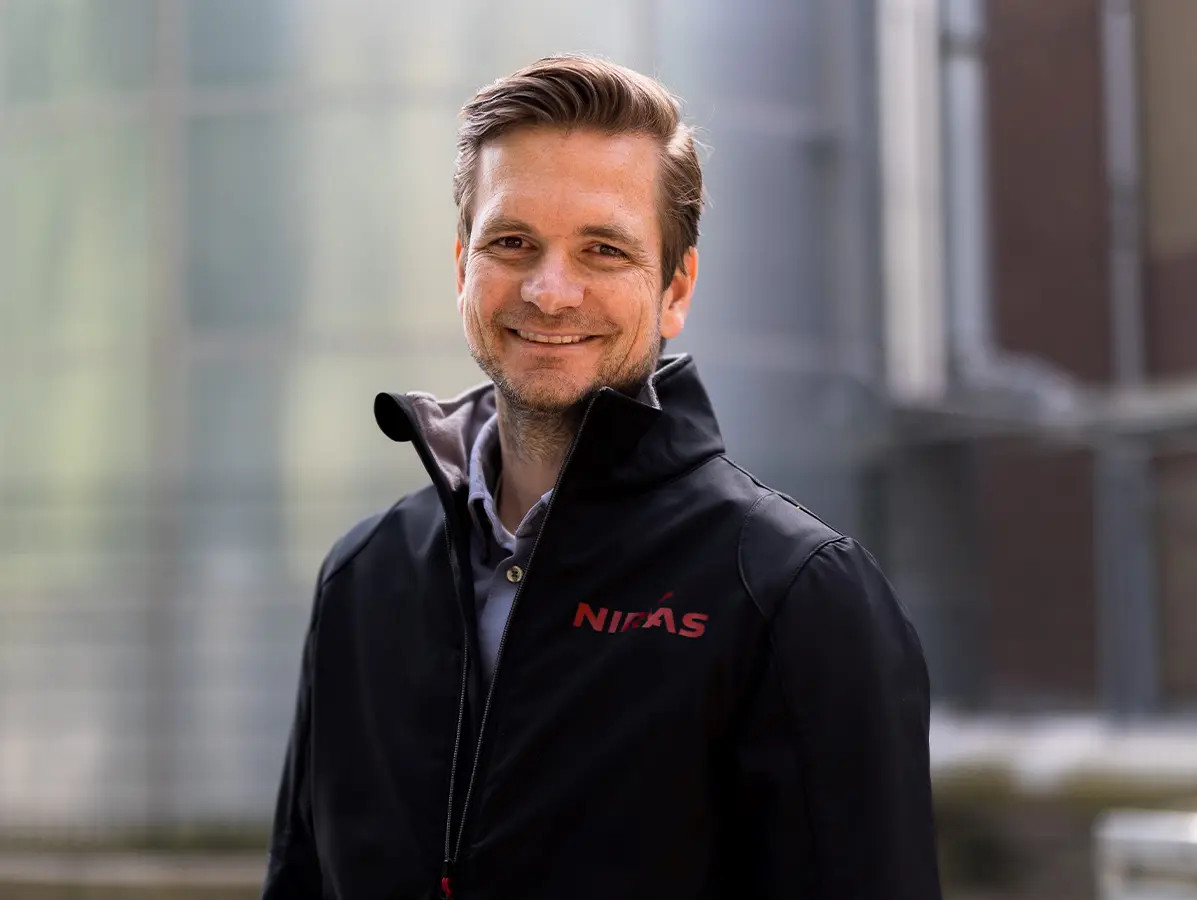
Pim Bles
Safeguarding hygiene is another extremely important aspect. “It starts during the engineering phase,” Pim emphasizes. “We follow the applicable guidelines, such as EHEDG standards for material selection and detailing. That includes minimizing horizontal surfaces, using sloped connections where appropriate, incorporating rounded corners, and creating surfaces that are easy to clean. To organize the work properly, we divide construction zones, temporarily separate hygiene zones by installing dust barriers and creating negative air pressure. This prevents the spread of dust, which is a major risk. Alternative routes are therefore established for both personnel and materials.”
And here’s another one of those countless considerations: when designing or modifying systems that control a building’s indoor climate, such as heating, cooling, and ventilation, the various hygiene zones and environmental requirements must also be taken into account.
“In addition to creating the desired climate conditions within the different areas, selecting the correct filter classifications and pressure regimes between spaces is a key consideration in HVAC systems, and one that we incorporate into every construction project.”
“Sustainability continues to be a major focus,” he continues. “More and more companies are making the switch from gas to electricity, or are planning to do so in the near future. We are also regularly integrating heat pumps or buffer tanks into existing systems. My advice to food producers would be: you cannot start thinking about and preparing for future grid congestion and permitting challenges early enough.”
The same applies to building-related systems and HVAC installations. “The phase-out of F-gases in refrigeration systems and heat pumps has been underway for quite some time, but it is now truly driving a major shift from traditional refrigerants to natural alternatives such as propane.”
NIRAS is increasingly working with 3D scans and BIM, Pim explains. “This allows us to model different scenarios more easily. It provides greater insight into risks and bottlenecks, which is very helpful for management and the various stakeholders involved. It also helps prevent surprises during the construction phase.”
His advice to food manufacturers planning a new build, expansion, or renovation project: “Bring construction specialists into the project at an early stage. Most producers naturally start with the production challenge. Their focus is on the new production line or the updated product. We help them translate that into what it means for the building—from the foundation to the required hygiene measures, from a healthy and safe indoor environment to emergency evacuation planning. And everything in between.”
Source: Vakblad Voedingsindustrie 2026
Magazine Voedingsindustrie has been made possible in part by:



© COPYRIGHT 2026 VOEDINGSINDUSTRIE | ALLE RECHTEN VOORBEHOUDEN
Powered by Wallbrink Crossmedia © 2026





