
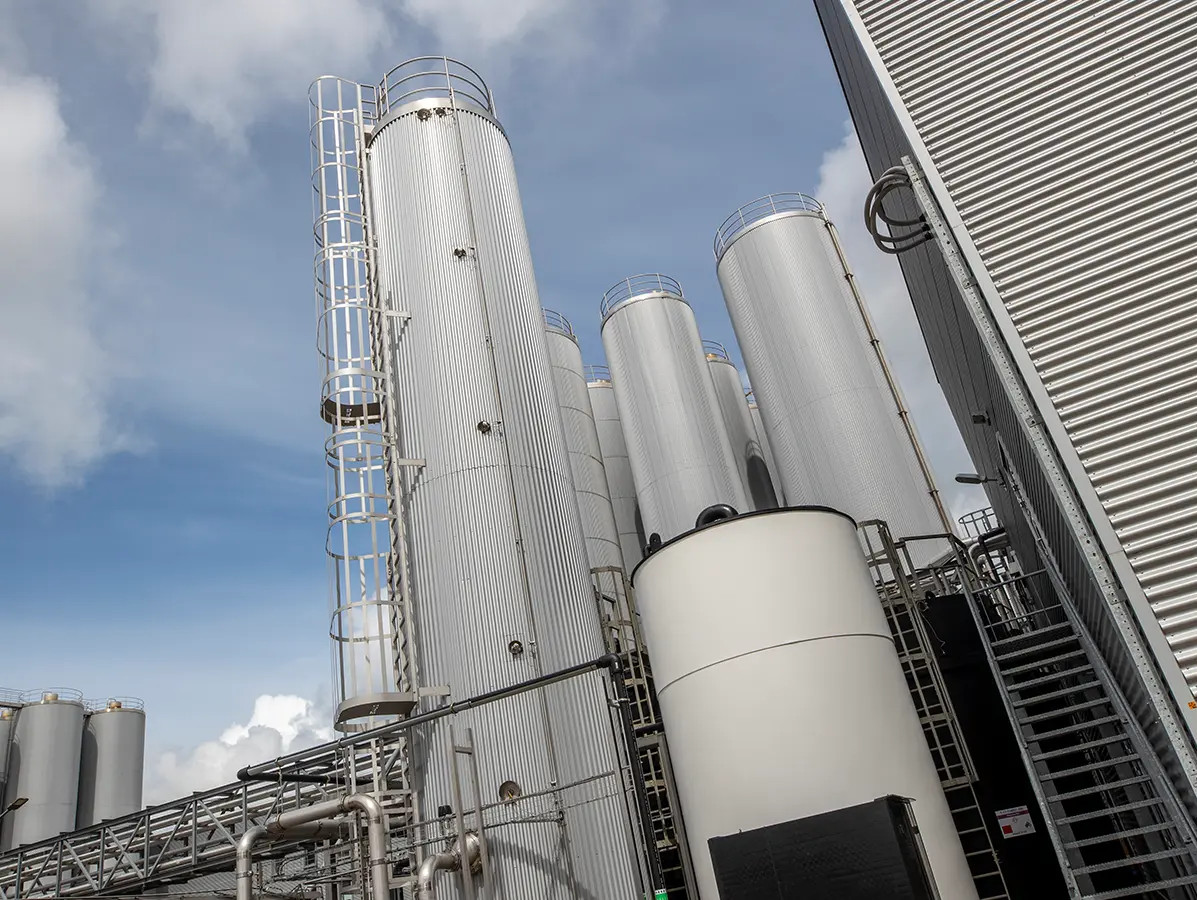
In Heerenveen, Fonterra operates a state-of-the-art facility where whey from the neighboring cheese plant is processed in a sustainable way. A heat pump that utilizes waste heat is the next piece of the sustainability puzzle.
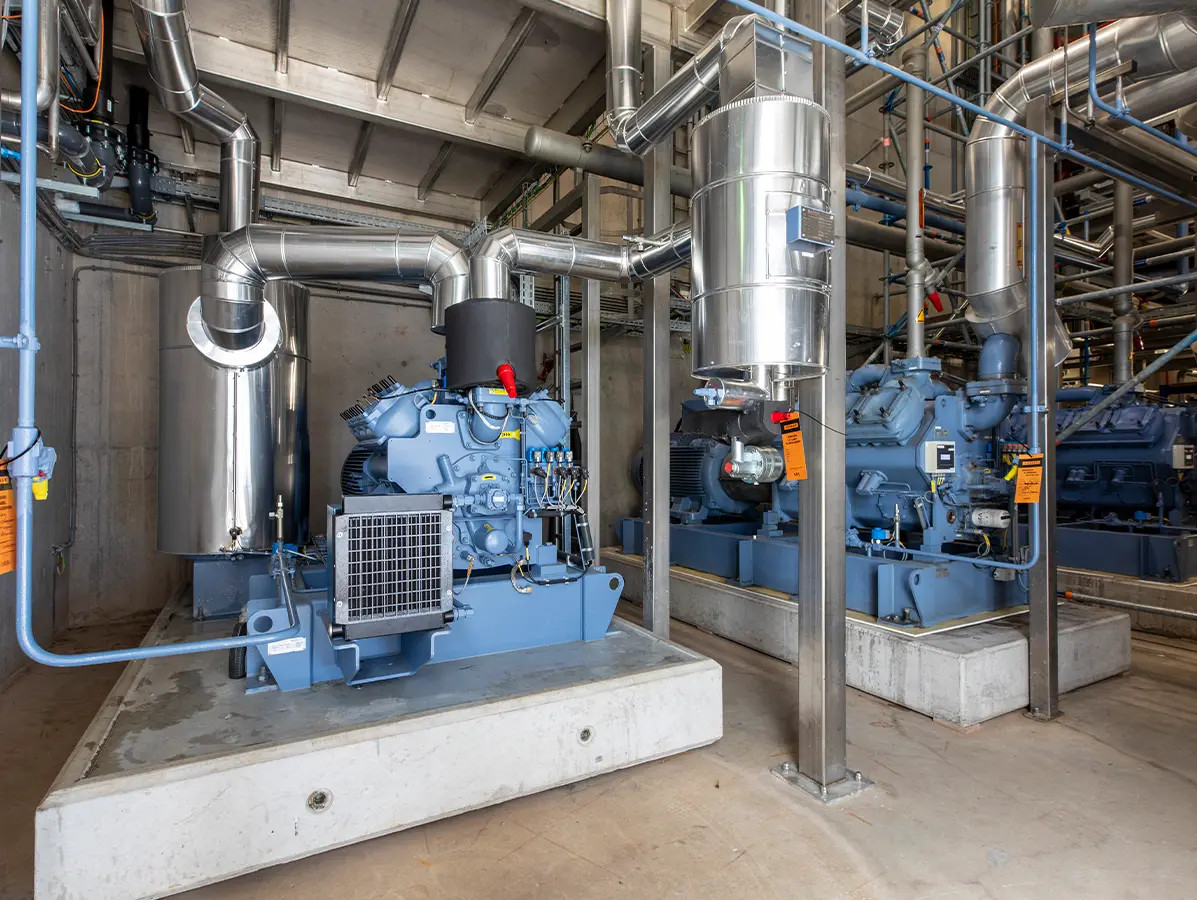
“Processing whey into powders requires a great deal of water and energy. We strive to use these resources as efficiently as possible,” explains Martine Mulder, Project Manager at Fonterra. This is the second heat pump the dairy company has installed. This time, it is connected to the ice water system, where chilled water is produced for cooling specific process stages. “Cooling ice water generates heat. Most of that heat used to be discharged through condensers and released through the stack. Now, we are putting that heat back into the process in a functional way. The heat pump supplies energy in the form of heat, which is used to warm water for cleaning. Ultimately, this results in a significant reduction in energy consumption.”
In addition to reusing waste heat, the project also reduces CO2 emissions. “By using the heat pump, we significantly reduce the amount of gas required for our steam boiler. That lowers our overall CO2 emissions. Fewer greenhouse gas emissions also reduce the cost of emission allowances.” Reduced dependence on fossil fuels is another major advantage. “Gas prices are subject to geopolitical developments,” says Martine. “Using less gas creates a more stable cost structure.” Fonterra has long focused on maximizing the use of sustainable energy sources and implementing them step by step. The site is already covered with solar panels, and wind energy is purchased as well.
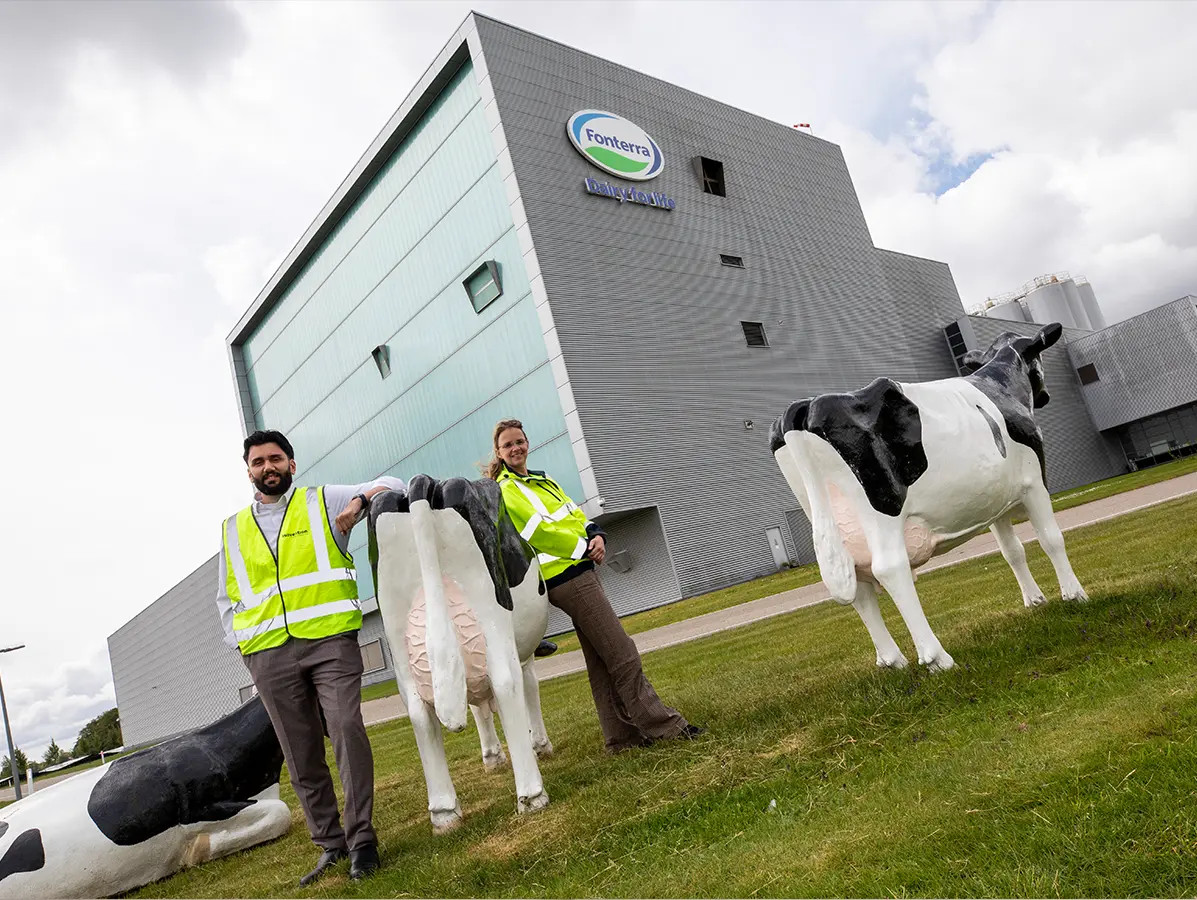
Rasit Akdogan and Martine Mulder
Making modifications to the highly reliable and robust ice water system was not without its challenges. Fortunately, much of the work could be carried out outside the regular production process. Martine explains: “The ice water system had to be completely shut down to make the connection to the existing installation. Twice a year, the factory shuts down for one day. That was the perfect opportunity to make the connection and implement this modification. The project was awarded to the supplier of the ice water system. Naturally, they are very familiar with integrating a heat pump into the ice water system they originally supplied.”
Fonterra had previously worked with Subvention on subsidy support for an earlier sustainability project. The company also provided extensive support for the heat pump installation. “As soon as this project got underway, I called Rasit,” Martine says.
“Subvention ensures that its advisors not only have expertise in applicable subsidies, but also understand the industries in which their clients operate,” explains Rasit Akdogan of Subvention. “With my background and knowledge of process technology, combined with my experience in the food industry, I can quickly get up to speed on technical challenges. This allows me to understand why clients make certain project decisions and enables us to provide guidance that goes beyond subsidy advice alone.”
Subvention became involved in the project while the business case was still being developed for the internal funding application to Fonterra’s headquarters. “At this stage, we look at the project timeline, key deadlines, and when sustainability measures will be implemented, ensuring everything aligns with subsidy requirements and timelines.”
The fact that part of the project could be subsidized was important in securing funding from the New Zealand parent company. Martine adds: “The subsidy strengthened an already solid business case and helped make this project possible.”
Subvention identified two suitable subsidy schemes: VEKI and EIA. Their knowledge of the subsidy landscape immediately proved valuable. Martine says: “For VEKI, it became quite a race against the clock to submit the application on time. We had not yet fully completed the permitting process.”
Rasit knew the rules and had no doubts. “This project aligns perfectly with VEKI’s objectives of reducing CO2 emissions and encouraging sustainable electrification.”
Once the application had been submitted on time, sufficient funding remained available to secure the desired grant allocation based on the projected CO2 reduction. In addition to VEKI, the Energy Investment Allowance (EIA) was also applicable. This tax incentive provides additional short-term cash flow through a reduction in corporate income tax.
Martine says: “Without Subvention, we probably would not have moved so quickly on these types of subsidy opportunities. In addition to their timing and expertise, they also speak the language of implementing agencies such as RVO.”
Subvention remains involved through the final stages of the project to ensure the subsidy schemes are properly completed and administered.
Now that the heat pump is being commissioned step by step, attention can shift to identifying the next sustainability opportunities. The Heerenveen facility demonstrates how industrial production and sustainability can go hand in hand: by capturing waste heat, making smart use of subsidies, and minimizing disruption to the production process. Every efficiency gain brings Fonterra one step closer to a future where energy efficiency and operational reliability reinforce one another.
www.fonterra.com
www.subvention.nl
Photo’s ©Anne van der Woude
Source: Vakblad Voedingsindustrie 2026
Magazine Voedingsindustrie has been made possible in part by:


© COPYRIGHT 2026 VOEDINGSINDUSTRIE | ALLE RECHTEN VOORBEHOUDEN
Powered by Wallbrink Crossmedia © 2026