
After the rapid rise of alternative proteins, the market has entered calmer waters. The focus is shifting from protein alone to ingredients with broader nutritional value. Aliga Netherlands sees significant opportunities for its patented white algae. Interim Managing Director Christian Koolloos is preparing the company for its next phase of growth.
Christian Koolloos is a biologist by training and has spent the past few years working on the commercialisation of new technologies in sectors including biotech, agriculture, feed and food. Through DUPP, which specialises in recruitment, executive and interim solutions for the food sector, he joined Aliga Netherlands in Oldenzaal in February 2026. As Interim Managing Director, he is leading the company into its next phase of growth.
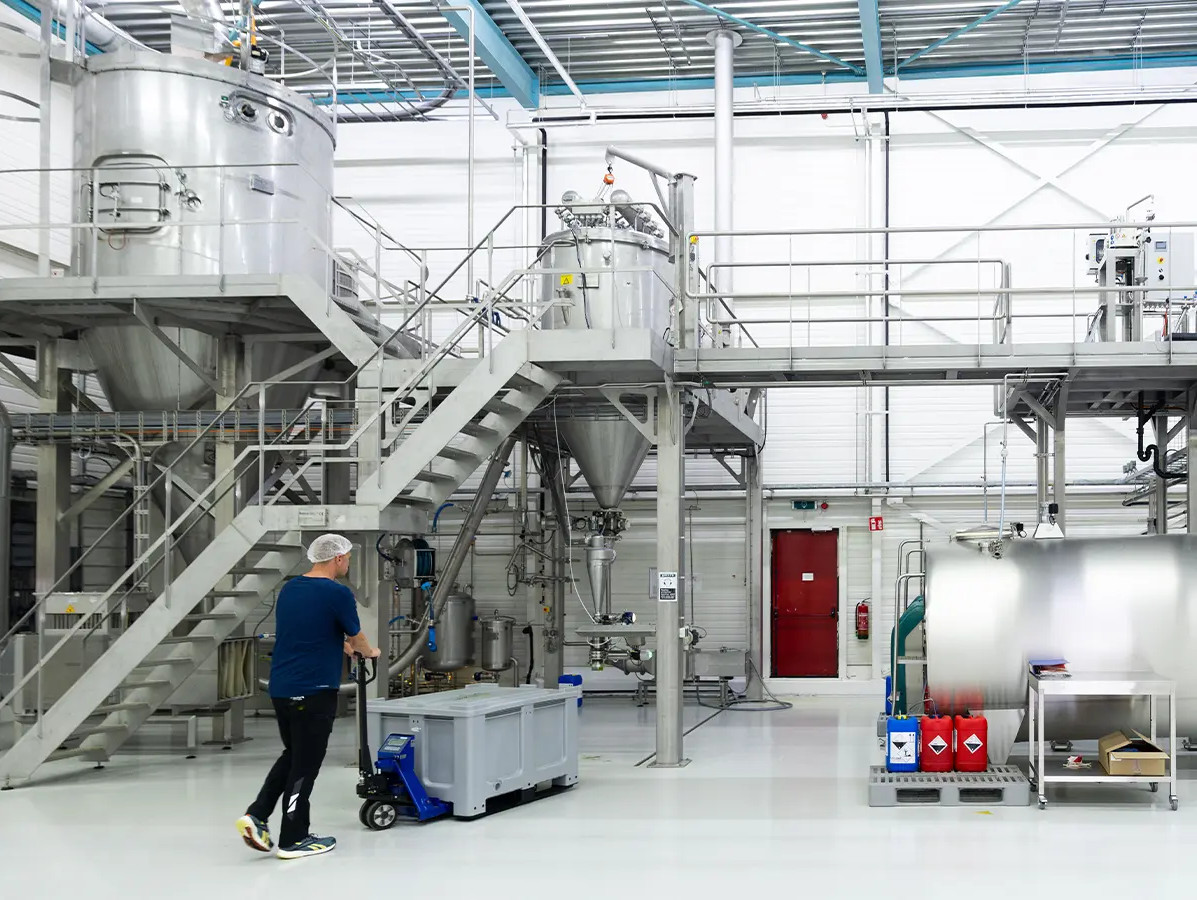
Aliga Microalgae develops applications based on microalgae, ranging from dietary supplements for consumers to ingredients for the food industry. After the Danish company acquired the production site of bankrupt Duplaco in Oldenzaal, Aliga Netherlands was established. The activities in Denmark and the Netherlands have since been organisationally separated. In Denmark, the focus includes research, product development and the consumer market. In Oldenzaal, products are manufactured using the traditional green algae, as well as food products and ingredients based on the patented white algae for the B2B market.
According to Christian, the alternative protein market has changed significantly in recent years. “At first there was hardly anything, then an enormous hype developed. Now you can see that the market is maturing. Producers no longer look only at the protein content or at a single ingredient, but take a much broader view: total nutritional value, health, and whether something can serve as the basis for a consumer product rather than merely as an ingredient.” That is precisely where Aliga sees opportunities for its patented white algae. Christian: “We see it more as a nutritional play than a protein play. White algae consists of around forty percent protein, but it also contains plenty of fibre, vitamins, minerals and antioxidants. That combination makes it interesting.” The white algae was developed from the same species of algae as the green variety. Removing the chlorophyll changes more than just the colour. “Green algae contain a lot of chlorophyll and are therefore less suitable for use in meal replacements. The amount of chlorophyll that people can consume is limited. White algae is neutral in colour and, because it contains no chlorophyll, it can be used more widely and is easier to consume. Think of applications such as shakes, meal replacements and other food products where nutritional value is important,” Christian says enthusiastically.
Aliga produces its algae using heterotrophic fermentation. This differs from traditional algae cultivation, which requires sunlight and often involves growing algae in open ponds or photobioreactors. “We produce 24 hours a day and are not dependent on sunlight or the seasons. That provides stable production and consistent quality.” According to Christian, this production method offers another important advantage: “Our experience is that we can also produce cost-effectively this way. The technology works. That is why the focus is no longer on developing the process, but on increasing production capacity.”
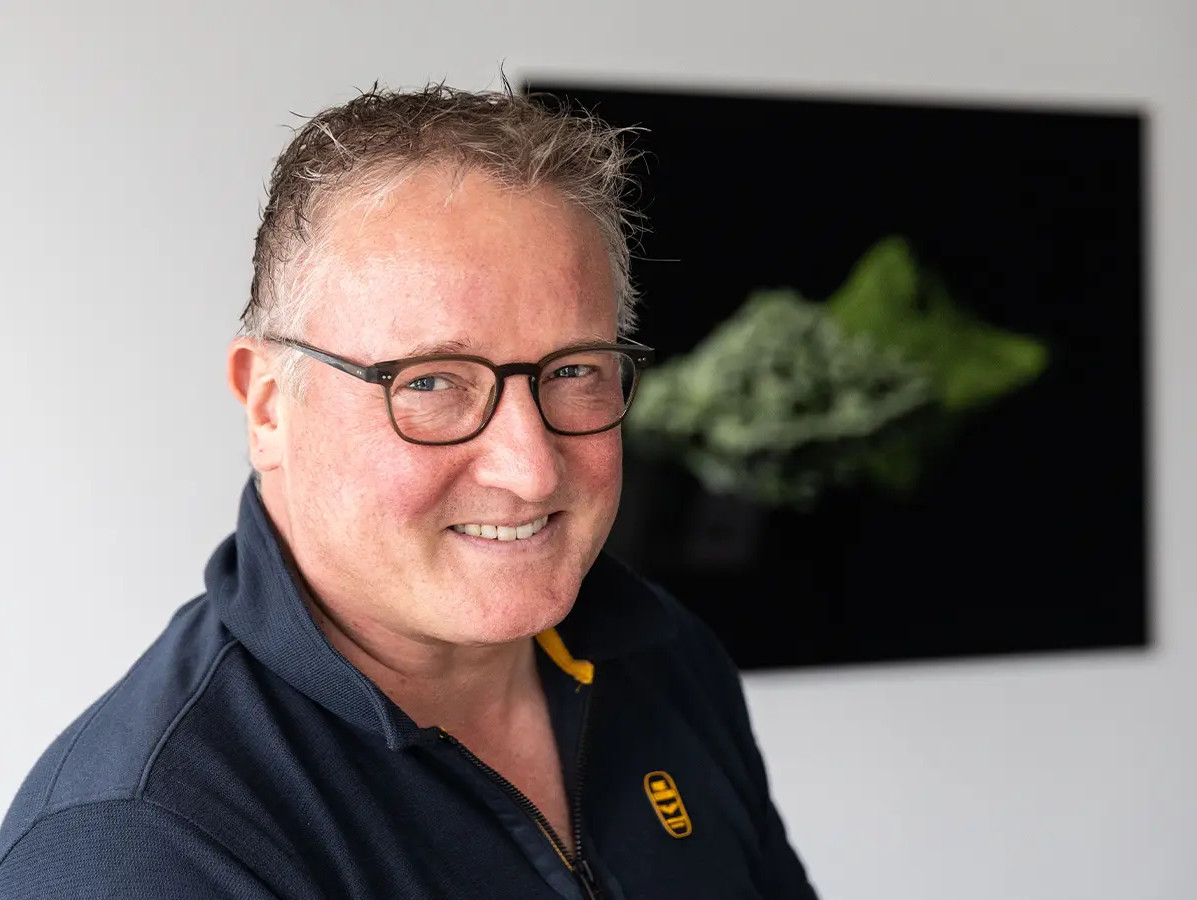
Christian Koolloos
“The first products were sold in 2023,” he continues. “Our production and turnover are growing by around seventy percent each year. We receive enquiries from a range of different markets. Now a new phase is beginning.” According to Christian, the next step mainly requires an expansion of production capacity. “We do not need to reinvent the technology. The production process is running, the knowledge is there, and with the current team we can continue to grow. The investment is mainly in additional hardware so that we can scale up.” That is why Aliga is looking beyond the investors who financed the company during its start-up phase. “Venture capital helped us develop the technology and establish the first production capacity. For the next step, we are looking for a strategic investor. Someone who not only brings capital, but can also help us further develop new markets.”
This stage particularly appeals to Christian. During his career, he has worked for both large organisations and start-ups, and has supported entrepreneurs in introducing new technologies and attracting investment. “I thrive more in smaller companies. Communication lines are short and you can make decisions quickly. If something does not work, you learn from it and try something else. That entrepreneurial environment gives me energy.” He sees plenty of opportunities for Aliga. “The market is ready, and the organisation is in place. Now the aim is to continue growing in a controlled way and establish the next production lines.” That also changes the company’s role. “We are moving from pioneering and building to scaling up for a mature market. I have every confidence in it.”
Photos ©Foto Hissink
Source: ©vakblad Voedingsindustrie 2026
Magazine Voedingsindustrie has been made possible in part by:



© COPYRIGHT 2026 VOEDINGSINDUSTRIE | ALLE RECHTEN VOORBEHOUDEN
Powered by Wallbrink Crossmedia © 2026