
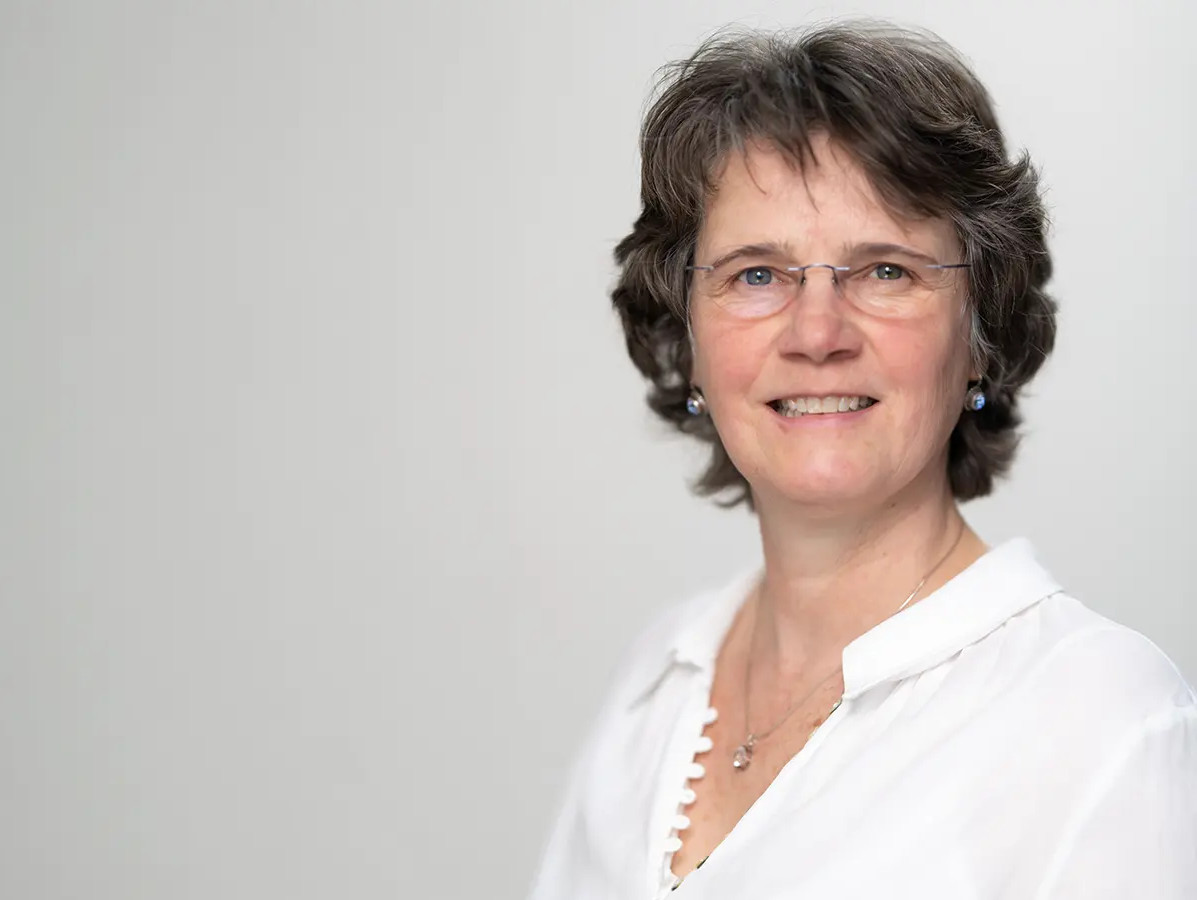
Miriam Quataert is a senior researcher at Wageningen University & Research (WUR). In addition, she spends two days a week as a practor and driving force behind the Protein Transition practorate at SVO vakopleider food. Combining these two worlds – one focused on theory and abstract thinking, the other very much rooted in practice – suits her perfectly. For the fresh food sector, it is a clear win-win.
“The seeds for this collaboration were sown more than seven years ago with the Plant4Texture project,” Miriam explains. “Through WUR, we came into contact with SVO vakopleider food for this project on hybrid products. The collaboration was so successful that the school asked me to set up a Protein Transition practorate. The knowledge from that first project has now been fully incorporated into the curriculum at SVO.” Her role as a practor is comparable to that of a lecturer at a university of applied sciences: building a bridge between practice-based research, educational innovation and regional businesses. Although the foundations of the practorate are now firmly in place, the work is far from finished. On 1 May 2026, her contract was extended by another three years.
“SVO students attend classes either one day or four days a week. On the other day or days, they work. Their employers include butchers, delicatessen specialists and fishmongers who prepare meals and develop new concepts; retailers that stock new hybrid, vegetarian and vegan products; and hospitality businesses where plant-based and hybrid dishes are appearing on menus more and more often. So they are all dealing with the protein transition, and SVO wanted to address that in its education.”
“The protein transition is changing the product ranges of all these businesses. Change inherently requires research, as well as the ability to develop new products so that you can keep pace with that change. Or, preferably, stay ahead of it and help shape its direction. That is why we are working on strengthening students’ inquiry-based learning skills. They learn, for example, what constitutes good research, such as repeating trials and recording results properly. Research at SVO is much less complex than it is at university. In secondary vocational education, we take a practical and pragmatic approach. We work at a different pace.”
“I see this as an investment in the future. Students take what they hear and learn at school back into the workplace. As a result, their employers also become familiar with new developments and changes. Every transition has one thing in common: it is not a linear process, but moves in waves. We are all learning as we go. Next year, there will be new insights again. We may have to reconsider certain things. The advantage of also working at WUR is that I have access to a vast source of current knowledge and research. In this way, I help make a great deal of university knowledge accessible to people working in practice.”
“Through all kinds of collaborative projects! For example, we are working on a really enjoyable project with the Seaweed Sisters. By combining SVO’s craft expertise and what we learned about hybrid products in a project with WUR with their ambition to increase seaweed consumption, we created a kind of hybrid hot dog with a seaweed topping. At SVO’s inspiration day this spring, all the guests had the opportunity to taste the hot dog. The response was excellent, and teachers and students really enjoy working on something completely new and different. So working on innovative products like these is motivating for everyone involved.”
‘The protein transition is not a linear process. We are all learning as we go’
“Within SVO vakopleider food, we also have a project in which students and teachers developed a hybrid fish concept: 50% fish and 50% plant-based ingredients. We did this together with fish specialists, VNV, MSC, Hogeschool Zeeland UAS and Geerts Best, a producer of rapeseed and field beans. Sustainability was explicitly included in this project as well: the fish we use must be MSC-certified. That requires continuous review. Due to developments around the world, a fish species that is certified today may suddenly no longer be on the list six months from now. We have to anticipate that and remain alert.”
“Together with WUR, we have also created a new online training course as part of lifelong learning, entitled ‘New proteins call for a sharper focus’. The training covers everything you need to know to develop plant-based and hybrid foods safely and responsibly. The e-learning course provides insight into food safety, legislation and regulations, hygiene, allergens and innovation. It explains the role that reusing residual streams can play in developing new food products, and we address novel food legislation: why are certain ingredients not permitted for consumption and/or use in a product, and what exactly is a novel food? The aim is to give participants a solid foundation for working safely and responsibly with new proteins.”
“A fourth example – although there are many more – is our collaboration with Cellular Agriculture Nederland. Together, we are developing a curriculum on cultivated meat and precision fermentation. I think it is very important to include these new and innovative technologies in the curriculum so that when students graduate, they are genuinely prepared for what is happening now and what is coming next. We also need well-trained people who are able to work with these new technologies.”
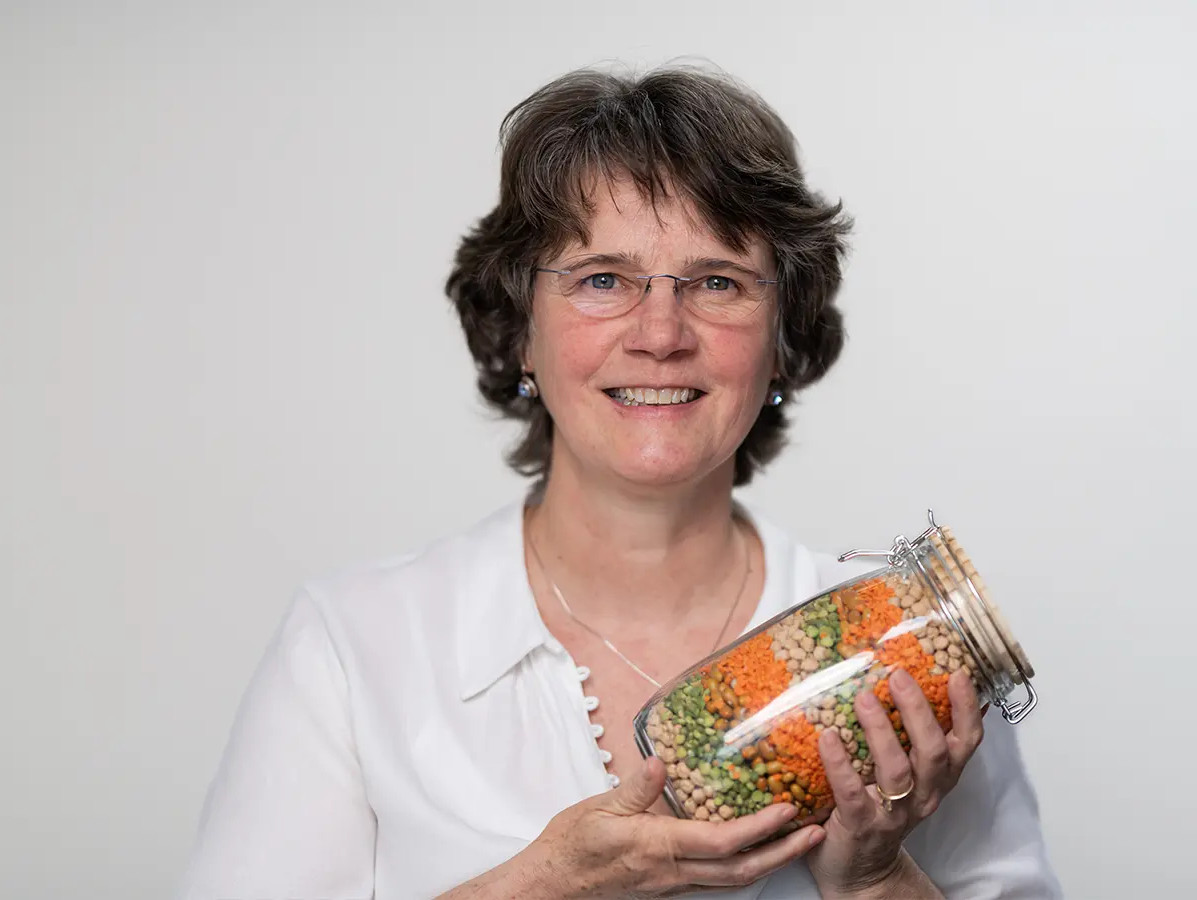
Without hesitation, she replies: “Taste comes first. If a product does not taste good, people will not choose it again, buy it again or eat it again. That is something we are continuously working on in our kitchens. Number two is making good use of our raw materials, with the valorisation of residual streams as an important part of that. Health will also remain a key issue: what does shifting our diets towards more plant-based foods mean for our health? And finally, there is consumer acceptance of the protein transition and the adoption of new technologies such as cultivated meat and 3D food printing. That is a major challenge.”
“I would like to do a hundred million things, but I am only at SVO two days a week, so unfortunately I cannot take on everything,” she laughs. Then, more seriously: “One thing we will definitely work on is making the curriculum more robust from a sustainability perspective. Our starting point is that we want to use our own resources as responsibly as possible, with sustainability and shelf life in mind. In practical terms, that means embedding topics such as preventing food waste and valorising residual streams into the programme. For this, we are once again working with WUR in a Kennis op Maat project.
“We are also going to integrate research more firmly into the courses through assignments from businesses. We are looking for specific challenges from entrepreneurs relating to the protein transition and/or sustainability that students can investigate and develop solutions for. For example: ‘How can I make this product or dish healthier and more sustainable? By using less meat and more vegetables while keeping it high in protein and fibre? By reducing sugar and/or salt? Or by focusing on reducing its footprint by using less packaging material or choosing a different type of packaging?’ Entrepreneurs can email me their challenges, and these may be added to our digital database. Students can then select a development assignment from that database and work on it. This gives them the opportunity both to strengthen their basic skills and to gain hands-on experience with inquiry-based learning. They are supported by WUR researchers, with the expert taking on the role of adviser.”
“You are not the first person to ask me that, haha. Someone in secondary vocational education genuinely approaches things from a practical perspective and wants to get things done, whereas a WUR expert is much more analytical. Sometimes it may take a little while to find the right angle and the right language. But that will work itself out; I have every confidence in that. Where there is a will, there is a way, and people will find common ground.”
“When I joined SVO, a whole new world opened up to me,” Miriam concludes. “These students and teachers are pragmatic, creative and have one foot firmly in day-to-day practice. There are fewer protocols and rules in secondary vocational education, which gives them more freedom to think. As a result, they often come up with very different solutions from someone with a university education. As a practor, it is very rewarding to be able to connect the different types of education, identify where everyone’s strengths lie and make the best possible use of them.”
More information about the online training course ‘New proteins call for a sharper focus’
Source: ©Vakblad Voedingsindustrie 2026
Magazine Voedingsindustrie has been made possible in part by:


© COPYRIGHT 2026 VOEDINGSINDUSTRIE | ALLE RECHTEN VOORBEHOUDEN
Powered by Wallbrink Crossmedia © 2026