
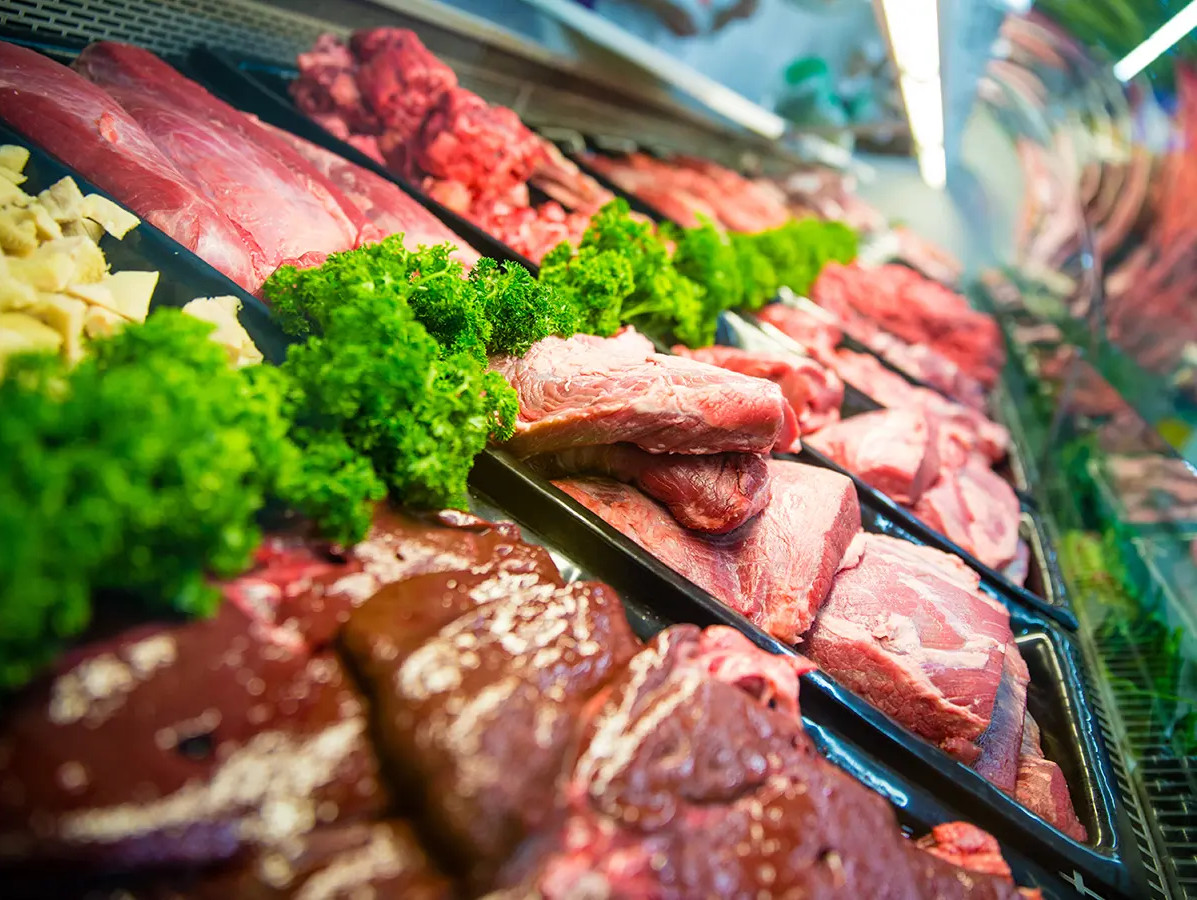
The Dutch are eating less and less meat. In 2024, the average per capita meat consumption reached 74.4 kilos — the lowest figure since 2005. That is shown in the annual Vleesnota by Wageningen University & Research, commissioned by Wakker Dier.
Total meat consumption declined again last year, from 75.3 kilos in 2023 to 74.4 kilos per person. This continues the downward trend of recent years. Since 2020, researchers have identified a clear turning point: consumption has remained structurally lower ever since.
Pork contributed most to the decline, dropping by one kilo per person. Beef consumption fell slightly, while poultry increased a little. In that sense, the Netherlands follows a broader international trend — less red meat, more white meat.
Consumption sociologist Hans Dagevos, co-author of the Vleesnota, observes that many people are becoming more conscious of their meat intake. Still, that awareness has yet to result in major national shifts. “At this macro level, change happens very slowly,” he says. Across the board, there is a modest decline, but no real turnaround yet.
A new element in this year’s Vleesnota is the focus on pets. The Netherlands has nearly five million dogs and cats, yet no animals are raised specifically to produce pet food. Dogs and cats mainly eat animal by-products — organs, lungs, and intestines — left over from meat production for humans. Researchers estimate that together they consume between 120,000 and 180,000 tons of these by-products each year, less than the amount available in the Netherlands.
Source: Resource online
Magazine Voedingsindustrie has been made possible in part by:



© COPYRIGHT 2026 VOEDINGSINDUSTRIE | ALLE RECHTEN VOORBEHOUDEN
Powered by Wallbrink Crossmedia © 2026