
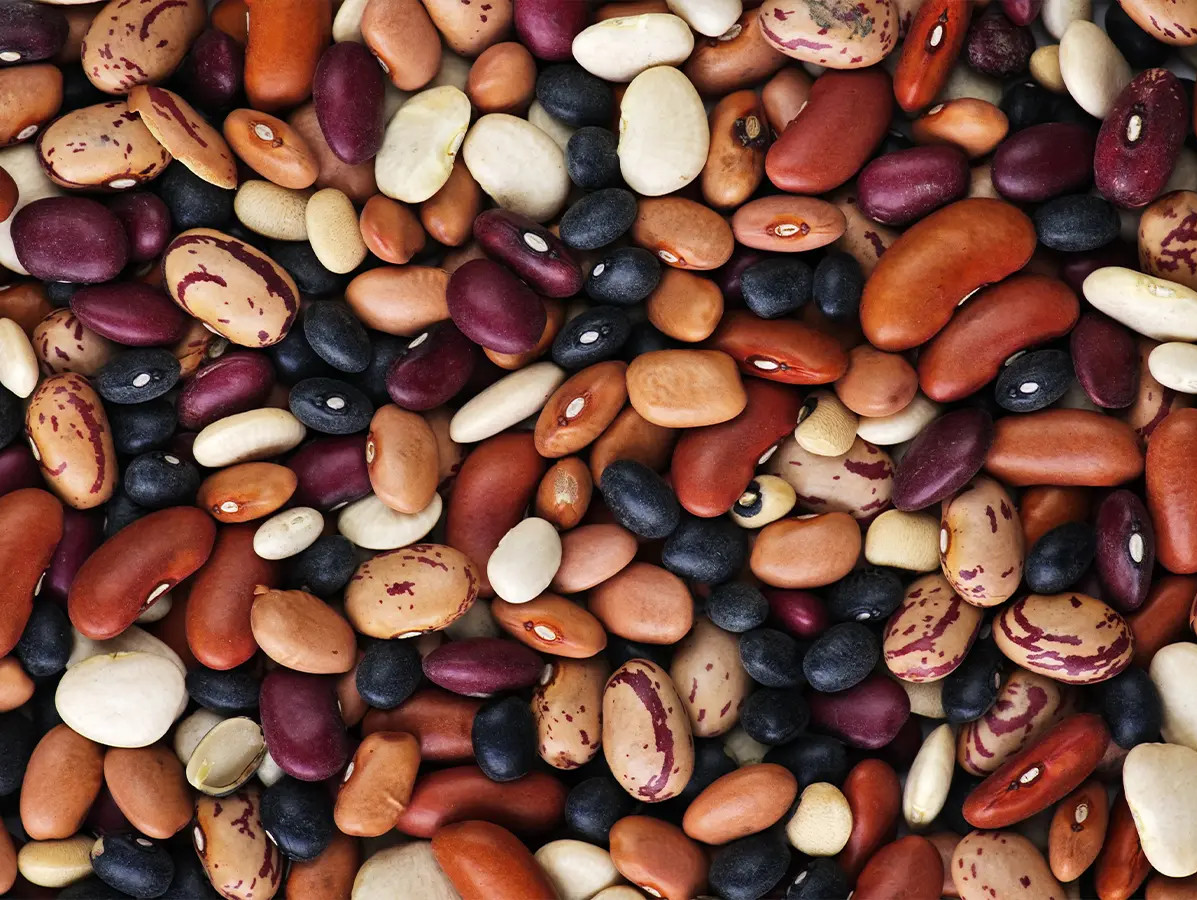
The Bean Deal may have officially come to an end, but collaboration across the chain is far from over. That’s what Minister Femke Marije Wiersma of Agriculture, Fisheries, Food Security and Nature wrote in a letter to the Dutch House of Representatives. The focus remains the same: strengthening the cultivation, processing and marketing of Dutch protein-rich crops.
The Bean Deal started in 2022 as a Green Deal with 56 partners, later expanding to 72. Their shared goal: scaling up the cultivation and processing of legumes such as field beans, lupin and soy, mainly for human consumption.
Over the course of three years, numerous initiatives have emerged. Cosun Protein processes Dutch field beans into a neutral-tasting plant protein suitable for dairy alternatives. ME-AT uses field beans as a base for plant-based meat products. Growers from Lekker Lupine and LuPeel supply lupin beans to Boon, Ekoplaza, Compass Group, Vermaat and Oregional Streekproducten. And the Dutch chickpea? It’s being processed into hummus by Groentegoed. Education and research have also played their part, contributing to broader knowledge on cultivation and processing.
Three years of the Bean Deal have made one thing clear: market demand is growing more slowly than expected. Global soy prices are so low that Dutch growers struggle to compete. That makes it difficult for local legumes to be priced attractively for buyers.
To strengthen the chain, the Plant Protein Forward program was launched within the Bean Deal. This initiative by Rabobank, Foodvalley and the provincial network Eiwitnetwerk NL focuses on supply chain transparency and on revealing the true value of Dutch plant proteins. It has already led to concrete agreements between growers and buyers, including for Edamame, soy yoghurt, lupin and field beans.
It’s not only about production; consumption matters too. The Dutch eat an average of 7 grams of legumes per day. That’s far below the recommendation of the Netherlands Nutrition Centre: at least once a week, around 100 grams per person.
To help change those habits, the Bean Meal campaign week was launched in 2023, coinciding with World Pulses Day. In the weeks that followed, sales volumes increased noticeably.
The minister remains involved in the next phase. The eco-activity ‘nitrogen-binding crop’ will continue as part of the Common Agricultural Policy, and the 2026 edition of Bean Meal will once again receive financial support from the ministry.
Source: LVVN
Magazine Voedingsindustrie has been made possible in part by:


© COPYRIGHT 2026 VOEDINGSINDUSTRIE | ALLE RECHTEN VOORBEHOUDEN
Powered by Wallbrink Crossmedia © 2026