
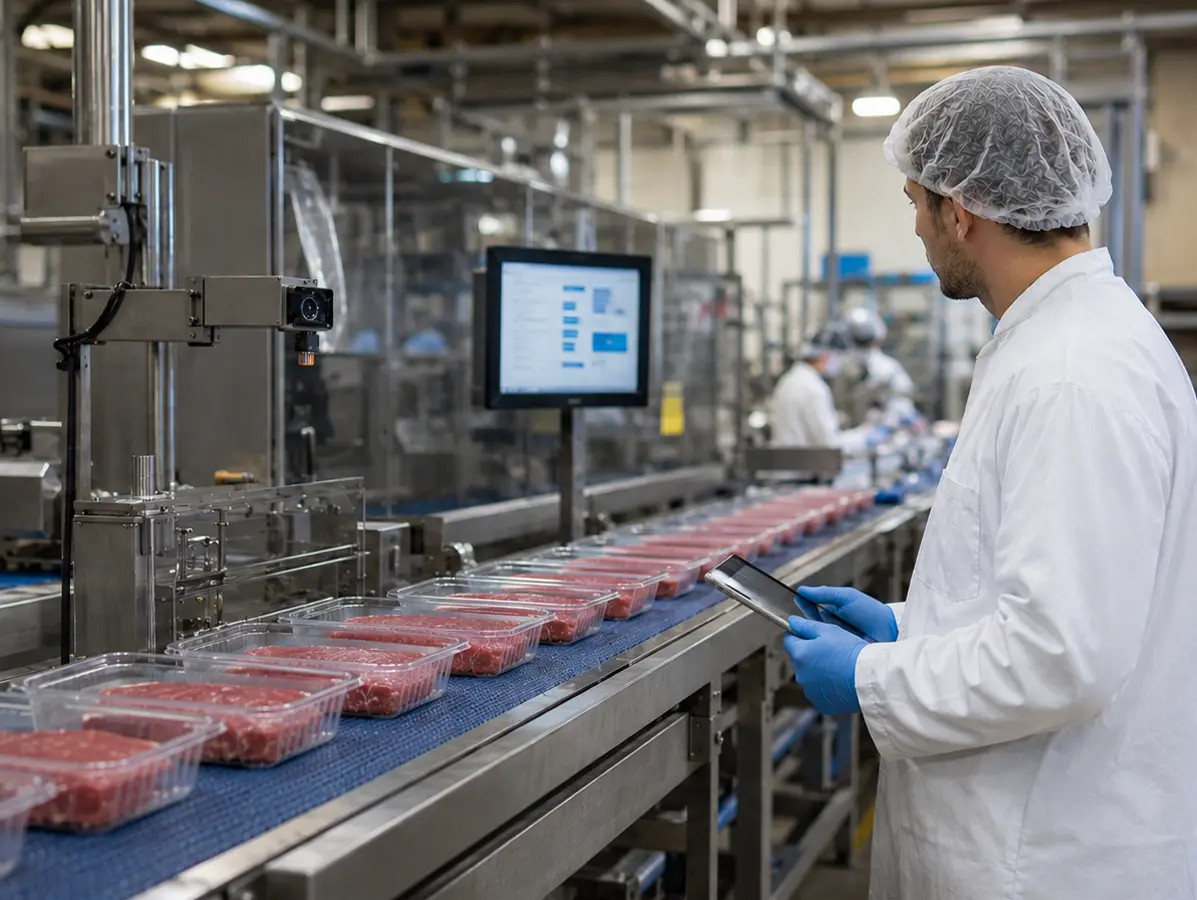
AI can help food companies work faster and more efficiently. Its greatest impact is currently in production and logistics. Raw material use, quality control, and inventory management also offer practical opportunities. RaboResearch expects AI to play a greater role in product innovation over time. It could also enable more personalized offerings for consumers.
The food industry has access to vast amounts of data. Machines, raw materials, inventories, and transportation continuously generate information. Better sensors and greater computing power make this data more useful.
AI helps manufacturers plan their raw material requirements. This allows them to reduce waste and identify bottlenecks faster. The technology also supports production and maintenance planning. Over time, AI could independently control parts of the production process. The system would then account for demand and inventory levels. Available energy and other raw materials would also factor into its decisions.
Cameras, sensors, and AI software support quality control. They help manufacturers assess incoming raw materials more effectively. This can prevent waste later in the production process. It also helps manufacturers make better use of higher-quality raw materials.
Several factors affect logistics within food companies. Weather, traffic, inventory, staffing, and truck availability all play a role. AI combines this information to make operations more efficient. This helps companies organize routes, deliveries, and schedules more effectively. Procurement teams can also use AI for tenders and price negotiations. Supermarkets and restaurant kitchens can estimate expected demand more accurately. They can then adjust their inventory accordingly.
In product development, AI helps identify trends more quickly. The technology analyzes signals from online recipes and restaurant visits. Social media posts also provide useful information. This brings popular flavors, ingredients, and products into focus sooner. AI can also help adjust product formulations. This is relevant when raw materials become more expensive or less available. Flavor and texture should be preserved as much as possible.
Using AI requires investment in software, expertise, and staff. Production environments may need additional cameras and sensors. Existing equipment may also require modifications.
AI is not infallible. Generative AI, in particular, can mix fact with fiction. Reliable data, oversight, and security are therefore becoming increasingly important. Questions about data ownership also remain relevant.
Source: Rabobank
Magazine Voedingsindustrie has been made possible in part by:



© COPYRIGHT 2026 VOEDINGSINDUSTRIE | ALLE RECHTEN VOORBEHOUDEN
Powered by Wallbrink Crossmedia © 2026





