Menu Surplus is the central production kitchen of Surplus, a healthcare and social services organization in the West Brabant region of the Netherlands. Through its Social Approach pillar, the organization places great value on freedom of choice: residents at its care facilities should be able to put together their meals flexibly. Thanks to the new packaging line, that is now possible, and the standard three-compartment meal has become a thing of the past.
“In our region, we are one of the few organizations in our sector that still operates its own production kitchen,” says Koos Nijssen, Manager of Menu Surplus. Together with colleague Nelie Braspenning, Process and Project Manager Food & Beverage, he developed a new vision to strengthen the kitchen’s long-term viability and better serve clients. One important change was the switch to packaging individual meal components in sustainable packaging. Nelie explains: “When residents now order meals for several days, they can create their own meals based on what they feel like eating that day. Previously, they could only choose a complete meal packaged in a large plastic tray with three compartments. The combination of meal components was fixed. That does not fit with our vision, in which people come first, nor with our sustainability goals.”
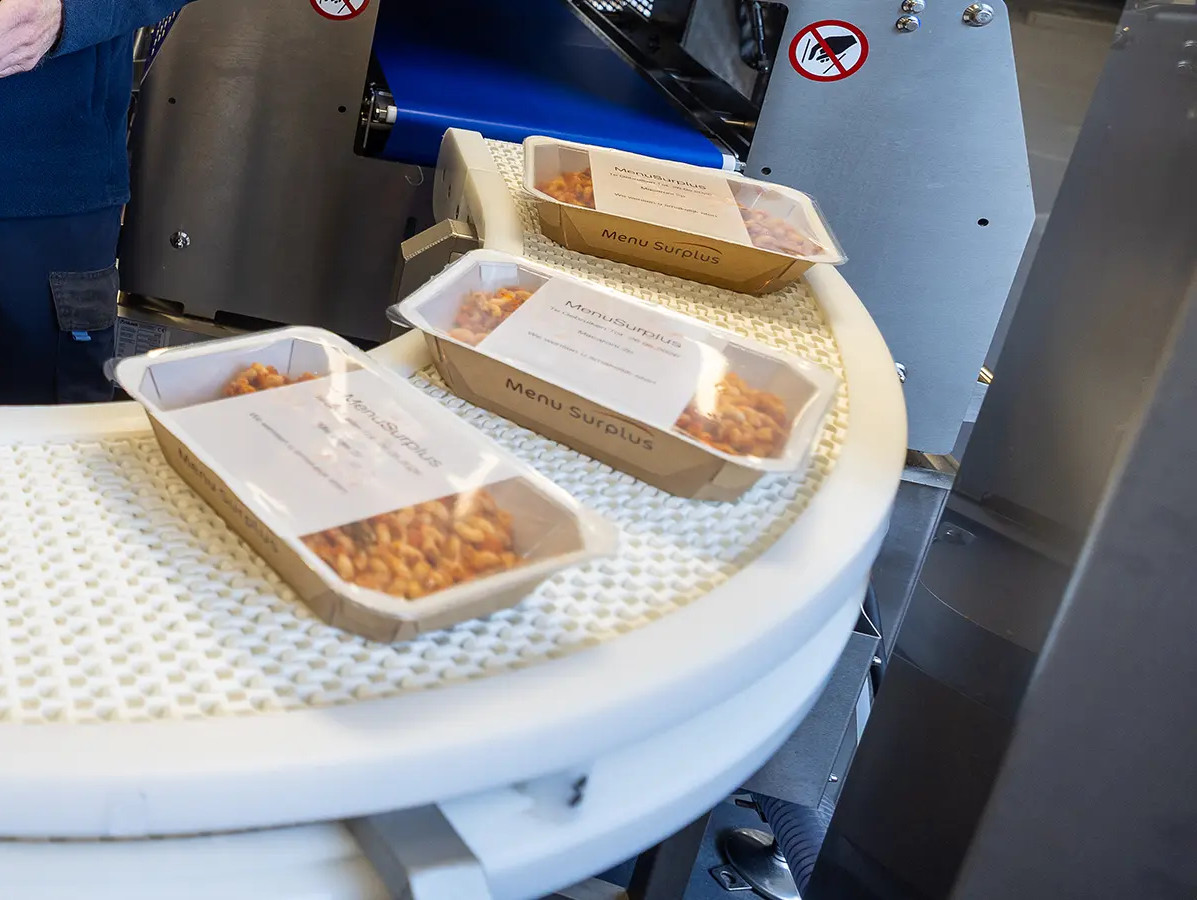
To make this freedom of choice in meals possible, it quickly became clear that the existing packaging line had to be replaced. Koos explains: “After all, we were moving away from standard plastic packaging and switching to sustainable packaging in various sizes. The old machine was not designed for that and was also more than twenty years old. Based on our positive experience with ULMA Packaging, the supplier of our previous machine, we asked them for advice. We wanted to continue using modified atmosphere packaging (MAP), but in individual cardboard trays in three different sizes, sealed with film. This reduces our plastic use by approximately 90%. In addition, the packaging is fully recyclable.” Stein van Engelen, Sales Manager Ready Meals & Cheese at ULMA Packaging, adds: “Based on those requirements, we recommended the TSA series. The TSA 540 automatic tray sealer is highly versatile and ideally suited for different packaging formats, materials, and MAP applications.”
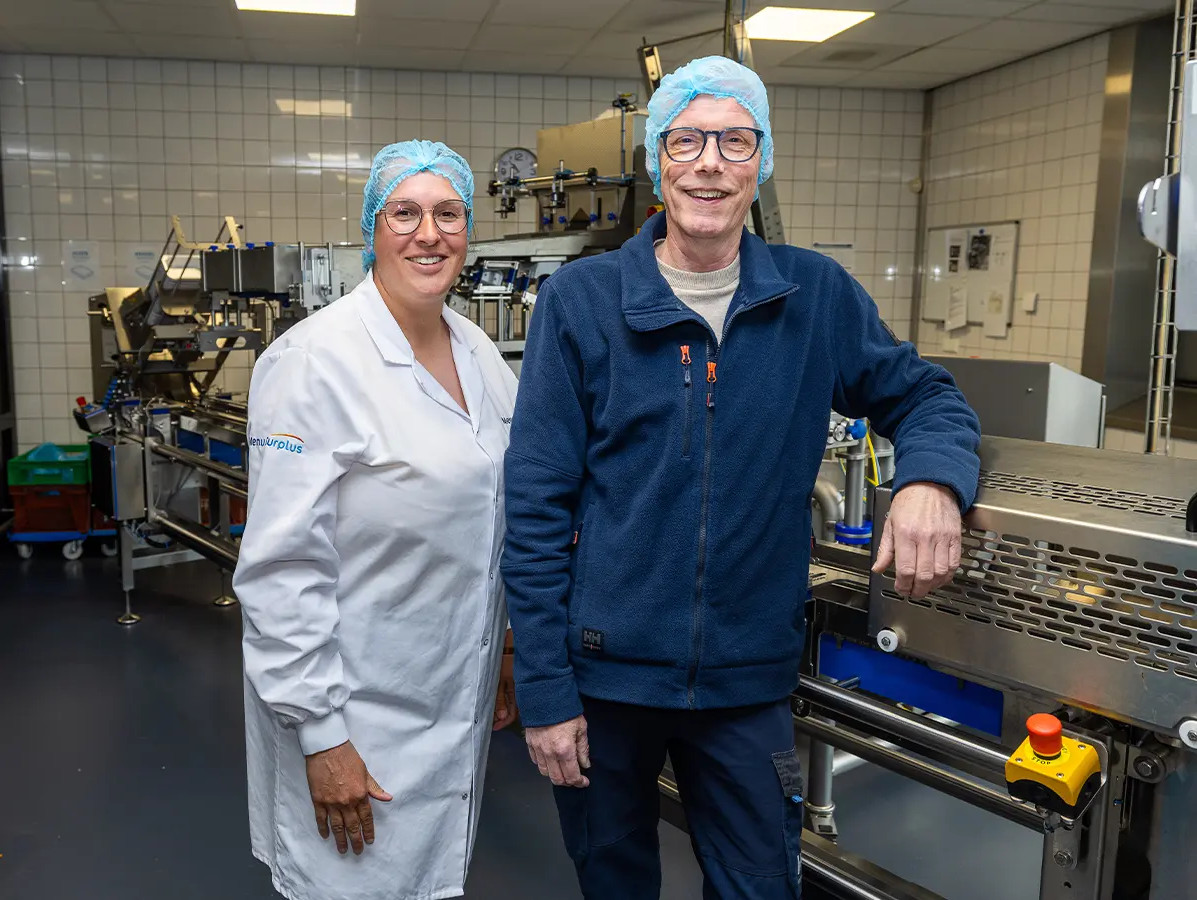
Nelie Braspenning and Koos Nijssen
“With the TSA 540, we can package under a protective atmosphere, which is essential for the shelf life of our meal components,” says Koos. “Combined with hygienic working practices, the right packaging, and optimal cooking temperatures, we have been able to extend shelf life from six to eight days.” Nelie adds: “Because the machine is also easy to change over, we can quickly switch between different packaging formats in the kitchen. Changing molds and adjusting the infeed conveyor takes relatively little time, so production is never halted for long. In addition, production speed is inherently higher than in the previous situation.”
In an environment where food is handled, hygiene and food safety are naturally key priorities. “The TSA series was developed entirely for food production,” says Stein. “It is made of stainless steel, the components are easy to clean, and its design makes maintenance and cleaning straightforward.” Koos adds: “Because the machine is robust, you can thoroughly hose it down without risking damage. You let it dry overnight and start fresh the next morning. Cleaning is often seen as a burden, but this machine makes hygienic operation easy.”
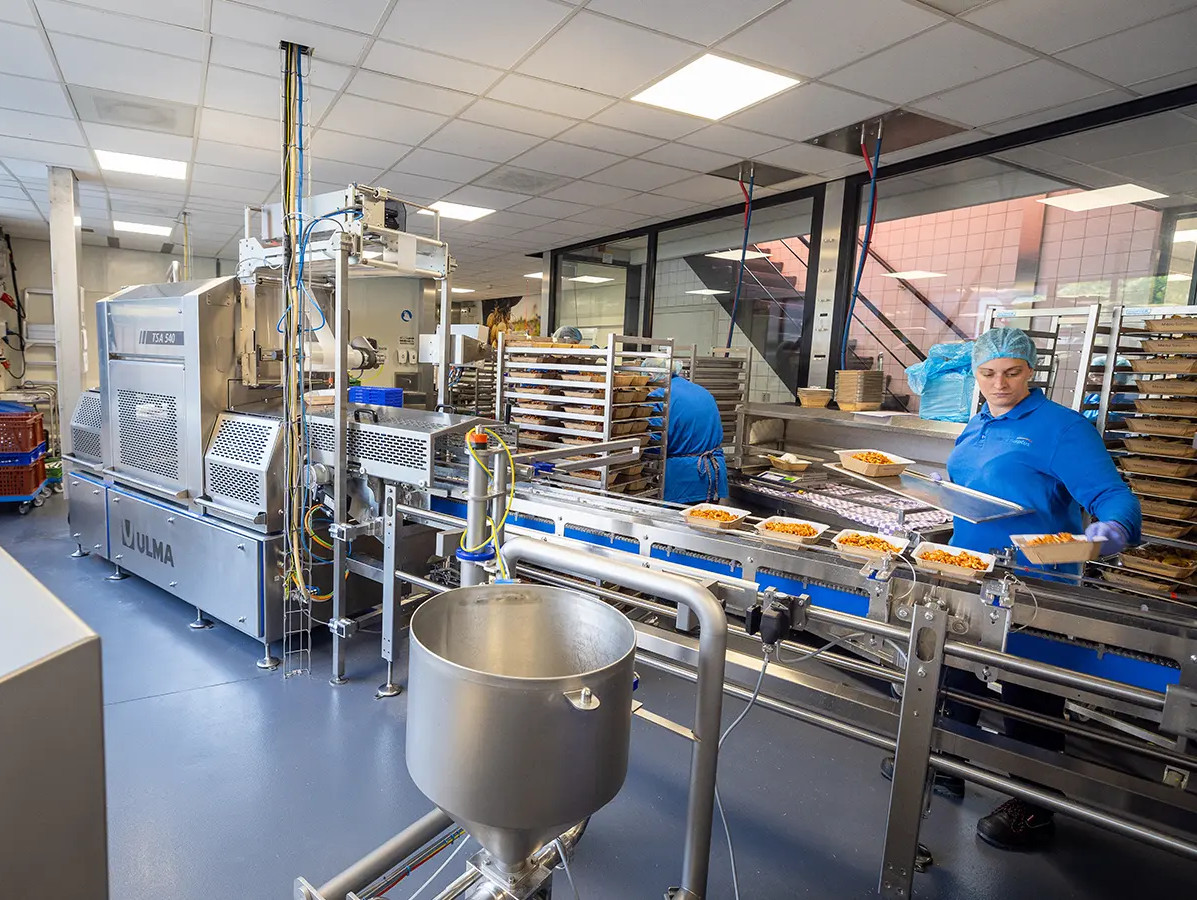
The limited space available for the complete packaging line, including components such as an infeed conveyor, denester, labeling system, checkweigher, and dosing pump, presented a challenge. “Fortunately, the TSA 540 is very compact, and ULMA Packaging worked closely with us on the layout and on selecting the right partners for the connected systems,” says Koos. “As a result, we were able to create an efficient packaging line in a small space within a short period of time. We started clearing out and rebuilding on Monday, January 12, 2026. That same week, the entire line was up and running: a perfectly integrated system.”
“The TSA machine offers extensive monitoring capabilities,” says Stein. Nelie adds: “We are not using those features yet, but we intend to in the future.” Koos continues: “Our first priority is launching an online webshop. We expect to go live in 2027, and that is when we will also implement the necessary integrations. At that point, it will be ideal if ULMA Packaging can monitor the machine remotely and immediately assist with questions or malfunctions. That said, we are already very satisfied with the service: support or a technician is always available quickly.”
www.surplus.nl
www.ulmapackaging.nl
Photos: ©Peter Roek
Source: Vakblad Voedingsindustrie 2026
Magazine Voedingsindustrie has been made possible in part by:



© COPYRIGHT 2026 VOEDINGSINDUSTRIE | ALLE RECHTEN VOORBEHOUDEN
Powered by Wallbrink Crossmedia © 2026