
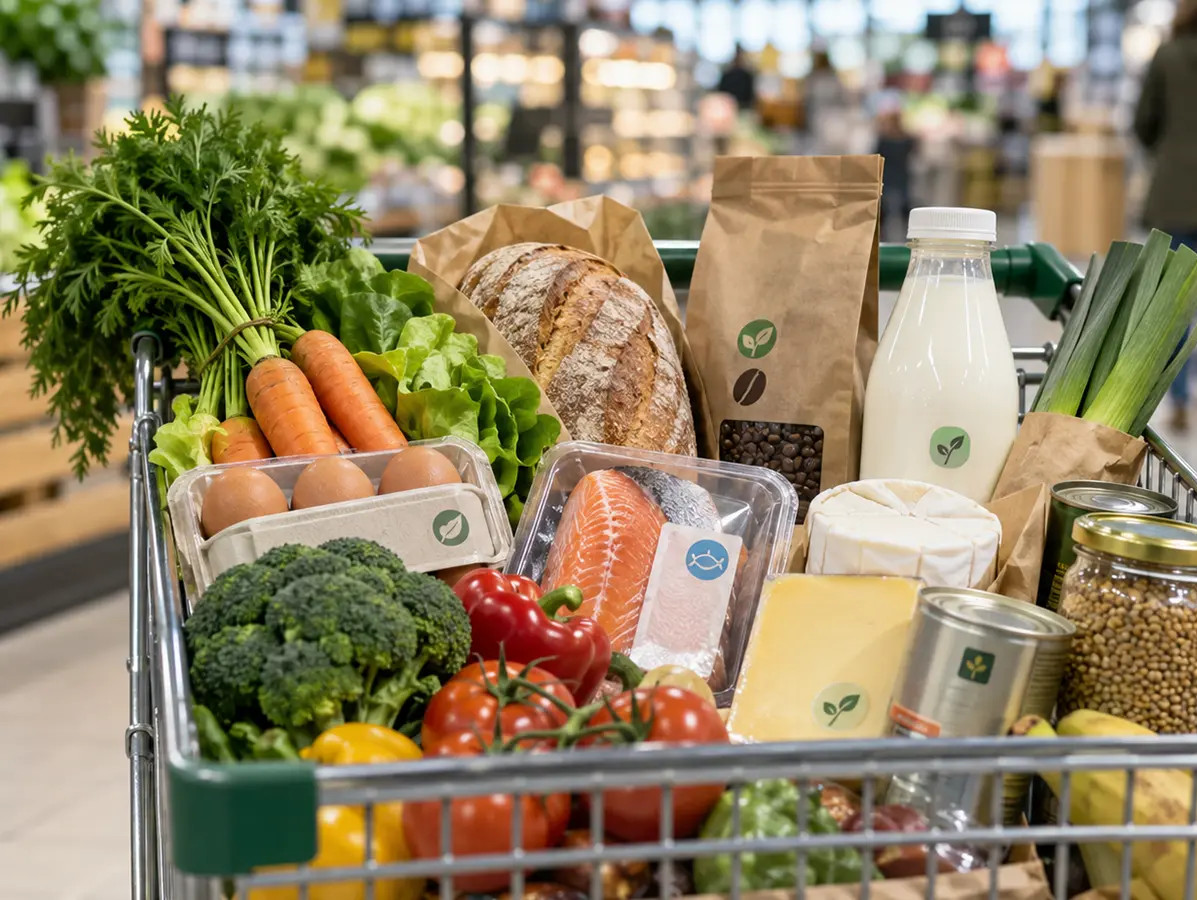
Sales of sustainable food are growing, but market share is barely moving. In 2025, Dutch consumers spent nearly €15.6 billion on these products. Higher prices account for a significant part of that increase. At the same time, sales volume also increased. Organic products recorded particularly strong growth.
The figures come from Wageningen University & Research’s Monitor Duurzaam Voedsel 2025. The monitor tracks spending in supermarkets, foodservice, and specialty stores for sustainable food. Only products carrying an independently verified sustainability label are included.
Spending on sustainable food rose by 6 percent. Total food spending increased by 5 percent during the same period. Nevertheless, sustainable food’s market share remained stable at 22 percent.
Consumers spent nearly €2.5 billion on organic products. That was 13 percent more than in 2024. In supermarkets, spending on organic products increased by 16 percent.
Fairtrade and Rainforest Alliance grew by 8 and 7 percent, respectively. Beter Leven remained the largest label, with spending of nearly €5.7 billion. Rainforest Alliance and organic followed. Products may carry several labels at the same time. The individual amounts therefore cannot be added together.
Supermarkets sold more than €13.3 billion in sustainable food. That was 6 percent more than in 2024. Its share of total supermarket sales remained stable at 28 percent.
Spending in specialty stores for sustainable food increased by 8 percent. This brought the total to €495 million. Sales volume in this channel rose by approximately 4 percent. Spending in foodservice increased by 1 percent. Average prices in this channel rose by 4 percent. As a result, the sales volume of sustainable food declined.
For eggs, 63 percent of sales came from certified products. Fish followed at 62 percent, with coffee and tea at 50 percent. The actual share for fish is slightly higher. Some supermarkets switched from ASC to GGN Certified Farming. This certification was not yet included in the 2025 monitor.
Researcher Katja Logatcheva emphasizes the importance of action across the supply chain: “Without initiatives from the food supply chain, the share of sustainable food will remain stable or increase only slowly.”
Source: Wageningen University & Research
Magazine Voedingsindustrie has been made possible in part by:


© COPYRIGHT 2026 VOEDINGSINDUSTRIE | ALLE RECHTEN VOORBEHOUDEN
Powered by Wallbrink Crossmedia © 2026