
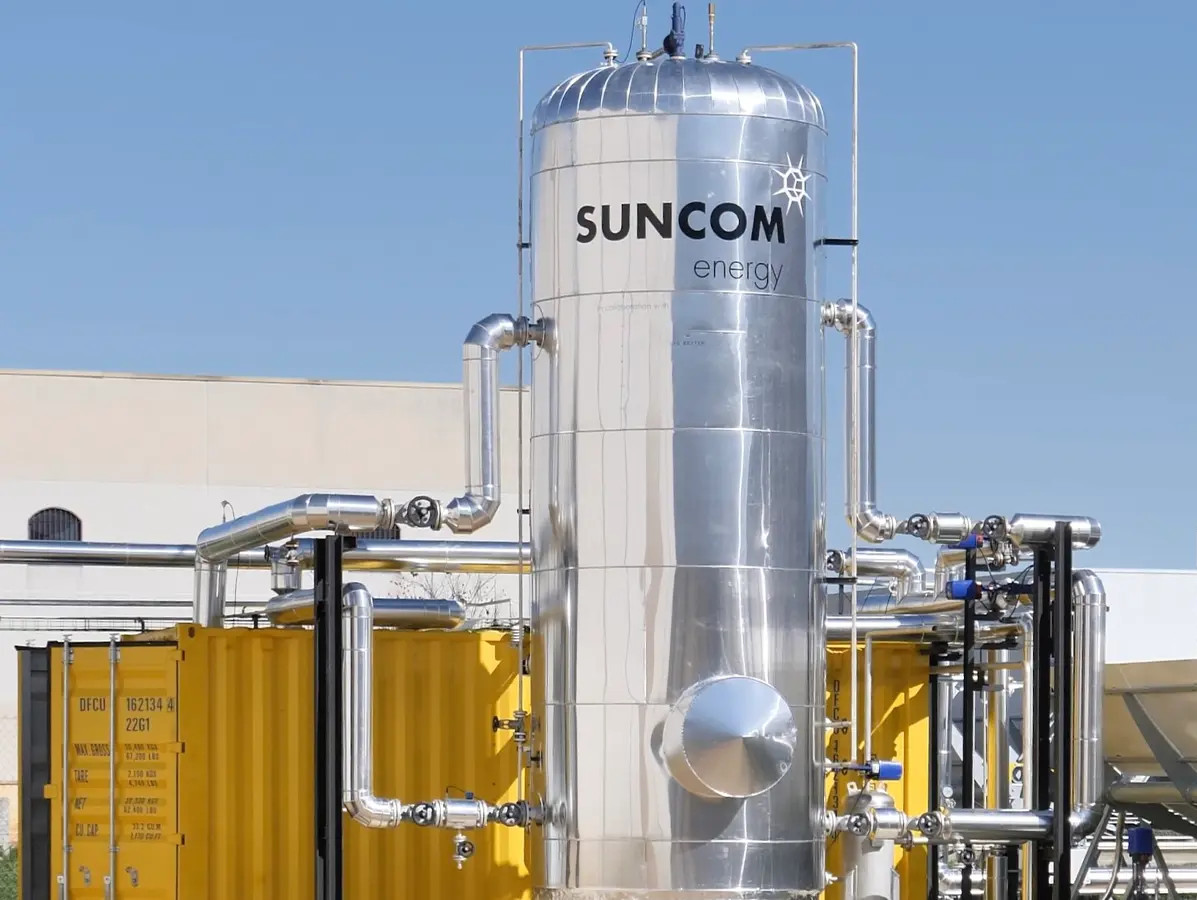
In Breskens, Zeeland, a remarkable technological achievement is taking shape: candy manufacturer Confiserie Napoleon is set to become one of the first Dutch companies to use direct solar heat in its production process, with a thermal battery partially powered by a power-to-heat installation.
“We want to be an innovative company. An attractive employer that embraces modern technologies,” says Plant Manager Wim Rutten. “Sustainability matters to younger generations. In addition, we feel that solar energy is a natural fit for our candy products—they’re little suns in their own way. The current rise in gas prices certainly strengthens the business case for investing in more sustainable energy.” To make this possible, innovative Dutch company Suncom is building a system using so-called solar mirrors, which can achieve temperatures of up to 300 degrees Celsius by concentrating sunlight. Apart from an existing installation in Someren, this technology is still unique in the Netherlands, but it is likely only the beginning.
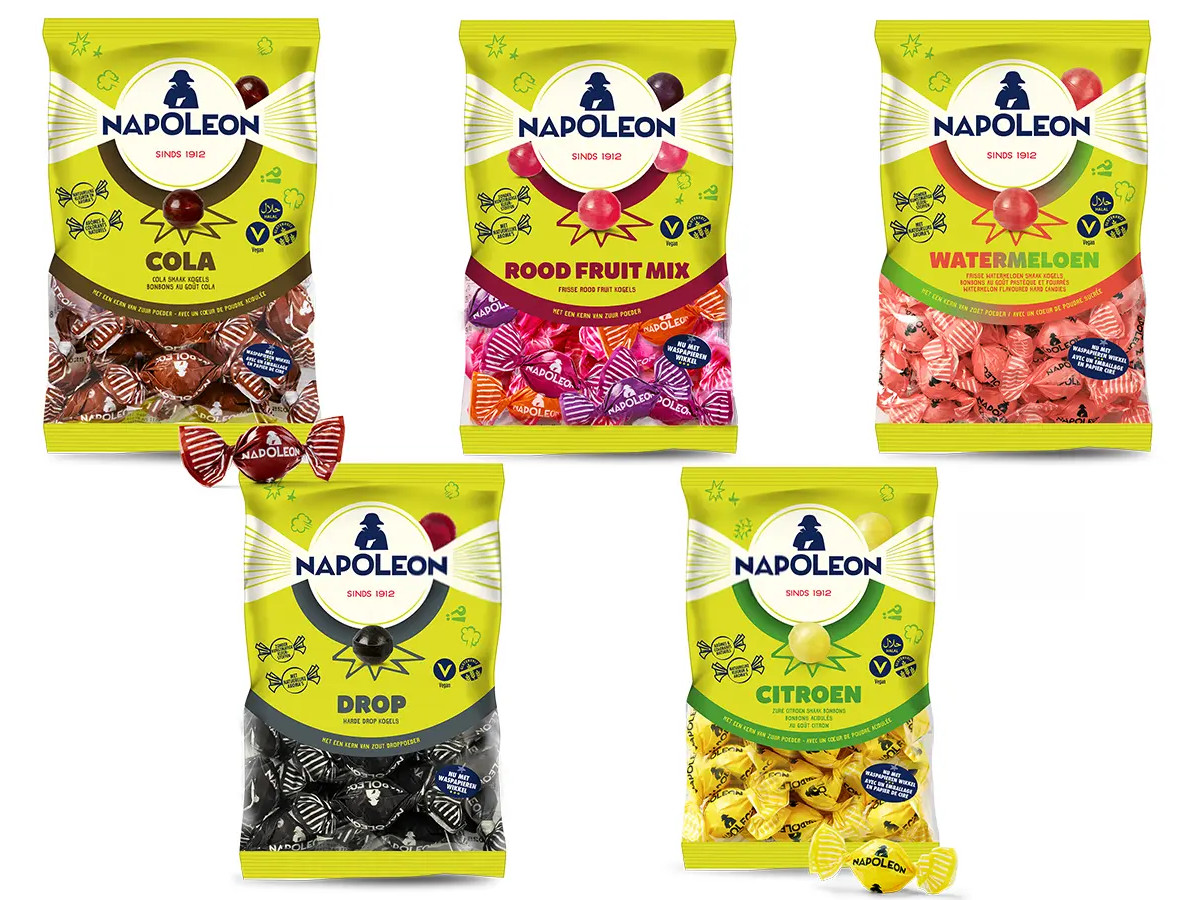
Speaking of taste: in addition to its well-known lemon candies, Napoleon has been producing countless other delicious varieties for many years; from flavors such as apple, orange, and pineapple to cappuccino, licorice, and black-and-white (and everything in between). Their commitment to sustainability is also reflected in the packaging. Since the fall of 2023, every Napoleon candy has been wrapped in wax paper instead of plastic, resulting in a plastic reduction of no less than 60,000 kg per year. Through this initiative, the manufacturer hopes to inspire others in the industry to follow the path of change and progress.
To reduce its dependence on natural gas and maximize the use of sustainable energy, Napoleon is now investing in a smart combination of electrification and thermal energy storage. At the heart of the system is a large thermal storage tank filled with a natural mineral that can efficiently store heat. This so-called thermal battery is partially supplied by a power-to-heat installation, which converts electricity into heat when large amounts of low-cost electricity are available on the grid. Power-to-heat creates flexibility: excess renewable electricity is not wasted but stored as heat for later use. This is beneficial not only in light of limited grid capacity, but also because solar generation and production schedules do not always align—for example, during weekends when the factory is not operating. In addition, thermal mirrors use solar heat to contribute extra renewable energy to the system. Together, these installations provide approximately forty percent of Napoleon’s total heat demand.
Wim explains: “We can still make significant improvements within our process to further reduce energy consumption. Ideally, we would like to make our entire heat demand sustainable. That would require a larger grid connection. With further scaling of power-to-heat and storage capacity, we even see opportunities to supply heat to a nearby village in the future. How great would that be?”
“The thermal battery and power-to-heat installation form the backbone of this project”
“Power-to-heat and thermal energy storage form the backbone of this project,” says Willem Boekhoven, Business Developer at Suncom. “They make it possible to have sustainably generated electricity available as heat at exactly the right time and in exactly the right place.” The thermal mirrors provide a high energy density per square meter and strengthen the overall concept. “It was not easy to make the business case work,” he continues. “The factory’s grid connection is too small to qualify for a standard subsidy scheme such as SDE++, which only applies from 2 MW onward. Thanks to the DEI+ program for innovative projects, the investment could still be financially justified.”
Part of the electricity used by Napoleon is sourced indirectly from a nearby solar park. Napoleon has a substantial grid connection and would like to incorporate even more decentralized energy into its system. Willem explains: “The thermal battery gives us a great deal of flexibility, and by using it intelligently, we could potentially free up grid capacity during peak periods for other users connected to the network.”
www.napoleonsnoep.nl
www.suncom-energy.com
This article previously appeared in a report by the NVDE
The Dutch Association for Sustainable Energy (NVDE) is committed to creating an energy supply fully based on renewable energy by bringing together expertise and efforts from across the sector—including the food industry. Member companies are active in renewable electricity, heat, and gases, as well as sustainable mobility, the built environment, and industry. The sustainable energy activities of its 1,600 affiliated companies already represent annual revenue of more than €43 billion. By participating in the NVDE, companies can help shape national policy on the ongoing energy transition in The Hague.
www.nvde.nl
Source: Vakblad Voedingsindustrie 2026
Magazine Voedingsindustrie has been made possible in part by:



© COPYRIGHT 2026 VOEDINGSINDUSTRIE | ALLE RECHTEN VOORBEHOUDEN
Powered by Wallbrink Crossmedia © 2026