
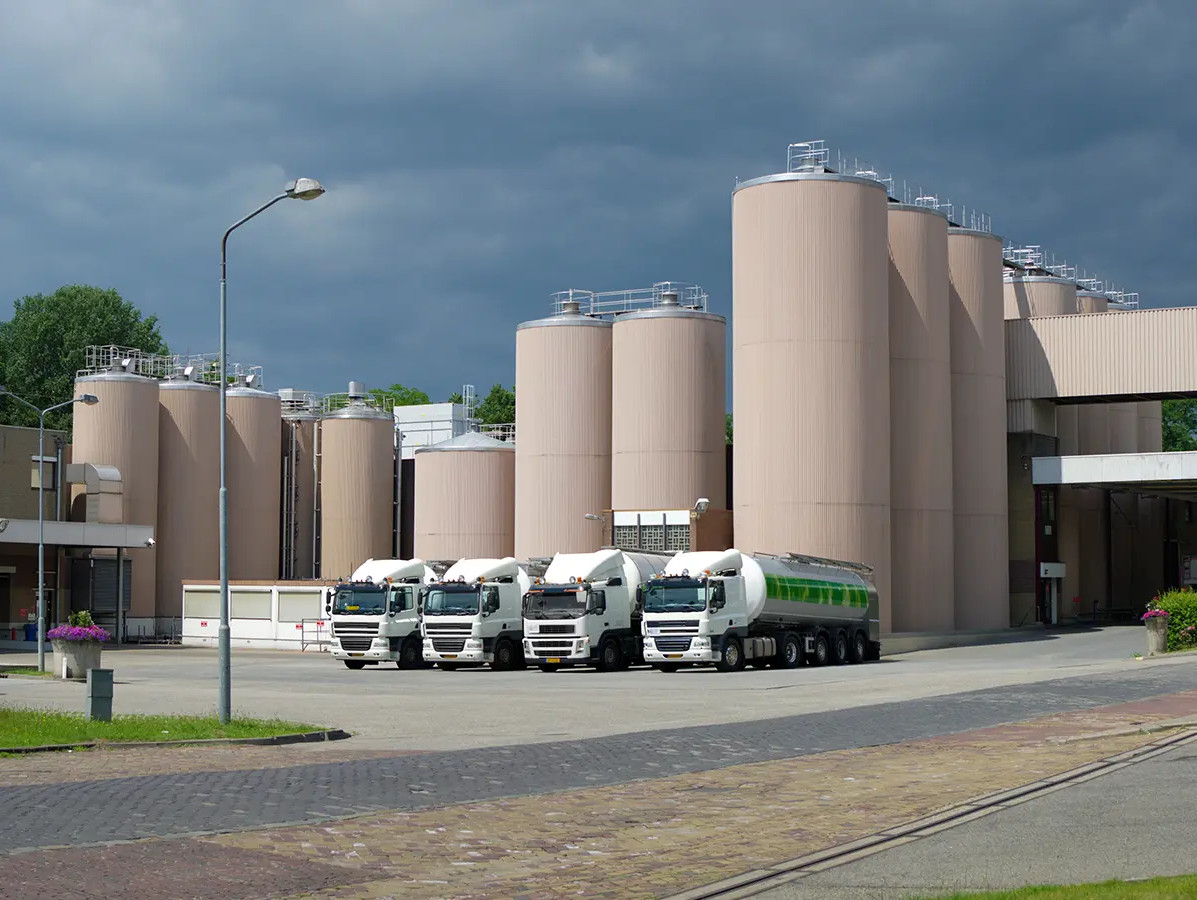
Drying is one of the most energy-intensive processes in the food industry. Yet it is entirely possible to make this process more sustainable. What adjustments can be made? And where can the greatest gains be achieved? Wageningen University & Research takes a closer look.
Two factors play a key role in reducing the energy intensity of drying processes: the total energy consumption of the process and the energy source used. Energy consumption is determined by the efficiency of the drying process. In conventional spray drying, for example, efficiency is around 50%: while approximately 2,260 kJ/L is theoretically required to evaporate water, a spray dryer in practice requires around 4,520 kJ/L of evaporated water. By improving process efficiency, actual energy consumption can be significantly reduced. Depending on the energy source used, however, the same amount of energy can have a very different climate impact. The chosen energy source therefore largely determines the final climate impact, expressed in CO₂ equivalents.
Most conventional dryers are gas-fired, but natural gas is, as is well known, not a sustainable energy source: every cubic meter of natural gas emits 2.1 kg of CO₂-eq. Wind and solar energy are more sustainable, as no CO₂ is released during generation. To make use of these sources, electrification is required. The extent of the climate benefits achieved through electrification depends heavily on how the electricity is generated. The Dutch electricity mix (the average electricity supplied through the Dutch grid) currently consists of a combination of renewable and fossil-based power, including energy from natural gas and coal. As a result, the average CO₂ emissions of grid electricity remain substantial.
The difference in emissions between natural gas and the current electricity mix is smaller than is often assumed. On January 1, 2025, emissions from the Dutch fossil-based electricity mix were approximately 497 g CO₂-eq/kWh. Due to the growing share of renewable electricity, the average emission factor of the electricity mix was significantly lower, at around 211 g CO₂/kWh. By comparison, the CO₂ emissions of natural gas are approximately 214 g CO₂/kWh of energy content (1 m³ of gas equals 9.77 kWh).
The efficiency of a drying process is expressed as the Coefficient of Performance (COP). This figure indicates the ratio between the amount of energy put into a process and the amount of usable energy obtained from it. The higher the COP, the more efficient the process. A heat pump uses a refrigerant and compressor to upgrade heat from a low-temperature source to a higher temperature. The compressor increases the pressure and temperature of the refrigerant, allowing heat to be delivered at a useful higher temperature level. The temperature lift is the difference between the source temperature and the output temperature. The greater this lift, the more work the compressor requires and the lower the heat pump’s efficiency (COP). In general, the larger the temperature lift, the lower the efficiency.
This topic was further investigated within the MOOI project The Heat Is On (THIO), an innovation program carried out by a consortium of organizations including Wageningen Food & Biobased Research (WFBR), aimed at improving the efficiency of industrial dewatering, drying, and heat integration processes. Calculations showed that a COP of 2.6 could be achieved using mechanical vapor compressors with a temperature lift of 100°C (from 40°C to 140°C). This means that for every kWh of electricity consumed, a heat pump produces 2.6 kWh of heat, reducing the CO₂ impact by a factor of 2.6. A temperature lift of 100°C is substantial; for smaller temperature lifts, the COP becomes even higher.
Implementing an electric boiler is often easier than implementing a heat pump because it converts electricity directly into heat and can therefore be connected relatively easily to existing steam or heating systems. However, an electric boiler has a low COP of 1.
To illustrate: in 2025, producing 1 MWh of steam cost €85 using an electric boiler, compared with €73 using a gas boiler (see table). With a heat pump operating at a COP of 2.6, the cost drops to just €33 per MWh of steam. That means costs are reduced by well over half. These figures are no longer fully accurate, however: due to the current geopolitical situation, energy costs are approximately 30% higher than the values used in the 2025 study.
Table: Energy costs from the 2025 study
|
Electricity |
|
|
|
Electricity price |
70 |
€/MWh |
|
Grid management costs |
15 |
€/MWh |
|
Electricity costs |
85 |
€/MWh |
|
|
|
|
|
Gas |
|
|
|
Gas price |
40 |
€/MWh |
|
Grid management costs |
0 |
€/MWh |
|
Energy tax |
6 |
€/MWh |
|
CO₂ tax |
16 |
€/MWh |
|
Gas boiler efficiency (HHV) |
85 |
% |
|
Steam costs |
73 |
€/MWh |
|
|
44 |
€/ton of steam |
An interesting option is to participate in a flexibility contract using an electric boiler. Sappi Maastricht, a producer of high-quality paper and pulp grades, for example, works with Enexis Netbeheer through a flexible contract under which the company reduces its peak electricity demand during periods of grid congestion. Sappi started with a flexible capacity of 3 MW but has since expanded this to 24 MW of flexible capacity. When there is excess capacity on the grid, Sappi uses its electric boiler to produce steam with electricity instead of natural gas. During peak demand periods, the electric boiler is scaled back to reduce strain on the grid. In addition, Sappi participates in the Automatic Frequency Restoration Reserve (aFRR), a market mechanism that helps grid operators continuously maintain the balance of the electricity network.
Solutions like these are also relevant for the food industry. Many (drying) processes rely on steam or heat, making electric boilers a potential contributor to both sustainability goals and the reduction of grid congestion. Companies do, however, need to assess how much flexibility is available within their operations and when it can be utilized. Heat pumps are generally less suitable for rapid ramping up and down. For applications like these, an electric boiler is therefore a better fit.
Anyone who improves the efficiency of a drying process through the use of a heat pump still needs a heat source from which energy can be extracted. A well-known solution is to condense the evaporated air from a drying process and recover the heat released during condensation. Recovering energy from humid air is not straightforward, however: the dew point must be high enough to recover sufficient latent heat. In many cases, a large portion of the heat still remains unused. A high dew point also makes the drying process more complex. It can reduce the drying rate and create a risk of condensation inside the dryer.
An alternative to hot-air drying is the use of superheated steam as the drying medium. Superheated steam is hotter than saturated steam and can therefore absorb additional moisture; the evaporated water becomes part of the steam itself. This makes energy recovery much easier, as surplus steam (the evaporated water from the product) can be separated from the recirculating main steam flow. In principle, this allows 100% of the energy contained in the evaporated water to be recovered. WFBR is conducting research into drying with superheated steam.
For food products, the most important consideration is that the wet-bulb temperature during superheated steam drying is significantly higher than during hot-air drying. Wet-bulb temperature is an international standard defined as “the lowest temperature that a wet object in an airflow can reach due to the evaporation of adhering water.” In this context, it refers to the temperature of the product during the initial stage of drying.
At that stage, the product is still wet. Continuous evaporation of water keeps the product temperature constant and significantly lower than the surrounding temperature. At atmospheric pressure, however, the wet-bulb temperature of superheated steam is approximately 100°C, which means the product can easily suffer thermal damage during drying. Superheated steam can therefore be a highly interesting drying method for food products, provided the process is carried out under reduced pressure so that the product temperature remains sufficiently low throughout drying.
Making drying processes more sustainable is not a utopian idea—it can be done. There are, of course, still technical and strategic challenges to overcome, but now is the time to determine which combination of efficiency improvements, electrification, and innovative drying technologies best fits your process and energy requirements. The greatest gains are achieved when process optimization, smart electrification, and energy integration are combined. At the same time, look beyond the current emission factor of electricity. After all, the Dutch electricity mix is becoming increasingly sustainable, making investments in electrification progressively more attractive over the long term.
Sources:
https://ispt.eu/projects/the-heat-is-on/
Source: Vakblad voedingsindustrie 2026
Magazine Voedingsindustrie has been made possible in part by:



© COPYRIGHT 2026 VOEDINGSINDUSTRIE | ALLE RECHTEN VOORBEHOUDEN
Powered by Wallbrink Crossmedia © 2026