
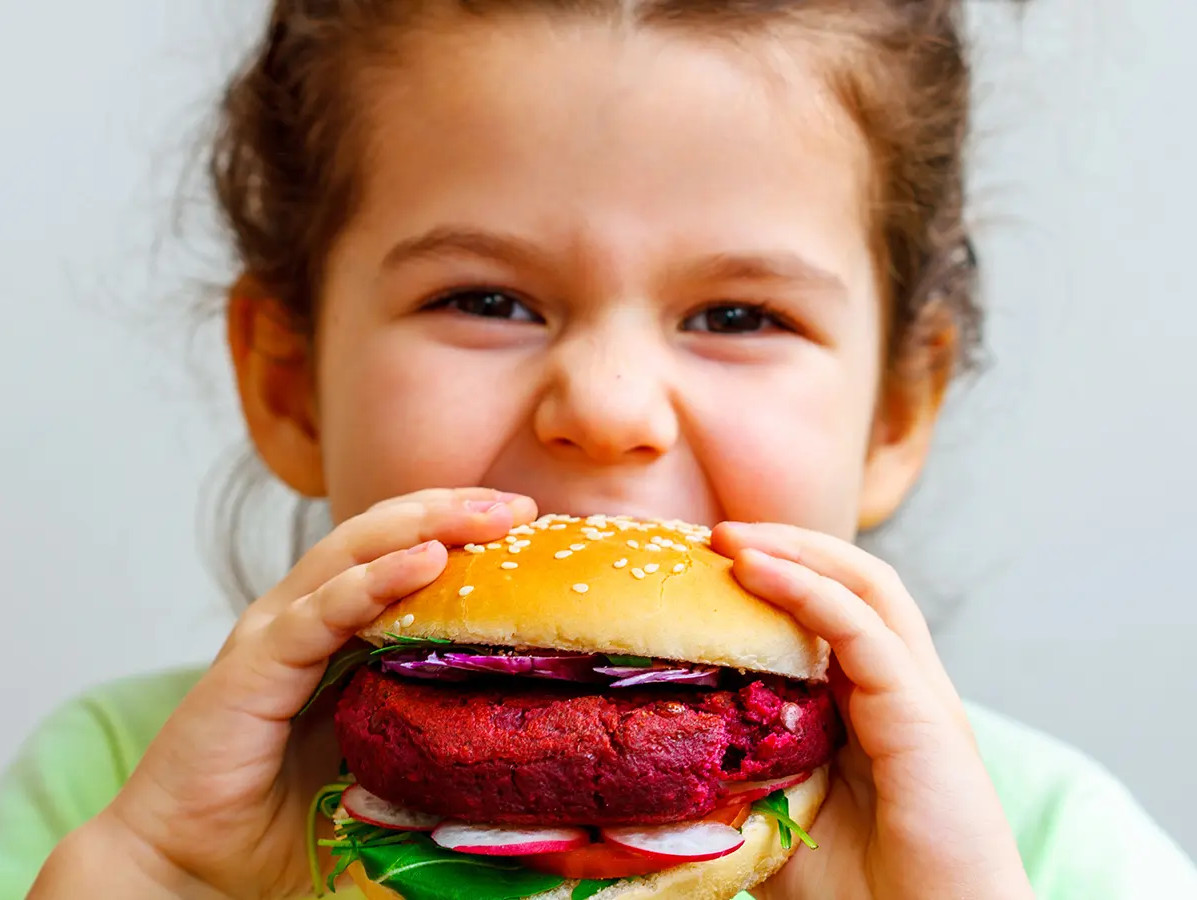
Making a high-quality meat substitute that also tastes good is not easy. The fact that these substitutes are also trying to replicate an entirely different product category makes the challenge even more complex.
The initial hype around meat substitutes has passed. Consumers are becoming more demanding. For a new product to be genuinely successful now, quality needs to be high. The challenges remain considerable: soy-based substitutes often contain too many bean-like off-flavours that overpower the added meaty flavour. The texture may also be too soft or too dry, or, worse still, the ingredients absorb the added flavourings, changing the flavour completely. And what about appearance? Does a plant-based burger really need to ‘bleed’?
Generally speaking, a meat substitute consists of the following ingredients: 50 to 80% water, 10 to 25% textured protein, 4 to 20% other protein ingredients, 3 to 10% flavourings, 0 to 15% fats, 1 to 5% binders and 0 to 0.5% colourings (Kyriakopoulou, 2019). ‘Juiciness’ in particular is an important parameter in plant-based meat substitutes, but one that is difficult to achieve. More water often increases juiciness, but unfortunately, more is not necessarily better. Adding more water also makes the texture softer, and many meat substitutes are already too soft. The challenge is to find the right balance. Other ingredients are needed to achieve a good texture.
Texturized protein is produced using two types of processes. Traditionally, it is made by low moisture extrusion, resulting in low moisture extrudate, or LME. Think of the ‘soy chunks’ sold in health food shops or Asian supermarkets. Today, LME is made not only from soy, but from a wide range of crops. The properties of these pieces — firmness, water binding and oil binding — depend partly on the ingredients used, but also very much on the selected processing parameters.
Extrudate can also be made with more moisture through ‘high moisture extrusion’, resulting in high moisture extrudate, or HME. Although the process is broadly comparable with LME, HME looks very different. Rather than being dry and sponge-like, it has a firm, layered structure. Examples include plant-based chicken pieces and high-quality plant-based burgers such as the Beyond Meat burger. Both LME and HME provide structure to the product.
Other protein ingredients include flours, such as milled and defatted soybeans and peas, as well as protein concentrates and isolates. Their primary role is binding, but they also help emulsify the fats within the matrix. Pea protein is currently receiving considerable attention. In terms of functionality, however, this ingredient does not yet achieve the same results as soy.
Fat is an important flavour carrier and contributes to both texture and mouthfeel. Many plant-based burgers use a mixture of fats that are solid and liquid at room temperature. The type of fat affects the firmness of the product. Solid fats are more similar to animal fat and are often combined with liquid fats in formulations. A higher fat percentage generally results in a juicier and more tender burger with better flavour.
Binders are a diverse group. Protein ingredients already provide a degree of binding, which can be enhanced by hydrocolloids such as carrageenan or methylcellulose. A wide range of starches and fibres, such as citrus fibre, are also regularly used to provide binding. Egg white is an excellent binder and is widely used in vegetarian products. However, it is not suitable for a fully plant-based or vegan product. Finding a comparable alternative has proved difficult. A combination of binders is therefore often used. Methylcellulose is a good candidate. It has the unique property of being a viscous liquid at room temperature and a gel at higher temperatures. This makes it particularly suitable for holding the burger ingredients together during cooking. Methylcellulose also retains water effectively, which can increase juiciness. One disadvantage of methylcellulose is the negative consumer perception of the ingredient, as it is regarded as unnatural and ultra-processed.

The challenge in making a successful meat substitute is achieving both good flavour and good texture. The two are not independent: texture affects flavour perception. Scientific research shows that a firmer texture is associated with reduced flavour intensity. But how do you develop or optimise such a product? The scientific literature contains many studies using model products to assess the effect of an ingredient on texture and flavour.
One example is a study on plant-based salami, in which different fat ratios were used and their effects on texture, drying rate and flavour were assessed (Dreher, 2021). A second relevant study examined the effect of fat on the release of aroma and flavour compounds in sausages (Carrapiso, 2007). The third study I would like to mention investigated the addition of the hydrocolloid konjac at different percentages to a plant-based burger. This was found to affect the product’s water binding and hardness (Yuliarti et al., 2023).
It is notable that the products in these studies were not always tasted. Analytical parameters such as hardness, elasticity and water binding are known to be related to sensory properties, but this relationship is far from straightforward. It is therefore difficult to draw conclusions about flavour and texture from the literature alone. In addition, different ingredients often affect one another. Because of these interactions, small changes to a formulation can have a substantial effect on the outcome. Varying just one ingredient, as is often done, does not take this complexity into account. An alternative method is to change several parameters simultaneously in a so-called ‘design of experiment’. Statistical methods can then be used to measure not only the effect of each parameter individually, but also the interactions between parameters and their effect on the final quality of the product.
The research project ‘Improved Sensory Quality of Meat Analogues’, which ran in recent years at Wageningen Food & Biobased Research, part of Wageningen University & Research (WUR), used this method. In the project, twenty-four different burgers were produced by varying five parameters. The products were then measured for hardness, fracture behaviour and the amount of ‘juice’ released, both during preparation and when the product was compressed, as a very simple simulation of chewing. The burgers were also tasted by a sensory panel, which assessed the products on thirty different attributes.
The ingredients that were varied were:
The added aroma and flavour compounds remained the same. However, we know that texture can change flavour and flavour perception. Furthermore, the ingredients themselves can have flavours — in other words, off-flavours — and ingredients can interact with the added flavours. Therefore, we asked the panel to assess not only the texture of the burgers, but also their flavour. The main sensory differences were, as might be expected, related to texture. The burgers ranged from ‘tough’, ‘hard’ and ‘with pieces’ to ‘smooth’, ‘sticky’ and ‘juicy’. Still, two-thirds of the attributes that differed significantly between the burgers were flavour-related. This indicates how important the matrix is to flavour perception.
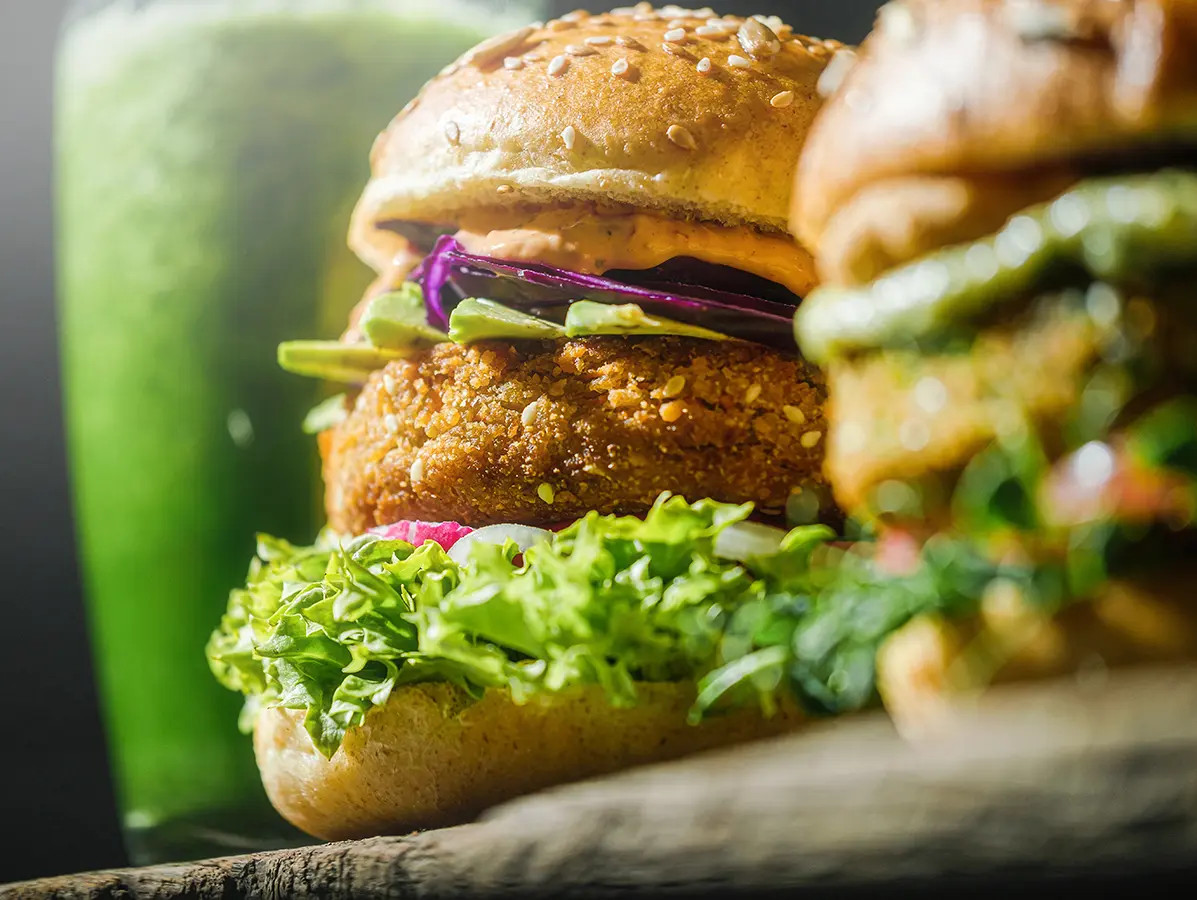
What, then, is the effect of the five different formulation variations? The study shows that the type of extruded protein has a major effect on texture. LME almost disappears into the burger mixture: it is barely visible as individual pieces. HME, by contrast, is much harder. These HME containing burgers consequently scored much higher for ‘pieces’ in the panel, although ‘smooth’, ‘sticky’ and ‘tough’ were also associated with this type of extrudate. It may work better to add HME in ground form rather than as pieces of a similar size to the LME.
The difference in extrudate also accounted for most of the variation in flavour. This may be due to the interaction between flavour and texture, but also because the two extrudates we used had different off-flavours. The LME was pea-based and had been produced using a different process from the soy-based HME. Because both the processing parameters and the crop differed, this study does not allow us to determine which of the two had the greater influence, but it is clear that both had an effect. The type of extrudate also affected the amount of juice released during preparation and during compression of the burger. More juice was released with LME. The hardness of the burger increased as the amount of HME increased.
The amount of fat affected the attributes ‘airy’, ‘juicy’ and ‘elastic’. A higher fat content resulted in more fat in the released juice and greater perceptibility of several flavour attributes, although the effects were small. This is consistent with the role of fat as a flavour carrier. ‘Bitter’ decreased slightly as the fat percentage increased.
The expectation was that a higher proportion of solid fat, within a variable ratio of solid to liquid fat, would result in greater juiciness and would affect the texture. However, this was not the case. One explanation is that the burgers are eaten above the melting temperature of the solid fats. Apparently, the way the fat is distributed during burger production does not have a major influence on the final texture. In the panel, ‘greasy’ and several flavour parameters were affected by the ratio of solid to liquid fat. Changing the ratio between solid and liquid fat also changes the amount of juice released during compression and the point at which the burger breaks when compressed. The solid fat is probably distributed in slightly larger pieces, which are released during compression. This has relatively little effect on flavour perception.
Methylcellulose concentration may well be the most important parameter for differences in texture. All sensory parameters related to texture, with the exception of ‘pieces’ and ‘sticky’, were affected by it, which is also clearly reflected in the analytically measured hardness. This showed a clear relationship between sensory hardness and analytically measured hardness. Flavour was also affected by the amount of methylcellulose, but not consistently in terms of increased or decreased intensity. Methylcellulose, which is a polymer, probably binds one flavour molecule slightly more strongly than another.
Finally, the amount of citrus fibre had very little effect on the flavour and texture of the burgers. Both in the panel measurements and in the analytical hardness measurements, we found only small effects. We suspect that the role of citrus fibre is overshadowed by the much greater effects of other ingredients, particularly methylcellulose.
This study shows that a sound experimental design makes it possible to describe and assess a large number of parameters using a relatively small number of formulation variations. This is highly useful for product development: less ‘cook-and-look’ and more structured variation. In our study, the type of extruded protein, the amount of methylcellulose and the amount of fat had a major influence on the texture and flavour of the burgers. The sensory panel provided extensive insight into the differences between the formulations.
A next step would be to conduct a consumer test using a number of these types of products. This would make it possible to translate the findings into questions such as ‘does it taste good?’, ‘would you buy it again?’ and ‘how does this burger fit into a complete meal?’ This can create the essential link between differences in sensory perception and the consumer experience as it is actually perceived.
This study has also been published in Applied Food Research
www.sciencedirect.com/science/article/pii/S2772502226003628
References
Carrapiso, A. I. (2007). Effect of fat content on flavour release from sausages. Food Chemistry, 103(2), 396–403.
https://doi.org/10.1016/j.foodchem.2006.07.037
Dreher, J., König, M., Herrmann, K., Terjung, N., Gibis, M., & Weiss, J. (2021). Varying the amount of solid fat in animal fat mimetics for plant-based salami analogues influences texture, appearance and sensory characteristics. LWT, 143. https://doi.org/10.1016/j.lwt.2021.111140
Juteau, A., Tournier, C., & Guichard, E. (2004). Influence of type and amount of gelling agent on flavour perception: physicochemical effect or interaction between senses? Flavour and Fragrance Journal, 19(6), 483–490.
Kyriakopoulou, K., Dekkers, B., & van der Goot, A. J. (2019). Chapter 6 - Plant-Based Meat Analogues. In C. M. Galanakis (Ed.), Sustainable Meat Production and Processing (pp. 103–126). Academic Press.
https://doi.org/https://doi.org/10.1016/B978-0-12-814874-7.00006-7
Yuliarti, O., Ng, L., Koh, W. M., Abdullah Tan, M. F. B. M. F., & Dwi Sentana, A. (2023). Structural properties of meat analogue with added konjac gels. Food Hydrocolloids, 142. https://doi.org/10.1016/j.foodhyd.2023.108716
Source: ©vakblad Voedingsindustrie 2026
Magazine Voedingsindustrie has been made possible in part by:



© COPYRIGHT 2026 VOEDINGSINDUSTRIE | ALLE RECHTEN VOORBEHOUDEN
Powered by Wallbrink Crossmedia © 2026