
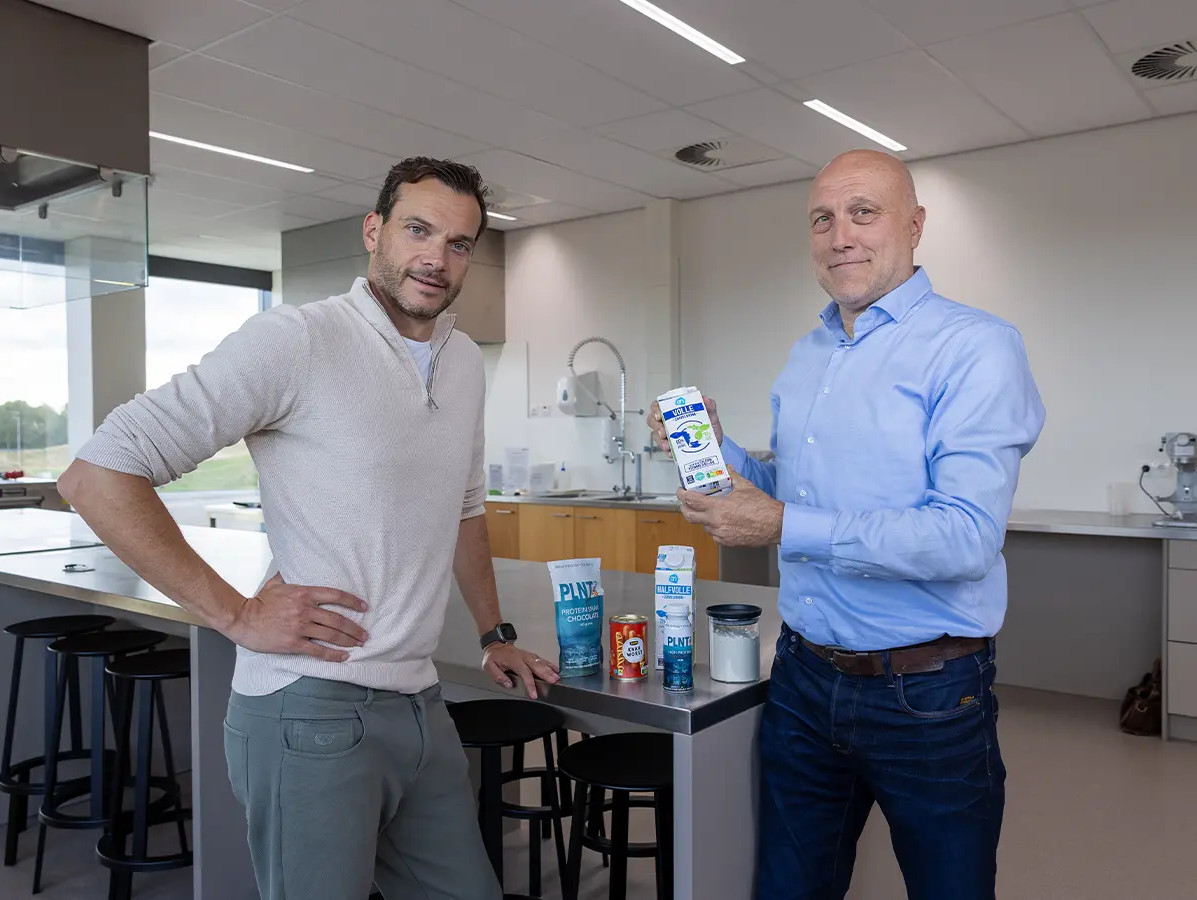
A plant-based protein developed at laboratory scale or a newly developed hybrid concept does not automatically translate into successful commercial production. Jeroen van den Boezem of NIRAS takes us through this and other challenges and developments surrounding the protein transition.
How complex it really is to make a plant-based protein source developed in the lab suitable for industrial production is still often underestimated, says Jeroen van den Boezem, Senior Marketing Director at NIRAS. “Producers – from start-ups to established manufacturers – know their processes and production sites better than anyone. But fully understanding the production and technical implications of scaling up – both the production of plant-based proteins and the integration of new plant-based ingredients into existing production – is another matter. Knowledge of how raw materials behave and the challenges involved in scaling up, particularly with ‘new’ raw materials such as plant-based proteins, is key. Scaling up is an art.”
These are among the issues that Jeroen and his colleagues help food manufacturers address. “Questions that require process expertise,” Jeroen sums up. “Producers come to us when they want to invest in scaling up or broadening their product range, or in automation. Or they may be dealing with issues relating to hygiene or logistics. They want to know: should we build a new factory or create a new production line, or can we expand the existing facilities? What are the costs, advantages and disadvantages of both options? How can we save water, energy or other resources? We map out all of these issues.” Jeroen continues: “Producers often quickly assume that CapEx is unavoidable. But when we take a critical look at the challenges, we regularly conclude that less investment may be sufficient, or that optimising what is already there is a good option. Our independence in a process like this is extremely important; we consistently look for the solution that best fits the situation.”
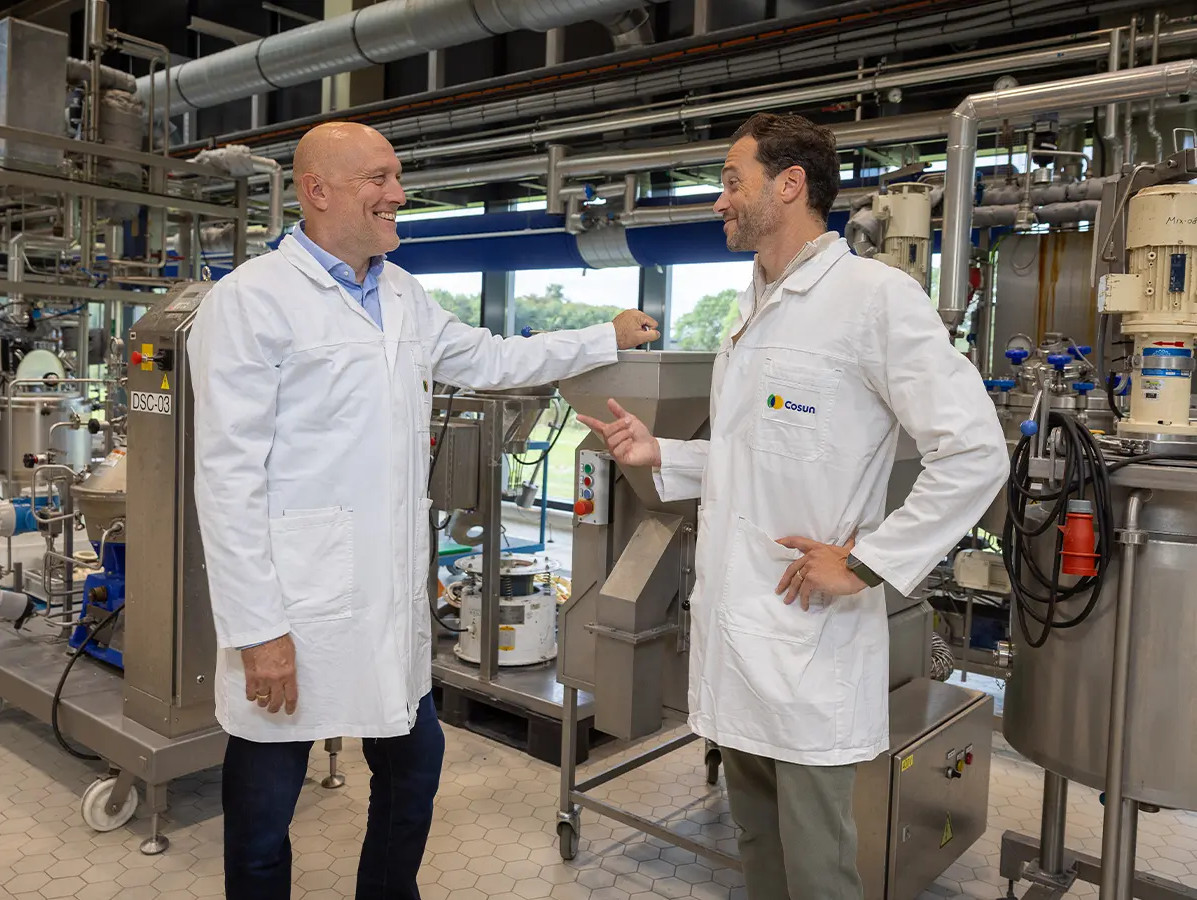
Jeroen van den Boezem (left) and Michiel Pronk
Scaling up in the context of the protein transition is complex. Jeroen: “There is, of course, still a great deal to be developed in this area. It starts with the challenge of extracting proteins from raw materials: what are the costs, and what financing options are available?” NIRAS supports its clients with these issues. “We invest in knowledge about plant-based proteins and how they behave, including in the production of hybrid products – ‘balanced proteins’. Plant-based proteins behave differently from animal proteins. Combining the two at production-line scale requires knowledge and expertise. Start-ups and scale-ups are already working on this, and more and more established companies are joining them,” says Jeroen.
Companies working with these balanced proteins include Farm Dairy and Van Loon Group (see box). Jeroen: “Several years ago, we helped Farm Dairy draw up a master plan for expanding dairy production at its current site. They later incorporated hybrid dairy into their plans as well – a very forward-looking step at the time.” Both Farm Dairy and Van Loon Group use Tendra® for their hybrid solutions, a plant-based protein from Cosun Ingredients, part of Royal Cosun. Jeroen: “Plant-based proteins are a more sustainable and often more affordable alternative to animal protein, as well as a neutral-tasting ingredient for enriching balanced protein products.”
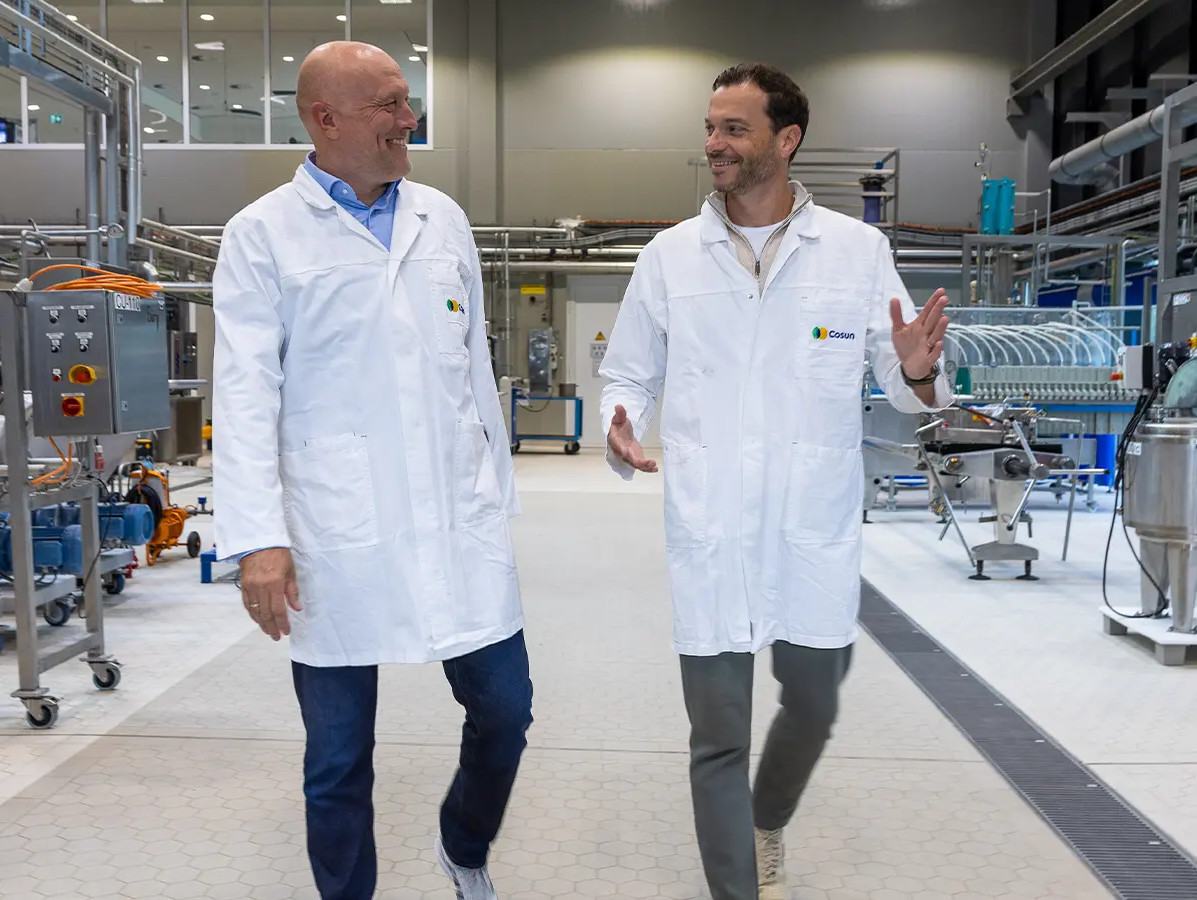
Cosun Ingredients extracts its proteins from fava beans using a specialised extraction and purification technology. Due to growing demand for Tendra®, Cosun Ingredients had to look for a larger production site. NIRAS supported the company with the issues it encountered along the way. Jeroen: “In this case, a new factory turned out to be the most efficient option. A possible site in Lithuania is currently being investigated, a country where large quantities of fava beans are grown.” Michiel Pronk, Sales Lead Protein at Cosun Ingredients, explains: “The greatest impact is achieved when producers can make sustainable improvements without having to compromise. That makes sustainability not only desirable, but commercially viable as well. Tendra® was developed with functionality as the starting point. Producers want proteins that behave predictably in their processes, have a neutral taste and are easy to use,” says Michiel. The origin of proteins is also becoming increasingly important. European food manufacturers are looking more and more for locally produced raw materials and greater security in their supply chains.
_________________________________________
Farm Dairy is focusing on hybrid dairy products as part of its mission to produce better, more sustainable dairy. It does this by combining milk with plant-based ingredients. In collaboration with PlanetDairy, Farm Dairy scaled up a recipe to commercial production, containing 30% plant-based ingredients in the semi-skimmed version and 40% in the full-fat version. Taste was the guiding principle: the product had to remain close to conventional milk.
The dairy processor considers hybrid dairy important because it combines the nutritional value of dairy with the sustainability benefits of plant-based ingredients. As fully plant-based alternatives are not yet an obvious choice for everyone, hybrid dairy can help consumers make more sustainable choices step by step. Small steps can therefore have a significant impact.
_________________________________________
Van Loon Group had already comfortably exceeded its 2024 ambition of 7.5% by 2025: 11.1% of its total meat production volume had been converted to a hybrid product. By partially combining meat with plant-based ingredients based on fava beans and peas, the proportion of plant-based ingredients in the product increases. This step can reduce the climate impact of meat products. The development is in line with themes such as food availability, changing legislation and increasing pressure on both livestock farming and plant-based supply chains.
_________________________________________
An interesting question that arises in the production of plant-based proteins and, ultimately, hybrid products is how residual streams can be valorised. Jeroen: “Fava beans are used primarily for their proteins, but other components of the bean can also be highly valuable as raw materials. There is a business case there too, and one we are keen to contribute to.” Jeroen and his colleagues draw on knowledge gained in other industries, such as the dairy industry. “They have a 150-year head start; they extract everything that can be extracted from milk. Even the water is recycled. Incidentally, many of the techniques used to produce plant-based and hybrid products are based on widely used principles, whether in engineering, logistics or hygiene. But the 10% that is different is crucial to success.”
Photos ©Peter Roek
Source: ©vakblad Voedingsindustrie 2026
Magazine Voedingsindustrie has been made possible in part by:


© COPYRIGHT 2026 VOEDINGSINDUSTRIE | ALLE RECHTEN VOORBEHOUDEN
Powered by Wallbrink Crossmedia © 2026