
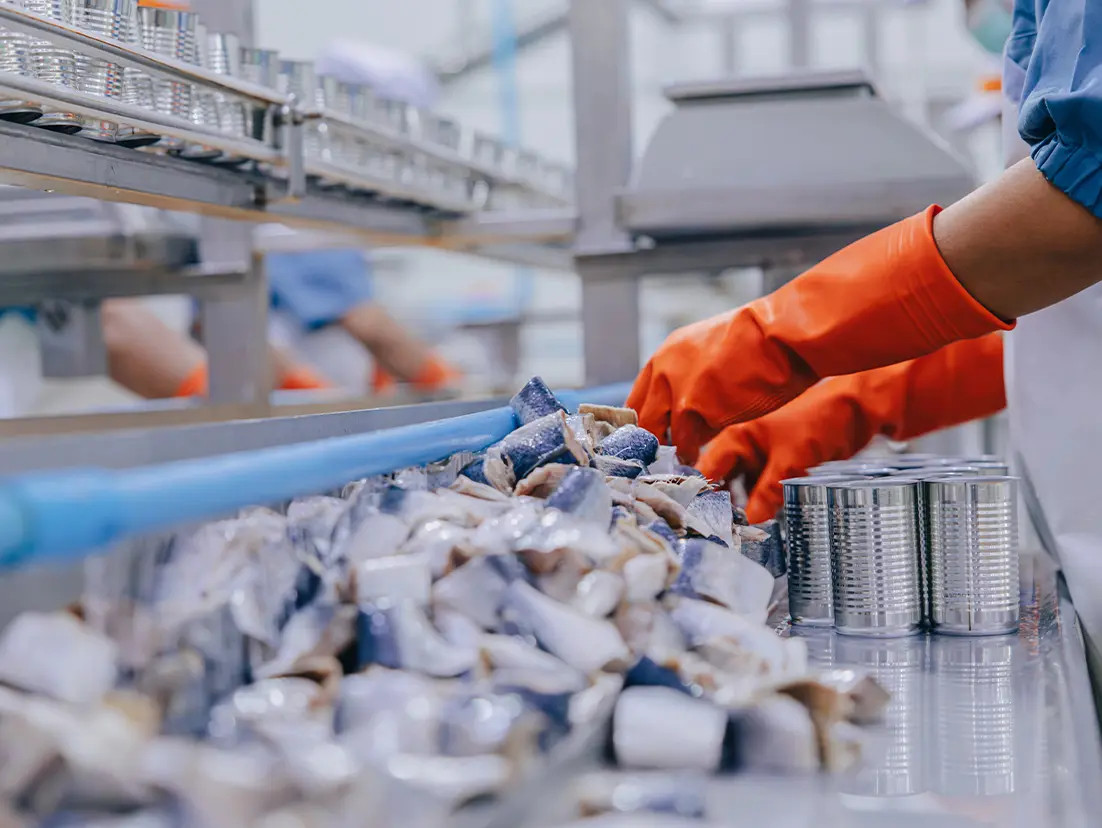
Histamine management requires greater attention throughout the fish supply chain. European inspections have identified problems with refrigeration, sampling, and professional expertise. Smaller businesses in particular struggle with certain requirements. Inspection practices also vary between Member States. This affects not only regulators, but also fish processors, traders, retailers, and quality departments. In this supply chain, temperature control, hygiene, and reliable testing are essential for food safety.
Histamine can develop in fish species with high histidine levels. Examples include tuna, mackerel, sardines, and anchovies. After the fish is caught, bacteria can convert histidine into histamine. Excessive storage temperatures accelerate this process. Once histamine has formed, further processing does not remove it.
All 27 Member States collect official samples from fish products. The share of non-compliant samples increased between 2022 and 2024. In 2022, 1.11 percent of samples failed to comply. In 2024, that figure rose to 1.49 percent. In retail, the percentage increased from 1.32 to 2.66 percent. The report does not identify the cause of this increase.
Regulators cite problems with storage and distribution temperatures. Incorrect freezing, thawing, and refreezing also occur. Incoming raw materials are not always checked thoroughly enough. Some companies rely entirely on supplier guarantees.
Smaller businesses sometimes lack sufficient knowledge of the rules. Training for quality control staff also regularly falls short. According to the report, companies also consider laboratory testing expensive. Implementing sampling plans presents further challenges.
Member States take different approaches to pooled samples. Uniform criteria for alternative analytical methods are also lacking. As a result, practices and test results are not fully comparable across the EU.
The report also refers to illegal treatments of tuna. Certain substances can preserve its red color for longer. This can make the fish appear fresher than it actually is. It may also conceal food safety risks.
Source: Europese Commissie
Magazine Voedingsindustrie has been made possible in part by:



© COPYRIGHT 2026 VOEDINGSINDUSTRIE | ALLE RECHTEN VOORBEHOUDEN
Powered by Wallbrink Crossmedia © 2026